
BuddhistCatholicContemplativeEvangelicalGeneral ChristianHinduJewishLatter-day SaintMuslimNew VisionsProgressive Christian
Beliefs
- Buddhist
- Catholic
- Contemplative
- Evangelical
- General Christian
- Hindu
- Jewish
- Latter-day Saint
- More Voices
- Muslim
- New Visions
- Pagan
- Progressive Christian
Topics
- Religion News
- Food and Religion
- Sports and Religion
- Religious Art
- Religious Music and Entertainment
- Religious Events
- History and Religion
- Style and Religion
- Politics and Religion
- Women in Religion
- Recreation Outdoors and Religion
- Business Finance and Religion
- Careers Workplace and Religion
- Education and Religion
- Family Parenting and Religion
- Health Fitness and Religion
- Home and Religion
- Relationships and Religion
- Technology and Religion
- Travel and Religion
Columnists
- Buddhist Columnists
- Business Finance and Religion Columnists
- Careers Workplace and Religion Columnists
- Catholic Columnists
- Contemplative Columnists
- Education and Religion Columnists
- Evangelists Columnists
- Family Parenting and Religion Columnists
- General Christian Columnists
- Health Fitness and Religion Columnists
- Hindu Columnists
- History and Religion Columnists
- Home and Religion Columnists
- Jewish Columnists
- More Voices Columnists
- Latter Day Columnists
- Muslim Columnists
- New Visions Columnists
- Nonreligious Columnists
- Pagan Columnists
- Politics and Religion Columnists
- Progressive Columnists
- Recreation Outdoors and Religion Columnists
- Relationships and Religion Columnists
- Religion News Columnists
- Religious Art Columnists
- Religious Events Columnists
- Religious Music and Entertainment Columnists
- Sports and Religion Columnists
- Style and Religion Columnists
- Technology and Religion Columnists
- Travel and Religion Columnists
- Women in Religion Columnists
Resource Library
- 2026 Calendar
- Library of World Religions
- The 100 Most Holy Places on Earth
- Patheos Answers
- Podcasts
- Videos
- Faith Leaders Database
- Anglican Episcopalian
- Bahai
- Baptist
- Buddhism
- Christianity
- Confucianism
- Eastern Orthodoxy
- Hinduism
- Holiness and Pentecostal
- ISKCON
- Islam
- Judaism
- Lutheran
- Methodist
- The Church of Jesus Christ of Latter-day Saints
- New Age
- Paganism
- Presbytarian and Reformed
- Protestantism
- Religion Behind the Scenes
- Roman Catholic
- Scientology
- Shia Islam
- Sikhism
- Sufism
- Sunni Islam
- Taoism
- Zen
- See all religions
Research Tools
 Ad-Free & Subscriber Log-In Subscription Support
Ad-Free & Subscriber Log-In Subscription Support
Follow Patheos 

- Trending:
- Forgiveness
- |
- Marriage
- |
- Consciousness
- |
- Death Penalty
- |
- Election
- |
- Halloween

- Home
- Progressive Christian
- Politics and Religion
- Karl Marx: Communism as Alternative to Christianity?
Karl Marx: Communism as Alternative to Christianity?
Last updated on: September 8, 2023 at 7:25 pm by _Guest
Karl Marx: Communism as Alternative to Christianity? 2023-09-08T19:25:52+00:00 _Guest
Patheos Explore the world's faith through different perspectives on religion and spirituality! Patheos has the views of the prevalent religions and spiritualities of the world.
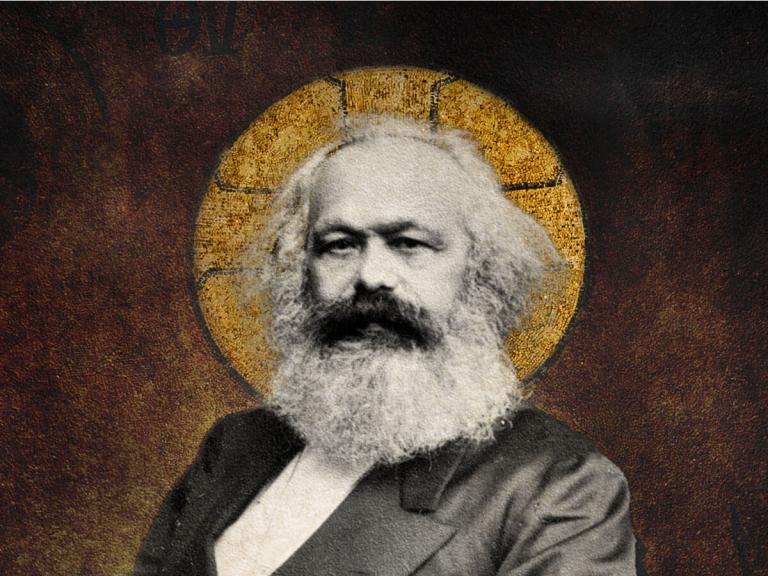
Public Domain
By Robert Orlando
In ideology, few figures have garnered as much attention and stirred controversy as Karl Marx’s writings on communism. While commonly regarded as a political and economic theory, a different perspective emerges when we scrutinize it through the lens of eschatology, the study of ultimate destinies.
Interestingly, upon closer examination that avoids caricature, the structure of Marx’s ideas reflects a narrative not dissimilar to the eschatological records found in religious systems, particularly Christianity.
Marx’s foundational concept of historical materialism is the bedrock of our analysis. It dissects society and human history based on material production conditions and class struggle.
This mirrors the foundational principles of many eschatological narratives, which often begin with depicting a fallen world.
Rising Action
As Marx delves into the relationship between social classes, precisely the bourgeoisie and the proletariat, he uncovers the inherent contradictions of capitalism. This mirrors the rising action of eschatological narratives, where tensions and struggles arise, setting the stage for a transformative event.
Marx further explores the exploitation of the working class by the bourgeoisie, leading to inequality and alienation. This resembles how eschatological narratives often describe a world marked by suffering and injustice before a redemptive figure or event arrives.
In Christianity, this transitional figure is the Messiah; in the case of Communism, it’s envisioned as a benevolent despot.
Climax
Marx’s vision of the proletariat’s revolutionary potential aligns with the climax of eschatological narratives, where a decisive event reshapes the world. The overthrow of the bourgeoisie and establishment of a socialist society mirrors the turning point in eschatological tales.
Falling Action
The transition from socialism to communism, characterized by the collective ownership of production and equitable distribution, parallels the falling action of eschatological narratives. Here, the world transitions into a new state marked by ideals of justice and equality.
Resolution
Marx’s vision of communism as the ultimate goal shares similarities with the resolution of eschatological narratives. Both depict a state of fulfillment (a golden age) that eradicates exploitation and inequality, creating a world where humanity fulfills harmony and abundance.
It’s crucial to recognize that while Marx’s works explore multifaceted aspects of society, politics, and economics, mapping his ideas onto a narrative framework better reveals his eschatological undertones.
Those that emphasize transformation, redemption, and the pursuit of an ideal community.
Comparative Analysis
The convergence between Marx’s ideology and eschatological narratives, particularly Christianity, is intriguing. Both envision a future state of equality, justice, and the dissolution of existing hierarchies. However, their paths to achieving these outcomes differ profoundly.
While Christianity often emphasizes the role of faith and believers’ unity in ushering a messianic figure’s return to bring about ultimate transformation, Marx’s narrative relies on a proletarian revolution to initiate change. Marx proposes a secularized version of salvation through human agency.
Analyzing Marx’s writings through an eschatological lens sheds light on the underlying structure of his ideology. This approach helps us understand why Marxism has attracted fervent followers who often exhibit religious zeal.
Whether Christianity or Marxism, the narrative structure inherently appeals to our longing for a better world, a trait deeply embedded in eschatology.
Moreover, this analysis opens avenues for dialogue between seemingly opposing worldviews. By recognizing the shared structural elements of the core architecture between Marx’s ideology and religious eschatologies, we can encourage conversations to bridge left-right ideologies.
Understanding the narrative frameworks can provide a common ground for discussing societal transformation, even among those who might otherwise vehemently disagree.
Distilled to their core structure, Karl Marx’s ideas remarkably align with the narrative arcs of eschatological traditions. His narrative of class struggle, revolution, and the pursuit of an ideal society mirrors the core elements of Christianity.
While the antecedents of their anthropology and cosmology may clash, these worldviews, or “first things,” generate similar eschatology.
Marx’s writings also challenge established religious wisdom concerning societal change, the role of human agency, and the perceived disparities between ideologies that, on the surface, seem irreconcilable.
However, at this juncture of doctrine and eschatology, a space emerges for conversation, understanding, and, potentially, a new perspective on the enduring quest for a just and equitable world.
This perspective seeks to integrate material needs with those of the spirit, fostering a holistic approach to a harmonious society.
General Christian
Politics and Religion
History and Religion
About Robert Orlando
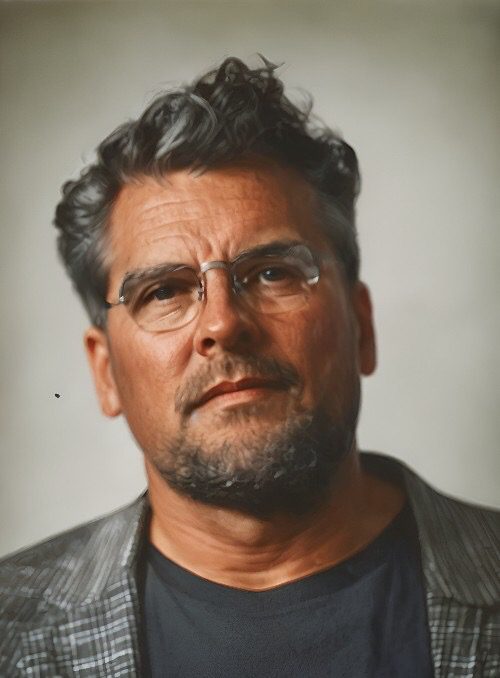
Robert Orlando, B.F.A., School of Visual Arts, is an award-winning author, filmmaker, and entrepreneur who founded Nexus Media. His studies include film, religion, ancient and modern history, and biography. As an award-winning writer and director, he has released more than a dozen movies, including the thought-provoking documentaries Silence Patton, The Divine Plan, and Trump’s Rosebud. His books include Apostle Paul: A Polite Bribe, The Divine Plan, The Tragedy of Patton, Citizen Trump: A One Man Show, and Apostle Paul: The Final Days (2024). His latest book and film is The Shroud: Face to Face, to be in bookstores in the Fall and Theaters in the Winter of 2023. He is completing his Graduate degree at Princeton Theological Seminary, where he resides. You can read more about the author here.
Next Post

January 16, 2025 How Religion Is Reframing the LGBTQ Movement
Browse Our Archives
Select a Category Advent Author Interviews Battle Over the Body and Blood of Christ Bearing Beauty Book Reviews Christian Education christian spirituallity christianity Christmas Church Church Leadership Contemplation Creation Care Death and Dying Death Penalty Disruptive Change Disruptors Series Easter Education Evolution and Faith Future of Progressive Christianity Gun Violence Health & Wellness Holy Week Interfaith Israel-Palestine Leading Differently Lent LGBTQ Living with Cancer Meditations on the Cross Mental Illness millennials Mimetic Mondays Monday Meditations Movie Reviews New Monasticism Pando Populus Parenting Patheos 10+1 Q&A Series PC(USA) Politics Pop Culture Practical Theology Series Prayer progressive christian Race Relations Reformation religion Religion and Politics Religion in America Rethink Church Social Justice Spirituality Spirituality of the Body Stump a Scholar Technology and Faith Thanksgiving Theodicy Trust Me Church Uncategorized Why I'm Still Christian Youth Ministry
Select a Month December 2025 April 2025 January 2025 September 2023 September 2022 May 2022 February 2022 January 2022 November 2021 October 2021 May 2021 February 2021 November 2020 October 2020 September 2020 June 2020 May 2020 March 2020 June 2019 March 2019 January 2019 June 2018 May 2018 April 2018 February 2018 January 2018 December 2017 November 2017 October 2017 September 2017 August 2017 July 2017 June 2017 May 2017 April 2017 March 2017 February 2017 January 2017 December 2016 November 2016 October 2016 September 2016 August 2016 July 2016 June 2016 May 2016 April 2016 March 2016 February 2016 January 2016 December 2015 November 2015 October 2015 September 2015 August 2015 July 2015 June 2015 May 2015 April 2015 March 2015 February 2015 January 2015 December 2014 November 2014 October 2014 September 2014 August 2014 July 2014 June 2014 May 2014 April 2014 March 2014 February 2014 January 2014 December 2013 November 2013 October 2013 September 2013 August 2013 July 2013 June 2013 May 2013 April 2013 March 2013 February 2013 January 2013 December 2012 November 2012 October 2012 September 2012 August 2012 July 2012 June 2012 May 2012 April 2012 March 2012 February 2012 January 2012 December 2011 November 2011 October 2011 September 2011 August 2011 July 2011 June 2011 May 2011 April 2011 March 2011 February 2011 January 2011 December 2010 November 2010 October 2010 September 2010 August 2010 July 2010 June 2010 May 2010 April 2010 March 2010
Follow Us!
TAKE THE
Religious Wisdom Quiz
What kind of leaf did the dove bring back to Noah?
Select your answer to see how you score.
Fig leaf Olive leaf Palm leaf Grape leaf
Related posts from Faith Forward

The Preacher Persisted: Finding Courage in the Pulpit


Reviving the Heart of Our Democracy: Watch the...

Spirituality and Democracy: Staying Engaged Amid Vulnerability
TRENDING AT PATHEOS Progressive Christian

What Being a Modern-Day Apostle Means to Me
In my last column, I discussed the ins and outs of modern-day...

Did Ancient China Once Worship the God of...
Across human history, a common thread weaves through the origins of the...

Love Your Neighbor – Including Earth-Kin: Lev. 19,...
God’s command to love your neighbor means acting in an ethical and...

Lead a Church Study of “Jesus and Lao...
Guest writer Jack Thomas (The Irreverent Reverend) reflects on leading his church...

Pastoral Wisdom for Responding to Sermon Pushback
Getting sermon pushback on your social justice sermon? Learn practical, Proverbs-based strategies...

Principles for Understanding the Apostolic Ministry Today
Whenever people discover that my formal ministry title is "apostle," as in...
view all Progressive Christian blogs
Ad-Free & Subscriber Log-In Subscription Support
- About Us
- 2026 Calendar
- Videos
- Podcasts
- Library of World Religions
- Faith In Media Tracker
- Advertise With Us
- Write for Us
- Privacy Policy
- Terms of Service
- Do Not Sell My Data
- Contact Us
- Radiant Digital
- Manage Newsletter Subscriptions
- Unsubscribe From Notifications
- Sitemap
Copyright 2008-2026, Patheos. All rights reserved.
Subscription Support Ad-Free & Subscriber Log-In
Follow Patheos