
BuddhistCatholicContemplativeEvangelicalGeneral ChristianHinduJewishLatter-day SaintMuslimNew VisionsProgressive Christian
Beliefs
- Buddhist
- Catholic
- Contemplative
- Evangelical
- General Christian
- Hindu
- Jewish
- Latter-day Saint
- More Voices
- Muslim
- New Visions
- Pagan
- Progressive Christian
Topics
- Religion News
- Food and Religion
- Sports and Religion
- Religious Art
- Religious Music and Entertainment
- Religious Events
- History and Religion
- Style and Religion
- Politics and Religion
- Women in Religion
- Recreation Outdoors and Religion
- Business Finance and Religion
- Careers Workplace and Religion
- Education and Religion
- Family Parenting and Religion
- Health Fitness and Religion
- Home and Religion
- Relationships and Religion
- Technology and Religion
- Travel and Religion
Columnists
- Buddhist Columnists
- Business Finance and Religion Columnists
- Careers Workplace and Religion Columnists
- Catholic Columnists
- Contemplative Columnists
- Education and Religion Columnists
- Evangelists Columnists
- Family Parenting and Religion Columnists
- General Christian Columnists
- Health Fitness and Religion Columnists
- Hindu Columnists
- History and Religion Columnists
- Home and Religion Columnists
- Jewish Columnists
- More Voices Columnists
- Latter Day Columnists
- Muslim Columnists
- New Visions Columnists
- Nonreligious Columnists
- Pagan Columnists
- Politics and Religion Columnists
- Progressive Columnists
- Recreation Outdoors and Religion Columnists
- Relationships and Religion Columnists
- Religion News Columnists
- Religious Art Columnists
- Religious Events Columnists
- Religious Music and Entertainment Columnists
- Sports and Religion Columnists
- Style and Religion Columnists
- Technology and Religion Columnists
- Travel and Religion Columnists
- Women in Religion Columnists
Resource Library
- 2026 Calendar
- Library of World Religions
- The 100 Most Holy Places on Earth
- Patheos Answers
- Podcasts
- Videos
- Faith Leaders Database
- Anglican Episcopalian
- Bahai
- Baptist
- Buddhism
- Christianity
- Confucianism
- Eastern Orthodoxy
- Hinduism
- Holiness and Pentecostal
- ISKCON
- Islam
- Judaism
- Lutheran
- Methodist
- The Church of Jesus Christ of Latter-day Saints
- New Age
- Paganism
- Presbytarian and Reformed
- Protestantism
- Religion Behind the Scenes
- Roman Catholic
- Scientology
- Shia Islam
- Sikhism
- Sufism
- Sunni Islam
- Taoism
- Zen
- See all religions
Research Tools
 Ad-Free & Subscriber Log-In Subscription Support
Ad-Free & Subscriber Log-In Subscription Support
Follow Patheos 

- Trending:
- Forgiveness
- |
- Marriage
- |
- Consciousness
- |
- Death Penalty
- |
- Election
- |
- Halloween

- Home
- Progressive Christian
- Introducing Mimetic Mondays: Exploring God and Violence
Introducing Mimetic Mondays: Exploring God and Violence
Last updated on: October 7, 2013 at 4:29 pm by Deborah Arca
Introducing Mimetic Mondays: Exploring God and Violence 2013-10-07T16:29:58+00:00 Deborah Arca
Patheos Explore the world's faith through different perspectives on religion and spirituality! Patheos has the views of the prevalent religions and spiritualities of the world.
Mimetic Theory. It’s a phrase that’s been popping up in conversations and blogposts about violence, and particularly the violence in the Bible, from the likes of Brian McLaren, Kevin Miller, Christian Piatt and other progressive Christian thinkers as of late. Being new to the concept myself, I decided we needed some experts to come and unpack this theory for us at Patheos. Starting today, we’ll begin a Mimetic Mondays weekly series, in which Suzanne Ross and Adam Ericksen of The Raven Foundation will explain and engage this theory and why it matters for us as progressive Christians living in a violent world. As Ericksen says in the interview below, “Mimetic theory is for anyone who wants to better understand human nature, the ways we fall into conflict and how to foster peace in our world.”
We begin with a Q&A this week; in coming weeks, we’ll explore how mimetic theory shows up in politics and pop culture, as well as how it can help us make sense of the violence in the Bible, especially that of the Crucifixion. It may even offer an explanation as to why young people aren’t coming to church! Please feel free to leave questions to be addressed in future posts, in the comments section below. And if you like what you’re reading and want more, The Raven Foundation has just launched a premium blog at Patheos, Teaching Non-Violent Atonement: Mimetic Theory’s Wisdom for Transforming Christianity in a Violent World, with resources for group study and much more.
 Q: What is Mimetic Theory and why does it matter for us today?
AE: Mimetic theory answers the critical questions being asked by Christians about the connection between violence and God. How do we understand the violence in Scripture and at the cross? Why was violence involved at the cross, at the very place that Christians say God made atonement with humanity?
SR: Yes. That’s why mimetic theory matters to Christian theology, but it’s important to know that mimetic theory is not a theology. It’s an anthropology that offers the best available analysis of the causes of conflict, the contagion of violence, and the pervasive use of scapegoating by individuals and communities. It explains the role of violence in human culture using imitation as a starting point. “Mimetic” is the Greek word for imitation and René Girard, the man who proposed –
AE: Hold on, Suzanne – I think we just lost half our readers!
 SR: Good point. How about we start with an example? Remember a few years ago when Kate Middleton wore a blue dress to announce her engagement to Prince William? That dress flew off the racks at British retailer Harvey Nichols.
AE: That dress became popular so fast! Did you see the one she wore to introduce the baby to the press? I bet that one is going to be a best seller, too.
SR: Most of what she wears become popular items and mimetic theory explains why so many people want what Kate has. Before Kate wore the Harvey Nichols dress, it wasn’t a top seller. What made the dress great was not anything about the dress itself. It was Kate!
AE: Right – desires don’t arise spontaneously from within us and objects don’t have intrinsic worth. We desire things because other people desire them first. And when the one doing the desiring is about to marry a prince, that gives a previously average blue dress a ton of value. It’s not the blue dress they want, but to become like Kate, to acquire a bit of “Kate-ness” so that perhaps they will catch a prince of their own. The whole phenomenon was something advertisers dream of! They understand the unconscious imitative nature of desire – in fact, their jobs depend on attaching desirable qualities to their products through models.
SR: Apple is another good example.
AE: That’s right! They aren’t just selling their products, they are selling “cool”. And if you can make your competition look like losers in the process, well, even better. That’s what the Apple campaign is all about – Mac is cool. PC is passé.
SR: You can begin to see why this matters when it comes to conflict. Let’s say I’m at the mall with a friend. There’s only one blue dress left on the rack. My friend and I reach for it at the same time. We’re going to fight over the dress and we will probably recruit someone to take our side against the other in the contest. That’s how a petty rivalry between individuals can spread throughout an entire community. Peace can be restored if we can find a scapegoat to unite against. Maybe our admiration for Kate switches to resentment – if we can begin to tear her down we can repair our relationship by uniting in hatred against the skinny, gold digging –
AE: Okay, Suzanne – we get the point! Kate becomes your scapegoat. Now that’s a pretty mundane example, but that’s why mimetic theory is so important and why it matters. Rivalries that begin with shared or imitated desire occur every day, on the personal level all the way up to the national level. Discovering how to prevent mimetic conflicts from spreading and escalating into violence becomes the key to the survival of human communities. Girard theorizes that sacrificial religion grew out of spontaneous scapegoating in early human communities in which the victim wasn’t just cut down to size, but chosen randomly and actually killed. The resulting cathartic effect was ritualized and myth developed to hide the reality of the murder from the community. Hiding the murder was critical – I mean, think what would happen to the unity Suzanne and I felt if we met Kate and she turned out to be nice! We would have to find another scapegoat or risk becoming rivals again.
Q: Who will mimetic theory appeal to? Who is it for?
SR: Mimetic theory appeals to people who are searching for a faith that takes the Bible seriously, but not necessarily literally. It appeals to people who are weary of a religion that divides the world into “us” and “them.” Mimetic theory is for anyone who wants to better understand human nature, the ways we fall into conflict and how to foster peace in our world. But don’t just take my word for it. A few weeks ago Adam interviewed participants at the Colloquium on Violence and Religion (COV&R), an international conference of scholars studying the implications of mimetic theory. He asked people, “Why should anyone care about mimetic theory?” You can watch that video at the Teaching Nonviolent Atonement site here.
Q: Why is Mimetic Theory enjoying a renaissance of sorts currently?
AE: The big question in Christianity today is about God’s relationship to violence. Because mimetic theory explains the human tendency toward scapegoating and violence, one of its unexpected and enduring values is found in the way it opens up a reading of Scripture and Christian doctrine to reveal the utter nonviolence of God.
SR: I was discussing the future of Christianity with a pastor friend of mine and we were bemoaning the flight from church membership, the rise of the nones, and all of that. I asked him what he thought was driving folks away from church or not attracting new ones and he said people see the violence in the world Monday through Saturday, they don’t want to worship a violent God on Sundays. I think he got it just right – Christianity’s future depends on us giving a coherent account of the saving power of the cross that explains why Christ’s death saved us but was not at the same time required by God.
AE: I think that S. Mark Heim in his book, Saved From Sacrifice: A Theology of the Cross, expresses the paradox well when he writes, “In short, Jesus’ death saves the world, and it ought not happen. It’s God’s plan and an evil act. It is a good bad thing.” Mark Heim is one of many theologians across the religious spectrum who are finding mimetic theory a powerful tool to interpret the Bible and the saving power of the cross in a way that is faithful to Scripture and Christian doctrine but which puts the violence squarely where it belongs, on humanity and not on God.
Q: So clearly, this theory is especially important as a lens for understanding the atonement in a new way. Can you say more about that?
SR: Sure. The questions folks are asking about the violence at the cross are nothing new. Throughout the history of the church every explanation of the atoning effect of the cross had to explain why God’s saving act involved a violent death. All too often, and often despite the best intentions of the theologian, these explanations slid downhill towards the idea that God used violence for the greater good of our redemption.
From his study of ancient myth and Greek tragedy, Girard realized that the idea of redemptive divine violence has an ancient pedigree. It dominated the ancient world of ritual sacrifice and myth, a world firmly convinced that violence and the sacred were intertwined for the good of the many at the expense of the few. Caiaphas gives voice to the ways of this world when he succinctly states the formula undergirding the ancient sacrificial system: “…it is better for you to have one man die for the people than to have the whole nation perish.” (John 11:50)
AE: But Girard’s research led him to a radical insight. The old atonement theories were right about one piece of the puzzle: there was an angry divinity at the ancient sacrificial altars, the same angry divinity we meet at the cross demanding the sacrifice of an innocent or substitute victim. But this divine being wasn’t the God of Abraham, Isaac and Jacob – it was us! We are the ones who need our anger appeased. What God did through the death and resurrection of Christ was to reveal that the sin we needed redemption from was the way we have constructed human culture on the graves of sacrificial victims. Jesus, by taking the place of one of our victims, revealed that God was not on the side of the perpetrators. Rather the opposite – it was God who we had been persecuting all along.
Q: What is your background? How did you come to this field of study?
AE: I have a Masters in Theological Studies, but had never heard of Girard or mimetic theory in my formal studies. My thesis was a comparison of Christianity and Islam entitled, Love and Nonviolence in Christianity and Islam. I then needed a job, and soon discovered that a Masters in Theological Studies isn’t all that helpful… but I had contacts at a church that needed a youth pastor. I met Suzanne at that church. She was on fire for this thing called “mimetic theory.” I was pretty academicked out at the time, and a theory with the word “mimetic” in it sounded academically burdensome to me, but Suzanne was nice so I listened. She made the Bible and faith come alive.
SR: And hiring Adam made the Raven Foundation come alive! At that point it was just an idea, but Adam came on board and helped us build our website and start blogging. My background is in education – I’m a certified Montessori directress and I taught preschool and kindergarten for six years. I’ve also worked as an instructional designer and training consultant for corporations and had a wonderful time serving as the Director of Christian Education in my church. I encountered mimetic theory in 1995 when our pastor began preaching using the mimetic insight to explain the violence in the bible and at the cross. Intrigued, I began asking him for books to read and then I started attending the COV&R conferences and meeting the scholars doing the important work. My husband Keith and I decided that we wanted to share awareness of their work with others and that’s how the Raven Foundation began.
Q: How can mimetic theory be a tool for reading the Bible and deepening our faith?
AE: This is the most exciting aspect of mimetic theory for me. Once I learned the basics of mimetic theory – that human desire for an object leads to rivalry and rivalry leads us to scapegoating another for our problems – I began to see it everywhere in the Bible. In fact, the first human story in the Bible is all about desire that leads to rivalry that leads to scapegoating. The serpent suggests to Eve a desire for the fruit. Eve mimics the serpents suggested desire for the fruit and then Adam mimics Eve’s desire for the fruit. They eat it and fall into rivalry with God. Interestingly, God doesn’t abandon them, but seeks them out by asking “Adam, where are you?” At first, Adam scapegoats Eve, and then Adam scapegoats God. “The woman, whom you gave to be with me, she gave me fruit from the tree, and I ate” (Gen 3:12). Eve then scapegoats the serpent. There’s a tension in the Genesis story because God does expel Adam and Eve from paradise, but throughout Genesis God continues to search for humanity, asking “Where are you?”
SR: Mimetic theory helps us understand another fascinating story about beginnings in the Bible that often gets overlooked by Christians. John chapter 1 is admittedly pretty weird, but it’s a midrash of the creation story in Genesis 1. They both start “In the beginning…” What’s so interesting from a mimetic theory standpoint is that instead of God excluding humans from paradise, in John it is humans that exclude God. “He was in the world, and the world came into being through him; yet the world did not know him. He came to what was his own, and his own people did not accept him” (John 1:10-11). Of course, John was foreshadowing the cross, where political and religious violence combined to kill the Son of God. We shouldn’t scapegoat the politicians and religious leaders though. After all, the disciples abandoned Jesus – even his closest disciple denied him three times. The insight that the disciples came to was that even when we reject God, God doesn’t respond mimetically. That is, God doesn’t reject us in return. Rather, God resurrects Jesus to offer divine forgiveness and peace. That understanding actually gave my faith back to me because I had become a Christian in name only, largely due to my rejection of violent atonement theologies. The discovery that the violence at the cross was all human allowed me to worship God again.
Previous Post

August 21, 2013
Itchy Intentions for a Messy World: A Tale of Two Festivals
Next Post

August 27, 2013 To Sing and Dance: Confessions of a Religious, but Not Spiritual
Recent Comments
121 Comments | Leave a Comment
Browse Our Archives
Select a Category Advent Author Interviews Battle Over the Body and Blood of Christ Bearing Beauty Book Reviews Christian Education christian spirituallity christianity Christmas Church Church Leadership Contemplation Creation Care Death and Dying Death Penalty Disruptive Change Disruptors Series Easter Education Evolution and Faith Future of Progressive Christianity Gun Violence Health & Wellness Holy Week Interfaith Israel-Palestine Leading Differently Lent LGBTQ Living with Cancer Meditations on the Cross Mental Illness millennials Mimetic Mondays Monday Meditations Movie Reviews New Monasticism Pando Populus Parenting Patheos 10+1 Q&A Series PC(USA) Politics Pop Culture Practical Theology Series Prayer progressive christian Race Relations Reformation religion Religion and Politics Religion in America Rethink Church Social Justice Spirituality Spirituality of the Body Stump a Scholar Technology and Faith Thanksgiving Theodicy Trust Me Church Uncategorized Why I'm Still Christian Youth Ministry
Select a Month December 2025 April 2025 January 2025 September 2023 September 2022 May 2022 February 2022 January 2022 November 2021 October 2021 May 2021 February 2021 November 2020 October 2020 September 2020 June 2020 May 2020 March 2020 June 2019 March 2019 January 2019 June 2018 May 2018 April 2018 February 2018 January 2018 December 2017 November 2017 October 2017 September 2017 August 2017 July 2017 June 2017 May 2017 April 2017 March 2017 February 2017 January 2017 December 2016 November 2016 October 2016 September 2016 August 2016 July 2016 June 2016 May 2016 April 2016 March 2016 February 2016 January 2016 December 2015 November 2015 October 2015 September 2015 August 2015 July 2015 June 2015 May 2015 April 2015 March 2015 February 2015 January 2015 December 2014 November 2014 October 2014 September 2014 August 2014 July 2014 June 2014 May 2014 April 2014 March 2014 February 2014 January 2014 December 2013 November 2013 October 2013 September 2013 August 2013 July 2013 June 2013 May 2013 April 2013 March 2013 February 2013 January 2013 December 2012 November 2012 October 2012 September 2012 August 2012 July 2012 June 2012 May 2012 April 2012 March 2012 February 2012 January 2012 December 2011 November 2011 October 2011 September 2011 August 2011 July 2011 June 2011 May 2011 April 2011 March 2011 February 2011 January 2011 December 2010 November 2010 October 2010 September 2010 August 2010 July 2010 June 2010 May 2010 April 2010 March 2010
Follow Us!
TAKE THE
Religious Wisdom Quiz
What was forbidden after the conquest of Jericho?
Select your answer to see how you score.
Offering sacrifices Celebrating with a feast Rebuilding the city Taking plunder
Related posts from Faith Forward

Should Christians Attend Same-Sex Weddings?

Gender Dysphoria: Real or Imagined?
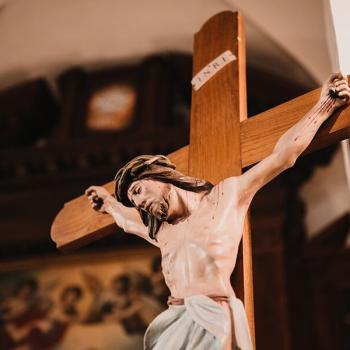
Is Christ a Sacrifice or a Survivor? How...

A Christian Defense of Critical Theory
TRENDING AT PATHEOS Progressive Christian

What Being a Modern-Day Apostle Means to Me
In my last column, I discussed the ins and outs of modern-day...

Did Ancient China Once Worship the God of...
Across human history, a common thread weaves through the origins of the...

Love Your Neighbor – Including Earth-Kin: Lev. 19,...
God’s command to love your neighbor means acting in an ethical and...

Lead a Church Study of “Jesus and Lao...
Guest writer Jack Thomas (The Irreverent Reverend) reflects on leading his church...

Pastoral Wisdom for Responding to Sermon Pushback
Getting sermon pushback on your social justice sermon? Learn practical, Proverbs-based strategies...

Principles for Understanding the Apostolic Ministry Today
Whenever people discover that my formal ministry title is "apostle," as in...
view all Progressive Christian blogs
Ad-Free & Subscriber Log-In Subscription Support
- About Us
- 2026 Calendar
- Videos
- Podcasts
- Library of World Religions
- Faith In Media Tracker
- Advertise With Us
- Write for Us
- Privacy Policy
- Terms of Service
- Do Not Sell My Data
- Contact Us
- Radiant Digital
- Manage Newsletter Subscriptions
- Unsubscribe From Notifications
- Sitemap
Copyright 2008-2026, Patheos. All rights reserved.
Subscription Support Ad-Free & Subscriber Log-In
Follow Patheos