
BuddhistCatholicContemplativeEvangelicalGeneral ChristianHinduJewishLatter-day SaintMuslimNew VisionsProgressive Christian
Beliefs
- Buddhist
- Catholic
- Contemplative
- Evangelical
- General Christian
- Hindu
- Jewish
- Latter-day Saint
- More Voices
- Muslim
- New Visions
- Pagan
- Progressive Christian
Topics
- Religion News
- Food and Religion
- Sports and Religion
- Religious Art
- Religious Music and Entertainment
- Religious Events
- History and Religion
- Style and Religion
- Politics and Religion
- Women in Religion
- Recreation Outdoors and Religion
- Business Finance and Religion
- Careers Workplace and Religion
- Education and Religion
- Family Parenting and Religion
- Health Fitness and Religion
- Home and Religion
- Relationships and Religion
- Technology and Religion
- Travel and Religion
Columnists
- Buddhist Columnists
- Business Finance and Religion Columnists
- Careers Workplace and Religion Columnists
- Catholic Columnists
- Contemplative Columnists
- Education and Religion Columnists
- Evangelists Columnists
- Family Parenting and Religion Columnists
- General Christian Columnists
- Health Fitness and Religion Columnists
- Hindu Columnists
- History and Religion Columnists
- Home and Religion Columnists
- Jewish Columnists
- More Voices Columnists
- Latter Day Columnists
- Muslim Columnists
- New Visions Columnists
- Nonreligious Columnists
- Pagan Columnists
- Politics and Religion Columnists
- Progressive Columnists
- Recreation Outdoors and Religion Columnists
- Relationships and Religion Columnists
- Religion News Columnists
- Religious Art Columnists
- Religious Events Columnists
- Religious Music and Entertainment Columnists
- Sports and Religion Columnists
- Style and Religion Columnists
- Technology and Religion Columnists
- Travel and Religion Columnists
- Women in Religion Columnists
Resource Library
- 2026 Calendar
- Library of World Religions
- The 100 Most Holy Places on Earth
- Patheos Answers
- Podcasts
- Videos
- Faith Leaders Database
- Anglican Episcopalian
- Bahai
- Baptist
- Buddhism
- Christianity
- Confucianism
- Eastern Orthodoxy
- Hinduism
- Holiness and Pentecostal
- ISKCON
- Islam
- Judaism
- Lutheran
- Methodist
- The Church of Jesus Christ of Latter-day Saints
- New Age
- Paganism
- Presbytarian and Reformed
- Protestantism
- Religion Behind the Scenes
- Roman Catholic
- Scientology
- Shia Islam
- Sikhism
- Sufism
- Sunni Islam
- Taoism
- Zen
- See all religions
Research Tools
 Ad-Free & Subscriber Log-In Subscription Support
Ad-Free & Subscriber Log-In Subscription Support
Follow Patheos 

- Trending:
- Forgiveness
- |
- Marriage
- |
- Consciousness
- |
- Death Penalty
- |
- Election
- |
- Halloween

- Home
- Progressive Christian
- Science, Religion, and Buddha Too
Science, Religion, and Buddha Too
Last updated on: April 28, 2010 at 12:27 pm by Benjamin Chicka
Science, Religion, and Buddha Too 2010-04-28T12:27:19+00:00 Benjamin Chicka
Patheos Explore the world's faith through different perspectives on religion and spirituality! Patheos has the views of the prevalent religions and spiritualities of the world.
 There is a simple fact being largely ignored by those engaging science and religion: it is not an exclusively Christian enterprise. Dialogue with other religions can make some of the work being done in the field look downright ridiculous. Understanding how another religion has learned from science can reveal the presuppositions used when looking at science only out of a Christian framework. That is, last week’s discussion about method could be a complete waste of time if it is limited only to Christians.
Bringing this up is, admittedly, a bit more throat clearing before getting into the heart of our regular inquiries starting with evolutionary science next week. However, instead of evangelizing you about why comparative theology matters for Christians engaging science myself, I will let Paul Ingram do it for me. His recent book Buddhist-Christian Dialogue in an Age of Science makes my case that our four-part monthly investigations will need to bring in perspectives from other religions when relevant. This may be an obvious truth for many, but I still think the reasons for this inclusion need to be explained rather than being done ad hoc.
Ingram’s book is set up by a review of Ian Barbour’s conflict, independence, dialogue, and integration typology for science and religion, the same one covered last week. That typology is then applied to the ways Buddhism and Christianity have related to specific scientific domains throughout the rest of the book. I feel I should point out that not everyone is thrilled with this revival of Barbour’s typology. In 2007 the journal Zygon devoted an issue to the agenda for science and religion in which several scholars argued a shift was occurring. For example, Wesley Wildman argued people were no longer cooking up grand schemes for orchestrating the worlds of science and religion into a whole and were instead tackling pressing issues through science where applicable. In other words, typologies and method are not that interesting because people just do what they do. Whether it be the ecological crisis, biotechnology, or specific ethical problems from a biological perspective (to tease future topics to be covered), those in the field now just do what they do and try to solve pressing problems regardless of what formal methods are supposed to exist.
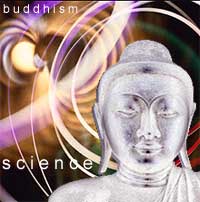
But if Barbour’s typology is old and tired, its comparison with a similar Buddhist arrangement from Jose Ignacio Cabezon is significant. In his essay “Buddhism and Science: On the Nature of the Dialogue” Cabezon points out that Buddhism and science have related through conflict/ambivalence, compatibility/identity, and complementarity. Ingram points out that these ways of relating are similar to Barbour’s breakdown and perhaps give it new legs when applied to an interreligious dialogue with science. So just like the initial emergence of the field of religion and science, comparative theology has brought a methodological revival on two levels.
First, traditional questions like Barbour’s concerning the relation between science and religion may need to be reopened if that religious partner is to be understood pluralistically. When I was first taught religion and science as a distinct field, I was given 16 different typologies to learn. Perhaps that list could be narrowed and refined depending on whether a given model can handle the way multiple religions relate to science. I presume we may find new models are needed as well, but I think Ingram may already have provided a surprising result. Barbour’s “tired old” model may be even more significant that we realized since it matches what Buddhists have been up to rather well. Second, beyond the field of religion and science, Ingram’s book offers a new method for doing theology. Since the way different religions relate to science can be coherently connected to similar models, it is becoming clear to me that any theology giving reasonable responses for today’s world will be comparative interreligiously and scientifically. If I am right then we might be seeing the emergence of a new field or at least sub-field setting forth the daunting task of being fluent in the languages of science and multiple religious traditions, but I don’t think anything less can be adequate any longer.
Here is an example of what I mean.
We could undertake comparative theology between different religions. Separately we could ask how different religions relate to science independent of another religious dialogue partner. Those results might then impact how each religion engages another in dialogue. Alternatively, it would be possible to consider whether the way an individual religion engages science impacts an already occurring interreligious dialogue. The reason I think it would be good to engage in such a breakdown and piece by piece comparison is that it can be easy to look silly as a theologian. It looks odd to engage the sciences with theological categories comparativists and pluralists have rejected. It similarly looks odd to engage in comparative theology when other theologians engaging science have rejected the concepts being compared due to their knowledge of science. Essentially, as I see the take-away point of Ingram’s book, interreligious dialogue, and now interreligious dialogue with science, point to the fact that religious life, like science, is an ongoing experiment to see what works and what can be improved over time as technology changes and places are brought together.
For someone such as myself who sees theology as comparative, pluralistic, and informed by the best science, I thank Paul Ingram for paving the way by showing such a method is at least coherent.
Previous Post

April 25, 2010
A Progressive Shout Out to Billy Graham
Next Post
April 28, 2010 Pluralism Sunday, May 2nd
Recent Comments
Browse Our Archives
Select a Category Advent Author Interviews Battle Over the Body and Blood of Christ Bearing Beauty Book Reviews Christian Education christian spirituallity christianity Christmas Church Church Leadership Contemplation Creation Care Death and Dying Death Penalty Disruptive Change Disruptors Series Easter Education Evolution and Faith Future of Progressive Christianity Gun Violence Health & Wellness Holy Week Interfaith Israel-Palestine Leading Differently Lent LGBTQ Living with Cancer Meditations on the Cross Mental Illness millennials Mimetic Mondays Monday Meditations Movie Reviews New Monasticism Pando Populus Parenting Patheos 10+1 Q&A Series PC(USA) Politics Pop Culture Practical Theology Series Prayer progressive christian Race Relations Reformation religion Religion and Politics Religion in America Rethink Church Social Justice Spirituality Spirituality of the Body Stump a Scholar Technology and Faith Thanksgiving Theodicy Trust Me Church Uncategorized Why I'm Still Christian Youth Ministry
Select a Month December 2025 April 2025 January 2025 September 2023 September 2022 May 2022 February 2022 January 2022 November 2021 October 2021 May 2021 February 2021 November 2020 October 2020 September 2020 June 2020 May 2020 March 2020 June 2019 March 2019 January 2019 June 2018 May 2018 April 2018 February 2018 January 2018 December 2017 November 2017 October 2017 September 2017 August 2017 July 2017 June 2017 May 2017 April 2017 March 2017 February 2017 January 2017 December 2016 November 2016 October 2016 September 2016 August 2016 July 2016 June 2016 May 2016 April 2016 March 2016 February 2016 January 2016 December 2015 November 2015 October 2015 September 2015 August 2015 July 2015 June 2015 May 2015 April 2015 March 2015 February 2015 January 2015 December 2014 November 2014 October 2014 September 2014 August 2014 July 2014 June 2014 May 2014 April 2014 March 2014 February 2014 January 2014 December 2013 November 2013 October 2013 September 2013 August 2013 July 2013 June 2013 May 2013 April 2013 March 2013 February 2013 January 2013 December 2012 November 2012 October 2012 September 2012 August 2012 July 2012 June 2012 May 2012 April 2012 March 2012 February 2012 January 2012 December 2011 November 2011 October 2011 September 2011 August 2011 July 2011 June 2011 May 2011 April 2011 March 2011 February 2011 January 2011 December 2010 November 2010 October 2010 September 2010 August 2010 July 2010 June 2010 May 2010 April 2010 March 2010
Follow Us!
TAKE THE
Religious Wisdom Quiz
On which mountain did Moses receive the Ten Commandments?
Select your answer to see how you score.
Mount Sinai Mount Carmel Mount Ararat Mount Hermon
Related posts from Faith Forward

“Unequally Yoked”: How Christians Get Interfaith Marriage Wrong

Searching for the Buddha’s Climate Change Policy

Together Towards Tomorrow: Pluralism in India

Religion and Science in the Indian Context
TRENDING AT PATHEOS Progressive Christian

Why Christians Have a Sacred Duty to Vote:...
The Bible offers strong support for the sacred duty to vote. Here...

What Being a Modern-Day Apostle Means to Me
In my last column, I discussed the ins and outs of modern-day...

Did Ancient China Once Worship the God of...
Across human history, a common thread weaves through the origins of the...

Love Your Neighbor – Including Earth-Kin: Lev. 19,...
God’s command to love your neighbor means acting in an ethical and...

Lead a Church Study of “Jesus and Lao...
Guest writer Jack Thomas (The Irreverent Reverend) reflects on leading his church...

Principles for Understanding the Apostolic Ministry Today
Whenever people discover that my formal ministry title is "apostle," as in...
view all Progressive Christian blogs
Ad-Free & Subscriber Log-In Subscription Support
- About Us
- 2026 Calendar
- Videos
- Podcasts
- Library of World Religions
- Faith In Media Tracker
- Advertise With Us
- Write for Us
- Privacy Policy
- Terms of Service
- Do Not Sell My Data
- Contact Us
- Radiant Digital
- Manage Newsletter Subscriptions
- Unsubscribe From Notifications
- Sitemap
Copyright 2008-2026, Patheos. All rights reserved.
Subscription Support Ad-Free & Subscriber Log-In
Follow Patheos