
BuddhistCatholicContemplativeEvangelicalGeneral ChristianHinduJewishLatter-day SaintMuslimNew VisionsProgressive Christian
Beliefs
- Buddhist
- Catholic
- Contemplative
- Evangelical
- General Christian
- Hindu
- Jewish
- Latter-day Saint
- More Voices
- Muslim
- New Visions
- Pagan
- Progressive Christian
Topics
- Religion News
- Food and Religion
- Sports and Religion
- Religious Art
- Religious Music and Entertainment
- Religious Events
- History and Religion
- Style and Religion
- Politics and Religion
- Women in Religion
- Recreation Outdoors and Religion
- Business Finance and Religion
- Careers Workplace and Religion
- Education and Religion
- Family Parenting and Religion
- Health Fitness and Religion
- Home and Religion
- Relationships and Religion
- Technology and Religion
- Travel and Religion
Columnists
- Buddhist Columnists
- Business Finance and Religion Columnists
- Careers Workplace and Religion Columnists
- Catholic Columnists
- Contemplative Columnists
- Education and Religion Columnists
- Evangelists Columnists
- Family Parenting and Religion Columnists
- General Christian Columnists
- Health Fitness and Religion Columnists
- Hindu Columnists
- History and Religion Columnists
- Home and Religion Columnists
- Jewish Columnists
- More Voices Columnists
- Latter Day Columnists
- Muslim Columnists
- New Visions Columnists
- Nonreligious Columnists
- Pagan Columnists
- Politics and Religion Columnists
- Progressive Columnists
- Recreation Outdoors and Religion Columnists
- Relationships and Religion Columnists
- Religion News Columnists
- Religious Art Columnists
- Religious Events Columnists
- Religious Music and Entertainment Columnists
- Sports and Religion Columnists
- Style and Religion Columnists
- Technology and Religion Columnists
- Travel and Religion Columnists
- Women in Religion Columnists
Resource Library
- 2026 Calendar
- Library of World Religions
- The 100 Most Holy Places on Earth
- Patheos Answers
- Podcasts
- Videos
- Faith Leaders Database
- Anglican Episcopalian
- Bahai
- Baptist
- Buddhism
- Christianity
- Confucianism
- Eastern Orthodoxy
- Hinduism
- Holiness and Pentecostal
- ISKCON
- Islam
- Judaism
- Lutheran
- Methodist
- The Church of Jesus Christ of Latter-day Saints
- New Age
- Paganism
- Presbytarian and Reformed
- Protestantism
- Religion Behind the Scenes
- Roman Catholic
- Scientology
- Shia Islam
- Sikhism
- Sufism
- Sunni Islam
- Taoism
- Zen
- See all religions
Research Tools
 Ad-Free & Subscriber Log-In Subscription Support
Ad-Free & Subscriber Log-In Subscription Support
Follow Patheos 

- Trending:
- Forgiveness
- |
- Marriage
- |
- Consciousness
- |
- Death Penalty
- |
- Election
- |
- Halloween
 Faith and Chelsen
- Home
- Evangelical
- Mark Pearson Explores Why the Ascension is Neglected
Mark Pearson Explores Why the Ascension is Neglected
Last updated on: May 28, 2022 at 12:48 pm by Faith J. H. McDonnell
Mark Pearson Explores Why the Ascension is Neglected 2022-05-28T12:48:38-05:00 Faith J. H. McDonnell
Patheos Explore the world's faith through different perspectives on religion and spirituality! Patheos has the views of the prevalent religions and spiritualities of the world.
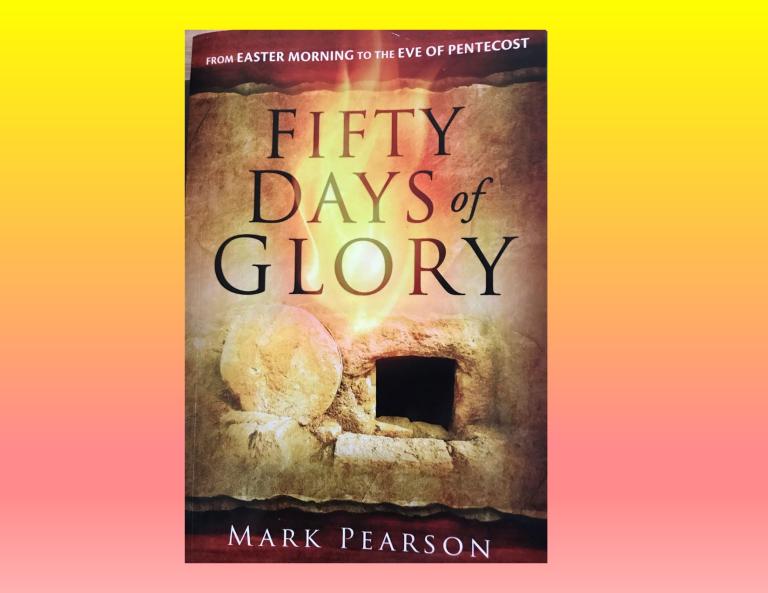
Fifty Days of Glory: From Easter Morning to the Eve of Pentecost, by Mark Pearson (Creation House, 2014)
I’m re-reading my friend the Rev. Dr. Mark Pearson’s wonderful book Fifty Days of Glory. In this book Fr. Mark explores the days between Jesus’ Resurrection and the coming of the Holy Spirit on Pentecost. Growing up as a non-liturgical Christian (in the accepted sense — every denomination has their own liturgy whether they call it that or not!) I didn’t give much thought to what is known as the Fifty Days of Glory. Easter was the big bang! Christ is risen from the dead! And, not being a charismatic or Pentecostal believer back then, Pentecost was acknowledged but not deeply celebrated. What happened in between, and what significance does it have? Quite a bit!
This past Thursday, May 26, was Ascension Day. Fr. Mark devotes two chapters of his book to the Ascension of the Lord. Most churches that observe the Ascension do so on the Sunday following and don’t have an actual service on Ascension Day. So we’ve actually have time to reflect on the meaning of Christ’s Ascension in the next day, in preparation for entering more fully and comprehendingly into praise and worship of Jesus’ glorious departure.
Chapter ten of Fr. Mark’s book is “Rescuing and Defending the Celebration of the Ascension.” He notes that most churches are closed on Ascension Day, or may have a service with a handful of people. Even more shocking to me was to read that you “won’t find a reference to Ascension Day in Eerdman’s Handbook to the History of Christianity or even a footnote in Williston Walker’s A History of the Christian Church.”
We repeat every Sunday in the Nicene Creed, “He ascended into Heaven and is seated at the right hand of the Father. . . ” We say it in the Apostle’s Creed too. But Pearson quotes J.G. Davies, theology professor from the University of Birmingham, saying, “Of all the articles in the Creed there is none that has been so neglected in the present century as that which affirms our Lord’s Ascension into heaven.”
Pearson posits some possible reasons for why the Ascension may be neglected:
- Ascension Day is always a weekday. But Christmas is frequently on a weekday, and in most churches, Pearson says, “Christmas services are the most attended services of the year.”
- Non-liturgical Protestants once removed most holy days from the church calendar — even Christmas — as being, gasp!, “Papist.” But the Book of Common Prayer “accords it a priority status as a principal feast in Anglicanism. . . ” Pearson adds.
- There is no secular parallel culture of it such as with Santa or the Easter Bunny. Pearson says, “Unless a congregation goes out of its way to emphasize the Ascension, unless there’s a skit or the releasing of balloons to give a sensory illusion (Yikes! We’d sure get in trouble for that gesture today!) there’s nothing to help people anticipate this Holy Day or be excited about it when it arrives.”
But those are not the only possible reasons. Pearson continues with other more challenging explanations:
- Is the Ascension ignored because “it is clearly about Christ and not, at least in an obvious way, about me?” In an era of looking for blessings and prosperity, of self-help and self-esteem, this makes a lot of sense. Pearson says “the Ascension speaks of Christ in glory, and the focus is on Him.” He continues to explain that me-centered “twisting of the Christian faith” isn’t a new thing. The risen Christ spent his 40 post-Resurrection days “going over basic themes with His closest followers” but still, on the eve of His Ascension, they were “focusing on the political restoration of Israel” (Acts 1: 6)!
- Or maybe, says Pearson, we don’t “celebrate” the Ascension because it would be celebrating Jesus leaving us. “We do not wish Him to leave any more than Mary Magdalene did when she tried to hold on to Him,” Pearson explains.
- The next possibility digs even deeper. Pearson queries “could the reason the Ascension is generally ignored by that it means we must focus on the Holy Spirit, who will come after Jesus departs, and many who believe in and love Jesus Christ are skeptical of the person and work of the Holy Spirit?” He explains that such persons “might so love order and control they do not want to focus on the Holy Spirit, who, like the wind, blows where the Spirit wills (John 3: 8).” Or such persons, he says, might have been scared off of the Holy Spirit “by the excesses of some who call themselves Pentecostals or Charismatics.” So they think it is better “to focus on Jesus’ teaching, atoning work, and bodily resurrection and leave it at that.” Reminds me of a quote from evangelist Mario Murillo who says that to some people the Holy Trinity is “the Father, the Son, and the Holy Bible.”
- Finally, says Pearson, there are attitudes “ranging from skepticism to ridicule on the part of liberal theologians.” Since many liberal theologians don’t believe in the bodily Resurrection of Christ, or even the Virgin Birth, it makes sense that they would not believe in a bodily Ascension. So what about those of us who do believe in the Virgin Birth and the bodily Resurrection? Why would this affect us? Pearson says, “Even if we do not believe what [such theologians] have said, many people are nonetheless left subtly influenced by their denials.”
In the next part of the chapter, Pearson explores the theological skepticism towards the Ascension, and the lack of logic to be found in that skepticism. I’ll write about that in my next blog post. We are missing a wonderful, powerful part of our faith if we neglect the Ascension of our Lord Jesus. I am grateful to Fr. Mark Pearson for exploring this issue in a way that helps us to embrace that aspect of Jesus’ earthly history.
Previous Post

May 21, 2022
Americans Don't Let America's Sovereignty Get Sold to the W.H.O.
Next Post

December 23, 2022 My Christmas Favorites You Should Not Miss
Browse Our Archives
Select a Category Beauty Christmas Cultural Marxism Feminism Freedom Global Christian Persecution Israel Jesus Justice and Human Rights Marriage Peace and Reconciliation Rebecca Gonzales Sanctity of Life Self-Worth Social Witness Sudan and South Sudan Uncategorized Women
Select a Month December 2022 May 2022 March 2022 December 2021 April 2021 December 2020 August 2020 February 2020 December 2019 May 2019 April 2019 February 2019 September 2018 July 2018 March 2018 February 2018 January 2018 December 2017 November 2017 September 2017 August 2017 July 2017 June 2017 May 2017 March 2017 February 2017 January 2017 December 2016 November 2016 October 2016 September 2016 August 2016 July 2016 June 2016 May 2016 April 2016 March 2016 February 2016
Follow Us!
TAKE THE
Religious Wisdom Quiz
What order did the four beasts that rose from the sea in Daniel's vision appear?
Select your answer to see how you score.
Leopard, bear, lion with eagle's wings, terrifying beast with iron teeth Lion with eagle's wings, bear, leopard, terrifying beast with iron teeth Bear, lion with eagle's wings, terrifying beast with iron teeth, leopard Terrifying beast with iron teeth, lion with eagle's wings, leopard, bear
Books by This Author Books by Faith McDonnell
Related posts from Faith and Chelsen

My Christmas Favorites You Should Not Miss

Americans Don't Let America's Sovereignty Get Sold to...

Five Lessons We Can Learn from St. Patrick
TRENDING AT PATHEOS Evangelical

The REST of Your Life: A Creative Wrestles...
This week I had a conversation with a good friend from church....

How the author of the world's best hymn...
I've been working with John Newton for a while now. This makes...

Long before this Lectio Divina, Psalm 130 - the song - started...

What About the Trees? Another Living Parable
After I finished writing the last article about falling leaves as a...

Why Classical Education Is a Conversation, Not a...
Come and Read: Joy in Classical Education When I was a little...

Cornell University has received a great deal of negative publicity and intense...
view all Evangelical blogs
Ad-Free & Subscriber Log-In Subscription Support
- About Us
- 2026 Calendar
- Videos
- Podcasts
- Library of World Religions
- Faith In Media Tracker
- Advertise With Us
- Write for Us
- Privacy Policy
- Terms of Service
- Do Not Sell My Data
- Contact Us
- Radiant Digital
- Manage Newsletter Subscriptions
- Unsubscribe From Notifications
- Sitemap
Copyright 2008-2026, Patheos. All rights reserved.
Subscription Support Ad-Free & Subscriber Log-In
Follow Patheos