
BuddhistCatholicContemplativeEvangelicalGeneral ChristianHinduJewishLatter-day SaintMuslimNew VisionsProgressive Christian
Beliefs
- Buddhist
- Catholic
- Contemplative
- Evangelical
- General Christian
- Hindu
- Jewish
- Latter-day Saint
- More Voices
- Muslim
- New Visions
- Pagan
- Progressive Christian
Topics
- Religion News
- Food and Religion
- Sports and Religion
- Religious Art
- Religious Music and Entertainment
- Religious Events
- History and Religion
- Style and Religion
- Politics and Religion
- Women in Religion
- Recreation Outdoors and Religion
- Business Finance and Religion
- Careers Workplace and Religion
- Education and Religion
- Family Parenting and Religion
- Health Fitness and Religion
- Home and Religion
- Relationships and Religion
- Technology and Religion
- Travel and Religion
Columnists
- Buddhist Columnists
- Business Finance and Religion Columnists
- Careers Workplace and Religion Columnists
- Catholic Columnists
- Contemplative Columnists
- Education and Religion Columnists
- Evangelists Columnists
- Family Parenting and Religion Columnists
- General Christian Columnists
- Health Fitness and Religion Columnists
- Hindu Columnists
- History and Religion Columnists
- Home and Religion Columnists
- Jewish Columnists
- More Voices Columnists
- Latter Day Columnists
- Muslim Columnists
- New Visions Columnists
- Nonreligious Columnists
- Pagan Columnists
- Politics and Religion Columnists
- Progressive Columnists
- Recreation Outdoors and Religion Columnists
- Relationships and Religion Columnists
- Religion News Columnists
- Religious Art Columnists
- Religious Events Columnists
- Religious Music and Entertainment Columnists
- Sports and Religion Columnists
- Style and Religion Columnists
- Technology and Religion Columnists
- Travel and Religion Columnists
- Women in Religion Columnists
Resource Library
- 2026 Calendar
- Library of World Religions
- The 100 Most Holy Places on Earth
- Patheos Answers
- Podcasts
- Videos
- Faith Leaders Database
- Anglican Episcopalian
- Bahai
- Baptist
- Buddhism
- Christianity
- Confucianism
- Eastern Orthodoxy
- Hinduism
- Holiness and Pentecostal
- ISKCON
- Islam
- Judaism
- Lutheran
- Methodist
- The Church of Jesus Christ of Latter-day Saints
- New Age
- Paganism
- Presbytarian and Reformed
- Protestantism
- Religion Behind the Scenes
- Roman Catholic
- Scientology
- Shia Islam
- Sikhism
- Sufism
- Sunni Islam
- Taoism
- Zen
- See all religions
Research Tools
 Ad-Free & Subscriber Log-In Subscription Support
Ad-Free & Subscriber Log-In Subscription Support
Follow Patheos 

- Trending:
- Forgiveness
- |
- Marriage
- |
- Consciousness
- |
- Death Penalty
- |
- Election
- |
- Halloween
 Faith Beyond Belief
-
Post Categories
- Home
- New Visions
- What Does Spiritual Progress Really Mean?
What Does Spiritual Progress Really Mean?
Last updated on: March 2, 2013 at 2:10 pm by Margaret Placentra Johnston
What Does Spiritual Progress Really Mean? 2013-03-02T14:10:57-05:00 Margaret Placentra Johnston
Patheos Explore the world's faith through different perspectives on religion and spirituality! Patheos has the views of the prevalent religions and spiritualities of the world.
What is “spiritual progress?” The dictionary tells us the word progress means moving forward, advancing, creating better conditions or new policies or ideals. So how would a person move forward spiritually? What better conditions or new policies or new ideals would a spiritually advanced person promote?
Forward movement—or progress—in spirituality has been pretty well defined through a generally known, but rarely articulated process that should one day come to be called spiritual development theory. Some spiritual development theorists have shared their own journey toward what they call enlightenment. Others have analyzed the results of extensive interviews and categorized their findings into specific stages. But careful analysis shows that a common denominator can be found in all authoritative descriptions of the road to spiritual maturity.
The common trajectory in all spiritual progress takes a person from a selfish, egocentric, competitive and materialistic worldview, through some steps involving emergence beyond group think (and sometimes beyond the limitations of organized religion) by way of individuation and courageous questioning of “the givens” handed to him by society, toward a stance where the self is less important than the whole and where the principle of unity (or oneness) supersedes individual striving and goals. This unitive or universal worldview is the hallmark of spiritual maturity, an endpoint (note I have not said the endpoint, because there may be many more spiritual levels our theorists have not yet explored) of progress up the spiritual ladder.
So what does a universal worldview look like? As we mature spiritually our worldview expands to include more and more within our range of concern. Where the child is concerned mainly with getting his own needs met, the typical adult has expanded beyond the self to include members of his own tribe. Rather than being egocentric, he is ethnocentric. Then, some adults manage to free themselves of tribal limitations and explore beyond their own community to find that people outside the group are not so very different from people inside. So the group they feel themselves to be a part of expands to include more people. At this stage the person becomes worldcentric, eventually including all humans within his or her concern. This stage leads him to become very interested in social justice issues, for example. A person progressing even further up the spiritual ladder may expand his or her caring to nonhumans, animals, the environment—even the spirit world. In short at the universal level, the entire universe comes to be seen as worthy of being cared about, worthy of concern. The main trait of the unitive or universal worldview is total inclusiveness. So the more inclusive we are, the further we have progressed spiritually, and the more authentic and mature our spirituality is.
This brings us to the question: What better conditions or new policies or new ideals would a spiritually advanced or spiritually mature person promote? The main things a universal or unitive or spiritually mature person wants to promote are conditions that better the lives of everyone, and in fact, everything in the universe. Note this does not include securing one’s own “salvation” in the next life. It does not include assuming one’s own religious beliefs are better, and somehow more right, than those of other religions. It does not allow marginalizing people who don’t fit into a given religious, political or socio-economic group.
Spiritual development theory does clearly inform us as to which way is forward—it is always toward the more universal concern—always in the direction that includes more of the universe. We can assume the attempts that go in the other direction—those which limit the options and lessen the quality of life for any particular person or group (huge corporations aside) are regressive. That is, whatever lessens wholeness of anyone or anything in the universe represents the opposite of progress, and is spiritually immature.
So attempts to govern our society based on biblical authority represent a regressive form of spirituality. They exclude the authority of the holy books of other religions—which some people find important. And they exclude the concerns of people who find reliable self-governance outside of rules laid out in holy books. Political governance based on biblical authority is only promoted by those at an undeveloped spiritual level. Teaching creationism in public schools is spiritually regressive. Unfair treatment of gays in the military represents a spiritually immature position. Those at a mature spiritual level will want to support efforts that respect and include everyone’s beliefs and concerns.
Political efforts that favor one group of citizens over another group represent an immature spirituality. Voter suppression attempts are about as spiritually regressive as anything can get. Not extending healthcare to those who can’t afford is motivated by spiritually immature concerns. A mature spirituality will want to support the needs of individual people, and not so much those of huge corporations.
Having defined which way is forward, and therefore more desirable from the point of view of spiritual progress, our next task is to recognize which political forces support the more spiritually mature traits. The ones who give evidence of more progressive values are the ones who are more likely to lead our society forward. Those displaying more regressive values and traits are likely to lead us backward to a less evolved society.
Previous Post

February 19, 2013
Transcending the Self – through Kite Flying?
Next Post
April 3, 2013 IS there an afterlife?
Browse Our Archives
Select a Category Spiritual Courage Spiritual Maturity Spiritual Strength Uncategorized
Select a Month April 2013 March 2013 February 2013 January 2013 December 2012 November 2012 October 2012 September 2012 August 2012
TAKE THE
Religious Wisdom Quiz
Which letter encourages believers to "rejoice in the Lord always"?
Select your answer to see how you score.
Philippians 2 Thessalonians Colossians 1 Peter
Related posts from Faith Beyond Belief

What does God Really Look Like? - Time...
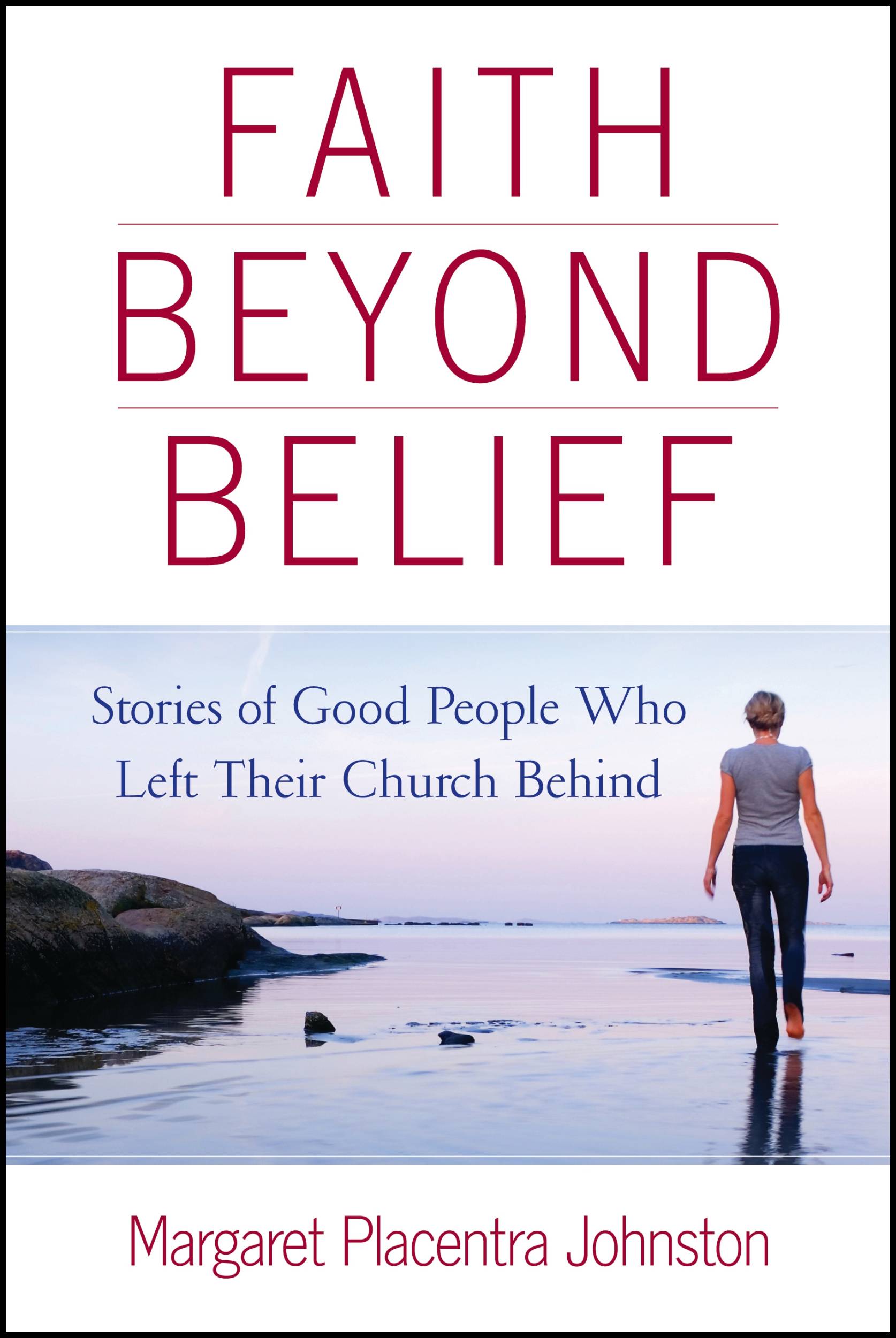
My Defining Moment Led to this Patheos Blog...

Why I am a Freelance Spiritual Seeker

TRENDING AT PATHEOS New Visions

Did Prayer Cure His Cancer? Or Was It...
At 4 AM one morning, Joshua W. Brown’s wife awoke to a...

8 Ways a Near-Death Experience Rewires the Soul
Does Consciousness Survive Physical Death? After 50 Years of Research, Dr. Raymond...

Holy Longing: What Our Restlessness Is Telling Us
“One can find so many pains when the rain is falling.” -John...

What this is NOT about. This blog is definitely not about...

Who said the Israelites were God’s chosen? That’s right, they did. Who...

The Spirit World Is the Real World: God...
A Monk’s Wisdom on Body and Spirit I sit with Brother Martin...
view all New Visions blogs
Ad-Free & Subscriber Log-In Subscription Support
- About Us
- 2026 Calendar
- Videos
- Podcasts
- Library of World Religions
- Faith In Media Tracker
- Advertise With Us
- Write for Us
- Privacy Policy
- Terms of Service
- Do Not Sell My Data
- Contact Us
- Radiant Digital
- Manage Newsletter Subscriptions
- Unsubscribe From Notifications
- Sitemap
Copyright 2008-2026, Patheos. All rights reserved.
Subscription Support Ad-Free & Subscriber Log-In
Follow Patheos