
BuddhistCatholicContemplativeEvangelicalGeneral ChristianHinduJewishLatter-day SaintMuslimNew VisionsProgressive Christian
Beliefs
- Buddhist
- Catholic
- Contemplative
- Evangelical
- General Christian
- Hindu
- Jewish
- Latter-day Saint
- More Voices
- Muslim
- New Visions
- Pagan
- Progressive Christian
Topics
- Religion News
- Food and Religion
- Sports and Religion
- Religious Art
- Religious Music and Entertainment
- Religious Events
- History and Religion
- Style and Religion
- Politics and Religion
- Women in Religion
- Recreation Outdoors and Religion
- Business Finance and Religion
- Careers Workplace and Religion
- Education and Religion
- Family Parenting and Religion
- Health Fitness and Religion
- Home and Religion
- Relationships and Religion
- Technology and Religion
- Travel and Religion
Columnists
- Buddhist Columnists
- Business Finance and Religion Columnists
- Careers Workplace and Religion Columnists
- Catholic Columnists
- Contemplative Columnists
- Education and Religion Columnists
- Evangelists Columnists
- Family Parenting and Religion Columnists
- General Christian Columnists
- Health Fitness and Religion Columnists
- Hindu Columnists
- History and Religion Columnists
- Home and Religion Columnists
- Jewish Columnists
- More Voices Columnists
- Latter Day Columnists
- Muslim Columnists
- New Visions Columnists
- Nonreligious Columnists
- Pagan Columnists
- Politics and Religion Columnists
- Progressive Columnists
- Recreation Outdoors and Religion Columnists
- Relationships and Religion Columnists
- Religion News Columnists
- Religious Art Columnists
- Religious Events Columnists
- Religious Music and Entertainment Columnists
- Sports and Religion Columnists
- Style and Religion Columnists
- Technology and Religion Columnists
- Travel and Religion Columnists
- Women in Religion Columnists
Resource Library
- 2026 Calendar
- Library of World Religions
- The 100 Most Holy Places on Earth
- Patheos Answers
- Podcasts
- Videos
- Faith Leaders Database
- Anglican Episcopalian
- Bahai
- Baptist
- Buddhism
- Christianity
- Confucianism
- Eastern Orthodoxy
- Hinduism
- Holiness and Pentecostal
- ISKCON
- Islam
- Judaism
- Lutheran
- Methodist
- The Church of Jesus Christ of Latter-day Saints
- New Age
- Paganism
- Presbytarian and Reformed
- Protestantism
- Religion Behind the Scenes
- Roman Catholic
- Scientology
- Shia Islam
- Sikhism
- Sufism
- Sunni Islam
- Taoism
- Zen
- See all religions
Research Tools
 Ad-Free & Subscriber Log-In Subscription Support
Ad-Free & Subscriber Log-In Subscription Support
Follow Patheos 

- Trending:
- Forgiveness
- |
- Marriage
- |
- Consciousness
- |
- Death Penalty
- |
- Election
- |
- Halloween
 Faith Beyond Belief
-
Post Categories
- Home
- New Visions
- Were the New Atheists Right?
Were the New Atheists Right?
Last updated on: February 6, 2013 at 11:01 am by Margaret Placentra Johnston
Were the New Atheists Right? 2013-02-06T11:01:07-05:00 Margaret Placentra Johnston
Patheos Explore the world's faith through different perspectives on religion and spirituality! Patheos has the views of the prevalent religions and spiritualities of the world.
Were the New Atheists Right?
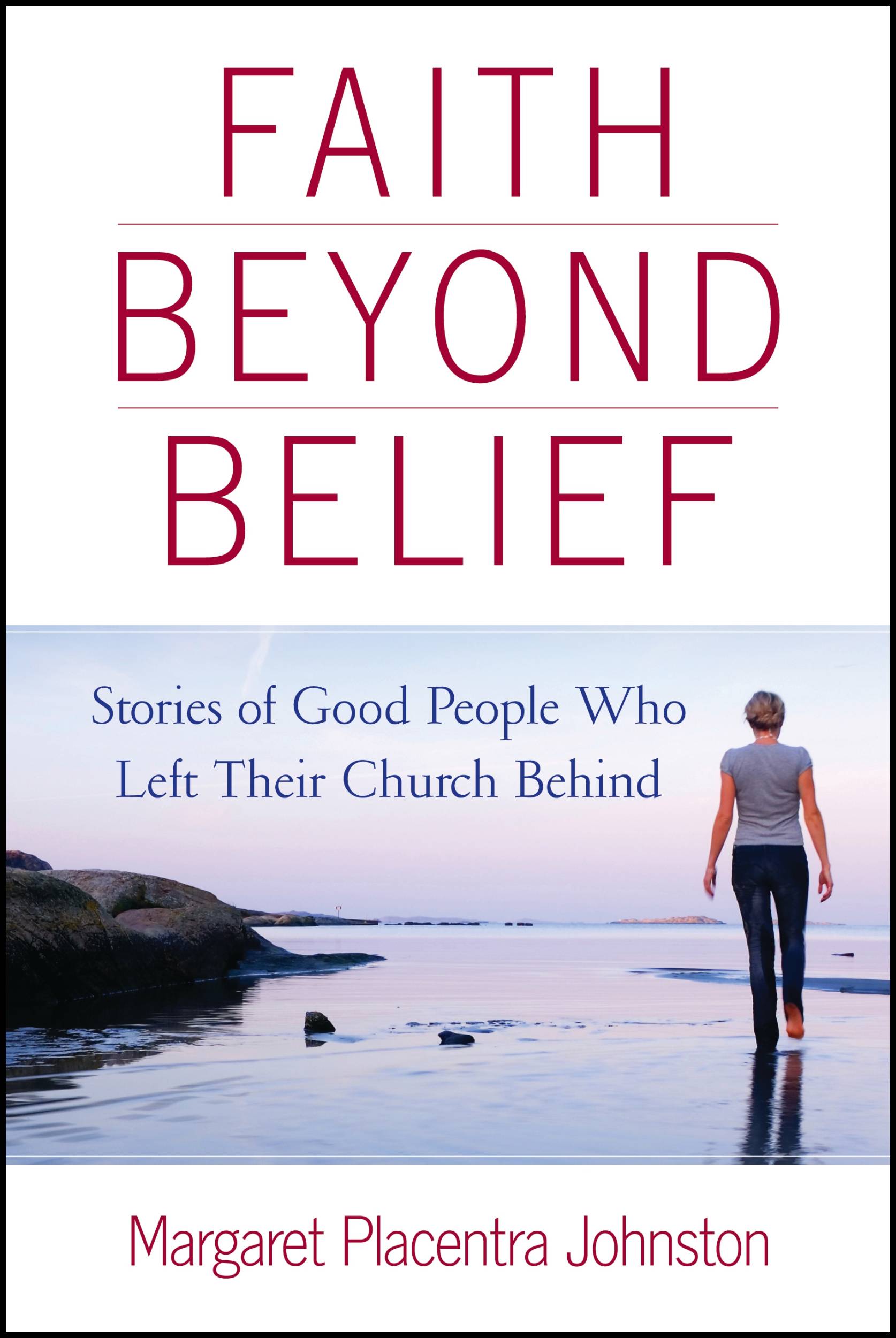
In the last decade, many people were impressed with the work of the New Atheist writers. These three authors each wrote a highly reasoned treatise against religion or God that hit the best-seller list around the middle of the last decade. A few words about them from my book, Faith Beyond Belief: Stories of Good People Who Left Their Church Behind:[1]
In God is Not Great: How Religion Poisons Everything, Christopher Hitchens claimed that…religion has misrepresented the origins of man and the cosmos and subsisted through the ages upon man’s fears.
…Hitchens felt religion has outlived its usefulness and it is time for science and reason to take its place as dominant forces in society. This will do away with unneeded violence, unwise health practices, and the blind submission advocated by some religions, thus improving civilization, he argued.
In The End of Faith: Religion, Terror, and the Future of Reason, Sam Harris posits what all professed nonbelievers and most believers must feel is self-evident: that whatever we believe, it must correspond to an actual literal reality…[H]e elevates the faculty of human reason to the level of religion itself, saying it is reason that inspires deeper ethics and brings order into the world while religious faith detracts from it…[Harris] would lead us to a world where reason, spirituality, and ethics come together to form a strictly rational approach to our deepest concerns…[H]e claims such a world would mean “the end of faith.”
In The God Delusion, Richard Dawkins claims that…[r]eligion…is a by-product of memes…It keeps getting passed down from generation to generation because of its own ability to fulfill the wishes and drives of normal human psychology.
…Dawkins gives his readers many examples of why we would not want to derive our morals from Old Testament scripture…He finds appalling the story of Noah, wherein God was so displeased with mankind that He drowned all of them except for one family (and animals as well, except for one pair from each species). Despite the fact that few modern theologians take such stories literally, Dawkins laments that many regular people…do…“What makes my jaw drop,” he writes, “is that people today should base their lives on such appalling role models as Yahweh.”[i]
And from the New Testament, Dawkins finds the principle of atonement “morally obnoxious.” [This] refers to the “sin” of Adam eating a forbidden fruit in the Garden of Eden, and the supposed need for Jesus to live and die thousands of years later in atonement on behalf of all humanity for this seemingly minor infraction on the part of one man. After establishing that Adam and Eve surely never existed in the literal sense, and that the bite of forbidden fruit was symbolic of the sins of mankind in general, Dawkins offers this acerbic comment: “So, in order to impress himself, Jesus had himself tortured and executed, in vicarious punishment for a symbolic sin committed by a non-existent individual?”[ii]
These three New Atheist authors wrote to convince their readers that religion is nothing but hogwash, that human reason is the last word, that science will one day present us with the ultimate truth of our existence, and that the visible reality we enjoy on earth is all there is. Are they right?
In a sense, we must admit that they are “right” in having figured out that some aspects of religion are harmful, and that a lot of things the various religions claim cannot possibly be true in a literal sense. But if the New Atheists are right, why have various forms of religion or spirituality been found in every culture down through the ages? Why has every culture tried to form a story that explains why we are here on earth, and what happens after we die?
One reason humans seem destined to create such stories is our innate human need to connect to something greater than ourselves – an explanation about the unknown aspects of our existence, a community to which we may belong and/or a goodness principle, like truth or justice which lends coherence to our lifes. While the details of the story each culture creates will vary depending on the time and the place in which it was written, a common theme of trying to form this connection can be seen through all of them.
People who understand that people of all cultures and all ages have always formed some story about their existence are going to be unmoved when a literalist Christian claims he knows something is true because it appears in the Bible. They will recognize that yes, even the Bible is a story written by men of a certain time and a certain place to fulfill their need to connect. They will also realize that the truth found in the Christian Bible is not in its specifics, but in what teachings can be generalized to hold true when contrasted against the stories brought to us by other cultures and other times.
Global communications are contributing to our realization of the universal truths brought to us in the holy books, and the religious stories told by other religions. Those of us willing to take the bird’s eye view global communications are granting us should noticing that all religions are localized expressions of a universal human need to form a story that gives meaning to life. It is evident that we now need to enlarge our story.
We need a bigger story that includes the perspective gained from recognizing the commonalities among the religions. That bigger story would realize that religious truth is not found in the specifics of all those smaller stories, not found in the literal proclamations about a bearded sky God who watches over us and judges our actions. Rather religious truth is found in the recognition that people have formed these stories – not to tell themselves lies, like the New Atheists claimed, but rather as expressions of a need to connect. If only people would admit that, 1) there would be no need for one religion to fight against another and 2) we would not need to worry about who was right between the New Atheist authors, and the religious believers. The bigger story would include all the smaller stories each of these factions tells itself.
[1] Johnston, Margaret Placentra. Faith Beyond Belief: Stories of Good People Who Left Their Church Behind. Wheaton, IL: Quest Books, 2012.
[i] Dawkins, The God Delusion, 248.
[ii] Ibid., 253.
Previous Post

January 30, 2013
The Problem of Knowing God
Next Post
February 12, 2013 Planned Parenthood Urges a More Spiritually Mature Conversation
Browse Our Archives
Select a Category Spiritual Courage Spiritual Maturity Spiritual Strength Uncategorized
Select a Month April 2013 March 2013 February 2013 January 2013 December 2012 November 2012 October 2012 September 2012 August 2012
TAKE THE
Religious Wisdom Quiz
In Philippians, what does Paul say he has learned in any and every situation?
Select your answer to see how you score.
To be content To trust God To pray without ceasing To give thanks
Related posts from Faith Beyond Belief

What does God Really Look Like? - Time...
My Defining Moment Led to this Patheos Blog...

Why I am a Freelance Spiritual Seeker

TRENDING AT PATHEOS New Visions

Did Prayer Cure His Cancer? Or Was It...
At 4 AM one morning, Joshua W. Brown’s wife awoke to a...

8 Ways a Near-Death Experience Rewires the Soul
Does Consciousness Survive Physical Death? After 50 Years of Research, Dr. Raymond...

Holy Longing: What Our Restlessness Is Telling Us
“One can find so many pains when the rain is falling.” -John...

What this is NOT about. This blog is definitely not about...

Who said the Israelites were God’s chosen? That’s right, they did. Who...

The Spirit World Is the Real World: God...
A Monk’s Wisdom on Body and Spirit I sit with Brother Martin...
view all New Visions blogs
Ad-Free & Subscriber Log-In Subscription Support
- About Us
- 2026 Calendar
- Videos
- Podcasts
- Library of World Religions
- Faith In Media Tracker
- Advertise With Us
- Write for Us
- Privacy Policy
- Terms of Service
- Do Not Sell My Data
- Contact Us
- Radiant Digital
- Manage Newsletter Subscriptions
- Unsubscribe From Notifications
- Sitemap
Copyright 2008-2026, Patheos. All rights reserved.
Subscription Support Ad-Free & Subscriber Log-In
Follow Patheos