
BuddhistCatholicContemplativeEvangelicalGeneral ChristianHinduJewishLatter-day SaintMuslimNew VisionsProgressive Christian
Beliefs
- Buddhist
- Catholic
- Contemplative
- Evangelical
- General Christian
- Hindu
- Jewish
- Latter-day Saint
- More Voices
- Muslim
- New Visions
- Pagan
- Progressive Christian
Topics
- Religion News
- Food and Religion
- Sports and Religion
- Religious Art
- Religious Music and Entertainment
- Religious Events
- History and Religion
- Style and Religion
- Politics and Religion
- Women in Religion
- Recreation Outdoors and Religion
- Business Finance and Religion
- Careers Workplace and Religion
- Education and Religion
- Family Parenting and Religion
- Health Fitness and Religion
- Home and Religion
- Relationships and Religion
- Technology and Religion
- Travel and Religion
Columnists
- Buddhist Columnists
- Business Finance and Religion Columnists
- Careers Workplace and Religion Columnists
- Catholic Columnists
- Contemplative Columnists
- Education and Religion Columnists
- Evangelists Columnists
- Family Parenting and Religion Columnists
- General Christian Columnists
- Health Fitness and Religion Columnists
- Hindu Columnists
- History and Religion Columnists
- Home and Religion Columnists
- Jewish Columnists
- More Voices Columnists
- Latter Day Columnists
- Muslim Columnists
- New Visions Columnists
- Nonreligious Columnists
- Pagan Columnists
- Politics and Religion Columnists
- Progressive Columnists
- Recreation Outdoors and Religion Columnists
- Relationships and Religion Columnists
- Religion News Columnists
- Religious Art Columnists
- Religious Events Columnists
- Religious Music and Entertainment Columnists
- Sports and Religion Columnists
- Style and Religion Columnists
- Technology and Religion Columnists
- Travel and Religion Columnists
- Women in Religion Columnists
Resource Library
- 2026 Calendar
- Library of World Religions
- The 100 Most Holy Places on Earth
- Patheos Answers
- Podcasts
- Videos
- Faith Leaders Database
- Anglican Episcopalian
- Bahai
- Baptist
- Buddhism
- Christianity
- Confucianism
- Eastern Orthodoxy
- Hinduism
- Holiness and Pentecostal
- ISKCON
- Islam
- Judaism
- Lutheran
- Methodist
- The Church of Jesus Christ of Latter-day Saints
- New Age
- Paganism
- Presbytarian and Reformed
- Protestantism
- Religion Behind the Scenes
- Roman Catholic
- Scientology
- Shia Islam
- Sikhism
- Sufism
- Sunni Islam
- Taoism
- Zen
- See all religions
Research Tools
 Ad-Free & Subscriber Log-In Subscription Support
Ad-Free & Subscriber Log-In Subscription Support
Follow Patheos 

- Trending:
- Forgiveness
- |
- Marriage
- |
- Consciousness
- |
- Death Penalty
- |
- Election
- |
- Halloween
 Faith Beyond Belief
-
Post Categories
- Home
- New Visions
- Planned Parenthood Urges a More Spiritually Mature Conversation
Planned Parenthood Urges a More Spiritually Mature Conversation
Last updated on: February 12, 2013 at 11:08 am by Margaret Placentra Johnston
Planned Parenthood Urges a More Spiritually Mature Conversation 2013-02-11T09:13:28-05:00 Margaret Placentra Johnston
Patheos Explore the world's faith through different perspectives on religion and spirituality! Patheos has the views of the prevalent religions and spiritualities of the world.
Planned Parenthood has a new campaign called <a href=”http://www.ppaction.org/site/PageServer?pagename=pp_ppol_notinhershoes#.UQkwteihBuW” target=”_hplink”>”Not in Her Shoes.”</a> In it they are trying to move away from the divisive labels “Pro-choice” versus “Pro-life,” and the black-and-white thinking those labels engender.
“Not in Her Shoes” begs us to broaden our conversation about abortion, and to realize the issue is far more complex than being “for” or “against” the procedure.
Besides the fact that I agree with Planned Parenthood’s position that <em>lawmakers</em> should not be the ones to decide about whether a woman bears a child, I find genius in the “Not in Her Shoes” campaign. Its genius lies in its attempt to deepen and enlighten the conversation we can have – not just about abortion – but about social issues in general. The campaign takes our discussion beyond the simplistic <em>binary logic</em> to which so much of our society has sadly been reduced.
Issues with a definite “yes” or “no” answer, issues that divide people up into “either/or” categories, respect the laws of binary logic. In order to function, the simplest type of computers need their instructions to be broken down into simple steps, each expressed as a set of numbers using only two digits: either 1 or 0. (Electric current is either on, or off, for a given command.) So computers “reason” using binary logic.
But we humans are capable of much more sophisticated reasoning than computers. We can sense that some things are only partially true, true to a greater or lesser degree, or even true at one time and false at another. Asking people whether they like their job can serve as an example. Most people probably like their job to some degree, and at the same time hate certain aspects of it. They probably like it more on some days than others, and over time may grow to like it more or less depending on multiple complex factors. Almost everyone can see that it would be impossible to accurately divide people into two groups, those who like their job and those who do not. Job satisfaction cannot be considered using black-and-white reasoning. [1]
K. Helmut Reich, originally an electrical engineer and physicist who more recently focuses on theological issues, studied reasoning skills, and pointed out how black-and-white logic is the l<em>east developed</em> level of reasoning (out of five levels). As reasoning skills develop beyond the first level, people begin to be able to take in more and more angles, and appreciate increasing numbers of perspectives in considering any issue. [1]
For some reason people seem to be able to apply more sophisticated reasoning to less crucial issues – “Do I have a good boss or a bad boss?” But when it comes to our most compelling social, political and theological issues, these same people insist there are only two possibilities–yes or no–limiting their reasoning to the same simple binary logic computers use.[1]
In Reich’s[2] reasoning levels, Level I, binary logic, says if one thing (one position, one side to the argument, one viewpoint) is right, then all the others must be wrong. In level II, the person can allow that maybe there is something valid to both or all of them. In Level III, both or all are definitely needed to account for the phenomenon under question. Level IV can explain how all the situations are related to one another. Level V attempts to provide an overarching explanation for the phenomenon under question.
Ever so many forces in our society today seek to reduce the logic about complex issues to simplistic “yes or no” answers in order to convince listeners and readers that there is only one right answer. Binary reasoning reigns supreme in the Tea Party, on fundamentalist talk radio talk shows, and on “certain” news outlets (you know which one) that try to seek to “dumb down” our reasoning skills and scatter people from the middle “gray areas” toward one of two poles. Of course, they skew the logic toward the pole that represents <em>their interests</em>.
Clearly, we humans are capable of far more complex reasoning. We owe it to ourselves, and to our fellow man, to resist being swayed by simplistic binary arguments. We each hold a personal responsibility to consider important social, political and even theological issues in the full complexity of which our human reasoning skills – and our human hearts – are capable.
The “Not in Her Shoes” campaign begins to respect that complexity by introducing the idea that there are innumerable positions in between just “pro-choice” and “pro-life.” And most of them are situation-dependent. Congrats to Planned Parenthood and the “Not in Her Shoes” campaign for opening the door to the different kind of conversation – the more mature, and more spiritually evolved kind of conversation – we can to have about important issues. It is a conversation based on mutual respect and empathy, one that fully respects the intense level of personal responsibility involved in a woman’s decision whether to become a parent, choose adoption, or end a pregnancy.
It is a type of conversation that includes the full use of our magnificent minds, our sophisticated human reasoning skills, and our deeply compassionate hearts – a type of conversation in which we become free to engage when we appreciate these rich spiritual gifts with which we have been endowed.
_______
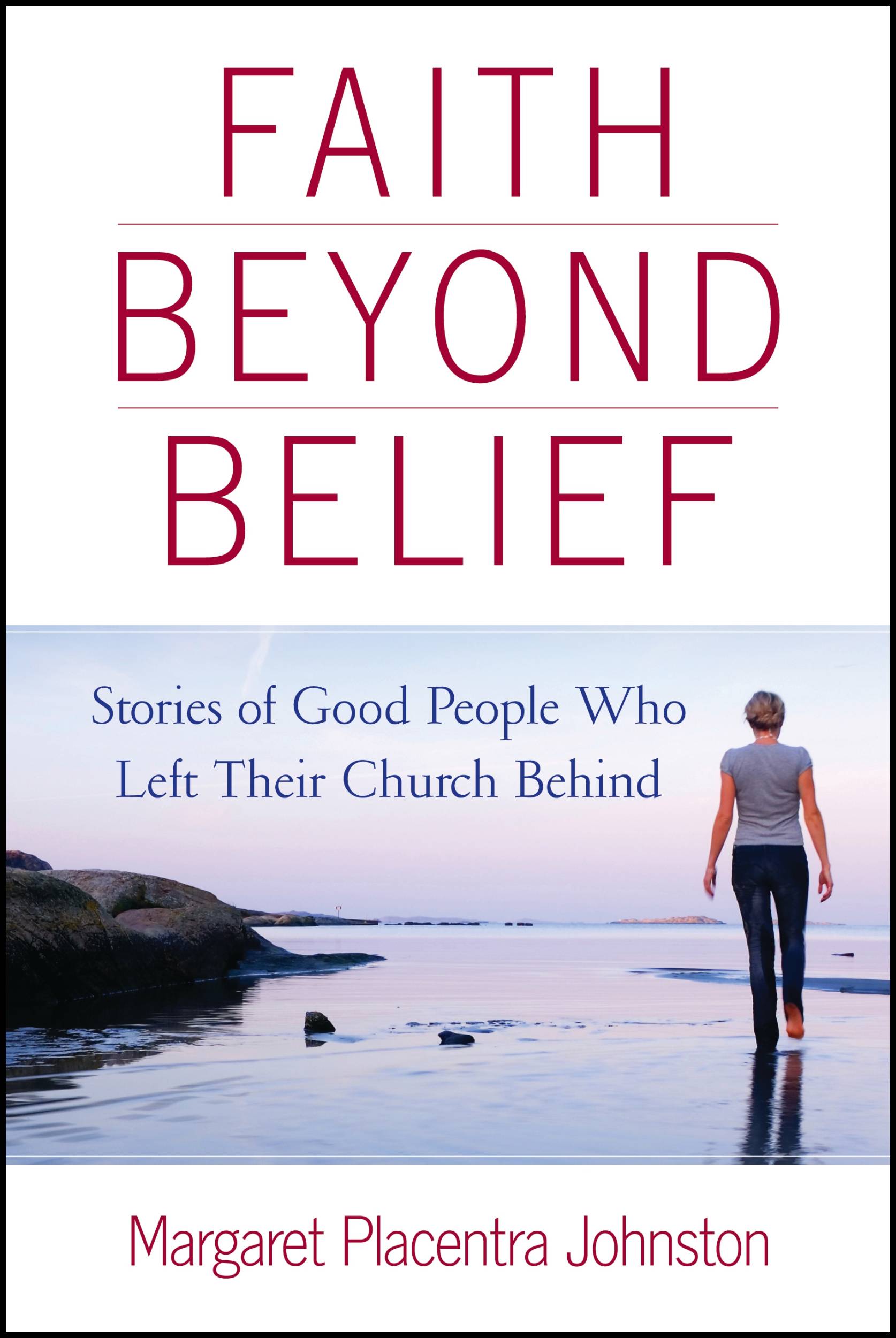
[1] From: Johnston, Margaret Placentra. Faith Beyond Belief: Stories of Good People Who Left Their Church Behind. Wheaton, IL, Quest Books. 2012.
[2] Reich, K. Helmut. Developing the Horizons of the Mind: Relational and Contextual Reasoning and Resolution of Cognitive Conflict.Cambridge: Cambridge University Press, 2002. 126-129
Previous Post

February 6, 2013
Were the New Atheists Right?
Next Post
February 19, 2013 Transcending the Self – through Kite Flying?
Browse Our Archives
Select a Category Spiritual Courage Spiritual Maturity Spiritual Strength Uncategorized
Select a Month April 2013 March 2013 February 2013 January 2013 December 2012 November 2012 October 2012 September 2012 August 2012
TAKE THE
Religious Wisdom Quiz
According to 1 John, what three things testify on earth?
Select your answer to see how you score.
Prayer, fasting, and almsgiving The Father, the Son, and the Holy Spirit Faith, hope, and love The Spirit, the water, and the blood
Related posts from Faith Beyond Belief

What does God Really Look Like? - Time...
My Defining Moment Led to this Patheos Blog...

Why I am a Freelance Spiritual Seeker

What Does Spiritual Progress Really Mean?
TRENDING AT PATHEOS New Visions

Did Prayer Cure His Cancer? Or Was It...
At 4 AM one morning, Joshua W. Brown’s wife awoke to a...

8 Ways a Near-Death Experience Rewires the Soul
Does Consciousness Survive Physical Death? After 50 Years of Research, Dr. Raymond...

Holy Longing: What Our Restlessness Is Telling Us
“One can find so many pains when the rain is falling.” -John...

What this is NOT about. This blog is definitely not about...

Who said the Israelites were God’s chosen? That’s right, they did. Who...

The Spirit World Is the Real World: God...
A Monk’s Wisdom on Body and Spirit I sit with Brother Martin...
view all New Visions blogs
Ad-Free & Subscriber Log-In Subscription Support
- About Us
- 2026 Calendar
- Videos
- Podcasts
- Library of World Religions
- Faith In Media Tracker
- Advertise With Us
- Write for Us
- Privacy Policy
- Terms of Service
- Do Not Sell My Data
- Contact Us
- Radiant Digital
- Manage Newsletter Subscriptions
- Unsubscribe From Notifications
- Sitemap
Copyright 2008-2026, Patheos. All rights reserved.
Subscription Support Ad-Free & Subscriber Log-In
Follow Patheos