
BuddhistCatholicContemplativeEvangelicalGeneral ChristianHinduJewishLatter-day SaintMuslimNew VisionsProgressive Christian
Beliefs
- Buddhist
- Catholic
- Contemplative
- Evangelical
- General Christian
- Hindu
- Jewish
- Latter-day Saint
- More Voices
- Muslim
- New Visions
- Pagan
- Progressive Christian
Topics
- Religion News
- Food and Religion
- Sports and Religion
- Religious Art
- Religious Music and Entertainment
- Religious Events
- History and Religion
- Style and Religion
- Politics and Religion
- Women in Religion
- Recreation Outdoors and Religion
- Business Finance and Religion
- Careers Workplace and Religion
- Education and Religion
- Family Parenting and Religion
- Health Fitness and Religion
- Home and Religion
- Relationships and Religion
- Technology and Religion
- Travel and Religion
Columnists
- Buddhist Columnists
- Business Finance and Religion Columnists
- Careers Workplace and Religion Columnists
- Catholic Columnists
- Contemplative Columnists
- Education and Religion Columnists
- Evangelists Columnists
- Family Parenting and Religion Columnists
- General Christian Columnists
- Health Fitness and Religion Columnists
- Hindu Columnists
- History and Religion Columnists
- Home and Religion Columnists
- Jewish Columnists
- More Voices Columnists
- Latter Day Columnists
- Muslim Columnists
- New Visions Columnists
- Nonreligious Columnists
- Pagan Columnists
- Politics and Religion Columnists
- Progressive Columnists
- Recreation Outdoors and Religion Columnists
- Relationships and Religion Columnists
- Religion News Columnists
- Religious Art Columnists
- Religious Events Columnists
- Religious Music and Entertainment Columnists
- Sports and Religion Columnists
- Style and Religion Columnists
- Technology and Religion Columnists
- Travel and Religion Columnists
- Women in Religion Columnists
Resource Library
- 2026 Calendar
- Library of World Religions
- The 100 Most Holy Places on Earth
- Patheos Answers
- Podcasts
- Videos
- Faith Leaders Database
- Anglican Episcopalian
- Bahai
- Baptist
- Buddhism
- Christianity
- Confucianism
- Eastern Orthodoxy
- Hinduism
- Holiness and Pentecostal
- ISKCON
- Islam
- Judaism
- Lutheran
- Methodist
- The Church of Jesus Christ of Latter-day Saints
- New Age
- Paganism
- Presbytarian and Reformed
- Protestantism
- Religion Behind the Scenes
- Roman Catholic
- Scientology
- Shia Islam
- Sikhism
- Sufism
- Sunni Islam
- Taoism
- Zen
- See all religions
Research Tools
 Ad-Free & Subscriber Log-In Subscription Support
Ad-Free & Subscriber Log-In Subscription Support
Follow Patheos 

- Trending:
- Forgiveness
- |
- Marriage
- |
- Consciousness
- |
- Death Penalty
- |
- Election
- |
- Halloween
 Faith Beyond Belief
-
Post Categories
- Home
- New Visions
- The Big Misunderstanding
The Big Misunderstanding
Last updated on: October 30, 2012 at 4:48 pm by Margaret Placentra Johnston
The Big Misunderstanding 2012-10-30T16:48:53-04:00 Margaret Placentra Johnston
Patheos Explore the world's faith through different perspectives on religion and spirituality! Patheos has the views of the prevalent religions and spiritualities of the world.
There is something religious believers don’t understand. It is about humanists (and others who don’t explicitly believe in God)—and it is important.
Unfortunately some types of preachers imply that without belief in God we are forced into sinful, chaotic lifestyles and empty, meaningless lives. Nothing could be farther from the truth. While some nonbelievers may lead completely lawless, undisciplined lives, there is another whole type of nonbeliever for whom this is just not so. Many humanists and others without explicit belief in God have arrived at their stance through a process of open, honest critical reflection. The resulting decision is likely to have led them to a stronger, more solid life stance than that held by the typical religious person.
If a person was brought up in a family or social system where religious belief was taken for granted, holding that same belief system all their life, not subjecting it to critical reflection, leaves the person mired in conformity and dependent upon the outer authority of holy books and religious leaders. For anyone paying attention, some inconsistency will inevitably show up in their belief system at some point in their life. Then a choice must be made. Do they honestly follow the questions, or do they sink back into the security of the set beliefs they were taught in Sunday school? The former takes courage; the latter signifies need for comfort and pre-set answers over truth. To honestly face down the questions, a person must be ready and willing to stray beyond group think. He must have a strong enough sense of personal identity that if the answers arrived at deviate from those of his tribe, he will be able to disagree and risk rejection. He will still know who he is if he winds up without the group to identify with.
This is obviously the more vigorous, and the more authentic way to approach religious questions. It does not lead to undisciplined lifestyles, but rather to an honest reliance on reason and a realization of the benefits of self-governance. Rather than depend upon following the rules in hope of avoiding eternal punishment, a self-reliant individual trusts himself to do the right thing, even when no one is looking.
Moreover, the person at this critical, rational level can recognize that in modern society, some situations are so complex, that pre-stated religious rules (such as the Ten Commandments) don’t apply, or are not adequate to determine right from wrong. They realize they will have to don thinking caps to weigh both sides of some issues, figure out some things on their own. Here again, this requires a more vigorous approach to life than taking comfort in merely following all the rules.
So religious folks would do well to appreciate ways in which a post-religious worldview (as opposed to a lawless, pre-religious worldview) may be more demanding, and more authentic than simply adhering to pre-determined beliefs handed down by one’s group.
But—there is also something non-believers and humanists often don’t understand about religious people—and it too, is important. Just as there are pre-religious and post-religious nonbelievers, there are also two types of religious person.
Some religious people are pre-critical—have yet to honestly face the important questions about their beliefs—and maybe never will. These are the ones who are more likely to condemn nonbelievers because they think everyone who doesn’t believe as they do is pre-religious. They have yet to realize that there are many spiritual levels beyond literal religious belief.
Both within and without traditional religion, it turns out, there are people who have not only gone through the critical, questioning, individual stage, but have passed through it to something quite different—something that may resemble traditional religiosity, but which is actually more sophisticated, more nuanced and more comprehensive. Beyond the literal level there is a faith stance that does not proclaim superiority over other religions, does not cast aspersions at people with different lifestyles and different views.
The post-critical or Mystic level seeks to include, not to exclude. Like the critical level, it recognizes that specific religious tenets cannot be true in the literal sense. But it also sees validity in those tenets when considered metaphorically. It also sees validity in other religions and other forms of spirituality. They tend to recognize that each particular religion is really just a local expression of a universal human search for an ultimate source of meaning in life. People of this mentality tend to refer to their own religion as my “tradition”—terminology that defuses the differences among the religions. And when they use the word God, they are not necessarily referring to the bearded judgmental “sky God” of the western religions.
Unfortunately, most nonbelievers remain unaware of this post-critical level, and so lump all religious people into the pre-critical category. This is a stance they can readily dismiss out of hand, having already reasoned themselves out of it.
The religious/spiritual levels discussed above have been described by various theorists down through the ages, but rarely in simple language the common person can readily understand. It has been at times considered advisable to not divulge this information to the common person.
But with these two groups—the religious people and the nonbelievers—not understanding each other, much needless strife and divisiveness arises between them. But with the way society is evolving, that strife and that divisiveness is damaging our culture in serious ways. It is time a broader understanding about spiritual development become common knowledge. If only people could recognize these stances as part of an ongoing continuum—instead of seeing them as a mere hodgepodge of vastly dissimilar worldviews—the different groups could enjoy accord instead of discord. If only the spiritual development trajectory were widely understood, in place of strife and divisiveness, we could have unity—and peace.
Previous Post

September 18, 2012
Oneness—Not Just for Buddhists
Next Post
October 2, 2012 Trust...and the Religious Believer
Browse Our Archives
Select a Category Spiritual Courage Spiritual Maturity Spiritual Strength Uncategorized
Select a Month April 2013 March 2013 February 2013 January 2013 December 2012 November 2012 October 2012 September 2012 August 2012
TAKE THE
Religious Wisdom Quiz
I am a runaway slave who became a brother. Paul pleaded for my master to receive me back in love. Who am I?
Select your answer to see how you score.
Philemon Titus Timothy Onesimus
Related posts from Faith Beyond Belief

What does God Really Look Like? - Time...
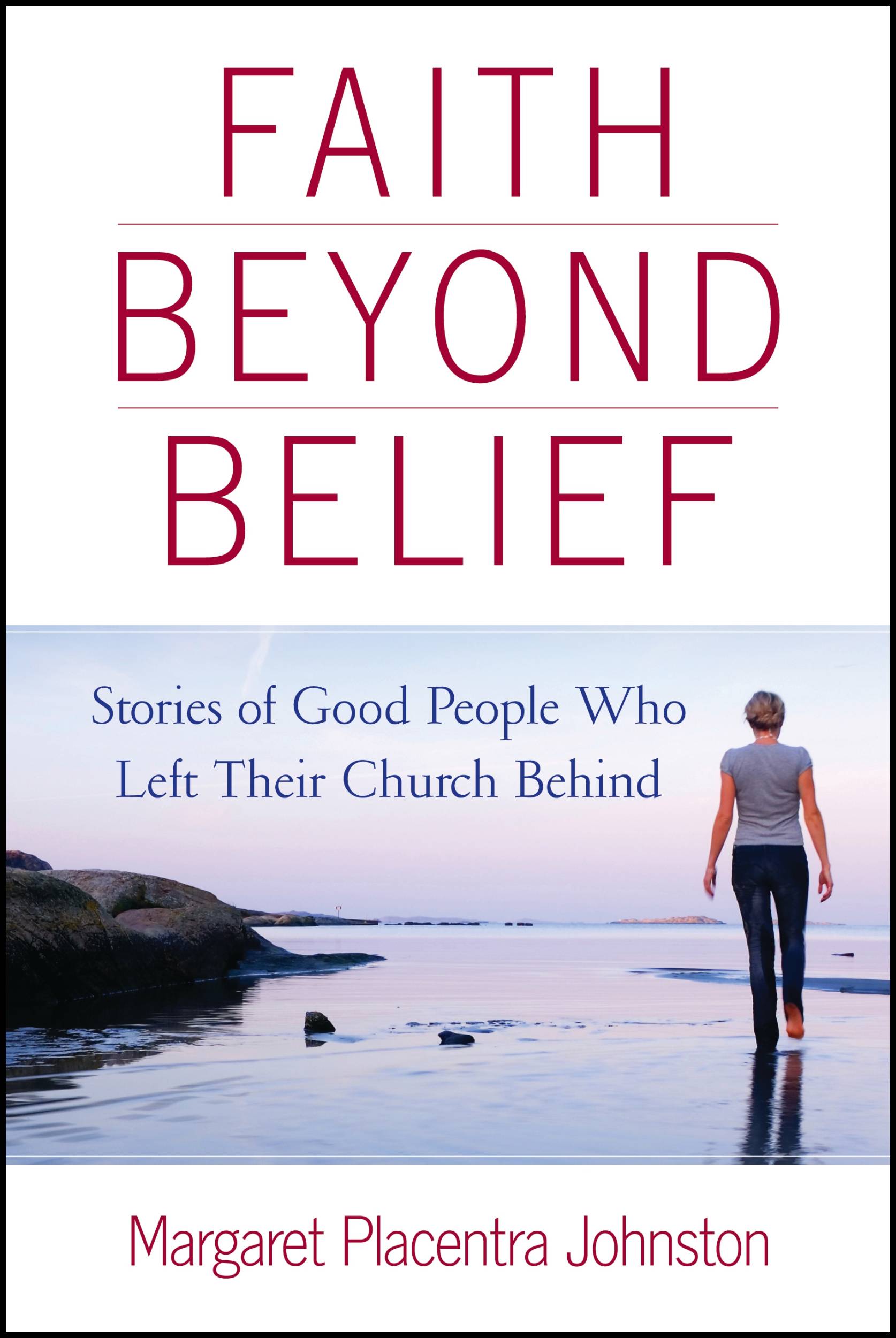
My Defining Moment Led to this Patheos Blog...

Why I am a Freelance Spiritual Seeker

TRENDING AT PATHEOS New Visions

Did Prayer Cure His Cancer? Or Was It...
At 4 AM one morning, Joshua W. Brown’s wife awoke to a...

8 Ways a Near-Death Experience Rewires the Soul
Does Consciousness Survive Physical Death? After 50 Years of Research, Dr. Raymond...

Holy Longing: What Our Restlessness Is Telling Us
“One can find so many pains when the rain is falling.” -John...

What this is NOT about. This blog is definitely not about...

Who said the Israelites were God’s chosen? That’s right, they did. Who...

The Spirit World Is the Real World: God...
A Monk’s Wisdom on Body and Spirit I sit with Brother Martin...
view all New Visions blogs
Ad-Free & Subscriber Log-In Subscription Support
- About Us
- 2026 Calendar
- Videos
- Podcasts
- Library of World Religions
- Faith In Media Tracker
- Advertise With Us
- Write for Us
- Privacy Policy
- Terms of Service
- Do Not Sell My Data
- Contact Us
- Radiant Digital
- Manage Newsletter Subscriptions
- Unsubscribe From Notifications
- Sitemap
Copyright 2008-2026, Patheos. All rights reserved.
Subscription Support Ad-Free & Subscriber Log-In
Follow Patheos