
BuddhistCatholicContemplativeEvangelicalGeneral ChristianHinduJewishLatter-day SaintMuslimNew VisionsProgressive Christian
Beliefs
- Buddhist
- Catholic
- Contemplative
- Evangelical
- General Christian
- Hindu
- Jewish
- Latter-day Saint
- More Voices
- Muslim
- New Visions
- Pagan
- Progressive Christian
Topics
- Religion News
- Food and Religion
- Sports and Religion
- Religious Art
- Religious Music and Entertainment
- Religious Events
- History and Religion
- Style and Religion
- Politics and Religion
- Women in Religion
- Recreation Outdoors and Religion
- Business Finance and Religion
- Careers Workplace and Religion
- Education and Religion
- Family Parenting and Religion
- Health Fitness and Religion
- Home and Religion
- Relationships and Religion
- Technology and Religion
- Travel and Religion
Columnists
- Buddhist Columnists
- Business Finance and Religion Columnists
- Careers Workplace and Religion Columnists
- Catholic Columnists
- Contemplative Columnists
- Education and Religion Columnists
- Evangelists Columnists
- Family Parenting and Religion Columnists
- General Christian Columnists
- Health Fitness and Religion Columnists
- Hindu Columnists
- History and Religion Columnists
- Home and Religion Columnists
- Jewish Columnists
- More Voices Columnists
- Latter Day Columnists
- Muslim Columnists
- New Visions Columnists
- Nonreligious Columnists
- Pagan Columnists
- Politics and Religion Columnists
- Progressive Columnists
- Recreation Outdoors and Religion Columnists
- Relationships and Religion Columnists
- Religion News Columnists
- Religious Art Columnists
- Religious Events Columnists
- Religious Music and Entertainment Columnists
- Sports and Religion Columnists
- Style and Religion Columnists
- Technology and Religion Columnists
- Travel and Religion Columnists
- Women in Religion Columnists
Resource Library
- 2026 Calendar
- Library of World Religions
- The 100 Most Holy Places on Earth
- Patheos Answers
- Podcasts
- Videos
- Faith Leaders Database
- Anglican Episcopalian
- Bahai
- Baptist
- Buddhism
- Christianity
- Confucianism
- Eastern Orthodoxy
- Hinduism
- Holiness and Pentecostal
- ISKCON
- Islam
- Judaism
- Lutheran
- Methodist
- The Church of Jesus Christ of Latter-day Saints
- New Age
- Paganism
- Presbytarian and Reformed
- Protestantism
- Religion Behind the Scenes
- Roman Catholic
- Scientology
- Shia Islam
- Sikhism
- Sufism
- Sunni Islam
- Taoism
- Zen
- See all religions
Research Tools
 Ad-Free & Subscriber Log-In Subscription Support
Ad-Free & Subscriber Log-In Subscription Support
Follow Patheos 

- Trending:
- Forgiveness
- |
- Marriage
- |
- Consciousness
- |
- Death Penalty
- |
- Election
- |
- Halloween

- Home
- Progressive Christian
- Health, Fitness and Religion
- Why do we celebrate Flag Day on June 14?
Why do we celebrate Flag Day on June 14?
Last updated on: June 11, 2026 at 9:40 pm by Olapeju Simoyan, MD, MPH
Why do we celebrate Flag Day on June 14? 2026-06-11T21:40:03-04:00 Olapeju Simoyan, MD, MPH
Patheos Explore the world's faith through different perspectives on religion and spirituality! Patheos has the views of the prevalent religions and spiritualities of the world.
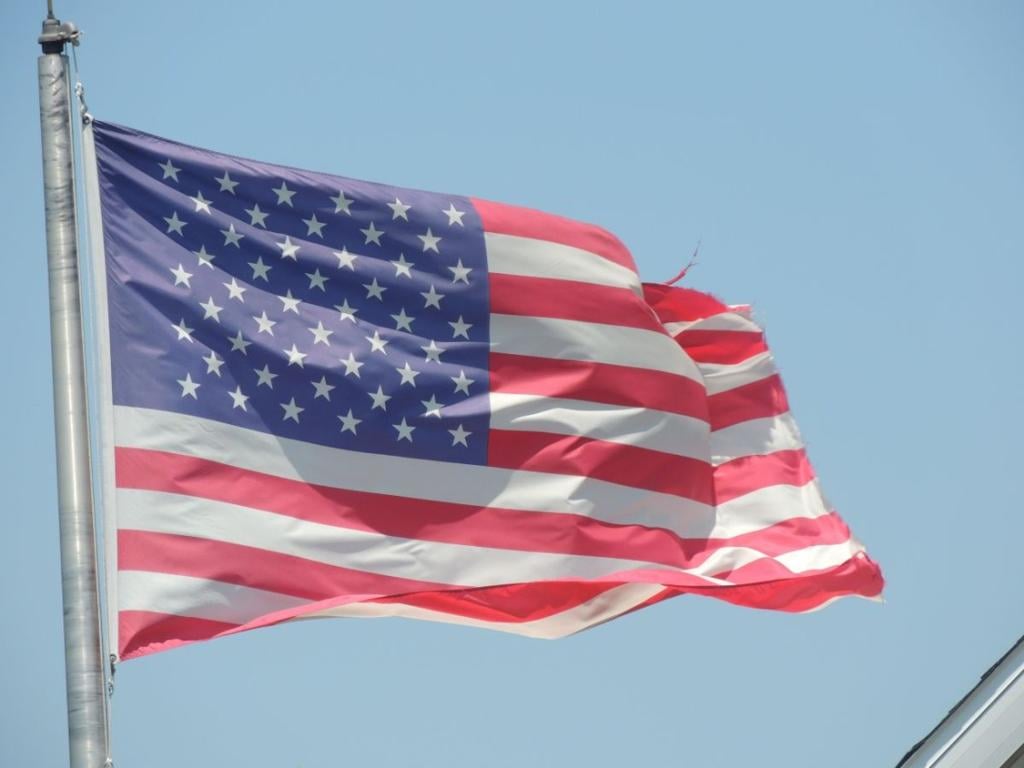
In 1949, the legislation recognizing June 14 as the national Flag Day was signed into law by President Harry Truman. |Photo by author.
The Continental Congress approved the design of a national flag on June 14, 1777.
President Woodrow Wilson established a national Flag Day with a presidential proclamation on June 14, 1916. This day had already been celebrated in many communities prior to the proclamation.
In 1949, the legislation recognizing June 14 as the national Flag Day was signed into law by President Harry Truman.
What do national symbols represent?
Every country has symbols that represent the values, traditions and ideals of its people. These symbols can foster a sense of unity by reminding people of their shared history and binding principles. In the United States of America, the national anthem is one of seven national symbols designated by Congress, and it was inspired by the flag.
The Flag Inspired the National Anthem
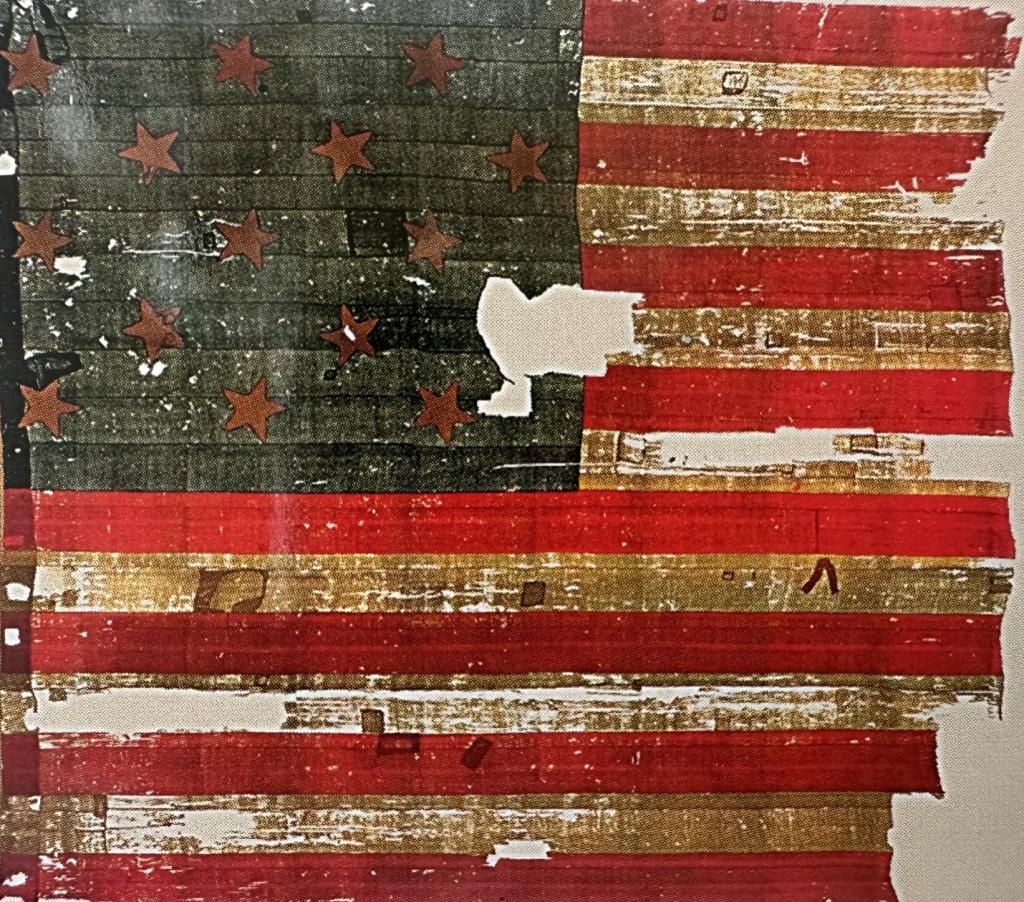
The original “Star-Spangled Banner” is on display at the National Museum of American History, which is part of the Smithsonian Institution. | Photo by author.
“Then in that hour of deliverance and joyful triumph, my heart spoke.”
- Francis Scott Key, remembering the morning of September 14, 1814
The Star-Spangled Banner
In 1916, President Woodrow Wilson signed an executive order making “The Star-Spangled Banner” the national anthem. In 1931, Congress passed a resolution making it the official national anthem. It was written in 1814 by Francis Scott Key, near Fort McHenry in Maryland, during the War of 1812. The specific event that inspired the words was the attack on Fort McHenry by a British fleet on September 13-14, 1814. The flag referenced in the song has survived for almost two centuries. It has been on display at the Smithsonian Institution in Washington, DC, since 1907.
Who designed the first US flag?
Many people believe that the first US flag was designed and made by Betsy Ross, at George Washington’s request in June 1776. Although this story is very widespread, historians have been unable to find any documented evidence to confirm it. Some scholars believe it was designed by Francis Hopkinson, who is also credited with designing the Great Seal and the first coin of the United States.
What is the significance of the colors of the flag?
- Red represents valor and bravery.
- White represents innocence and purity.
- Blue represents justice, perseverance and vigilance.
The US flag code was adopted in 1942 and provides guidelines for using and handling the flag.
The Design of the Flag has Changed Several Times
The US flag has gone through 27 official iterations, with varying arrangements of the stars.
The flag that inspired Francis Scott Key to write the poem — which became the national anthem — was made in 1813 by Mary Pickersgill, a flag maker in Baltimore, with the help of her daughter Caroline. The design was the second official version of the flag, featuring 15 stars and 15 stripes. The earlier version (1777-1795) had 13 stars and 13 stripes, representing the original 13 colonies.
The flag had 15 stars and 15 stripes from 1795 until 1818, when the number of stripes was reduced to 13. The number of stars was increased to 20, with provisions for adding a star whenever a new state joined the Union. The 50th star was added on July 4, 1960, about a year after Hawaii became a state.
In 1912, President Taft signed an executive order establishing the flag’s proportions and specifying the arrangement and orientation of the stars. As of July 4, 1960, the US flag has five rows with six stars each and four rows with five stars.
Pledging Allegiance to the Flag
The Pledge of Allegiance reads as follows:
I pledge Allegiance to the flag
of the United States of America
and to the Republic for which it stands,
one nation under God, indivisible,
with Liberty and Justice for all.
The original Pledge of Allegiance was written by Baptist Minister Francis Bellamy (1855 – 1931) in August 1892. What many people may not realize is that the original version was not specific to the United States. Some historians believe that Bellamy wanted the pledge to be used by citizens of any country.
It read:
“I pledge allegiance to my Flag and to the Republic for which it stands: one Nation indivisible with Liberty and Justice for all.”
In 1923, the words were modified to refer specifically to the United States of America. The phrase “my Flag” was changed to “the flag of the United States of America.”
Even though Francis Bellamy was deeply religious, he believed in separation of church and state. The words “under God” were not in the original version of the Pledge. On June 14, 1954, President Eisenhower approved a congressional resolution that added the words “under God” to the pledge. On June 22, 1942, the current version of the Pledge of Allegiance was adopted and included in the federal Flag Code.
Celebrating America at 250
The Fourth of July this year (2026) marks the 250th anniversary of the Declaration of Independence. A time of celebration is also an opportunity for reflection on the past as we look toward the future. In the current climate, there is a lot of talk about returning America to its “Christian roots.” While it is simply not true that all the founders were committed Christians, for those who may have been, we have to acknowledge that their version of Christianity was far from perfect.
Francis Scott Key declared America “the land of the free,” but he was a slaveowner, and the third verse of the national anthem, which is rarely, if ever, sung, contains a controversial reference to the “hireling and slave.” He did speak out against the cruelty of slavery, but opposed the abolitionists.
As we celebrate America at 250 and all the progress made over the past two and a half centuries, it’s important to acknowledge past mistakes to avoid repeating them. Our faith, combined with a healthy sense of patriotism, should allow us to celebrate without whitewashing the past, as we work towards building a future society that is truly equitable for all.
Happy 250th anniversary, America!
For more information about America’s national symbols and songs, you can read “Sweet Land of Liberty- The Stories Behind America’s Symbols and Songs,” now available where books are sold.
General Christian
History and Religion

About Olapeju Simoyan, MD, MPH
Dr. Olapeju Simoyan is a physician, board certified in family medicine and addiction medicine, with a special interest in the connections between faith and health. She strongly believes that faith and critical thinking are not mutually exclusive. As a female physician, Dr. Simoyan is also interested in women's issues and writes about religious abuse and trauma, with a focus on how misinterpretations of biblical texts have led to the perpetration of abuse within church settings. She has combined her writing and photography in several books, including Living Foolproof, a devotional based on reflections from the book of Proverbs. You can check out her author page on Amazon: https://www.amazon.com/stores/Olapeju-Simoyan/author/B0BP7RSYBL You can read more about the author here.
Previous Post

May 23, 2026
Lincoln, Wilson, Nixon: Presidents and Mental Health
Next Post

July 2, 2026 America at 250: Independence Was Actually July 2
Recent Comments
"The sources are mentioned in the text and there are also hyperlinks. Hyperlinks are standard ..."
Why Are Christians Celebrating Robert Mueller’s ..."
"Obviously you're a deluded psychopath, denying medical science for the sake of immorality."
Why Are Christians Celebrating Robert Mueller’s ..."
"This article should not be even allowed by Patheos. It fails the first test of ..."
Why Are Christians Celebrating Robert Mueller’s ..."
"Why would I or anyone else grieve for insentient fetal tissue? That's freaky and insensitive ..."
Why Are Christians Celebrating Robert Mueller’s ..."
Browse Our Archives
Select a Category Uncategorized
Select a Month October 2026 July 2026 June 2026 May 2026 March 2026 February 2026 January 2026 November 2025 October 2025 September 2025 June 2025 May 2025 March 2025 February 2025 December 2024 October 2024 July 2024 May 2024 April 2024 March 2024 February 2024 January 2024 December 2023 November 2023 October 2023 September 2023 August 2023 July 2023 June 2023 May 2023
TAKE THE
Religious Wisdom Quiz
How many days between resurrection and Pentecost?
Select your answer to see how you score.
40 days 50 days 30 days 60 days
Related posts from Where Faith and Critical Thinking Meet

What Makes a Place Home? Lessons From Hershey...
Where Faith and Critical Thinking Meet
America at 250: Independence Was Actually July 2
Where Faith and Critical Thinking Meet

Lincoln, Wilson, Nixon: Presidents and Mental Health
Where Faith and Critical Thinking Meet

Why Are Christians Celebrating Robert Mueller's Death?
Where Faith and Critical Thinking Meet
TRENDING AT PATHEOS Progressive Christian

The Sermon on the Mount, Part I: Matthew...
The Sermon on the Mount, Part I (Matthew 4:12-5:12) St. Matthew moves...

What's up from Crossway: Reviewing some of their latest A few weeks...

Janie Learns the Way of the Cross: A...
Teaching children about Jesus' Passion can be challenging. Many parents and educators...

Looking For Good Catholic Writing - October 2026
He alone extends the heavens, and he walks upon the waves of...

In "Irreplaceable," our book on vocation and technology, Trevor Sutton and I...

I was strolling through the top floor of the brand new Parthenon...
view all Progressive Christian blogs
What Are Your Thoughts?leave a comment
Ad-Free & Subscriber Log-In Subscription Support
- About Us
- 2026 Calendar
- Videos
- Podcasts
- Library of World Religions
- Faith In Media Tracker
- Advertise With Us
- Write for Us
- Privacy Policy
- Terms of Service
- Do Not Sell My Data
- Contact Us
- Radiant Digital
- Manage Newsletter Subscriptions
- Unsubscribe From Notifications
- Sitemap
Copyright 2008-2026, Patheos. All rights reserved.
Subscription Support Ad-Free & Subscriber Log-In
Follow Patheos