
BuddhistCatholicContemplativeEvangelicalGeneral ChristianHinduJewishLatter-day SaintMuslimNew VisionsProgressive Christian
Beliefs
- Buddhist
- Catholic
- Contemplative
- Evangelical
- General Christian
- Hindu
- Jewish
- Latter-day Saint
- More Voices
- Muslim
- New Visions
- Pagan
- Progressive Christian
Topics
- Religion News
- Food and Religion
- Sports and Religion
- Religious Art
- Religious Music and Entertainment
- Religious Events
- History and Religion
- Style and Religion
- Politics and Religion
- Women in Religion
- Recreation Outdoors and Religion
- Business Finance and Religion
- Careers Workplace and Religion
- Education and Religion
- Family Parenting and Religion
- Health Fitness and Religion
- Home and Religion
- Relationships and Religion
- Technology and Religion
- Travel and Religion
Columnists
- Buddhist Columnists
- Business Finance and Religion Columnists
- Careers Workplace and Religion Columnists
- Catholic Columnists
- Contemplative Columnists
- Education and Religion Columnists
- Evangelists Columnists
- Family Parenting and Religion Columnists
- General Christian Columnists
- Health Fitness and Religion Columnists
- Hindu Columnists
- History and Religion Columnists
- Home and Religion Columnists
- Jewish Columnists
- More Voices Columnists
- Latter Day Columnists
- Muslim Columnists
- New Visions Columnists
- Nonreligious Columnists
- Pagan Columnists
- Politics and Religion Columnists
- Progressive Columnists
- Recreation Outdoors and Religion Columnists
- Relationships and Religion Columnists
- Religion News Columnists
- Religious Art Columnists
- Religious Events Columnists
- Religious Music and Entertainment Columnists
- Sports and Religion Columnists
- Style and Religion Columnists
- Technology and Religion Columnists
- Travel and Religion Columnists
- Women in Religion Columnists
Resource Library
- 2026 Calendar
- Library of World Religions
- The 100 Most Holy Places on Earth
- Patheos Answers
- Podcasts
- Videos
- Faith Leaders Database
- Anglican Episcopalian
- Bahai
- Baptist
- Buddhism
- Christianity
- Confucianism
- Eastern Orthodoxy
- Hinduism
- Holiness and Pentecostal
- ISKCON
- Islam
- Judaism
- Lutheran
- Methodist
- The Church of Jesus Christ of Latter-day Saints
- New Age
- Paganism
- Presbytarian and Reformed
- Protestantism
- Religion Behind the Scenes
- Roman Catholic
- Scientology
- Shia Islam
- Sikhism
- Sufism
- Sunni Islam
- Taoism
- Zen
- See all religions
Research Tools
 Ad-Free & Subscriber Log-In Subscription Support
Ad-Free & Subscriber Log-In Subscription Support
Follow Patheos 

- Trending:
- Forgiveness
- |
- Marriage
- |
- Consciousness
- |
- Death Penalty
- |
- Election
- |
- Halloween

- Home
- Progressive Christian
- Health, Fitness and Religion
- “Two hundred years from now” – Writing for posterity
“Two hundred years from now” – Writing for posterity
Last updated on: October 29, 2024 at 8:28 am by Olapeju Simoyan, MD, MPH
“Two hundred years from now” – Writing for posterity 2024-10-29T08:28:37-04:00 Olapeju Simoyan, MD, MPH
Patheos Explore the world's faith through different perspectives on religion and spirituality! Patheos has the views of the prevalent religions and spiritualities of the world.

Photo by Unseen Studio on Unsplash
“Two hundred years from now, someone will find it useful.” That was my father’s response to me when I wanted to throw an old calendar away. This incident occurred while I was tidying up his room shortly after my mother passed away. My father lived for eleven more years after this incident and passed away on October 29, 2019. As the anniversary of his passing approached, I reflected on his legacy as a writer. I couldn’t see the value in an old calendar at the time, but I do see the value in my father’s writings. Although he published several books during his lifetime, he didn’t publish his autobiography. The good news is that he wrote the manuscript, and now we are in the process of getting it published.
If it’s not documented, it didn’t happen!
One of the many things that was emphasized during my medical training was the importance of documentation. I remember hearing the phrase “if it’s not documented, it didn’t happen.” From the medico-legal perspective, the importance of protecting ourselves was being emphasized (in case there’s a lawsuit, your documentation is your best defense). Aside from the threat of litigation and the reality of frivolous lawsuits, written communication is an essential component of patient care, so accurate documentation is important and can have an impact on clinical outcomes.
Does documentation prove it happened, though?
While it is difficult to prove something for which there is no record, is the existence of a written record adequate proof that an event has occurred?
Unfortunately, documentation can also be inaccurate and misleading. Whether intentional or not, misinformation often spreads through “documentation.” With the advent of social media, it has become so easy for misinformation to spread. People are inclined to believe what they see in print, especially when it comes from what they consider to be a “trusted” source.
Separating fact from myth – The Story Behind “O Holy Night”
I was reminded of the importance of accurate documentation several times while writing my new book, “I Played My Best for Him.” The inspiration to research and write about the stories behind Christmas carols came last December, after reading a brief history of “O Holy Night.” The one-page summary told a very interesting and fascinating story which led me to want to learn about the stories behind other Christmas carols.
The brief summary included a story about French and German soldiers laying down their weapons during the Franco – Prussian war to sing “O Holy Night,” leading to a temporary truce. The essay also stated that “O Holy Night” was banned in France, in part because the composer was Jewish. The war story is not verifiable and there is no evidence for the claim that Adolphe Adam, the composer, was Jewish.
Regardless, these myths have become an integral part of the story of “O Holy Night.”
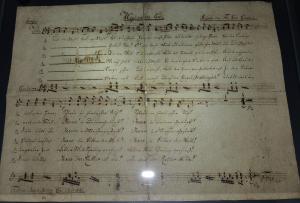
Silent Night manuscript – with Joseph Mohr’s autograph . Photo by author at Silent Night Museum, Oberndorf, Austria
Two hundred years from now, it just might matter – The Silent Night Story
The story behind “Silent Night,” another popular Christmas carol, has its own share of associated myths, which I won’t discuss here. Rather, I will highlight the aspect of the story that emphasizes the importance of documentation.
Franz Gruber was an Austrian church organist and schoolteacher who composed the melody for “Silent Night” (“Stille Nacht” in German). As the song grew in popularity and spread around the world, people assumed it had been composed by someone famous like Mozart or Beethoven. Gruber’s claims to the song were met with doubt, and it was only in 1995, long after his death in 1863, that the issue was resolved. A “Silent Night” manuscript, signed by Joseph Mohr (the lyricist) was discovered in 1995. It included a note to the effect that he (Mohr) had written the song in 1816 and that the music had been composed by Franz Gruber in 1818.
Not quite 200 years after the composition (177, to be exact), the rest of the world discovered that the composer of “Silent Night” was not Mozart or Beethoven, but a modest schoolteacher and church organist named Franz Xaver Gruber. We know this today because Joseph Mohr made the effort to record this and someone eventually found the document.
I guess my father was right, after all. Two hundred years later…. someone, somewhere may find something you have written or preserved useful. Your handwritten scribble, whether on a calendar or a music manuscript, may solve a mystery in the distant future.
For the full stories behind “O Holy Night,” “Silent Night” and other Christmas carols, check out my new book, “I Played My Best for Him- The Inspiring Stories Behind the Little Drummer Boy and Other Christmas Favorites.” Happy reading!
In loving memory,
Olayinka Olasehinde Simoyan (2/1/1934 – 10/29/2019)
Husband to Modupeola (Afolabi) Simoyan (5/30/1940 – 4/18/2008)
Father, Grandfather, Diplomat, Banker, Community leader and Author!
General Christian
Religious Music and Entertainment

About Olapeju Simoyan, MD, MPH
Dr. Olapeju Simoyan is a physician, board certified in family medicine and addiction medicine, with a special interest in the connections between faith and health. She strongly believes that faith and critical thinking are not mutually exclusive. As a female physician, Dr. Simoyan is also interested in women's issues and writes about religious abuse and trauma, with a focus on how misinterpretations of biblical texts have led to the perpetration of abuse within church settings. She has combined her writing and photography in several books, including Living Foolproof, a devotional based on reflections from the book of Proverbs. You can check out her author page on Amazon: https://www.amazon.com/stores/Olapeju-Simoyan/author/B0BP7RSYBL You can read more about the author here.
Previous Post
October 18, 2024
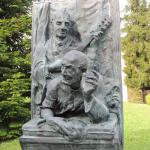
The Healing Power of Music - David’s harp & Joseph’s guitar
Next Post
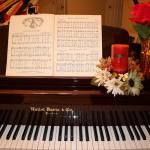
December 13, 2024 Inspiring Stories Behind Our Beloved Christmas Carols
Recent Comments
"The sources are mentioned in the text and there are also hyperlinks. Hyperlinks are standard ..."
Why Are Christians Celebrating Robert Mueller’s ..."
"Obviously you're a deluded psychopath, denying medical science for the sake of immorality."
Why Are Christians Celebrating Robert Mueller’s ..."
"This article should not be even allowed by Patheos. It fails the first test of ..."
Why Are Christians Celebrating Robert Mueller’s ..."
"Why would I or anyone else grieve for insentient fetal tissue? That's freaky and insensitive ..."
Why Are Christians Celebrating Robert Mueller’s ..."
Browse Our Archives
Select a Category Uncategorized
Select a Month October 2026 July 2026 June 2026 May 2026 March 2026 February 2026 January 2026 November 2025 October 2025 September 2025 June 2025 May 2025 March 2025 February 2025 December 2024 October 2024 July 2024 May 2024 April 2024 March 2024 February 2024 January 2024 December 2023 November 2023 October 2023 September 2023 August 2023 July 2023 June 2023 May 2023
TAKE THE
Religious Wisdom Quiz
According to Hebrews, for what purpose did Jesus taste death?
Select your answer to see how you score.
For Israel For his disciples For the righteous For everyone
Related posts from Where Faith and Critical Thinking Meet
What Makes a Place Home? Lessons From Hershey...
Where Faith and Critical Thinking Meet
America at 250: Independence Was Actually July 2
Where Faith and Critical Thinking Meet

Why do we celebrate Flag Day on June...
Where Faith and Critical Thinking Meet
Lincoln, Wilson, Nixon: Presidents and Mental Health
Where Faith and Critical Thinking Meet
TRENDING AT PATHEOS Progressive Christian

How to Make a Decision When You Can't...
Main point: It’s much more valuable to stay close to God so...

Archdiocese Hosts Military Marriage Retreat in Germany
RASTATT, Germany — The transient military lifestyle, with its frequent deployments and...

Nearly every morning, I make the drive to Detroit with my high-school-age...

The Real AI Story Is Adoption Without Trust
Artificial intelligence has crossed a political threshold. It is no longer a...

A new article, written by Jeff Lindsay and Gale L. Pooley,...

Swimfan: Forgotten Aughts Pleasures
This is a recovery effort. In 2002, My Big Fat Greek Wedding...
view all Progressive Christian blogs
What Are Your Thoughts?leave a comment
Ad-Free & Subscriber Log-In Subscription Support
- About Us
- 2026 Calendar
- Videos
- Podcasts
- Library of World Religions
- Faith In Media Tracker
- Advertise With Us
- Write for Us
- Privacy Policy
- Terms of Service
- Do Not Sell My Data
- Contact Us
- Radiant Digital
- Manage Newsletter Subscriptions
- Unsubscribe From Notifications
- Sitemap
Copyright 2008-2026, Patheos. All rights reserved.
Subscription Support Ad-Free & Subscriber Log-In
Follow Patheos