
BuddhistCatholicContemplativeEvangelicalGeneral ChristianHinduJewishLatter-day SaintMuslimNew VisionsProgressive Christian
Beliefs
- Buddhist
- Catholic
- Contemplative
- Evangelical
- General Christian
- Hindu
- Jewish
- Latter-day Saint
- More Voices
- Muslim
- New Visions
- Pagan
- Progressive Christian
Topics
- Religion News
- Food and Religion
- Sports and Religion
- Religious Art
- Religious Music and Entertainment
- Religious Events
- History and Religion
- Style and Religion
- Politics and Religion
- Women in Religion
- Recreation Outdoors and Religion
- Business Finance and Religion
- Careers Workplace and Religion
- Education and Religion
- Family Parenting and Religion
- Health Fitness and Religion
- Home and Religion
- Relationships and Religion
- Technology and Religion
- Travel and Religion
Columnists
- Buddhist Columnists
- Business Finance and Religion Columnists
- Careers Workplace and Religion Columnists
- Catholic Columnists
- Contemplative Columnists
- Education and Religion Columnists
- Evangelists Columnists
- Family Parenting and Religion Columnists
- General Christian Columnists
- Health Fitness and Religion Columnists
- Hindu Columnists
- History and Religion Columnists
- Home and Religion Columnists
- Jewish Columnists
- More Voices Columnists
- Latter Day Columnists
- Muslim Columnists
- New Visions Columnists
- Nonreligious Columnists
- Pagan Columnists
- Politics and Religion Columnists
- Progressive Columnists
- Recreation Outdoors and Religion Columnists
- Relationships and Religion Columnists
- Religion News Columnists
- Religious Art Columnists
- Religious Events Columnists
- Religious Music and Entertainment Columnists
- Sports and Religion Columnists
- Style and Religion Columnists
- Technology and Religion Columnists
- Travel and Religion Columnists
- Women in Religion Columnists
Resource Library
- 2026 Calendar
- Library of World Religions
- The 100 Most Holy Places on Earth
- Patheos Answers
- Podcasts
- Videos
- Faith Leaders Database
- Anglican Episcopalian
- Bahai
- Baptist
- Buddhism
- Christianity
- Confucianism
- Eastern Orthodoxy
- Hinduism
- Holiness and Pentecostal
- ISKCON
- Islam
- Judaism
- Lutheran
- Methodist
- The Church of Jesus Christ of Latter-day Saints
- New Age
- Paganism
- Presbytarian and Reformed
- Protestantism
- Religion Behind the Scenes
- Roman Catholic
- Scientology
- Shia Islam
- Sikhism
- Sufism
- Sunni Islam
- Taoism
- Zen
- See all religions
Research Tools
 Ad-Free & Subscriber Log-In Subscription Support
Ad-Free & Subscriber Log-In Subscription Support
Follow Patheos 

- Trending:
- Forgiveness
- |
- Marriage
- |
- Consciousness
- |
- Death Penalty
- |
- Election
- |
- Halloween
 Eve Tushnet
- Home
- Catholic
- Religious Music & Entertainment
- Ecstasy in Celibacy: Workshop Part Three
Ecstasy in Celibacy: Workshop Part Three
Last updated on: June 11, 2019 at 12:37 pm by Eve Tushnet
Ecstasy in Celibacy: Workshop Part Three 2019-06-11T12:37:51-04:00 Eve Tushnet
Patheos Explore the world's faith through different perspectives on religion and spirituality! Patheos has the views of the prevalent religions and spiritualities of the world.
Celibacy is beautiful because celibacy is a witness to our trust in God and in the resurrection of the dead.
We witness through celibacy in three ways. First, for St. Augustine, one of the primary purposes of procreation is to bring forth the Messiah. So once the Messiah has come, celibacy becomes open to us, a new form of freedom. By living celibately we proclaim that the Messiah has come in Christ and is already among us. [I should add that you don’t have to accept this Augustinian theology! I just found it an interesting extra way one can witness to Christ through celibacy so I threw it in there.]
Second, we proclaim that our inheritance and our legacy are in God alone. We do not need to leave anything behind us here. Wes Hill often quotes Mark 10:29 – 31:
Jesus said, “Amen, I say to you, there is no one who has given up house or brothers or sisters or mother or father or children or lands for my sake and for the sake of the gospel who will not receive a hundred times more now in this present age: houses and brothers and sisters and mothers and children and lands, with persecutions, and eternal life in the age to come. But many that are first will be last, and [the] last will be first.”
By sacrificing the form of love and family which our culture tells us to want (whether that’s heterosexual marriage or gay marriage), we proclaim our trust that Jesus’ promise is true. The sacrifice is part of the “absurdity” Johanna talked about in her keynote; the promise is part of what we meant when we sang, that same night, “All we lost, He will restore.”
To see the contrasting worldview, you can watch Pixar’s Coco! Click here for my rant about the afterlife in Coco.
Christian celibacy is a proclamation that our afterlife is not in the hands of our family, or anybody’s hands except our Maker’s.
And the third way we witness by our celibacy is that we live out a foretaste of the love we will have in Heaven, where there is neither marrying nor giving in marriage.
This life of Heaven is a life of communal love—love offered to God above all, and overflowing to embrace all people. In this way celibacy as witness to the reality of Heaven can strengthen the first and second purposes I discussed, celibacy as availability to the community and celibacy as availability to God.
The great difficulty here for gay people is that our experiences in the churches have made trust in God and His promises much harder. When the same church which seems to impose celibacy on us as a burden or even a punishment for being gay then turns around and says, “It’s a beautiful sign of your trust in God!”, both trust and celibacy become much harder and can even become forms of self-harm.
Moreover, offering us an inheritance in Heaven may become a way for churches to let themselves off the hook of supporting us in this life.
On the other hand–and here I made clear that I am speculating and speaking only for myself, not for the tradition–you know what is super nice about celibacy as foreshadowing or witnessing to the love we’ll know in Heaven? It calls into question the idea that we need to pass through heterosexuality on the way to Heaven. Why can’t I skip the part where I want to have sex with men, if that’s a way station leading to this love which is beyond marriage? Why not long directly for the love of Heaven and prepare yourself for it through growing in celibacy?
Celibacy is beautiful because celibacy is a form of poverty.
In celibacy we renounce a good which our Lord also renounced. We experience deprivation. This deprivation should not be destitution—that’s something our church should help us with. The poverty of a monk should not be desperate, should not be starvation, and the same is true with celibacy. But it is a renunciation of a good, and a form of surrender.
In contemporary America lay celibates also renounce the social status people often gain (esp in the churches) through marriage. I’m not saying married people have it easy; they desperately need our support, including our economic support. But there are ways in which being married is a little like being rich, in the sense that many people think of you as having succeeded, and think of lack of marriage as a failure. This is an un-Christian attitude but it is one way in which our obedient embrace of celibacy can be a way of “taking the lowest place,” which is always the place closest to Christ.
I quoted Christopher Roberts’s Creation & Covenant: “Could it be that expectations of erotic fulfillment, an attitude of sexual entitlement, is a variation upon wealth, a new possession modern people grip so tightly that we cannot be wholehearted followers of Christ? …As with the church’s teaching on voluntary poverty, or other types of suffering, a language will have to be recovered, to the effect that there is freedom and joy in a life without those things the world calls necessary.” And it’s important that Roberts also says, earlier: “The failure of the visible church to be sufficiently countercultural, such that a social life of lay celibacy is conceivable, is a likely reason [so many Christians reject the historic sexual ethic]. We cannot imagine existing in our culture without the haven of an erotic partnership, because our capacity to belong together in more chaste ways is so limited.” & so our proclamation of our sexual ethic “seems cruel and laughable.”
The obvious danger here for gay people is like, the churches already tell us we’re failures and we deserve deprivation. The obvious gift we can offer is that the churches have often forgotten that Christ lives in those who are not successful in the eyes of the world, and we remember that truth.
Celibacy is beautiful because celibacy, or sexual renunciation, offers a unique intimacy with Christ.
So if you read enough about celibacy you notice that there’s roughly a consensus [I think!!!!], at least up through the Middle Ages, that this is true. And yet nobody can agree on why! People come up with all kinds of explanations as to why a certain ecstatic, mystical union with Christ seems especially available to celibates. Some explanations are pretty wacky—Peter Brown cites pre-Christian beliefs that sex provokes “a warm rush of vital spirits through the body,” which keeps you from the emptiness you need to receive God; there was a theory that virgins’ voices sounded better! Or maybe if you’re not distracted by sensual pleasures, including but not limited to the pleasures of sex, your body responds more strongly to the pleasures of union with God in prayer.
But what strikes me about this multitude of explanations, some of which are kind of cuckoo, is that they are all clearly attempts to understand a phenomenon people had noticed: that celibate people had some kind of unusual access to the Lord. We were in some way vessels, receptive and ready to be filled with God’s spirit, exposed to God’s caresses. Celibates are naked, the ancient Christians say, we are unprotected from the touch and kiss of Christ on our bare souls.
Whatever the mechanism, the celibate makes of her body a secret garden, for God’s pleasure alone. He makes of his body a bridal chamber, enclosed, hushed, where his soul can embrace her Lover, her Lord.
Note that this giving of one’s body to God is about your choice, and can take place at any time in your life. The secret garden or bridal chamber in which you tryst with your Lord is created by your choice to renounce sex and marriage, so you can create it with your body no matter what has happened to your body before this. A sexual-abuse survivor can create this privacy and give her body in celibacy to God. Someone who has been unchaste in the past (a famous example many of you may know is Saint Aelred) may give his body wholeheartedly to God at any point. Celibacy is not virginity-fetishism; it honors and is dependent on your will and your conscience.
This ecstasy is not something I have experienced. I have received only the slightest hints in the sweetness of prayer or in a sudden aliveness to the created world, and these hints I think are pretty normal for everybody, common among the married and the single as well as the celibate. The tradition suggests, and this seems right to me, that I haven’t experienced mystical union with God because of my sins: my unchastity, but also, as the tradition would point out, my gluttony and my love of distraction and entertainment.
And God scatters these experiences of bliss so capriciously. He may let you feel the embrace to which you’ve bared yourself once right away, and then never again for all the long years of your obedience; He may not grant you that at all, until you rise to your reward. It can seem painfully unfair. Whereas service is something you can do right now–you can find a way to serve, through your prayers or your acts. And the fruit of service, as I think Mother Theresa says, is peace. So why not emphasize that, instead of a shattering ecstasy you may never actually perceive?
I think that this ecstatic union with Christ is what all the other purposes of celibacy lead up to: what they point to. The deepest purpose of celibacy is its most mysterious: to prepare us for the kiss of Christ.
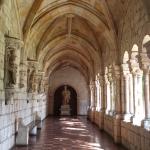
Monastery picture is still via Wikimedia Commons.
Previous Post
June 11, 2019
Ecstasy in Celibacy: Workshop Part Two
Next Post

June 13, 2019 Ecstasy in Celibacy Postscript: A Prayer from Gertrude the Great
Browse Our Archives
Select a Category Art Best-Of Gay Catholic Whatnot Mackerel-Snapping self-obsessed Too much is never enough Uncategorized
Select a Month November 2023 October 2023 September 2023 August 2023 July 2023 June 2023 May 2023 April 2023 March 2023 February 2023 January 2023 December 2022 November 2022 October 2022 August 2022 July 2022 May 2022 March 2022 February 2022 January 2022 December 2021 November 2021 October 2021 September 2021 August 2021 July 2021 June 2021 May 2021 April 2021 March 2021 February 2021 January 2021 December 2020 November 2020 October 2020 September 2020 August 2020 July 2020 June 2020 May 2020 April 2020 March 2020 February 2020 January 2020 December 2019 November 2019 October 2019 September 2019 August 2019 July 2019 June 2019 May 2019 April 2019 March 2019 February 2019 January 2019 December 2018 November 2018 October 2018 September 2018 August 2018 July 2018 June 2018 May 2018 April 2018 March 2018 February 2018 January 2018 December 2017 November 2017 October 2017 September 2017 August 2017 July 2017 June 2017 May 2017 April 2017 March 2017 February 2017 January 2017 December 2016 November 2016 October 2016 September 2016 August 2016 July 2016 June 2016 May 2016 April 2016 March 2016 February 2016 January 2016 December 2015 November 2015 October 2015 September 2015 August 2015 July 2015 June 2015 May 2015 April 2015 March 2015 February 2015 January 2015 December 2014 November 2014 October 2014 September 2014 August 2014 July 2014 June 2014 May 2014 April 2014 March 2014 February 2014 January 2014 December 2013 November 2013 October 2013 September 2013 August 2013 July 2013 June 2013 May 2013 April 2013 March 2013 February 2013 January 2013 December 2012 November 2012 October 2012 September 2012 August 2012 July 2012 June 2012 May 2012 April 2012 March 2012 February 2012 January 2012 December 2011 November 2011 October 2011 September 2011 August 2011 July 2011 June 2011 May 2011 April 2011 March 2011 February 2011 January 2011 December 2010 November 2010 October 2010 September 2010 August 2010 July 2010 June 2010 May 2010 April 2010 March 2010 February 2010 January 2010 December 2009 November 2009 October 2009 September 2009 August 2009 July 2009 June 2009 May 2009 April 2009 March 2009 February 2009 January 2009 December 2008 November 2008 October 2008 September 2008 August 2008 July 2008 June 2008 May 2008 April 2008 March 2008 February 2008 January 2008 December 2007 November 2007 October 2007 September 2007 August 2007 July 2007 June 2007 May 2007 April 2007 March 2007 February 2007 January 2007 December 2006 November 2006 October 2006 September 2006 August 2006 July 2006 June 2006 May 2006 April 2006 March 2006 February 2006 January 2006 December 2005 November 2005 October 2005 September 2005 August 2005 July 2005 June 2005 May 2005 April 2005 March 2005 February 2005 January 2005 December 2004 November 2004 October 2004 September 2004 August 2004 July 2004 June 2004 May 2004 April 2004 March 2004 February 2004 January 2004 December 2003 November 2003 October 2003 September 2003 August 2003 July 2003 June 2003 May 2003 April 2003 March 2003 February 2003 January 2003 December 2002 November 2002 October 2002 September 2002 August 2002 July 2002 June 2002 May 2002 April 2002 March 2002 February 2002 January 2002
Follow Us!
TAKE THE
Religious Wisdom Quiz
Which disciple was exiled to the island of Patmos?
Select your answer to see how you score.
John Thomas Peter Paul
Related posts from Eve Tushnet

Punch Drunk Love: I watch "Bottoms"

They Flew: I review Carlos Eire's new book...
"Why I'm Creating Orthodox Educational Resources by and...
TRENDING AT PATHEOS Catholic

Rejecting Doom: Christian Hope And Human Action
Christianity is a religion of hope. We are to have hope and...

It’s What Comes From Within Which Matters
One of the most difficult things for us to understand is why...

Why I Choose the Eucharist Over the Sermon
Choose the Eucharist, Not the Sermon What are we supposed to get...

5 Design Elements Found in Spiritually Rooted Homes
Putting Spirituality Into Home Decor Our homes are more than our living...

Credo: A Story of God Told with the...
About 10 years ago, I began to imagine a personal "Credo" that...

The Anatomy of Divine Revelation in Catholic Thought
The claim that God has made Himself known to human beings is...
view all Catholic blogs
Ad-Free & Subscriber Log-In Subscription Support
- About Us
- 2026 Calendar
- Videos
- Podcasts
- Library of World Religions
- Faith In Media Tracker
- Advertise With Us
- Write for Us
- Privacy Policy
- Terms of Service
- Do Not Sell My Data
- Contact Us
- Radiant Digital
- Manage Newsletter Subscriptions
- Unsubscribe From Notifications
- Sitemap
Copyright 2008-2026, Patheos. All rights reserved.
Subscription Support Ad-Free & Subscriber Log-In
Follow Patheos