
BuddhistCatholicContemplativeEvangelicalGeneral ChristianHinduJewishLatter-day SaintMuslimNew VisionsProgressive Christian
Beliefs
- Buddhist
- Catholic
- Contemplative
- Evangelical
- General Christian
- Hindu
- Jewish
- Latter-day Saint
- More Voices
- Muslim
- New Visions
- Pagan
- Progressive Christian
Topics
- Religion News
- Food and Religion
- Sports and Religion
- Religious Art
- Religious Music and Entertainment
- Religious Events
- History and Religion
- Style and Religion
- Politics and Religion
- Women in Religion
- Recreation Outdoors and Religion
- Business Finance and Religion
- Careers Workplace and Religion
- Education and Religion
- Family Parenting and Religion
- Health Fitness and Religion
- Home and Religion
- Relationships and Religion
- Technology and Religion
- Travel and Religion
Columnists
- Buddhist Columnists
- Business Finance and Religion Columnists
- Careers Workplace and Religion Columnists
- Catholic Columnists
- Contemplative Columnists
- Education and Religion Columnists
- Evangelists Columnists
- Family Parenting and Religion Columnists
- General Christian Columnists
- Health Fitness and Religion Columnists
- Hindu Columnists
- History and Religion Columnists
- Home and Religion Columnists
- Jewish Columnists
- More Voices Columnists
- Latter Day Columnists
- Muslim Columnists
- New Visions Columnists
- Nonreligious Columnists
- Pagan Columnists
- Politics and Religion Columnists
- Progressive Columnists
- Recreation Outdoors and Religion Columnists
- Relationships and Religion Columnists
- Religion News Columnists
- Religious Art Columnists
- Religious Events Columnists
- Religious Music and Entertainment Columnists
- Sports and Religion Columnists
- Style and Religion Columnists
- Technology and Religion Columnists
- Travel and Religion Columnists
- Women in Religion Columnists
Resource Library
- 2026 Calendar
- Library of World Religions
- The 100 Most Holy Places on Earth
- Patheos Answers
- Podcasts
- Videos
- Faith Leaders Database
- Anglican Episcopalian
- Bahai
- Baptist
- Buddhism
- Christianity
- Confucianism
- Eastern Orthodoxy
- Hinduism
- Holiness and Pentecostal
- ISKCON
- Islam
- Judaism
- Lutheran
- Methodist
- The Church of Jesus Christ of Latter-day Saints
- New Age
- Paganism
- Presbytarian and Reformed
- Protestantism
- Religion Behind the Scenes
- Roman Catholic
- Scientology
- Shia Islam
- Sikhism
- Sufism
- Sunni Islam
- Taoism
- Zen
- See all religions
Research Tools
 Ad-Free & Subscriber Log-In Subscription Support
Follow Patheos 

- Trending:
- Advent
- |
- Forgiveness
- |
- Thanksgiving
- |
- Election
- |
- Seasonal Holidays
- |
- Marriage
 Everyday Ethics
- Home
- Evangelical
- The Motives of the Gospel Authors
The Motives of the Gospel Authors
Last updated on: July 21, 2016 at 2:36 pm by Jeremy Neill
The Motives of the Gospel Authors 2016-07-21T14:36:01-06:00 Jeremy Neill
Patheos Explore the world's faith through different perspectives on religion and spirituality! Patheos has the views of the prevalent religions and spiritualities of the world.
Encountering the Bible ought to be more than just a matter of factual absorption. It is important sometimes to go deeper into the meaning and background of the Biblical stories. To imaginatively enter the events and parables of the Bible means to reflect on them in ways that transcend the mere written word. Doing so does not have to be a high-level philosophical exercise. Nor does it even have to focus on the text itself. It is sometimes just as important to reflect on the second-order hymns, sermons, and films that have arisen out of the text and that have animated it through music and story.
Consider Risen, a 2016 film about the initial days after the resurrection of Jesus. The Roman soldier at the film’s center is tasked with disproving the resurrection. But he finds his worldview reeling when he encounters the actual testimonial evidence. How would one enter imaginatively into Risen? How would one reflect on the rationality of the events it describes? A good place to start is to think about the accuracy of the Biblical account. Risen is a work of stage and artistry, and as such it is not intended to be an exact rendering of the gospel texts. But the film does point us toward the empty tomb claim, which is central to the Christian worldview. With the film as our background, and as an illustrative reflection of a deeper investigation of the text, what are we to make of that claim?
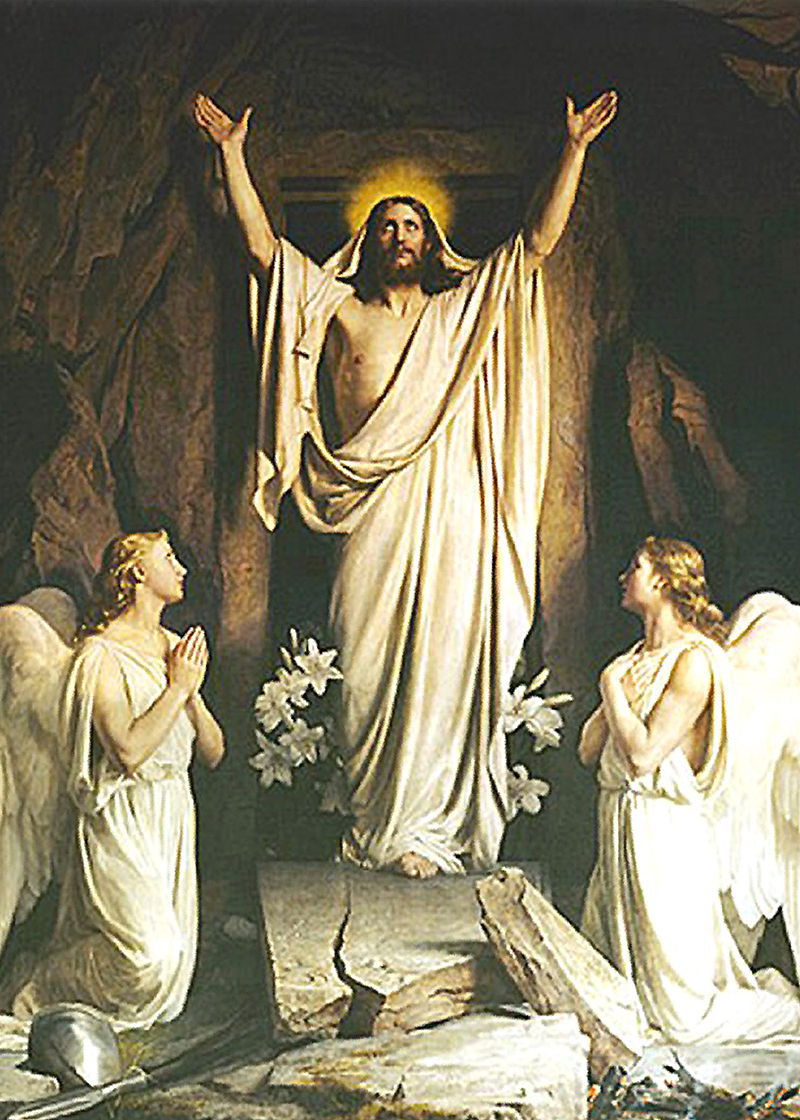
Carl Heinrich Bloch, The Resurrection
For starters, as William Lane Craig has noted, there were numerous people who said they encountered Jesus after his death. Think about that for a moment. To say that one has seen a person who has died is to make an extraordinary assertion. So it ought to be met with a greater amount of scrutiny than other, more ordinary kinds of assertions. Are the gospel accounts accurate when they tell us that there were numerous people who encountered Jesus after his death? Suppose we think for a moment about the motives and stories of the gospel writers (I will leave for another day the question of whether the gospel writers were themselves deceived). It certainly is within the realm of possibility that they were fabricating the resurrection story; or, alternatively, that they were relating the fabricated stories of others. But on closer consideration, the dynamics of their authorship make such scenarios unlikely. For one thing, the sheer number of people who claimed to have encountered the resurrected Jesus was very great. Charles Colson, a Watergate conspirator, once noted that it is difficult for conspirators to keep secrets. After all, the temptation is very great for them to break ranks for the sake of money, notoriety, or fame. So while it might sometimes be possible for a handful of conspirators to keep their secrets for a short time, Colson believed that the secrets of conspiracies would inevitably leak out to the public. But the Christian resurrection story did not just involve a handful of people. Nor did the Christian resurrection claims collapse after a short period of time. The story in fact involved hundreds of people. Many of them are explicitly named in the texts and many of them at the time of the gospels would still have been accessible for fact-checking purposes. Far from breaking ranks and spilling their secrets, the story’s adherents stood by its veracity to the day of their deaths. Why would so many people have kept their lies for so long if they were the parties to a conspiracy? Would not the prospect of money, notoriety, or fame have tempted at least some of them to break ranks?
Again, consider the motives of the gospel authors. Could they have been anticipating cultural advantages that might have incentivized them to deceive their readers? As mentioned, it certainly is within the realm of possibility that they intended deception. But the truth also seems to be that a fabricated resurrection tale would not have benefited them in their lives and immediate surroundings. In fact the resurrection story exposed the gospel authors to numerous hardships and persecutions. The price that many of the early Christians paid was torture and death at the hands of the Romans. But up to the day of their deaths, by all accounts, they stood by the veracity of the resurrection story. When large numbers of persons are willing to die for the sake of their beliefs – including especially a belief as preposterous as someone’s bodily resurrection – it is unlikely that their intent is to deceive. So although it is possible that the gospel authors were themselves deceived, it is unlikely that they were intending to deceive others.
Again, as Craig also has noted, there is still further evidence that the gospel writers intended truth in their claim that the first persons to discover the empty tomb were women. Why would the gospel writers have noted this fact if their intent had been deception? After all, the ancients considered women to be unreliable witnesses – in courts of law and elsewhere. People who are fabricating their stories do not offer central roles to non-credible witnesses. So the most probable thing is just that the women were in fact the first to discover the empty tomb.
The upshot of this reflection is just that it is unlikely that the gospel writers were conspirators. Of course, to demonstrate that they did not intend to deceive their audiences is by no means to show that Jesus was in fact resurrected. But it does suggest at least that the motives of the gospel writers were honorable. I will leave for another day the question of whether or not they were themselves deceived.
Note: this blog post originally appeared in a shorter form at an earlier time on this blog. I have significantly expanded that earlier post here.
Previous Post

July 13, 2016
Bible Reading: how to do it right
Next Post

August 5, 2016 Mining the Riches of the Philosophical Tradition
Browse Our Archives
Select a Category Uncategorized
Select a Month March 2018 October 2017 September 2017 August 2017 May 2017 March 2017 November 2016 August 2016 July 2016 June 2016 March 2016 February 2016 January 2016 December 2015 October 2015 September 2015 August 2015 July 2015 June 2015 May 2015 April 2015 March 2015 February 2015 January 2015
Follow Us!
TAKE THE
Religious Wisdom Quiz
What sacred tent did God command the Israelites to build?
Select your answer to see how you score.
Tabernacle House of David Booth Temple
Related posts from Everyday Ethics
Atheism and Cultural Relativism

Are Atheists Really Theists in Disguise?

Codes of Business Conduct: Valuable or Useless?

Miracles Don't Just Happen in Far-Away Places
TRENDING AT PATHEOS Evangelical

When you hear the word riches, what comes to mind? For most...

Don’t Miss the Parents: A Creative Christmas Meditation
As we enter the Advent Season, I see many people trying to...

Making Stones Into Bread: Choosing the “Right” Work
I was on my online arts ministry Zoom meeting with the International...

Ukraine’s exhausted Christians face fifth winter of war
By Julian Lukins The full-scale war in Ukraine is taking “a serious...

Russell Brand's Conviction is not anti-Christian Persecution
How do we shed the reputation that the Church is OK with...

Have you ever caught yourself saying, “I’ll do it tomorrow,” or “Now...
view all Evangelical blogs
Ad-Free & Subscriber Log-In Subscription Support
- About Us
- 2026 Calendar
- Videos
- Podcasts
- Library of World Religions
- Faith In Media Tracker
- Advertise With Us
- Write for Us
- Privacy Policy
- Terms of Service
- Do Not Sell My Data
- Contact Us
- Radiant Digital
- Manage Newsletter Subscriptions
- Unsubscribe From Notifications
- Sitemap
Copyright 2008-2026, Patheos, part of the Radiant Digital network of media brands. All rights reserved.
Subscription Support Ad-Free & Subscriber Log-In
Follow Patheos