
BuddhistCatholicContemplativeEvangelicalGeneral ChristianHinduJewishLatter-day SaintMuslimNew VisionsProgressive Christian
Beliefs
- Buddhist
- Catholic
- Contemplative
- Evangelical
- General Christian
- Hindu
- Jewish
- Latter-day Saint
- More Voices
- Muslim
- New Visions
- Pagan
- Progressive Christian
Topics
- Religion News
- Food and Religion
- Sports and Religion
- Religious Art
- Religious Music and Entertainment
- Religious Events
- History and Religion
- Style and Religion
- Politics and Religion
- Women in Religion
- Recreation Outdoors and Religion
- Business Finance and Religion
- Careers Workplace and Religion
- Education and Religion
- Family Parenting and Religion
- Health Fitness and Religion
- Home and Religion
- Relationships and Religion
- Technology and Religion
- Travel and Religion
Columnists
- Buddhist Columnists
- Business Finance and Religion Columnists
- Careers Workplace and Religion Columnists
- Catholic Columnists
- Contemplative Columnists
- Education and Religion Columnists
- Evangelists Columnists
- Family Parenting and Religion Columnists
- General Christian Columnists
- Health Fitness and Religion Columnists
- Hindu Columnists
- History and Religion Columnists
- Home and Religion Columnists
- Jewish Columnists
- More Voices Columnists
- Latter Day Columnists
- Muslim Columnists
- New Visions Columnists
- Nonreligious Columnists
- Pagan Columnists
- Politics and Religion Columnists
- Progressive Columnists
- Recreation Outdoors and Religion Columnists
- Relationships and Religion Columnists
- Religion News Columnists
- Religious Art Columnists
- Religious Events Columnists
- Religious Music and Entertainment Columnists
- Sports and Religion Columnists
- Style and Religion Columnists
- Technology and Religion Columnists
- Travel and Religion Columnists
- Women in Religion Columnists
Resource Library
- 2026 Calendar
- Library of World Religions
- The 100 Most Holy Places on Earth
- Patheos Answers
- Podcasts
- Videos
- Faith Leaders Database
- Anglican Episcopalian
- Bahai
- Baptist
- Buddhism
- Christianity
- Confucianism
- Eastern Orthodoxy
- Hinduism
- Holiness and Pentecostal
- ISKCON
- Islam
- Judaism
- Lutheran
- Methodist
- The Church of Jesus Christ of Latter-day Saints
- New Age
- Paganism
- Presbytarian and Reformed
- Protestantism
- Religion Behind the Scenes
- Roman Catholic
- Scientology
- Shia Islam
- Sikhism
- Sufism
- Sunni Islam
- Taoism
- Zen
- See all religions
Research Tools
 Ad-Free & Subscriber Log-In Subscription Support
Ad-Free & Subscriber Log-In Subscription Support
Follow Patheos 

- Trending:
- Forgiveness
- |
- Marriage
- |
- Consciousness
- |
- Death Penalty
- |
- Election
- |
- Halloween

- Home
- Evangelical
- Music Amidst the Rubble
Music Amidst the Rubble
Last updated on: April 15, 2022 at 5:21 pm by Philip Yancey
Music Amidst the Rubble 2022-04-15T17:21:36-04:00 Philip Yancey
Patheos Explore the world's faith through different perspectives on religion and spirituality! Patheos has the views of the prevalent religions and spiritualities of the world.
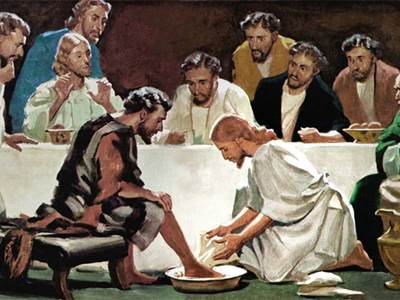 As Holy Week approaches each year, I turn to my favorite part of the Gospels, John 13-17. Many other passages seem rushed. They leave me longing for more sensory detail and pondering the meaning of Jesus’ cryptic sayings. In these five chapters, the author slows the pace almost cinematically. After all, it’s the group’s last supper together.
One by one, the key disciples make an appearance in John’s account. Peter picks an argument with Jesus and then quickly yields. John raises the question everyone else is afraid to ask. Judas Iscariot abruptly leaves the room. Philip and the other Judas quiz Jesus on some matters of theology.
All the while, Jesus remains in the spotlight. Tenderly, he calls the disciples “my children.” They pepper him with questions: Where are you going? How long is a little while? Can we come too? Often the twelve have exasperated Jesus, but this night he listens and responds with boundless patience. Aware that the time has come for him to leave this world, several times he reflects nostalgically on his life “before the creation of the world.”
Yet Jesus is now living within the confines of space and time on a cantankerous planet, and although he urges the disciples, “Do not let your hearts be troubled,” it’s apparent that he himself is troubled. He knows the betrayal, arrest, torture, and execution that await him, and knows too that some of these, his closest friends, will face a similar fate. “I am sending you out like lambs among wolves,” he once warned them, and now the wolves are growling at the door.
For two millennia Christians have reenacted one of the scenes from that intimate evening, the sharing of bread and wine. Few denominations, however, take literally Jesus’ command to wash each other’s feet—except perhaps on Maundy Thursday itself. Here is how John introduces the scene: “Jesus knew that the Father had put all things under his power, and that he had come from God and was returning to God; so he got up from the meal, took off his outer clothing, and wrapped a towel around his waist. After that, he poured water into a basin and began to wash his disciples’ feet…
I’ve participated in a few footwashings, and they can seem more awkward than sacred. Everyone makes sure to arrive with clean feet and respectable socks, so the washing itself is redundant. And apart from childhood or injury, we’re not accustomed to having someone else remove our footwear.
Though not part of modern culture, footwashing was an act of everyday hospitality in first-century Judea. In Colorado, I greet guests with a handshake or hug, and offer them a glass of water and a seat. Visitors to Japan learn to remove their shoes at the door, and always the host presents a pair of indoor slippers for them to wear. Hospitality means making our guests comfortable and, in a hot climate, scrubbing the accumulated grime off sweaty, calloused feet both honors and refreshes the guest. (See Luke 7:44-46 for Jesus’ rebuke of a Pharisee who did not extend such hospitality.)
In my reading this year, I noted one overlooked detail in John’s account. Jesus “got up from the meal to wash the disciples’ feet”— which shows that no one had offered the group common hospitality, and none of the disciples had volunteered to wash others’ dirty feet. Little wonder.
We may miss the demeaning nature of the task in Jesus’ day. Peter certainly understood it, which is why he loudly protested Jesus washing anyone’s feet. The messy, undignified role of foot-washer was beneath his master, and should be reserved for servants.
Correcting that spirit, of course, was the point of Jesus’ object lesson. “I have set you an example that you should do as I have done for you,” he said. The kingdom of God he was inaugurating would advance not by power exercised from the top down but by acts of service from the bottom up. Jesus elevated the most menial acts of service, for whatever we do for “the least of these,” we do for him.
Although in the modern West we rarely wash others’ feet, we have many avenues of service. Daily, I hear from my friends in Ukraine who are housing refugees, making dangerous runs to the border to evacuate children and senior citizens, and providing meals and essentials to those who have lost everything to Russian missiles. Other acts of service take place out of view. I think of a friend who serves as a chaplain at a memory-care facility, or another who conducts an aphasia choir for stroke victims. And could any church function without the volunteers who print bulletins, sanitize the pews, and shovel snow from the parking lot?
Rachel Remen, of the Commonweal Cancer Center, draws a distinction between service and helping. “Service is not the same as helping,” she says. “Helping is based on inequality, it’s not a relationship between equals. When you help, you use your own strength to help someone with less strength. It’s a one up, one down relationship, and people feel this inequality.…Helping incurs debt: when you help someone, they owe you. But service is mutual. When I help I have a feeling of satisfaction, but when I serve I have a feeling of gratitude.”
Remen adds, “A server knows that they’re being used and has the willingness to be used in the service of something greater.” When Jesus stooped to wash Peter’s feet, Peter felt the indignity of his Lord and Teacher assuming an “inferior” role that was beneath him. After three years with his master, he still missed the calculus of grace: it always flows to the undeserving and, though costly, comes as a free gift to those with open hands.
Greek and Roman authors almost never commended humility as a virtue, applying the word instead to abject and unworthy people. Christianity reversed that trend by ascribing humility to God’s own Son. In a poem thought to be a hymn of the early church (Philippians 2:5-11), Paul describes the mindset of Jesus, who did not cling to the prerogatives of deity, but took on the very nature of a servant. More, “being found in appearance as a man, he humbled himself by becoming obedient to death—even death on a cross!”
Then the hymn takes an abrupt twist:
Therefore God exalted him to the highest place
and gave him the name that is above every name,
that at the name of Jesus every knee should bow,
in heaven and on earth and under the earth,
and every tongue acknowledge that Jesus Christ is Lord,
to the glory of God the Father.
That same twist occurs in Jesus’ final words to his disciples at the last supper. After predicting his betrayal and death, and warning them of persecution to come, he announces, “In this world you will have trouble. But take heart! I have overcome the world.”
Even as he pronounced those words, soldiers were buckling on swords to intercept him in a garden. How empty that declaration must have seemed to the disciples over the next few days as they watched him tried, tortured, and killed. How empty it seems to us at times, when our world appears more overcome by evil than by good.
The theologian N. T. Wright opened his Maundy Thursday reflection this year with a scene that has gone viral on YouTube. It begins with a Ukrainian woman dusting off black powder from her white grand piano before sitting down to play a Chopin etude. As the camera pans wider, it shows the debris of her home, wrecked by a Russian missile. Wright observes, “All around her, the smashed doors and windows, the dirt and rubble on furniture and floor, the fires burning in the street outside, tell their story. And she continues, defiantly, to tell hers. A small piece of performance art, an act of new creation amid the ruins.”
Wright concludes his meditation, “The footwashing scene brings into unexpected focus the good news that the world’s tyrants and bullies are held to account and overthrown; that a different way to be human has been launched upon the world. The church, empowered by Jesus’ Spirit, must speak the truth to power, the truth of God’s new creation. As we discover again this evening, the bread and the wine of the Eucharist proclaim powerfully to the wider world that in Jesus’ death and resurrection God himself has sat down defiantly at the keyboard, to play, even amidst the rubble, the unstoppable music of new creation.”

About Philip Yancey
Philip Yancey is an award-winning Christian author, whose books include "Disappointment with God, Where is God When it Hurts?", "The Jesus I Never Knew", "What’s So Amazing About Grace?", and "Prayer: Does It Make Any Difference?" You can read more about the author here.
Previous Post
January 4, 2022
Death Comes For “the Arch”
Next Post

November 4, 2022 4 Ways Christian Should Respond to Being Canceled
Browse Our Archives
Select a Category Culture Slideshow Uncategorized
Select a Month April 2026 October 2025 July 2025 April 2025 February 2025 October 2024 August 2023 June 2023 March 2023 February 2023 November 2022 April 2022 January 2022 December 2021 November 2021 October 2021 September 2021 August 2021 March 2021 February 2021 January 2021 December 2020 September 2020 August 2020 July 2020 May 2020 April 2020 March 2020 January 2020 December 2019 October 2019 September 2019 August 2019 July 2019 May 2019 April 2019 March 2019 January 2019 October 2018 August 2018 June 2018 May 2018 March 2018 February 2018 January 2018 December 2017 November 2017 October 2017 September 2017 August 2017 July 2017 May 2017 April 2017 March 2017 February 2017 January 2017 December 2016 November 2016 October 2016 September 2016 August 2016 July 2016 June 2016 May 2016 April 2016 March 2016 February 2016 January 2016 December 2015 November 2015 October 2015 September 2015 August 2015 July 2015 June 2015 May 2015 April 2015 March 2015 February 2015 January 2015 December 2014 November 2014 October 2014 September 2014
TAKE THE
Religious Wisdom Quiz
Who was the Roman governor who sentenced Jesus to be crucified?
Select your answer to see how you score.
Pontius Pilate Felix Agrippa Herod
Related posts from The Evangelical Pulpit

How Faith Leaders Helped Pass the First Step...

Middle East Digital Extremism Is Rising - Can...

Can Your Prayers of Intercession Help Save the...
USSR Couldn't Snuff Out Easter—Now Russians Reap Hope
TRENDING AT PATHEOS Evangelical

How the author of the world's best hymn...
I've been working with John Newton for a while now. This makes...

Long before this Lectio Divina, Psalm 130 - the song - started...

What About the Trees? Another Living Parable
After I finished writing the last article about falling leaves as a...

Why Classical Education Is a Conversation, Not a...
Come and Read: Joy in Classical Education When I was a little...

Falling Leaves: A Living Parable on Letting Go
I’ve spent the vast majority of my life in the southeast corner...

Cornell University has received a great deal of negative publicity and intense...
view all Evangelical blogs
Ad-Free & Subscriber Log-In Subscription Support
- About Us
- 2026 Calendar
- Videos
- Podcasts
- Library of World Religions
- Faith In Media Tracker
- Advertise With Us
- Write for Us
- Privacy Policy
- Terms of Service
- Do Not Sell My Data
- Contact Us
- Radiant Digital
- Manage Newsletter Subscriptions
- Unsubscribe From Notifications
- Sitemap
Copyright 2008-2026, Patheos. All rights reserved.
Subscription Support Ad-Free & Subscriber Log-In
Follow Patheos