
BuddhistCatholicContemplativeEvangelicalGeneral ChristianHinduJewishLatter-day SaintMuslimNew VisionsProgressive Christian
Beliefs
- Buddhist
- Catholic
- Contemplative
- Evangelical
- General Christian
- Hindu
- Jewish
- Latter-day Saint
- More Voices
- Muslim
- New Visions
- Pagan
- Progressive Christian
Topics
- Religion News
- Food and Religion
- Sports and Religion
- Religious Art
- Religious Music and Entertainment
- Religious Events
- History and Religion
- Style and Religion
- Politics and Religion
- Women in Religion
- Recreation Outdoors and Religion
- Business Finance and Religion
- Careers Workplace and Religion
- Education and Religion
- Family Parenting and Religion
- Health Fitness and Religion
- Home and Religion
- Relationships and Religion
- Technology and Religion
- Travel and Religion
Columnists
- Buddhist Columnists
- Business Finance and Religion Columnists
- Careers Workplace and Religion Columnists
- Catholic Columnists
- Contemplative Columnists
- Education and Religion Columnists
- Evangelists Columnists
- Family Parenting and Religion Columnists
- General Christian Columnists
- Health Fitness and Religion Columnists
- Hindu Columnists
- History and Religion Columnists
- Home and Religion Columnists
- Jewish Columnists
- More Voices Columnists
- Latter Day Columnists
- Muslim Columnists
- New Visions Columnists
- Nonreligious Columnists
- Pagan Columnists
- Politics and Religion Columnists
- Progressive Columnists
- Recreation Outdoors and Religion Columnists
- Relationships and Religion Columnists
- Religion News Columnists
- Religious Art Columnists
- Religious Events Columnists
- Religious Music and Entertainment Columnists
- Sports and Religion Columnists
- Style and Religion Columnists
- Technology and Religion Columnists
- Travel and Religion Columnists
- Women in Religion Columnists
Resource Library
- 2026 Calendar
- Library of World Religions
- The 100 Most Holy Places on Earth
- Patheos Answers
- Podcasts
- Videos
- Faith Leaders Database
- Anglican Episcopalian
- Bahai
- Baptist
- Buddhism
- Christianity
- Confucianism
- Eastern Orthodoxy
- Hinduism
- Holiness and Pentecostal
- ISKCON
- Islam
- Judaism
- Lutheran
- Methodist
- The Church of Jesus Christ of Latter-day Saints
- New Age
- Paganism
- Presbytarian and Reformed
- Protestantism
- Religion Behind the Scenes
- Roman Catholic
- Scientology
- Shia Islam
- Sikhism
- Sufism
- Sunni Islam
- Taoism
- Zen
- See all religions
Research Tools
 Ad-Free & Subscriber Log-In Subscription Support
Ad-Free & Subscriber Log-In Subscription Support
Follow Patheos 

- Trending:
- Forgiveness
- |
- Marriage
- |
- Consciousness
- |
- Death Penalty
- |
- Election
- |
- Halloween

- Home
- Evangelical
- Before You Unplug or Sign Out for Good
Before You Unplug or Sign Out for Good
Last updated on: January 20, 2021 at 12:08 pm by Guest Contributor
Before You Unplug or Sign Out for Good 2021-01-20T12:08:35-04:00 Guest Contributor
Patheos Explore the world's faith through different perspectives on religion and spirituality! Patheos has the views of the prevalent religions and spiritualities of the world.
Given all the unrest and vitriol on social media, there are many well-meaning people, especially in the believing community, that are “heading for the hills.” Whether people are deleting their accounts altogether or opting to join new platforms over more established online mainstays, there is a mass exodus taking place in the virtual world, or, at the very least, certain sectors of it. Some are retreating for personal reasons, citing mental health and concerns about the stress and anxiety as reasons for unplugging. Others are upset by the censorship taking place and long for a place unencumbered by regulation or filters. Still others are disgusted by the negativity and hate that saturates the public online market and are looking to distance themselves from these disturbing forums. While there is certainly merit behind these and other concerns, what some believers are failing to remember is that the online world, like any nation state or people group, is a context that desperately needs the truth and the light. Retreating from these contexts altogether might be akin to pulling missions efforts out of an atheistic/anti-Christian country because it is simply too difficult or too dangerous.

pxhere.com
Therefore, before you unplug altogether or totally abandon a mission field that is still available to you, consider the following biblical images.
Salt and Light
Immediately following the beatitudes of Matthew 5:3-12, Jesus provides two word pictures that indicate how counter-cultural values like “gentleness,” “righteousness,” “mercy,” “purity,” “peace,” etc., are to be applied to the world. The first of these is salt. Jesus says, “You are the salt of the earth; but if the salt has become tasteless, how can it be made salty again? It is no longer good for anything, except to be thrown out and trampled underfoot by people” (Matt 5:13). Whether salt is understood here as a preservative agent or a flavor-giving seasoning (or some combination of the two), salt is only as good as it is applied to whatever food it encounters. Jesus says to his disciples “you are the salt of the earth”—not, “you possess the salt,” or “contain the salt,” but “you are the salt.” In other words, the disciple’s presence is required throughout the earth, especially in those areas running the risk of spoiling or in the bland corners in need of life-giving flavor. In fact, it is precisely in the unsavory and/or rotting contexts where salt is most necessary. If such salt is tasteless/absent/left on the shelf, it is useless or, as Jesus says “no longer good for anything…”. Disciples today would do well to remember that they run the risk of uselessness in the Lord’s mission if they relegate themselves to the shelf and not, in appropriate ways, apply themselves in the very contexts in need of their salty presence (that is, salty as defined here in Matthew’s gospel).
Following this salty comment, Jesus introduces another word picture:
“You are the light of the world. A city set on a hill cannot be hidden; nor do people light a lamp and put it under a basket, but on the lampstand, and it gives light to all who are in the house. Your light must shine before people in such a way that they may see your good works, and glorify your Father who is in heaven” (Matt 5:14-16).
Notice that both here and in the instruction given about salt earlier that a large domain is in view. Jesus tells his disciples they are the “salt of the earth” and here he says that they “are the light of the world” (Matt 5:14). With this big picture in mind Jesus continues by suggesting that the light given off by a city set on a hill is fairly conspicuous to the surrounding areas that are more in the dark. Light from such a city is an especially powerful presence amid darkness, providing illumination, perspective, and, perhaps, guidance to those in the darkness. This is why, as Jesus suggests, it would be outrageous to light a lamp only to then hide it somewhere out of sight. Disciples have not been given the light of Christ (Jn 1:4; 8:12) to keep for themselves or to only turn on in the safety of their carefully insulated spheres of influence. Instead, Jesus demands “Your light must shine before people in such a way that they may see your good works, and glorify your Father who is in heaven” (Matt 5:16). Disciples are to be conspicuous and light is most conspicuous in darkness. As Christ suggests, whether those in the darkness want to or not, they need to see the light of God in his people through their good works (and good words). Those who need to see this will not happen upon life and truth-giving light by accident. Light must shine where it can be seen (in the shadows) so that those in the dark might be directed to the Father in heaven and potentially bring him glory. Unfortunately, many are choosing to shine their light only in well-lit and more comfortable areas, neglecting, as Jesus encourages here, to shine what they have been given where it is most needed—in the darkness.
Ambassadors
Another important image the New Testament provides concerning the role of disciples is “ambassadors for Christ.” After Paul discusses the ministry of reconciliation that Christ accomplished for believers, Paul states, “Therefore, we are ambassadors for Christ, as though God were making an appeal through us; we beg you on behalf of Christ, be reconciled to God” (1 Cor 5:20). In ancient Rome and today, ambassadors are diplomats sent by nations as official representatives to foreign states. These are people who act on behalf of their leaders to promote specific ideals and activities that are keeping with their homeland. To be sure, while ambassadors are sent across the world to all kinds of places, nowhere is their role more important than in more unfriendly contexts or in those nations where the values and ideals are very different than one’s own. As citizens of the kingdom of God, this text from Paul teaches that disciples are to go out into the world and make an appeal on behalf of their leader (God himself) that is in keeping with the principles of their homeland (heaven). This effort exists so that those who endorse alternative values opposed to the life-giving tenets of God might be persuaded to change course in heaven’s direction. However, many are choosing to close the embassies they have established in virtual lands and are no longer making a case for God’s message in the very places where such a message is most needed.
Peculiar People
One final image worth investigating in this discussion is found in 1 Peter 2:9-12. There, Peter describes disciples as a peculiar people and then highlights their role in the world that they currently inhabit.
“But you are a chosen people, a royal priesthood, a holy nation, a people for God’s own possession, so that you may proclaim the excellencies of Him who has called you out of darkness into His marvelous light; for you once were not a people, but now you are the people of God; you had not received mercy, but now you have received mercy. Beloved, I urge you as foreigners and strangers to abstain from fleshly lusts, which wage war against the soul. Keep your behavior excellent among the Gentiles, so that in the thing in which they slander you as evildoers, they may because of your good deeds, as they observe them, glorify God on the day of visitation.”
What Peter offers here is, in many ways, a combination of what has already been explored. God’s people are said, in so many words, to be ambassadors—“royal priesthood…so that you may proclaim the excellencies of Him” (1 Pet 2:9). They are also lights who have been “called…out of darkness into his marvelous light” (1 Pet 2:9). However, Peter extends the images further by also reminding disciples that they are “foreigners and strangers” who are to live very differently from the world around them (“abstain from fleshly lusts”). While this might suggest a degree of “social distancing” from the world and those more unlovely parts of it, Peter then demands that God’s people “keep [their] behavior excellent among the Gentiles so that in the things in which they slander you as evildoers, they may because of your good deeds, as they observe them, glorify God on the day of visitation” (1 Pet 2:12). One of the most common reasons given today for unplugging or signing off various platforms involves the lies, deception, and personal attacks that are found on these sites. However, Peter says here that not only should that be expected, but it should not discourage disciples from engaging with “excellent behavior.” After all, responding to hate with excellence goes a long way in modeling the One who was willing to be slandered, attacked, and even crucified for sinners everywhere.
These biblical images (and others) seem to suggest that there is very little, if any, godly precedent for disciples to neglect/avoid/refuse to engage those contexts that might be rotten, dark, foreign, or difficult. In fact, these domains are where believers are needed most and where their engagement is most required as they are on mission. The world is filled with fields that are ripe for harvest and this includes many fields online. While these fields may look more and more like hell than they do heaven, remember the promise of Jesus in Matt 16:18 which says, “I will build My church; and the gates of Hades will not overpower it.”
Disclaimer
That said, the concerns cited at the beginning of this article should be taken seriously. There is a place for respite/sabbath from the work we have been called to by God and this includes our involvement on social media. While is appropriate and necessary to “socially distance” at times from these arenas (pun intended), abandoning them altogether is wasting an opportunity God has given us. Perhaps what would go a long way in correcting the feeling of dread and the sense of being overwhelmed by these platforms is a change in perspective. What if we understood these sites as mission fields instead of sources of self-worth? What if instead of seeking what we can glean for ourselves from these forums, we considered what God has given us to share? What if we remembered our role as salt, lights, ambassadors, and peculiar people instead of relegating ourselves to consumer or follower? Something to consider before you unplug entirely or sign off for good.
—
Jeffrey Dickson, PhD studied Theology and Apologetics at Liberty University where he now serves as an adjunct professor of Bible and theology. Dr. Dickson is also the senior pastor of Crystal Spring Baptist Church in Roanoke VA where he lives with his wife Brianna and their children.
Previous Post

December 28, 2020
The Contentment Cycle
Next Post

February 5, 2021 Working Out Peace In Your Life In 2021
Browse Our Archives
Select a Category Culture Slideshow Uncategorized
Select a Month April 2026 October 2025 July 2025 April 2025 February 2025 October 2024 August 2023 June 2023 March 2023 February 2023 November 2022 April 2022 January 2022 December 2021 November 2021 October 2021 September 2021 August 2021 March 2021 February 2021 January 2021 December 2020 September 2020 August 2020 July 2020 May 2020 April 2020 March 2020 January 2020 December 2019 October 2019 September 2019 August 2019 July 2019 May 2019 April 2019 March 2019 January 2019 October 2018 August 2018 June 2018 May 2018 March 2018 February 2018 January 2018 December 2017 November 2017 October 2017 September 2017 August 2017 July 2017 May 2017 April 2017 March 2017 February 2017 January 2017 December 2016 November 2016 October 2016 September 2016 August 2016 July 2016 June 2016 May 2016 April 2016 March 2016 February 2016 January 2016 December 2015 November 2015 October 2015 September 2015 August 2015 July 2015 June 2015 May 2015 April 2015 March 2015 February 2015 January 2015 December 2014 November 2014 October 2014 September 2014
TAKE THE
Religious Wisdom Quiz
How many visions does the book of Revelation contain?
Select your answer to see how you score.
12 7 10 5
Related posts from The Evangelical Pulpit

How Faith Leaders Helped Pass the First Step...

Middle East Digital Extremism Is Rising - Can...

Can Your Prayers of Intercession Help Save the...
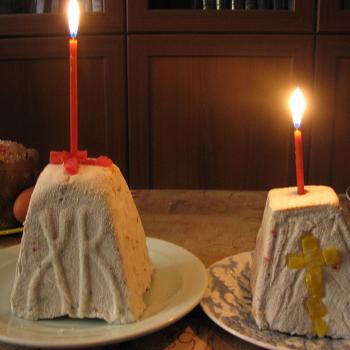
USSR Couldn't Snuff Out Easter—Now Russians Reap Hope
TRENDING AT PATHEOS Evangelical

How the author of the world's best hymn...
I've been working with John Newton for a while now. This makes...

Long before this Lectio Divina, Psalm 130 - the song - started...

What About the Trees? Another Living Parable
After I finished writing the last article about falling leaves as a...

Why Classical Education Is a Conversation, Not a...
Come and Read: Joy in Classical Education When I was a little...

Falling Leaves: A Living Parable on Letting Go
I’ve spent the vast majority of my life in the southeast corner...

Cornell University has received a great deal of negative publicity and intense...
view all Evangelical blogs
Ad-Free & Subscriber Log-In Subscription Support
- About Us
- 2026 Calendar
- Videos
- Podcasts
- Library of World Religions
- Faith In Media Tracker
- Advertise With Us
- Write for Us
- Privacy Policy
- Terms of Service
- Do Not Sell My Data
- Contact Us
- Radiant Digital
- Manage Newsletter Subscriptions
- Unsubscribe From Notifications
- Sitemap
Copyright 2008-2026, Patheos. All rights reserved.
Subscription Support Ad-Free & Subscriber Log-In
Follow Patheos