
BuddhistCatholicContemplativeEvangelicalGeneral ChristianHinduJewishLatter-day SaintMuslimNew VisionsProgressive Christian
Beliefs
- Buddhist
- Catholic
- Contemplative
- Evangelical
- General Christian
- Hindu
- Jewish
- Latter-day Saint
- More Voices
- Muslim
- New Visions
- Pagan
- Progressive Christian
Topics
- Religion News
- Food and Religion
- Sports and Religion
- Religious Art
- Religious Music and Entertainment
- Religious Events
- History and Religion
- Style and Religion
- Politics and Religion
- Women in Religion
- Recreation Outdoors and Religion
- Business Finance and Religion
- Careers Workplace and Religion
- Education and Religion
- Family Parenting and Religion
- Health Fitness and Religion
- Home and Religion
- Relationships and Religion
- Technology and Religion
- Travel and Religion
Columnists
- Buddhist Columnists
- Business Finance and Religion Columnists
- Careers Workplace and Religion Columnists
- Catholic Columnists
- Contemplative Columnists
- Education and Religion Columnists
- Evangelists Columnists
- Family Parenting and Religion Columnists
- General Christian Columnists
- Health Fitness and Religion Columnists
- Hindu Columnists
- History and Religion Columnists
- Home and Religion Columnists
- Jewish Columnists
- More Voices Columnists
- Latter Day Columnists
- Muslim Columnists
- New Visions Columnists
- Nonreligious Columnists
- Pagan Columnists
- Politics and Religion Columnists
- Progressive Columnists
- Recreation Outdoors and Religion Columnists
- Relationships and Religion Columnists
- Religion News Columnists
- Religious Art Columnists
- Religious Events Columnists
- Religious Music and Entertainment Columnists
- Sports and Religion Columnists
- Style and Religion Columnists
- Technology and Religion Columnists
- Travel and Religion Columnists
- Women in Religion Columnists
Resource Library
- 2026 Calendar
- Library of World Religions
- The 100 Most Holy Places on Earth
- Patheos Answers
- Podcasts
- Videos
- Faith Leaders Database
- Anglican Episcopalian
- Bahai
- Baptist
- Buddhism
- Christianity
- Confucianism
- Eastern Orthodoxy
- Hinduism
- Holiness and Pentecostal
- ISKCON
- Islam
- Judaism
- Lutheran
- Methodist
- The Church of Jesus Christ of Latter-day Saints
- New Age
- Paganism
- Presbytarian and Reformed
- Protestantism
- Religion Behind the Scenes
- Roman Catholic
- Scientology
- Shia Islam
- Sikhism
- Sufism
- Sunni Islam
- Taoism
- Zen
- See all religions
Research Tools
 Ad-Free & Subscriber Log-In Subscription Support
Ad-Free & Subscriber Log-In Subscription Support
Follow Patheos 

- Trending:
- Forgiveness
- |
- Marriage
- |
- Consciousness
- |
- Death Penalty
- |
- Election
- |
- Halloween

- Home
- Evangelical
- The Contentment Cycle
The Contentment Cycle
Last updated on: December 29, 2020 at 3:50 pm by Guest Contributor
The Contentment Cycle 2020-12-29T15:50:24-04:00 Guest Contributor
Patheos Explore the world's faith through different perspectives on religion and spirituality! Patheos has the views of the prevalent religions and spiritualities of the world.
The two of us are lon g time friends who chat regularly. In recent months, our conversations have focused on what it means to be content during this season of isolation and restriction. Over the course of our lives, contentment has often flowed easily. We have both been fortunate to have loving families, deep friendships, fruitful ministries, and adventures galore. But at other times, contentment has proven to be frustratingly elusive. Almost nigh impossible. Besides the general aches and pains of life, one of us (Leighton) has buried a son while the other (Alec) nearly lost a daughter and has suffered through two cancers. And, like everyone, we are experiencing ongoing frustrations related to the pandemic. In his letter to the Philippians, the apostle Paul addressed this subject head-on. Rotting in a dank Roman jail, he claimed to have “learned the secret” of “being content whatever the circumstances.” The term Paul used about learning is intriguing. It was utilized by the pagan mystery cults about initiating new members. In other words, contentment doesn’t just happen. There is a process of being initiated and learning! Through experience – including being a prisoner – Paul was discovering contentment. Assuming that Paul wasn’t blowing triumphal smoke, his promise of emotional equilibrium “in any and every situation… whether living in plenty or in want” is most appealing. Even when life disappoints, we can find contentment. Not necessarily happiness, but a place of equanimity and repose.
What exactly was Paul’s secret? And how did he learn it? We label this process of initiation “The “Contentment Cycle.” It is an oft repeated sequence consisting of four steps.
Step 1: Expectations Set
We all set expectations. As parents, we lay out behavior standards for our kids. As supervisors, we establish performance goals for our staff. As a mentor, Leighton encourages young leaders to aim for growth in every aspect of their lives. As a consultant, Alec challenges organizations to improve. Most of us set financial goals, envision levels of physical fitness, create reading lists, and organize vacations. Of course, if our expectations are unworthy (such as harming an annoying neighbor), we can create sour fruit. But in such cases, the problem is not in planning but in the outcome sought. Paul certainly loved to dream big. A bold personality, late in life he set himself the grand goal of planting churches in the western half of the Roman empire (even labeling it “my ambition.”)
Step 2: Expectations Disappointed
Sadly, in a broken world, our best plans often get quashed. This is particularly true during a pandemic. Over the past several months, the list of Covid-19 dream-killers feels endless – income lost, schools unattended, and promotions missed. Weddings, funerals, and vacations cancelled (or radically adjusted). Mo Gawdat, a senior leader at Google, labels these frustrations “the expectation gap.” Such gaps capture the dissonance between our optimistic hopes, on the one hand, and the harsh realities we often face, on the other. The wider the chasm, the greater our sense of discontentment. Paul deeply experienced this sense of loss. Rather than traveling to Spain to carry out his life’s calling, he was unjustly imprisoned in a Roman hole. It is easy to imagine his frustration at this injustice. Aware of his limited remaining time on earth, he chaffed at being involuntarily restrained (as is hinted by his four references to “chains” in Philippians 1). Contentment may also elude us when we get caught up in unhealthy expectations. A friend of ours was invited to speak at a high-level conference in Aspen, Colorado. Checking in, he was assigned a luxurious room with fine furnishings and breathtaking views. He felt very special until he took a walk up the mountain and came to a row of large condos which made his single room look ordinary. Still further uphill he came to a magnificent private mansion which made even the condos look puny. His contentment decreased “with every step up I took up the hill!”
Step 3: Expectations Surrendered
This is the crucial – and most difficult – step in the cycle. Rather than emotionally shutting down post-disappointment – or simply growing bitter – we learn to release our original expectations. Often this includes both lament (for hopes dashed) and repentance (for a sense of privilege). When Paul wrote about learning to be content, he used a surprising word. It literally can be translated as being self-sufficient. But this is not what columnist David Brooks describes as the “hyper-individualism of the current moment.” Rather Paul described inner resources which do not depend on outward circumstances. Paul’s secret was to empty himself of all entitlements. Traveling west? Held lightly. Visiting the church in Rome? Hoped it would happen. Living to an old age? Perhaps. A bull of man with a strong internal will, this certainly didn’t come naturally. But by seeing Jesus as his master and himself as his slave, he learned to let go of his own agenda. Through gritty self-denial, he gained the perspective of “not my will but yours be done.” Such surrender does not come easily. Friedrich Nietzsche actually scorned it as being weak and unworthy. But when forces beyond our control intervene – whether ill-health, recessions, or Covid-19 – we are foolish to assume that we can chase them away through mere will power. Paul encourages us to humbly cast our plans into the hands of a reliable and good master – “I can do everything through him who gives me strength.” To be content, however, is not to be passive. It is not mere acquiescence. It is a choice we make based on our trust in Christ. Neither does it imply the acceptance of what is wrong. There is a time not to be content. Our Lord himself expressed holy discord: “I have come to set fire on the earth, and how I wish it were already kindled! I have a baptism to undergo, and how hampered I am until the ordeal is over!” (Luke 12:49) Certainly, we cannot be totally content while children starve, fellow believers are persecuted, the gospel goes unshared, and people of color are marginalized. Like Paul, we should have Christ’s strength for ourselves, and a refusal to accept the status quo for others. As Russian philosopher Nikolai Berdyaev reflected: “Bread for myself is a material problem. Bread for other people is a spiritual problem.”
Step 4: Expectations Recalibrated
The final step is to reassess our situation. Often, this is very difficult to do since it involves redefining hopes and plans. For example, how should an 18 year old move forward after receiving a rejection letter from her priority college? How should a patient diagnosed with chronic arthritis adjust to new physical limitations? How should a pastor released by his church approach the future? Or, more simply, during the isolation of a pandemic, how can we do an inventory on what we can do without? And what we can do with what we have? Paul faced his crisis head on. Rather than getting lost in self-pity, he redirected his focus from Spain to his prison guards. What a remarkable recalibration! Though the scope of his plans had shrunk from half a continent to a mere handful of soldiers, he accepted his new reality and moved on. He wrote: “What has happened to me has actually served to advance the gospel. As a result, it has become clear throughout the whole palace guard.” Amazingly, Paul’s letter to the Philippians contains not a single word of complaint. Rather, he uses the word “rejoice” six times, “joy” five times, and “thanks” thrice. This outcome did not come simply or without personal cost. No doubt, he labored to submit, recalibrate, and identify new aspirations.
Paul found contentment despite dire circumstances. And so did John Stott, a leader we both knew and who was famed for his ministry both in the heart of London and around the world. Near the end of his life and not in good health, he was living in a retirement home for elderly clergy. One of his former assistants asked if he was happy in his restricted quarters. “No,” he replied. “I am not happy. But I am learning to be content.” It is our ambition so to learn!
About Leighton Ford and Alec Hill
Leighton Ford is founding president of Leighton Ford Ministries. Alec Hill is president emeritus of InterVarsity Christian Fellowship. You can read more about the author here.

Next Post

January 20, 2021 Before You Unplug or Sign Out for Good
Browse Our Archives
Select a Category Culture Slideshow Uncategorized
Select a Month April 2026 October 2025 July 2025 April 2025 February 2025 October 2024 August 2023 June 2023 March 2023 February 2023 November 2022 April 2022 January 2022 December 2021 November 2021 October 2021 September 2021 August 2021 March 2021 February 2021 January 2021 December 2020 September 2020 August 2020 July 2020 May 2020 April 2020 March 2020 January 2020 December 2019 October 2019 September 2019 August 2019 July 2019 May 2019 April 2019 March 2019 January 2019 October 2018 August 2018 June 2018 May 2018 March 2018 February 2018 January 2018 December 2017 November 2017 October 2017 September 2017 August 2017 July 2017 May 2017 April 2017 March 2017 February 2017 January 2017 December 2016 November 2016 October 2016 September 2016 August 2016 July 2016 June 2016 May 2016 April 2016 March 2016 February 2016 January 2016 December 2015 November 2015 October 2015 September 2015 August 2015 July 2015 June 2015 May 2015 April 2015 March 2015 February 2015 January 2015 December 2014 November 2014 October 2014 September 2014
TAKE THE
Religious Wisdom Quiz
How did God speak to Moses at the burning bush?
Select your answer to see how you score.
Through wind By name Symbols from the fire Through lightning
Related posts from The Evangelical Pulpit

How Faith Leaders Helped Pass the First Step...

Middle East Digital Extremism Is Rising - Can...

Can Your Prayers of Intercession Help Save the...
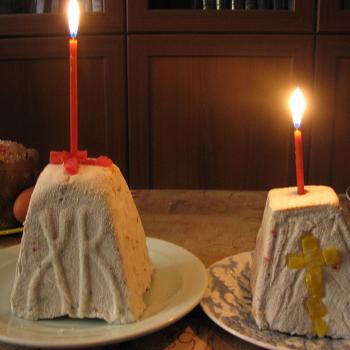
USSR Couldn't Snuff Out Easter—Now Russians Reap Hope
TRENDING AT PATHEOS Evangelical

How the author of the world's best hymn...
I've been working with John Newton for a while now. This makes...

Long before this Lectio Divina, Psalm 130 - the song - started...

What About the Trees? Another Living Parable
After I finished writing the last article about falling leaves as a...

Why Classical Education Is a Conversation, Not a...
Come and Read: Joy in Classical Education When I was a little...

Falling Leaves: A Living Parable on Letting Go
I’ve spent the vast majority of my life in the southeast corner...

Cornell University has received a great deal of negative publicity and intense...
view all Evangelical blogs
Ad-Free & Subscriber Log-In Subscription Support
- About Us
- 2026 Calendar
- Videos
- Podcasts
- Library of World Religions
- Faith In Media Tracker
- Advertise With Us
- Write for Us
- Privacy Policy
- Terms of Service
- Do Not Sell My Data
- Contact Us
- Radiant Digital
- Manage Newsletter Subscriptions
- Unsubscribe From Notifications
- Sitemap
Copyright 2008-2026, Patheos. All rights reserved.
Subscription Support Ad-Free & Subscriber Log-In
Follow Patheos