
BuddhistCatholicContemplativeEvangelicalGeneral ChristianHinduJewishLatter-day SaintMuslimNew VisionsProgressive Christian
Beliefs
- Buddhist
- Catholic
- Contemplative
- Evangelical
- General Christian
- Hindu
- Jewish
- Latter-day Saint
- More Voices
- Muslim
- New Visions
- Pagan
- Progressive Christian
Topics
- Religion News
- Food and Religion
- Sports and Religion
- Religious Art
- Religious Music and Entertainment
- Religious Events
- History and Religion
- Style and Religion
- Politics and Religion
- Women in Religion
- Recreation Outdoors and Religion
- Business Finance and Religion
- Careers Workplace and Religion
- Education and Religion
- Family Parenting and Religion
- Health Fitness and Religion
- Home and Religion
- Relationships and Religion
- Technology and Religion
- Travel and Religion
Columnists
- Buddhist Columnists
- Business Finance and Religion Columnists
- Careers Workplace and Religion Columnists
- Catholic Columnists
- Contemplative Columnists
- Education and Religion Columnists
- Evangelists Columnists
- Family Parenting and Religion Columnists
- General Christian Columnists
- Health Fitness and Religion Columnists
- Hindu Columnists
- History and Religion Columnists
- Home and Religion Columnists
- Jewish Columnists
- More Voices Columnists
- Latter Day Columnists
- Muslim Columnists
- New Visions Columnists
- Nonreligious Columnists
- Pagan Columnists
- Politics and Religion Columnists
- Progressive Columnists
- Recreation Outdoors and Religion Columnists
- Relationships and Religion Columnists
- Religion News Columnists
- Religious Art Columnists
- Religious Events Columnists
- Religious Music and Entertainment Columnists
- Sports and Religion Columnists
- Style and Religion Columnists
- Technology and Religion Columnists
- Travel and Religion Columnists
- Women in Religion Columnists
Resource Library
- 2026 Calendar
- Library of World Religions
- The 100 Most Holy Places on Earth
- Patheos Answers
- Podcasts
- Videos
- Faith Leaders Database
- Anglican Episcopalian
- Bahai
- Baptist
- Buddhism
- Christianity
- Confucianism
- Eastern Orthodoxy
- Hinduism
- Holiness and Pentecostal
- ISKCON
- Islam
- Judaism
- Lutheran
- Methodist
- The Church of Jesus Christ of Latter-day Saints
- New Age
- Paganism
- Presbytarian and Reformed
- Protestantism
- Religion Behind the Scenes
- Roman Catholic
- Scientology
- Shia Islam
- Sikhism
- Sufism
- Sunni Islam
- Taoism
- Zen
- See all religions
Research Tools
 Ad-Free & Subscriber Log-In Subscription Support
Ad-Free & Subscriber Log-In Subscription Support
Follow Patheos 

- Trending:
- Forgiveness
- |
- Marriage
- |
- Consciousness
- |
- Death Penalty
- |
- Election
- |
- Halloween

- Home
- Evangelical
- Praying All the Way to the Bank
Praying All the Way to the Bank
Last updated on: May 6, 2020 at 10:40 am by Philip Yancey
Praying All the Way to the Bank 2020-05-06T10:40:32-04:00 Philip Yancey
Patheos Explore the world's faith through different perspectives on religion and spirituality! Patheos has the views of the prevalent religions and spiritualities of the world.
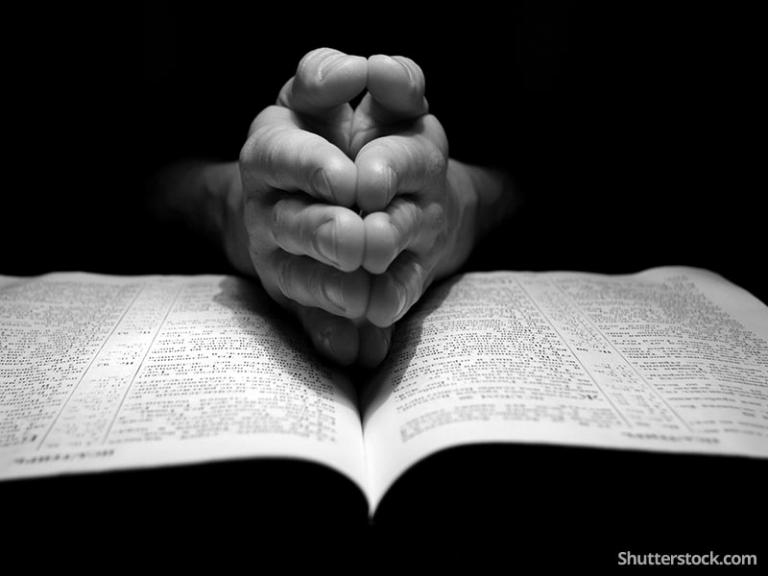 As the statistics on illness and death due to COVID-19 keep rising, the economic statistics keep falling. In March the stock market lost more than $11 trillion in value, and has been yo-yoing ever since. While the more fortunate are mourning their dwindling retirement plans, the truly desperate have joined the 30 million Americans applying for unemployment benefits. How will they pay the rent or feed their families?
While watching the news one day, I flashed back to another time of financial crisis, the Great Recession of 2008. I had just written a book on prayer, and got an unexpected call from a New York journalist. “Any advice on how a person should pray during a time like this?” he asked. “Does prayer do any good in a financial crash?” In the course of the conversation we came up with a three-stage approach to prayer.
The first stage is simple, an instinctive cry for “Help!” For someone who faces a job cut or health crisis, prayer offers a way to give voice to fear and anxiety. I’ve learned to resist the tendency to edit my prayers so that they’ll sound sophisticated and mature. I believe God wants us to come exactly as we are, no matter how childlike we may feel. A God aware of every sparrow that falls surely knows the impact of scary financial times on frail human beings.
Indeed, prayer provides the best possible place to take our fears. “Cast all your anxiety on him because he cares for you,” wrote the apostle Peter. As a template for prayers in crisis times, I look at Jesus’ night of prayer in Gethsemane. He threw himself on the ground three times, sweat falling from his body like drops of blood, and felt “overwhelmed with sorrow to the point of death.” In the midst of that anguish, however, his prayer changed from “Take this cup from me…” to “…may your will be done.” In the trial scenes that followed, Jesus was the calmest character present. His season of prayer had relieved him of anxiety, reaffirmed his trust in a loving Father, and emboldened him to face the horror that awaited him.
If I pray with the aim of listening as well as talking, I can enter into a second stage, that of meditation and reflection. OK, my life savings has virtually disappeared. What can I learn from this seeming catastrophe? In the midst of the crisis, a Sunday School song ran through my mind:
The wise man built his house upon the rock…
And the wise man’s house stood firm.
The foolish man built his house upon the sand…
Oh, the rains came down
And the floods came up…
A time of crisis presents a good opportunity to identify the foundation on which I construct my life. If I place my ultimate trust in financial security, or in the government’s ability to solve my problems, I will surely watch the basement flood and the walls crumble. As the song says, “And the foolish man’s house went splat!”
A friend from Chicago, Bill Leslie, used to say that the Bible asks three main questions about money: 1) How did you get it? (Legally and justly, or exploitively?); 2) What are you doing with it? (Indulging in needless luxuries or helping the needy?); and 3) What is it doing to you? Some of Jesus’ most trenchant parables and sayings go straight to the heart of that last question.
A financial crisis forces us to examine how money affects us. Am I stuck with debts I accumulated by buying goods that were more luxuries than necessities? Or, do I want to cling to the money I have when I know of people around me in dire need? Jesus taught us to pray, “Your will be done on earth as it is in heaven,” and we know that heaven will include no homeless, destitute, and starving people.
As the stock market dove to uncharted depths, I couldn’t help thinking of private colleges, mission agencies, and other non-profits, which depend heavily on the largesse of donors. The IRS has loosened the rules governing charitable contributions for 2020, hoping to encourage more giving—am I giving serious attention to the urgent appeals that fill my mailbox this year?
Which leads me to the third and most difficult stage of prayer in crisis times: I need God’s help in taking my eyes off my own problems in order to look with compassion on the truly desperate. In the Beatitudes, Jesus described a kind of upside-down kingdom that elevates the poor, those who mourn, the justice-makers and peace-makers, and those who show mercy.
The novel coronavirus has temporarily accomplished that societal reversal. In airports, janitors who clean the bannisters and wipe the seats of airplanes are now as crucial to safety as the pilots who fly the jets. Each night, people in major cities honk horns, howl, or shout their appreciation for the health care workers who keep us alive. We’ve learned we can get along without the sports industry that pays top athletes $10 million per year to chase a ball; meanwhile, harried parents of young children have new appreciation for the teachers who earn less than one-hundredth as much. Last month Time magazine put some of the real heroes on their cover: cafeteria workers who serve up food to needy children. They could just have easily profiled hospital orderlies or paramedics.
The question is, will we use this crisis time to re-evaluate what kind of society we want, or will we return as soon as possible to a society that idolizes the wealthiest, the most coordinated, the smartest, the most beautiful, and the most entertaining?
In the days of a collapsing Roman empire, Christians stood out because they cared for the poor, because they stayed behind to nurse plague victims rather than flee afflicted villages, and because platoons of wet nurses would gather up the babies abandoned along the roadside by Romans in their most cruel form of birth control. What a testimony it would be if Christians resolved to increase their giving in 2020 in order to build houses for the poor, combat other deadly diseases, and announce kingdom values to a celebrity-driven culture.
Such a response defies all logic and common sense. Unless, of course, we take seriously the moral of Jesus’ simple tale about building houses on a sure foundation.

About Philip Yancey
Philip Yancey is an award-winning Christian author, whose books include Disappointment with God, Where is God When it Hurts?, The Jesus I Never Knew, What’s So Amazing About Grace?, and Prayer: Does It Make Any Difference? You can read more about the author here.
Previous Post

April 2, 2020
Living in Quarantine: 4 Lessons
Next Post

May 11, 2020 Preparing to Die is the Best Way to Live
Browse Our Archives
Select a Category Culture Slideshow Uncategorized
Select a Month April 2026 October 2025 July 2025 April 2025 February 2025 October 2024 August 2023 June 2023 March 2023 February 2023 November 2022 April 2022 January 2022 December 2021 November 2021 October 2021 September 2021 August 2021 March 2021 February 2021 January 2021 December 2020 September 2020 August 2020 July 2020 May 2020 April 2020 March 2020 January 2020 December 2019 October 2019 September 2019 August 2019 July 2019 May 2019 April 2019 March 2019 January 2019 October 2018 August 2018 June 2018 May 2018 March 2018 February 2018 January 2018 December 2017 November 2017 October 2017 September 2017 August 2017 July 2017 May 2017 April 2017 March 2017 February 2017 January 2017 December 2016 November 2016 October 2016 September 2016 August 2016 July 2016 June 2016 May 2016 April 2016 March 2016 February 2016 January 2016 December 2015 November 2015 October 2015 September 2015 August 2015 July 2015 June 2015 May 2015 April 2015 March 2015 February 2015 January 2015 December 2014 November 2014 October 2014 September 2014
TAKE THE
Religious Wisdom Quiz
In 1 Peter, what does Peter say Sarah called Abraham?
Select your answer to see how you score.
My beloved Father Lord Master
Related posts from The Evangelical Pulpit

Start Living Before It’s Too Late

The Surprising Gift of Solitude

Preparing to Die is the Best Way to...

Living in Quarantine: 4 Lessons
TRENDING AT PATHEOS Evangelical

How the author of the world's best hymn...
I've been working with John Newton for a while now. This makes...

Long before this Lectio Divina, Psalm 130 - the song - started...

What About the Trees? Another Living Parable
After I finished writing the last article about falling leaves as a...

Why Classical Education Is a Conversation, Not a...
Come and Read: Joy in Classical Education When I was a little...

Falling Leaves: A Living Parable on Letting Go
I’ve spent the vast majority of my life in the southeast corner...

Cornell University has received a great deal of negative publicity and intense...
view all Evangelical blogs
Ad-Free & Subscriber Log-In Subscription Support
- About Us
- 2026 Calendar
- Videos
- Podcasts
- Library of World Religions
- Faith In Media Tracker
- Advertise With Us
- Write for Us
- Privacy Policy
- Terms of Service
- Do Not Sell My Data
- Contact Us
- Radiant Digital
- Manage Newsletter Subscriptions
- Unsubscribe From Notifications
- Sitemap
Copyright 2008-2026, Patheos. All rights reserved.
Subscription Support Ad-Free & Subscriber Log-In
Follow Patheos