
BuddhistCatholicContemplativeEvangelicalGeneral ChristianHinduJewishLatter-day SaintMuslimNew VisionsProgressive Christian
Beliefs
- Buddhist
- Catholic
- Contemplative
- Evangelical
- General Christian
- Hindu
- Jewish
- Latter-day Saint
- More Voices
- Muslim
- New Visions
- Pagan
- Progressive Christian
Topics
- Religion News
- Food and Religion
- Sports and Religion
- Religious Art
- Religious Music and Entertainment
- Religious Events
- History and Religion
- Style and Religion
- Politics and Religion
- Women in Religion
- Recreation Outdoors and Religion
- Business Finance and Religion
- Careers Workplace and Religion
- Education and Religion
- Family Parenting and Religion
- Health Fitness and Religion
- Home and Religion
- Relationships and Religion
- Technology and Religion
- Travel and Religion
Columnists
- Buddhist Columnists
- Business Finance and Religion Columnists
- Careers Workplace and Religion Columnists
- Catholic Columnists
- Contemplative Columnists
- Education and Religion Columnists
- Evangelists Columnists
- Family Parenting and Religion Columnists
- General Christian Columnists
- Health Fitness and Religion Columnists
- Hindu Columnists
- History and Religion Columnists
- Home and Religion Columnists
- Jewish Columnists
- More Voices Columnists
- Latter Day Columnists
- Muslim Columnists
- New Visions Columnists
- Nonreligious Columnists
- Pagan Columnists
- Politics and Religion Columnists
- Progressive Columnists
- Recreation Outdoors and Religion Columnists
- Relationships and Religion Columnists
- Religion News Columnists
- Religious Art Columnists
- Religious Events Columnists
- Religious Music and Entertainment Columnists
- Sports and Religion Columnists
- Style and Religion Columnists
- Technology and Religion Columnists
- Travel and Religion Columnists
- Women in Religion Columnists
Resource Library
- 2026 Calendar
- Library of World Religions
- The 100 Most Holy Places on Earth
- Patheos Answers
- Podcasts
- Videos
- Faith Leaders Database
- Anglican Episcopalian
- Bahai
- Baptist
- Buddhism
- Christianity
- Confucianism
- Eastern Orthodoxy
- Hinduism
- Holiness and Pentecostal
- ISKCON
- Islam
- Judaism
- Lutheran
- Methodist
- The Church of Jesus Christ of Latter-day Saints
- New Age
- Paganism
- Presbytarian and Reformed
- Protestantism
- Religion Behind the Scenes
- Roman Catholic
- Scientology
- Shia Islam
- Sikhism
- Sufism
- Sunni Islam
- Taoism
- Zen
- See all religions
Research Tools
 Ad-Free & Subscriber Log-In Subscription Support
Ad-Free & Subscriber Log-In Subscription Support
Follow Patheos 

- Trending:
- Forgiveness
- |
- Marriage
- |
- Consciousness
- |
- Death Penalty
- |
- Election
- |
- Halloween

- Home
- Evangelical
- Is it Biblical for Christians to Get Tattoos?
Is it Biblical for Christians to Get Tattoos?
Last updated on: August 28, 2019 at 2:11 pm by Lesli White
Is it Biblical for Christians to Get Tattoos? 2019-08-28T14:11:56-04:00 Lesli White
Patheos Explore the world's faith through different perspectives on religion and spirituality! Patheos has the views of the prevalent religions and spiritualities of the world.
 While looked down on in Western culture up through much of the past century, tattoos – designs or words etched into the skin with permanent ink – have become a widely accepted as popular trend, especially among young people. So are tattoos okay? Is inking your body a sin in the eyes of God?
The short answer is nothing definitive is said about tattoos in the Bible. Scripture makes no specific reference to tattoos as we understand them in modern times. Some Christians condemn all tattooing as immoral because God clearly forbids them in Leviticus 19:28. The Old Testament law commanded the Israelites, “Do not cut your bodies for the dead or put tattoo marks on yourselves. I am the LORD” (Leviticus 19:28). So, even though believers today are not under the Old Testament law, the fact that there was a command against tattoos may raise some questions.
Since the word tattoo does not appear in this verse in some popular English translations, this argument seems straightforward. Other Christians say this passage no longer applies to us because it is Old Testament law, and not for Christians. The New Testament does not speak on this issue. We do have this command in 1 Peter 3:3-4, “Your beauty should not come from outward adornment, such as elaborate hairstyles and the wearing of gold jewelry or fine clothes. Rather, it should be that your inner self, the unfading beauty of a gentile and quiet spirit, which is great worth in God’s sight.” While this passage is directed at Christian women, there is a principle here that may be appropriate to apply to this question: namely, a person’s external appearance should not be the focus of our attention. Much effort goes into “elaborate hairstyles” and “fine clothes” and “jewelry” but that’s not where a woman’s true beauty lies. In the same way, tattoos and body piercings are “outward adornment,” and we should be careful to give more effort to the development of the inner self, regardless of gender.
When it comes to tattoos, first ask yourself if you can honestly, in good conscience, ask God to bless and use that particular activity for His own good purposes. The Bible tells us, “So whether you eat or drink or whatever you do, do it all for the glory of God” (1 Corinthians 10:31). The New Testament does not specifically command against tattoos or body piercings, but it also does not give us any reason to believe God would have us get tattoos or body piercings either.
On issues that the Bible does not specifically address, one important scriptural principle is if there is room for doubt whether it pleases God, then it best to not engage in that activity. The Bible tells us, “But whoever has doubts is condemned if he eats, because the eating is not from faith. For whatever does not proceed from faith is sin” (Romans 14:23). This verse reminds us that anything that does not come from faith is sin. We need to remember that our bodies, as well as our souls, have been redeemed and belong to God.
While 1 Corinthians 6:19-20 does not directly apply to tattoos, it does give us a principle: “Do you not know that your body is a temple of the Holy Spirit, who is in you, whom you have received from God? You are not your own; you were bought at a price. Therefore honor God with your body.” This great truth should have a real influence on what we do and where we go with our bodies. Our bodies are so important to the Lord that He calls our bodies temples of God. Remember, we are commanded not to do things that will harm what is precious to Him. We are called to honor our personal temple in order to enter His.
Then, there’s the question of Christian tattoos. Do the same principles apply to tattoos that are of a Christian nature, such as a cross, a Christian Bible verse or quote? Some Christians have found that having tattoos gives them more credibility and connectedness, and thereby more possibilities to evangelize with some groups of people.
Obviously, a tattoo of a cross is better than a tattoo of a flaming skull or demon. Having a tattoo saying, “God is Love” or “Jesus Saves” could indeed be a conversation starter with some people who would never approach a preacher wearing a collar. The question is less “is getting tattoo a sin?” as much as it is “is getting a tattoo a good and necessary thing to do?” 1 Corinthians 10:23 says, “Everything is permissible – but not everything is beneficial. Everything is permissible – but not everything is constructive.” Christian tattoos may be permissible, but are they beneficial and constructive is the better question.
While there may be no clear passage in the Bible addressing tattoos, this is hardly license for unrestrained tattooing. You still need to think before you ink, especially if you’re a Christian. While Christian tattoos would seem to be permissible, it is questionable whether the can be considered beneficial and constructive. If you’re a Christian and considering getting a tattoo, the best thing to do is pray for wisdom and ask the Lord to provide pure motives and discernment.
Previous Post

August 28, 2019
7 Common Christian Beliefs That Aren’t in the Bible

Browse Our Archives
Select a Category Culture Slideshow Uncategorized
Select a Month April 2026 October 2025 July 2025 April 2025 February 2025 October 2024 August 2023 June 2023 March 2023 February 2023 November 2022 April 2022 January 2022 December 2021 November 2021 October 2021 September 2021 August 2021 March 2021 February 2021 January 2021 December 2020 September 2020 August 2020 July 2020 May 2020 April 2020 March 2020 January 2020 December 2019 October 2019 September 2019 August 2019 July 2019 May 2019 April 2019 March 2019 January 2019 October 2018 August 2018 June 2018 May 2018 March 2018 February 2018 January 2018 December 2017 November 2017 October 2017 September 2017 August 2017 July 2017 May 2017 April 2017 March 2017 February 2017 January 2017 December 2016 November 2016 October 2016 September 2016 August 2016 July 2016 June 2016 May 2016 April 2016 March 2016 February 2016 January 2016 December 2015 November 2015 October 2015 September 2015 August 2015 July 2015 June 2015 May 2015 April 2015 March 2015 February 2015 January 2015 December 2014 November 2014 October 2014 September 2014
TAKE THE
Religious Wisdom Quiz
The Old Testament prophet Joel spoke of "wonders in the heavens and the earth, blood, fire, and pillars of smoke before the great and terrible day of the Lord." (Joel 2:30) Which one of the disciples quoted him in the book of Acts?
Select your answer to see how you score.
Peter James Andrew John
Related posts from The Evangelical Pulpit

How Faith Leaders Helped Pass the First Step...

Middle East Digital Extremism Is Rising - Can...

Can Your Prayers of Intercession Help Save the...
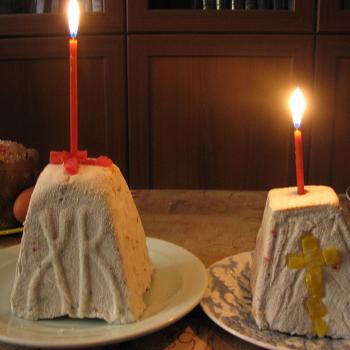
USSR Couldn't Snuff Out Easter—Now Russians Reap Hope
TRENDING AT PATHEOS Evangelical

How the author of the world's best hymn...
I've been working with John Newton for a while now. This makes...

Long before this Lectio Divina, Psalm 130 - the song - started...

What About the Trees? Another Living Parable
After I finished writing the last article about falling leaves as a...

Why Classical Education Is a Conversation, Not a...
Come and Read: Joy in Classical Education When I was a little...

Falling Leaves: A Living Parable on Letting Go
I’ve spent the vast majority of my life in the southeast corner...

Cornell University has received a great deal of negative publicity and intense...
view all Evangelical blogs
Ad-Free & Subscriber Log-In Subscription Support
- About Us
- 2026 Calendar
- Videos
- Podcasts
- Library of World Religions
- Faith In Media Tracker
- Advertise With Us
- Write for Us
- Privacy Policy
- Terms of Service
- Do Not Sell My Data
- Contact Us
- Radiant Digital
- Manage Newsletter Subscriptions
- Unsubscribe From Notifications
- Sitemap
Copyright 2008-2026, Patheos. All rights reserved.
Subscription Support Ad-Free & Subscriber Log-In
Follow Patheos