
BuddhistCatholicContemplativeEvangelicalGeneral ChristianHinduJewishLatter-day SaintMuslimNew VisionsProgressive Christian
Beliefs
- Buddhist
- Catholic
- Contemplative
- Evangelical
- General Christian
- Hindu
- Jewish
- Latter-day Saint
- More Voices
- Muslim
- New Visions
- Pagan
- Progressive Christian
Topics
- Religion News
- Food and Religion
- Sports and Religion
- Religious Art
- Religious Music and Entertainment
- Religious Events
- History and Religion
- Style and Religion
- Politics and Religion
- Women in Religion
- Recreation Outdoors and Religion
- Business Finance and Religion
- Careers Workplace and Religion
- Education and Religion
- Family Parenting and Religion
- Health Fitness and Religion
- Home and Religion
- Relationships and Religion
- Technology and Religion
- Travel and Religion
Columnists
- Buddhist Columnists
- Business Finance and Religion Columnists
- Careers Workplace and Religion Columnists
- Catholic Columnists
- Contemplative Columnists
- Education and Religion Columnists
- Evangelists Columnists
- Family Parenting and Religion Columnists
- General Christian Columnists
- Health Fitness and Religion Columnists
- Hindu Columnists
- History and Religion Columnists
- Home and Religion Columnists
- Jewish Columnists
- More Voices Columnists
- Latter Day Columnists
- Muslim Columnists
- New Visions Columnists
- Nonreligious Columnists
- Pagan Columnists
- Politics and Religion Columnists
- Progressive Columnists
- Recreation Outdoors and Religion Columnists
- Relationships and Religion Columnists
- Religion News Columnists
- Religious Art Columnists
- Religious Events Columnists
- Religious Music and Entertainment Columnists
- Sports and Religion Columnists
- Style and Religion Columnists
- Technology and Religion Columnists
- Travel and Religion Columnists
- Women in Religion Columnists
Resource Library
- 2026 Calendar
- Library of World Religions
- The 100 Most Holy Places on Earth
- Patheos Answers
- Podcasts
- Videos
- Faith Leaders Database
- Anglican Episcopalian
- Bahai
- Baptist
- Buddhism
- Christianity
- Confucianism
- Eastern Orthodoxy
- Hinduism
- Holiness and Pentecostal
- ISKCON
- Islam
- Judaism
- Lutheran
- Methodist
- The Church of Jesus Christ of Latter-day Saints
- New Age
- Paganism
- Presbytarian and Reformed
- Protestantism
- Religion Behind the Scenes
- Roman Catholic
- Scientology
- Shia Islam
- Sikhism
- Sufism
- Sunni Islam
- Taoism
- Zen
- See all religions
Research Tools
 Ad-Free & Subscriber Log-In Subscription Support
Ad-Free & Subscriber Log-In Subscription Support
Follow Patheos 

- Trending:
- Forgiveness
- |
- Marriage
- |
- Consciousness
- |
- Death Penalty
- |
- Election
- |
- Halloween

- Home
- Evangelical
- When a Story is Better than a Sermon
When a Story is Better than a Sermon
Last updated on: July 11, 2019 at 6:54 pm by Guest Contributor
When a Story is Better than a Sermon 2019-07-11T18:54:26-04:00 Guest Contributor
Patheos Explore the world's faith through different perspectives on religion and spirituality! Patheos has the views of the prevalent religions and spiritualities of the world.

Photo Credit: Shutterstock.com
About ten years ago, an imam walked into my office at Fairfax Presbyterian Church with a Christmas present. He was the leader of the nearby Turkish mosque, a man with a big smile and a warm spirit.
He and I became friends and went on to lead two clergy trips to Turkey, a country with a rich history of interfaith relations. When the rulers of Spain expelled its Jews in 1492, Turkey welcomed them. And while there have been interfaith conflicts over the years, Jews, Christians and Muslims have lived together in peace through much of Turkish history. Back in the US, members of the mosque have helped us to feed the homeless on cold winter nights, and we have celebrated the end of Ramadan together under a tent in our church parking lot.
I often preach about the importance of interfaith cooperation, but I find that sermons have their limits. People naturally push back against sermons — a common expression is, “Don’t preach at me.” And interfaith events can be easily declined by those who don’t want to leave the comfort of their religious traditions.
Now I’m trying a new vehicle for interfaith dialogue: The novel.
Not that this story-telling approach is original to me. Jesus didn’t give lectures on heaven, but taught through parables such as, “The kingdom of God is as if someone would scatter seed on the ground” (Mark 4:26). And Jewish rabbis continued this approach through midrash aggadah, a type of biblical interpretation which centered on the story or characters of the biblical law.
In line with this tradition, I am delivering a message about the need for deeper interfaith relations, especially in a time of Muslim bans and terrorist threats, through my novel City of Peace. In it, a Methodist pastor named Harley Camden is sent to Occoquan, Virginia, and soon after his arrival, he is asked — as the only clergy in town — to visit a prisoner named Muhammad Bayati, an Iraqi immigrant accused of murdering his daughter.
After introducing himself, Harley tells Muhammad that he has recently lost his own daughter and wife. Looking Muhammad in the eyes to gauge his reaction, he says, “They were killed by terrorists at the Brussels airport.”
Muhammad’s eyes well up, which is not the reaction Harley expects. “I was informed of your loss,” he says. “You have my sympathy.” Harley thanks him but feels a little off balance.
“You may know that the Qur’an says that whoever kills a person unjustly, it is as though he has killed all mankind,” says Muhammad. “I condemn the killers of your wife and daughter.”
The two men go on to talk about justice, God, and even Jesus — a prophet for Muhammad and the messiah for Harley. Then Harley says, “Our Bible says that God is love.”
Muhammad cocks his head slightly and replies, “That is different from our understanding. We have many names for God, but love is not among them.” He knows that “All-Compassionate” is one of the 99 names for God, but so is “The Distressor.” In Islam, none of these attributes of God is identical to God’s essence.
“For Christians, love is at the core of who God is,” explains Harley. “God reveals his love by sending Jesus. And the response we are supposed to make is to love one another.”
“I would agree with that,” says Muhammad. “Loving God does require that we love the people around us.” Harley begins to see that he and Muhammad have much in common, and that he is wrong to be prejudiced against someone with a commitment to love of God and neighbor.
This, then, is a portion of my parable, my midrash aggadah. Church members who have little interest in interfaith relations are attracted to the whodunnit aspect of the story, and are learning about Muslim attitudes through Muhammad, a multidimensional and sympathetic character. Readers identify better with Harley, a flawed and grieving man, than they do with a minister in robes.
But a story is no guarantee of interfaith harmony. When I presented City of Peace to members of the Turkish mosque, one woman complained that I had slighted Islam by saying love was absent from the names it gave God. But after a long discussion between two imams, one said, “On this point, Pastor Brinton is correct.” Whew. I was relieved.
Novels can ignite important conversations about matters of faith and morality, and they can get people talking outside the walls of the church. Such conversations can lead to new visions for our life together, and draw people together around values that are common to diverse faiths and cultures. I don’t plan on giving up the pulpit, but I am glad to have discovered a less preachy way of preaching.

About Henry G. Brinton
Henry G. Brinton is pastor of Fairfax Presbyterian Church in Virginia and author of the novel City of Peace. You can read more about the author here.

Next Post

August 6, 2019 Has the Church Allowed the Gospel to be Tainted by Nationalism?
Browse Our Archives
Select a Category Culture Slideshow Uncategorized
Select a Month April 2026 October 2025 July 2025 April 2025 February 2025 October 2024 August 2023 June 2023 March 2023 February 2023 November 2022 April 2022 January 2022 December 2021 November 2021 October 2021 September 2021 August 2021 March 2021 February 2021 January 2021 December 2020 September 2020 August 2020 July 2020 May 2020 April 2020 March 2020 January 2020 December 2019 October 2019 September 2019 August 2019 July 2019 May 2019 April 2019 March 2019 January 2019 October 2018 August 2018 June 2018 May 2018 March 2018 February 2018 January 2018 December 2017 November 2017 October 2017 September 2017 August 2017 July 2017 May 2017 April 2017 March 2017 February 2017 January 2017 December 2016 November 2016 October 2016 September 2016 August 2016 July 2016 June 2016 May 2016 April 2016 March 2016 February 2016 January 2016 December 2015 November 2015 October 2015 September 2015 August 2015 July 2015 June 2015 May 2015 April 2015 March 2015 February 2015 January 2015 December 2014 November 2014 October 2014 September 2014
TAKE THE
Religious Wisdom Quiz
Which king of Judah destroyed Nehushtan, the bronze serpent?
Select your answer to see how you score.
Manasseh Josiah Hezekiah Uzziah
Related posts from The Evangelical Pulpit

How Faith Leaders Helped Pass the First Step...

Middle East Digital Extremism Is Rising - Can...

Can Your Prayers of Intercession Help Save the...
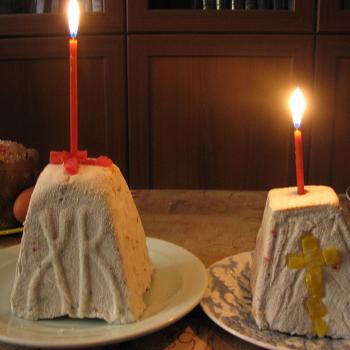
USSR Couldn't Snuff Out Easter—Now Russians Reap Hope
TRENDING AT PATHEOS Evangelical

The REST of Your Life: A Creative Wrestles...
This week I had a conversation with a good friend from church....

How the author of the world's best hymn...
I've been working with John Newton for a while now. This makes...

Long before this Lectio Divina, Psalm 130 - the song - started...

What About the Trees? Another Living Parable
After I finished writing the last article about falling leaves as a...

Why Classical Education Is a Conversation, Not a...
Come and Read: Joy in Classical Education When I was a little...

Cornell University has received a great deal of negative publicity and intense...
view all Evangelical blogs
Ad-Free & Subscriber Log-In Subscription Support
- About Us
- 2026 Calendar
- Videos
- Podcasts
- Library of World Religions
- Faith In Media Tracker
- Advertise With Us
- Write for Us
- Privacy Policy
- Terms of Service
- Do Not Sell My Data
- Contact Us
- Radiant Digital
- Manage Newsletter Subscriptions
- Unsubscribe From Notifications
- Sitemap
Copyright 2008-2026, Patheos. All rights reserved.
Subscription Support Ad-Free & Subscriber Log-In
Follow Patheos