
BuddhistCatholicContemplativeEvangelicalGeneral ChristianHinduJewishLatter-day SaintMuslimNew VisionsProgressive Christian
Beliefs
- Buddhist
- Catholic
- Contemplative
- Evangelical
- General Christian
- Hindu
- Jewish
- Latter-day Saint
- More Voices
- Muslim
- New Visions
- Pagan
- Progressive Christian
Topics
- Religion News
- Food and Religion
- Sports and Religion
- Religious Art
- Religious Music and Entertainment
- Religious Events
- History and Religion
- Style and Religion
- Politics and Religion
- Women in Religion
- Recreation Outdoors and Religion
- Business Finance and Religion
- Careers Workplace and Religion
- Education and Religion
- Family Parenting and Religion
- Health Fitness and Religion
- Home and Religion
- Relationships and Religion
- Technology and Religion
- Travel and Religion
Columnists
- Buddhist Columnists
- Business Finance and Religion Columnists
- Careers Workplace and Religion Columnists
- Catholic Columnists
- Contemplative Columnists
- Education and Religion Columnists
- Evangelists Columnists
- Family Parenting and Religion Columnists
- General Christian Columnists
- Health Fitness and Religion Columnists
- Hindu Columnists
- History and Religion Columnists
- Home and Religion Columnists
- Jewish Columnists
- More Voices Columnists
- Latter Day Columnists
- Muslim Columnists
- New Visions Columnists
- Nonreligious Columnists
- Pagan Columnists
- Politics and Religion Columnists
- Progressive Columnists
- Recreation Outdoors and Religion Columnists
- Relationships and Religion Columnists
- Religion News Columnists
- Religious Art Columnists
- Religious Events Columnists
- Religious Music and Entertainment Columnists
- Sports and Religion Columnists
- Style and Religion Columnists
- Technology and Religion Columnists
- Travel and Religion Columnists
- Women in Religion Columnists
Resource Library
- 2026 Calendar
- Library of World Religions
- The 100 Most Holy Places on Earth
- Patheos Answers
- Podcasts
- Videos
- Faith Leaders Database
- Anglican Episcopalian
- Bahai
- Baptist
- Buddhism
- Christianity
- Confucianism
- Eastern Orthodoxy
- Hinduism
- Holiness and Pentecostal
- ISKCON
- Islam
- Judaism
- Lutheran
- Methodist
- The Church of Jesus Christ of Latter-day Saints
- New Age
- Paganism
- Presbytarian and Reformed
- Protestantism
- Religion Behind the Scenes
- Roman Catholic
- Scientology
- Shia Islam
- Sikhism
- Sufism
- Sunni Islam
- Taoism
- Zen
- See all religions
Research Tools
 Ad-Free & Subscriber Log-In Subscription Support
Ad-Free & Subscriber Log-In Subscription Support
Follow Patheos 

- Trending:
- Forgiveness
- |
- Marriage
- |
- Consciousness
- |
- Death Penalty
- |
- Election
- |
- Halloween

- Home
- Evangelical
- The Theodicy of the Lord Jesus Christ
The Theodicy of the Lord Jesus Christ
Last updated on: August 27, 2018 at 8:33 am by Guest Contributor
The Theodicy of the Lord Jesus Christ 2018-08-27T08:33:50-04:00 Guest Contributor
Patheos Explore the world's faith through different perspectives on religion and spirituality! Patheos has the views of the prevalent religions and spiritualities of the world.
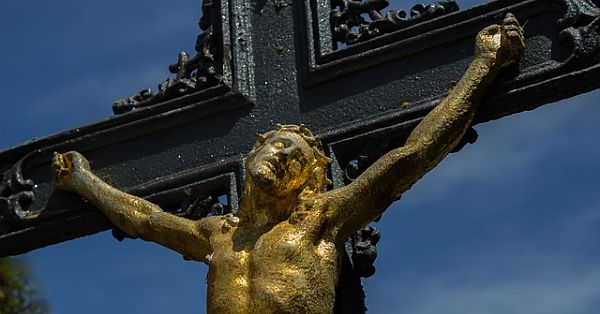
What’s the first thing that comes into your mind when you hear the word “theodicy”? Nothing, right? Well, the term means a defense of God’s justice in the face of evil’s reality. It comes from two words: “God” and “justice.”
Inadequate Theodicies
There are some poor theodicies out there. Christian Science, for example, denies the reality of evil. Mary Baker Eddy said, “Since God is All, there is no room for His opposite . . . therefore evil, being the opposite of goodness, is unreal . . .” (Science & Health with Key to the Scriptures, p. 234).
Rabbi Harold Kushner in his book Why Bad Things Happen to Good People tried to solve the problem of evil by denying God’s omnipotence. He wrote: “I recognize His [God’s] limitations. He is limited in what He can do by laws of nature and by the evolution of human nature and human moral freedom. . . . I can worship a God who hates suffering but cannot eliminate it, more easily than I can worship a God who chooses to make children suffer and die, for whatever exalted reason.” (p. 134).
Greg Boyd limits God’s omniscience, arguing that God didn’t know, for example, what Hitler would do. Boyd says, “. . . if God foreknew that Adolf Hitler would send six million Jews to their death, why did he go ahead and create a man like that? If I unleash a mad dog I am certain will bite you, am I not responsible for my dog’s behavior? If so, how is God not responsible for the behavior of evil people he ‘unleashes’ on the world – if, in fact, he is absolutely certain of what they will do once ‘unleashed’?” (Greg Boyd, God of the Possible: A Biblical Introduction to the Open View of God, p. 10).
A theodicy which denies evil’s reality or compromises God’s character is no help at all. If we ever needed a solid theodicy, it is today. With so many unspeakable events happening in our world, some take Jonathan Edwards’ sermon entitled “Sinners in the Hands of an Angry God” and twist it into “GOD in the Hands of Angry SINNERS”! They want an explanation why so many awful things happen in what is supposed to be God’s good world. And they want that explanation right now.
The Lord’s Theodicy
Thankfully, the Lord Jesus dealt with this issue and His response to the problem of evil is quite helpful for us as we relate to our plagued planet. We read in Luke 13:1-5 as follows:
Now there were some present at that time who told Jesus about the Galileans whose blood Pilate had mixed with their sacrifices. 2 Jesus answered, “Do you think that these Galileans were worse sinners than all the other Galileans because they suffered this way? 3 I tell you, no! But unless you repent, you too will all perish. 4 Or those eighteen who died when the tower in Siloam fell on them—do you think they were more guilty than all the others living in Jerusalem? 5 I tell you, no! But unless you repent, you too will all perish.”
This passage deals with two major sources of evil and suffering in our world: crimes and catastrophes. Let’s notice the first situation.
Victims of a Vicious Crime (vv. 1-3)
Some, presumably Galileans, come to Jesus and report a vicious crime. They tell about Pilate, the Roman governor, massacring a number of Jesus’ fellow Galileans for some offense. In fact, the text indicates that these Galileans were in a worship service, for Pilate mixed their blood with their sacrifices (desecration).
Even though we have no extra-biblical evidence of this act by Pilate or this tower falling in Luke 13, such events were relatively routine occurrences. As one writer says, Pilate behaved brutally on numerous occasions, and buildings collapse.
One commentator writes, “We don’t have a record in secular history about the specific incident mentioned here. But there is a similar incident before the ministry of Jesus, Pilate wanted to build an aqueduct from the Pools of Solomon to the city of Jerusalem. To pay for it, he demanded money from the temple treasury, money that had been dedicated to God — and this outraged the people. When the Jews sent a delegation to beg for their money back, Pilate sent into the crowd soldiers dressed as common people, and at a certain signal they took out daggers and attacked the people asking for the money. This doesn’t seem to be the same incident mentioned here, but it shows how completely consistent it was with the character of Pilate to slaughter some Galilean Jews on their way to sacrifice to the Lord in Jerusalem.” (https://www.blueletterbible.org/comm/guzik_david/studyguide_luk/luk_13.cfm) This event is referred to in Josephus 2.9.2-4.
Motive?
What was the likely motive of these reporters? Two possible motives occur to me. The first would be political. Perhaps they thought that they could incite Jesus to rail against the Roman occupation and start a protest. That’s possible. However, I believe their motive might have been theological. I believe their question comes from their Jewish background which suggested that if one suffers greatly one must have sinned greatly (see the book of Job for five representatives of this view, including Job). How could God allow such evil to be perpetuated upon His people — while they were worshiping!?
Jesus asks them a question about comparative sinfulness. “Do you think that these Galileans were worse sinners than all the other Galileans because they suffered this way?” (v. 2). He answers His own question, “No! But unless you repent, you will all perish.” He is not saying that they will be next on Pilate’s hit list, but that this broken world is filled with evil people who do unspeakable things.
Victims of a Violent Catastrophe (vv. 4-5)
Whenever some massive event happens in our world (a tsunami, an earthquake, etc.), I’m tempted to hide from my non-Christian friends. I fear they will ask me, “How can you believe in a God of love who allows something like this?”
But it is Jesus who raises the issue of a violent accident. A tower in Siloam fell on and killed eighteen people.
And Jesus uses that accident to ask: “Do you think that those people were more guilty than all the others living in Jerusalem?” He is directly challenging the idea that if one suffers greatly one must have sinned greatly. No! Vicious crimes and violent accidents happen to God’s people too.
Jesus uses the illustration of the collapsed tower to warn His hearers: “Unless you repent, you too will all perish.” He’s not saying, “A tower is going to fall on you unless you repent.” He is saying rather, “Life is dangerous . . . and uncertain. Be ready to meet the Lord!”
Theodicies may be complex or simple. And Jesus’ theodicy affirms the reality both of evil men and disastrous events in this world. He does not philosophize about evil and suffering, but warns of life’s brevity and eternity’s reality.
The slain Galileans were not worse sinners than all the other Galileans. God had not “gotten” them through Pilate. They did not deserve what happened to them. The dozen and a half victims in Siloam were not more guilty than all the other inhabitants of Jerusalem. God didn’t cause the tower to fall on them as punishment for their sin. Accidents happen. And sometimes believers get crushed.
God allows evil men to exist and to reek their cruel crimes on others. This world is broken and accidents reveal its fragile condition. And godly people are not immune to either source of suffering.
There is, of course, much more to the theodicy of the Lord Jesus. I think of His statement in John 9 about the man born blind: “Neither this man or his parents sinned. But this happened so that the works of God might be displayed in his life.” (v. 3). Could that statement not be written over any tragedy in life? That God is actively involved in the catastrophes that befall us — and can use them to display His mighty works in us?
Like the Lord, we ought to be the ones bringing up the terrible events of our world to warn people that we love, people who need to repent before it is too late.
Dr. Larry Dixon is a retired theology professor from Columbia International University. His blog is found at: larrydixon.wordpress.com. He authored the previous Patheos article “Is Stephen Paddock in Hell?”
Previous Post

August 23, 2018
The Power of Encouragement
Next Post

October 22, 2018 Donald Trump Is No Saint
Browse Our Archives
Select a Category Culture Slideshow Uncategorized
Select a Month April 2026 October 2025 July 2025 April 2025 February 2025 October 2024 August 2023 June 2023 March 2023 February 2023 November 2022 April 2022 January 2022 December 2021 November 2021 October 2021 September 2021 August 2021 March 2021 February 2021 January 2021 December 2020 September 2020 August 2020 July 2020 May 2020 April 2020 March 2020 January 2020 December 2019 October 2019 September 2019 August 2019 July 2019 May 2019 April 2019 March 2019 January 2019 October 2018 August 2018 June 2018 May 2018 March 2018 February 2018 January 2018 December 2017 November 2017 October 2017 September 2017 August 2017 July 2017 May 2017 April 2017 March 2017 February 2017 January 2017 December 2016 November 2016 October 2016 September 2016 August 2016 July 2016 June 2016 May 2016 April 2016 March 2016 February 2016 January 2016 December 2015 November 2015 October 2015 September 2015 August 2015 July 2015 June 2015 May 2015 April 2015 March 2015 February 2015 January 2015 December 2014 November 2014 October 2014 September 2014
TAKE THE
Religious Wisdom Quiz
What Christian holiday celebrates Jesus' resurrection?
Select your answer to see how you score.
Good Friday Christmas Pentecost Easter
Related posts from The Evangelical Pulpit
How Could a God of Love Allow Suffering?

How to Trust God When Bad Things Happen...

How Faith Leaders Helped Pass the First Step...

Middle East Digital Extremism Is Rising - Can...
TRENDING AT PATHEOS Evangelical

How the author of the world's best hymn...
I've been working with John Newton for a while now. This makes...

Long before this Lectio Divina, Psalm 130 - the song - started...

What About the Trees? Another Living Parable
After I finished writing the last article about falling leaves as a...

Why Classical Education Is a Conversation, Not a...
Come and Read: Joy in Classical Education When I was a little...

Falling Leaves: A Living Parable on Letting Go
I’ve spent the vast majority of my life in the southeast corner...

Cornell University has received a great deal of negative publicity and intense...
view all Evangelical blogs
Ad-Free & Subscriber Log-In Subscription Support
- About Us
- 2026 Calendar
- Videos
- Podcasts
- Library of World Religions
- Faith In Media Tracker
- Advertise With Us
- Write for Us
- Privacy Policy
- Terms of Service
- Do Not Sell My Data
- Contact Us
- Radiant Digital
- Manage Newsletter Subscriptions
- Unsubscribe From Notifications
- Sitemap
Copyright 2008-2026, Patheos. All rights reserved.
Subscription Support Ad-Free & Subscriber Log-In
Follow Patheos