
BuddhistCatholicContemplativeEvangelicalGeneral ChristianHinduJewishLatter-day SaintMuslimNew VisionsProgressive Christian
Beliefs
- Buddhist
- Catholic
- Contemplative
- Evangelical
- General Christian
- Hindu
- Jewish
- Latter-day Saint
- More Voices
- Muslim
- New Visions
- Pagan
- Progressive Christian
Topics
- Religion News
- Food and Religion
- Sports and Religion
- Religious Art
- Religious Music and Entertainment
- Religious Events
- History and Religion
- Style and Religion
- Politics and Religion
- Women in Religion
- Recreation Outdoors and Religion
- Business Finance and Religion
- Careers Workplace and Religion
- Education and Religion
- Family Parenting and Religion
- Health Fitness and Religion
- Home and Religion
- Relationships and Religion
- Technology and Religion
- Travel and Religion
Columnists
- Buddhist Columnists
- Business Finance and Religion Columnists
- Careers Workplace and Religion Columnists
- Catholic Columnists
- Contemplative Columnists
- Education and Religion Columnists
- Evangelists Columnists
- Family Parenting and Religion Columnists
- General Christian Columnists
- Health Fitness and Religion Columnists
- Hindu Columnists
- History and Religion Columnists
- Home and Religion Columnists
- Jewish Columnists
- More Voices Columnists
- Latter Day Columnists
- Muslim Columnists
- New Visions Columnists
- Nonreligious Columnists
- Pagan Columnists
- Politics and Religion Columnists
- Progressive Columnists
- Recreation Outdoors and Religion Columnists
- Relationships and Religion Columnists
- Religion News Columnists
- Religious Art Columnists
- Religious Events Columnists
- Religious Music and Entertainment Columnists
- Sports and Religion Columnists
- Style and Religion Columnists
- Technology and Religion Columnists
- Travel and Religion Columnists
- Women in Religion Columnists
Resource Library
- 2026 Calendar
- Library of World Religions
- The 100 Most Holy Places on Earth
- Patheos Answers
- Podcasts
- Videos
- Faith Leaders Database
- Anglican Episcopalian
- Bahai
- Baptist
- Buddhism
- Christianity
- Confucianism
- Eastern Orthodoxy
- Hinduism
- Holiness and Pentecostal
- ISKCON
- Islam
- Judaism
- Lutheran
- Methodist
- The Church of Jesus Christ of Latter-day Saints
- New Age
- Paganism
- Presbytarian and Reformed
- Protestantism
- Religion Behind the Scenes
- Roman Catholic
- Scientology
- Shia Islam
- Sikhism
- Sufism
- Sunni Islam
- Taoism
- Zen
- See all religions
Research Tools
 Ad-Free & Subscriber Log-In Subscription Support
Ad-Free & Subscriber Log-In Subscription Support
Follow Patheos 

- Trending:
- Forgiveness
- |
- Marriage
- |
- Consciousness
- |
- Death Penalty
- |
- Election
- |
- Halloween

- Home
- Evangelical
- Democracy, a Competition of Ideas, and the Role of the College Campus
Democracy, a Competition of Ideas, and the Role of the College Campus
Last updated on: November 15, 2016 at 8:08 pm by Guest Contributor
Democracy, a Competition of Ideas, and the Role of the College Campus 2016-11-15T20:08:26-04:00 Guest Contributor
Patheos Explore the world's faith through different perspectives on religion and spirituality! Patheos has the views of the prevalent religions and spiritualities of the world.
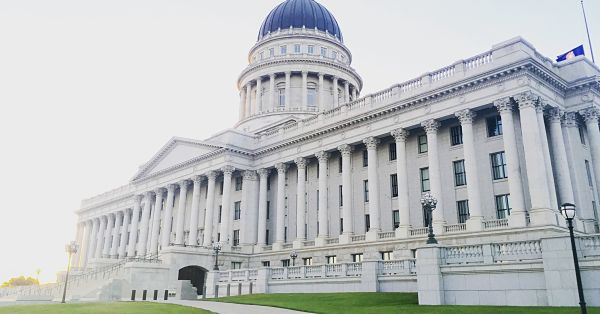
by Satchel Johnsen and Alex Hamann
Russian hackers and rigged voting systems aren’t the biggest threat to American democracy. Rather, in the aftermath of the November 8 election we must reflect on our own behaviors and attitudes as an American people. The preservation of American democracy depends on educating future leaders on college campuses about the essential importance of cultivating and maintaining a genuine respect for diversity of political viewpoints. The kind of demonization and delegitimization of those who supported, or at least accepted the outcome of Donald Trump’s election, is a disturbing response that threatens democratic legitimacy as well as the cohesion of our nation.
For the past year many of us couldn’t wait for November 9th to come and to end one of the most dreadful and divisive presidential elections in U.S. history. Many of us were shocked by the results of a Trump victory, including many of us NeverTrumpers. We were not happy that the Republican Party nominated such a flawed candidate who nearly derailed his campaign with sexually vulgar comments, racially charged rhetoric, and a shocking ignorance of public policy. Despite this, the American people spoke, and in a fair and decisive outcome elected Donald Trump as our nation’s 45th president.
Sadly, however, we are now witnessing protests challenging the election. These street and campus protesters certainly have a right to express their disappointment with the election outcome. However, they don’t have a right to question its legitimacy. Indeed, democratic legitimacy is the foundational bedrock of democratic governance and stability. In the broad sweep of history, democracy has been a rare gift. In Winston Churchill’s famous quip, “democracy is the worst form of government, except for all the others.” If you really care about social justice, you have to also care about the health of our democracy.
Further, it is one thing to point out a presidential candidate’s flaws, but another to target a candidate’s supporters. Targeting and stereotyping all, or most, of the 50 million people who voted for Donald Trump as racists and bigots is itself hateful and ignorant. Groups which claim to be inclusive and tolerant act hypocritically when they generalize that Mr. Trump’s supporters are bigoted and racist.
Yes, some Trump supporters behave in reprehensible ways. But their behavior does not represent the majority of Americans who voted for Mr. Trump. Post-election data simply doesn’t support the narrative that racism, sexism or other forms of bigotry were the motivator for Mr. Trump’s support. Other factors inspired Americans to vote for Mr. Trump, notably economic anxiety and cronyism in Washington. Many of Mr. Trump’s supporters are angry and believe they have been forgotten by coastal technocratic elites who values are alien to tens of millions working class Americans. In short, they feel that political elites are out of touch with the average American.
Arthur Brooks, president of the American Enterprise Institute, recently wrote a Wall Street Journal op-ed that helps us to understand a central dynamic of Donald Trump’s election. Brooks points out that for Americans work and dignity are strongly tied together. Since 1965 the percent of men outside of the workforce has risen from 10% to 22%; millions are underemployed and have given up looking for work. He further reports that, “the employment to population ratio for men aged 25 to 54 is 6.8 % lower than in 1930, in the teeth of the Great Depression.” This lack of work and opportunity fosters a loss of dignity, which in turn creates the perception that society is deteriorating. This analysis describes millions of America’s working class. This analysis has been told in memorable personal terms by J.D. Vance in his current autobiographical bestseller, Hillbilly Elegy.
Sadly, serious, thoughtful, data-driven analyses have also been ignored by too many on our college campuses. Once again, the issue does not have to do with the very real concerns about Donald Trump past statements and actions. What is problematic – in fact, very troubling – is the rejection of the legitimacy of the election outcome itself.
On our college campus this rejection is not limited to popular opinion among students. It has been reflected in student organization programming. For example, the dominance of the racism and bigotry narrative and the creation of “safe spaces” comes at the cost of rational debate and discussion. These are not helpful. They have only exacerbated division. Alternative perspectives are dismissed, while those who hold these views are vilified, if not explicitly at least implicitly. Especially troubling to the authors of this article is the seeming validation of these false narratives via chapel programming.
Democracy does not expect that we will all share the same viewpoint. Robust disagreement and debate stand at the center of a healthy democratic polity. But this democratic give and take, the process of contending ideas, must be anchored in a respect for other points of view. Civility, and democracy itself, is threatened when disagreement with one perspective is cast as bigotry and hate. At the end of an election cycle, Americans must recommit themselves to the common welfare. Without this civility and respect for the legitimacy of the electoral process, democracy fails. Our college friends and peers should heed the example of President Obama who said to Donald Trump at their White House meeting: “I want to emphasize to you, Mr. President-elect, that we now are going to want to do everything we can to help you succeed because if you succeed, then the country succeeds.”
 Satchel Johnsen is a junior at Messiah College where he is completing his Bachelor of Arts degree in Politics with a concentration in Political Studies and a minor in History. Mr. Johnsen is the Chairman to his campus’ chapter of the American Enterprise Institute Executive Council and is the Vice President of the Messiah College Republicans. In his free time, Mr. Johnsen enjoys playing golf and watching football.
 Alex Hamann is a student at Messiah College. He is currently completing his 2nd year of college, majoring in both Politics and Economic Development. Alex is a member of Messiah College Honors Program as well as its Humanities Scholars Program. This Spring, Alex will be studying and interning in Washington D.C. through Bestsemester’s American Studies Program. Currently, Alex is working on an article examining the effects of consolidating government power. During the summer Alex lives and works in Bel Air, Maryland.
Previous Post

November 9, 2016
3 Reasons Why Forgiveness is a Good Plan for the Holidays
Next Post

November 28, 2016 Santa and Jesus—is there room for both?
Browse Our Archives
Select a Category Culture Slideshow Uncategorized
Select a Month April 2026 October 2025 July 2025 April 2025 February 2025 October 2024 August 2023 June 2023 March 2023 February 2023 November 2022 April 2022 January 2022 December 2021 November 2021 October 2021 September 2021 August 2021 March 2021 February 2021 January 2021 December 2020 September 2020 August 2020 July 2020 May 2020 April 2020 March 2020 January 2020 December 2019 October 2019 September 2019 August 2019 July 2019 May 2019 April 2019 March 2019 January 2019 October 2018 August 2018 June 2018 May 2018 March 2018 February 2018 January 2018 December 2017 November 2017 October 2017 September 2017 August 2017 July 2017 May 2017 April 2017 March 2017 February 2017 January 2017 December 2016 November 2016 October 2016 September 2016 August 2016 July 2016 June 2016 May 2016 April 2016 March 2016 February 2016 January 2016 December 2015 November 2015 October 2015 September 2015 August 2015 July 2015 June 2015 May 2015 April 2015 March 2015 February 2015 January 2015 December 2014 November 2014 October 2014 September 2014
TAKE THE
Religious Wisdom Quiz
Buy a field while the enemy besieges the city? I did this to demonstrate that houses and fields would again be bought in this land. Where was this property?
Select your answer to see how you score.
Shiloh Bethlehem Anathoth Jerusalem
Related posts from The Evangelical Pulpit

How Faith Leaders Helped Pass the First Step...

Middle East Digital Extremism Is Rising - Can...

Can Your Prayers of Intercession Help Save the...
USSR Couldn't Snuff Out Easter—Now Russians Reap Hope
TRENDING AT PATHEOS Evangelical

How the author of the world's best hymn...
I've been working with John Newton for a while now. This makes...

Long before this Lectio Divina, Psalm 130 - the song - started...

What About the Trees? Another Living Parable
After I finished writing the last article about falling leaves as a...

Why Classical Education Is a Conversation, Not a...
Come and Read: Joy in Classical Education When I was a little...

Falling Leaves: A Living Parable on Letting Go
I’ve spent the vast majority of my life in the southeast corner...

Cornell University has received a great deal of negative publicity and intense...
view all Evangelical blogs
Ad-Free & Subscriber Log-In Subscription Support
- About Us
- 2026 Calendar
- Videos
- Podcasts
- Library of World Religions
- Faith In Media Tracker
- Advertise With Us
- Write for Us
- Privacy Policy
- Terms of Service
- Do Not Sell My Data
- Contact Us
- Radiant Digital
- Manage Newsletter Subscriptions
- Unsubscribe From Notifications
- Sitemap
Copyright 2008-2026, Patheos. All rights reserved.
Subscription Support Ad-Free & Subscriber Log-In
Follow Patheos