
BuddhistCatholicContemplativeEvangelicalGeneral ChristianHinduJewishLatter-day SaintMuslimNew VisionsProgressive Christian
Beliefs
- Buddhist
- Catholic
- Contemplative
- Evangelical
- General Christian
- Hindu
- Jewish
- Latter-day Saint
- More Voices
- Muslim
- New Visions
- Pagan
- Progressive Christian
Topics
- Religion News
- Food and Religion
- Sports and Religion
- Religious Art
- Religious Music and Entertainment
- Religious Events
- History and Religion
- Style and Religion
- Politics and Religion
- Women in Religion
- Recreation Outdoors and Religion
- Business Finance and Religion
- Careers Workplace and Religion
- Education and Religion
- Family Parenting and Religion
- Health Fitness and Religion
- Home and Religion
- Relationships and Religion
- Technology and Religion
- Travel and Religion
Columnists
- Buddhist Columnists
- Business Finance and Religion Columnists
- Careers Workplace and Religion Columnists
- Catholic Columnists
- Contemplative Columnists
- Education and Religion Columnists
- Evangelists Columnists
- Family Parenting and Religion Columnists
- General Christian Columnists
- Health Fitness and Religion Columnists
- Hindu Columnists
- History and Religion Columnists
- Home and Religion Columnists
- Jewish Columnists
- More Voices Columnists
- Latter Day Columnists
- Muslim Columnists
- New Visions Columnists
- Nonreligious Columnists
- Pagan Columnists
- Politics and Religion Columnists
- Progressive Columnists
- Recreation Outdoors and Religion Columnists
- Relationships and Religion Columnists
- Religion News Columnists
- Religious Art Columnists
- Religious Events Columnists
- Religious Music and Entertainment Columnists
- Sports and Religion Columnists
- Style and Religion Columnists
- Technology and Religion Columnists
- Travel and Religion Columnists
- Women in Religion Columnists
Resource Library
- 2026 Calendar
- Library of World Religions
- The 100 Most Holy Places on Earth
- Patheos Answers
- Podcasts
- Videos
- Faith Leaders Database
- Anglican Episcopalian
- Bahai
- Baptist
- Buddhism
- Christianity
- Confucianism
- Eastern Orthodoxy
- Hinduism
- Holiness and Pentecostal
- ISKCON
- Islam
- Judaism
- Lutheran
- Methodist
- The Church of Jesus Christ of Latter-day Saints
- New Age
- Paganism
- Presbytarian and Reformed
- Protestantism
- Religion Behind the Scenes
- Roman Catholic
- Scientology
- Shia Islam
- Sikhism
- Sufism
- Sunni Islam
- Taoism
- Zen
- See all religions
Research Tools
 Ad-Free & Subscriber Log-In Subscription Support
Ad-Free & Subscriber Log-In Subscription Support
Follow Patheos 

- Trending:
- Forgiveness
- |
- Marriage
- |
- Consciousness
- |
- Death Penalty
- |
- Election
- |
- Halloween

- Home
- Evangelical
- 3 Reasons Why Forgiveness is a Good Plan for the Holidays
3 Reasons Why Forgiveness is a Good Plan for the Holidays
Last updated on: November 9, 2016 at 3:53 pm by Guest Contributor
3 Reasons Why Forgiveness is a Good Plan for the Holidays 2016-11-09T15:53:42-04:00 Guest Contributor
Patheos Explore the world's faith through different perspectives on religion and spirituality! Patheos has the views of the prevalent religions and spiritualities of the world.

by Shannon Gianotti
“This isn’t middle school anymore,” one of my ninth grade teachers used to say whenever someone complained about homework, “it’s not a bunch of warm fuzzies.” Neither is forgiveness, and for many of us the holidays can feel more like forgiveness boot camp than walking in a winter wonderland.
As our families disappoint once us again, old hurts flare up, and holiday shopping ends in shouting matches, forgiveness can like an assault to our humanity. Could God really ask us to stoop that low, to forgive that person?
For Jesus, forgiveness felt exactly like iron nails tearing into his wrists and leather whips ripping up his back. Whether it’s happening on a cross or over Christmas turkey, forgiveness is painful, but it’s also where we find God at his best and most beautiful.
God at his best and most beautiful
God doesn’t ask us to forgive because it’s the right thing to do. For God, forgiveness is personal, he does it his own sake. “I, even I, am he who blots out your transgressions for my own sake, and remembers your sin no more.” (Isaiah 43:25, italics added).
God forgives us because it brings him joy to unclutter and unclog the space between us and him (Hebrew 12:2). He chooses to forget our sin because he wants to have a relationship with us that isn’t hindered by our severe underperformance—the hundred little ways we neglect and abuse him.
Three reasons to forgive over the holidays
When we look at the cross and see God’s approach to forgiveness, we find three reasons why forgiving is a good game plan for the holidays:
1. Forgiveness builds relationships
Wouldn’t it be nice to live in a world where family and friends always met up to our expectations? Where forgiveness was unnecessary? Unfortunately, that world isn’t a reality because you and I live in it.
Hurt and disappointment are guaranteed when it comes to family, so if we hope to have deep relationships with any of our family members, we need to go into the holidays prepared to forgive them for their underperformance. Without forgiveness, the holidays will devolve into blame and score-keeping, and we’ll be one step further from discovering how God can transform relationships.
2. Forgiveness frees us from bitterness
In some cases, the wounds inflicted on us are too severe to pursue a deeper relationship and maintaining healthy boundaries is the most we can hope for. Other times, the family members who hurt us may never ask for forgiveness. Even in these scenarios, forgiveness has the power to free us from bitterness.
As Jesus hung on the cross, he asked God to forgive the pharisees who were spitting at him, the soldiers gambling for his clothes. They were still in the act of murdering him, but Jesus didn’t wait for their repentance before asking God to forgive them.
Sometimes we refuse to forgive because we’re afraid that it will minimize the evil done to us, but this misunderstands what God calls us to. Biblical forgiveness sees the full depth of the trauma, but then entrusts it to God and believes that he will punish it, either in the death of Jesus or in torment of hell, and that one day we will experience total healing in the presence of God.
This hope—the belief that God’s justice and goodness are stronger than the evil inflicted on us—breaks the grip those acts of evil hold over our future. Only forgiveness empowered by the Holy Spirit can free us from hurt and bitterness, even as we stutter and halt towards it.
3. Forgiveness makes God’s visible
When someone makes a snide comment about the gift we bought, we get to build that family member’s future reality. We can build a world of karma and make them bear the consequences for their meanness by blasting them with icy silence, or we can usher in the supernatural world of grace.
In choosing forgiveness, we make the eternal realities of God—his forgiveness for our sin and how he refuses to hold it over us—tangible to our family member. We bring a bit of the kingdom into the present so that they can taste the goodness of God and catch a glimpse of what he’s got planned for when Jesus returns. Sure they don’t deserve it, but neither do we and God forgave us.
Forgiveness isn’t just about maintaining relationships and freeing ourselves from past hurt, it’s also a chance to join God in making him visible to our family members.
Better than a bunch of warm fuzzies
The holidays often remind us of how broken our families are and the pain we’d like to forget. It can be hard to believe the angels’ promise that Jesus will bring peace on earth, especially when Aunt Martha shatters the cease fire before the pumpkin pie is served. So when the conversation starts to heat up, lets remember the God we’re celebrating, and how he became a human to give us life, and teach us how to love. Forgiveness wasn’t a bunch of warm fuzzies for him, and it won’t be for us either this holiday season, but it is an ounce of glory.
 Shannon Gianotti is a nurse-practitioner by day, seminary student by hobby, and, somewhere on the fringes, she writes. Mostly, though, she’s fascinated by this world–one where the Grand Canyon, tiramisu, and good novels all matter, because God is behind them all.
Previous Post

November 4, 2016
What Is Politics Doing to Our Witness?
Next Post

November 15, 2016 Democracy, a Competition of Ideas, and the Role of the College Campus
Browse Our Archives
Select a Category Culture Slideshow Uncategorized
Select a Month April 2026 October 2025 July 2025 April 2025 February 2025 October 2024 August 2023 June 2023 March 2023 February 2023 November 2022 April 2022 January 2022 December 2021 November 2021 October 2021 September 2021 August 2021 March 2021 February 2021 January 2021 December 2020 September 2020 August 2020 July 2020 May 2020 April 2020 March 2020 January 2020 December 2019 October 2019 September 2019 August 2019 July 2019 May 2019 April 2019 March 2019 January 2019 October 2018 August 2018 June 2018 May 2018 March 2018 February 2018 January 2018 December 2017 November 2017 October 2017 September 2017 August 2017 July 2017 May 2017 April 2017 March 2017 February 2017 January 2017 December 2016 November 2016 October 2016 September 2016 August 2016 July 2016 June 2016 May 2016 April 2016 March 2016 February 2016 January 2016 December 2015 November 2015 October 2015 September 2015 August 2015 July 2015 June 2015 May 2015 April 2015 March 2015 February 2015 January 2015 December 2014 November 2014 October 2014 September 2014
TAKE THE
Religious Wisdom Quiz
Which New Testament city was known for worshipping Artemis?
Select your answer to see how you score.
Corinth Ephesus Athens Rome
Related posts from The Evangelical Pulpit

How Faith Leaders Helped Pass the First Step...

Middle East Digital Extremism Is Rising - Can...

Can Your Prayers of Intercession Help Save the...
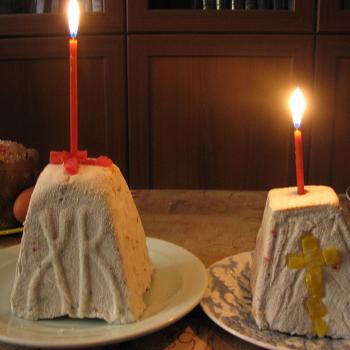
USSR Couldn't Snuff Out Easter—Now Russians Reap Hope
TRENDING AT PATHEOS Evangelical

How the author of the world's best hymn...
I've been working with John Newton for a while now. This makes...

Long before this Lectio Divina, Psalm 130 - the song - started...

What About the Trees? Another Living Parable
After I finished writing the last article about falling leaves as a...

Why Classical Education Is a Conversation, Not a...
Come and Read: Joy in Classical Education When I was a little...

Falling Leaves: A Living Parable on Letting Go
I’ve spent the vast majority of my life in the southeast corner...

Cornell University has received a great deal of negative publicity and intense...
view all Evangelical blogs
Ad-Free & Subscriber Log-In Subscription Support
- About Us
- 2026 Calendar
- Videos
- Podcasts
- Library of World Religions
- Faith In Media Tracker
- Advertise With Us
- Write for Us
- Privacy Policy
- Terms of Service
- Do Not Sell My Data
- Contact Us
- Radiant Digital
- Manage Newsletter Subscriptions
- Unsubscribe From Notifications
- Sitemap
Copyright 2008-2026, Patheos. All rights reserved.
Subscription Support Ad-Free & Subscriber Log-In
Follow Patheos