
BuddhistCatholicContemplativeEvangelicalGeneral ChristianHinduJewishLatter-day SaintMuslimNew VisionsProgressive Christian
Beliefs
- Buddhist
- Catholic
- Contemplative
- Evangelical
- General Christian
- Hindu
- Jewish
- Latter-day Saint
- More Voices
- Muslim
- New Visions
- Pagan
- Progressive Christian
Topics
- Religion News
- Food and Religion
- Sports and Religion
- Religious Art
- Religious Music and Entertainment
- Religious Events
- History and Religion
- Style and Religion
- Politics and Religion
- Women in Religion
- Recreation Outdoors and Religion
- Business Finance and Religion
- Careers Workplace and Religion
- Education and Religion
- Family Parenting and Religion
- Health Fitness and Religion
- Home and Religion
- Relationships and Religion
- Technology and Religion
- Travel and Religion
Columnists
- Buddhist Columnists
- Business Finance and Religion Columnists
- Careers Workplace and Religion Columnists
- Catholic Columnists
- Contemplative Columnists
- Education and Religion Columnists
- Evangelists Columnists
- Family Parenting and Religion Columnists
- General Christian Columnists
- Health Fitness and Religion Columnists
- Hindu Columnists
- History and Religion Columnists
- Home and Religion Columnists
- Jewish Columnists
- More Voices Columnists
- Latter Day Columnists
- Muslim Columnists
- New Visions Columnists
- Nonreligious Columnists
- Pagan Columnists
- Politics and Religion Columnists
- Progressive Columnists
- Recreation Outdoors and Religion Columnists
- Relationships and Religion Columnists
- Religion News Columnists
- Religious Art Columnists
- Religious Events Columnists
- Religious Music and Entertainment Columnists
- Sports and Religion Columnists
- Style and Religion Columnists
- Technology and Religion Columnists
- Travel and Religion Columnists
- Women in Religion Columnists
Resource Library
- 2026 Calendar
- Library of World Religions
- The 100 Most Holy Places on Earth
- Patheos Answers
- Podcasts
- Videos
- Faith Leaders Database
- Anglican Episcopalian
- Bahai
- Baptist
- Buddhism
- Christianity
- Confucianism
- Eastern Orthodoxy
- Hinduism
- Holiness and Pentecostal
- ISKCON
- Islam
- Judaism
- Lutheran
- Methodist
- The Church of Jesus Christ of Latter-day Saints
- New Age
- Paganism
- Presbytarian and Reformed
- Protestantism
- Religion Behind the Scenes
- Roman Catholic
- Scientology
- Shia Islam
- Sikhism
- Sufism
- Sunni Islam
- Taoism
- Zen
- See all religions
Research Tools
 Ad-Free & Subscriber Log-In Subscription Support
Ad-Free & Subscriber Log-In Subscription Support
Follow Patheos 

- Trending:
- Forgiveness
- |
- Marriage
- |
- Consciousness
- |
- Death Penalty
- |
- Election
- |
- Halloween

- Home
- Evangelical
- God’s Not A Convict
God’s Not A Convict
Last updated on: March 8, 2016 at 6:53 am by Guest Contributor
God’s Not A Convict 2016-02-19T14:59:05-04:00 Guest Contributor
Patheos Explore the world's faith through different perspectives on religion and spirituality! Patheos has the views of the prevalent religions and spiritualities of the world.

(Photo Credit: Unsplash)
by Lucas Miles
Let’s face it: God has a bad reputation. Rumor has it that he divinely designs cancer cells, systematically spirals tornadoes, and callously causes car accidents all for the sake of his glory. One might assume that such accusations against God could be propagated only by a slanderous enemy, but, amazingly Christians are often the source.
Quick to cite the suffering of Job, and the benefit of trials and temptations in the book of James, Christians pepper their well-intentioned comments to those who are suffering with reminders that “His ways are higher than our ways”, as if to take delight in this near-diabolical version of God.
Consider the words of a well-known theologian regarding a string of deadly tornadoes that demolished towns in a dozen states and killed forty-one people in 2012, “Jesus rules the wind. The tornadoes were his.” Continuing he added, “We do not ascribe such independent power to Mother Nature or to the devil. God alone has the last say in where and how the wind blows. If a tornado twists at 175 miles an hour and stays on the ground like a massive lawnmower for 50 miles, then God gave the command.”
Not surprising, this perspective of God has existed for hundreds, if not thousands of years, although its origin is based more in Greek mythology than in Scripture. In another era, perhaps pastors may have been able to slide such broad inconsistencies past religious congregants and God-fearing people, but today in a more secular, educated, and amalgamated culture, humankind is looking for answers.
Is God the source of my pain? Does he have the power to stop my suffering, but refuses to help? Why do some find deliverance, while others continue to writhe in the depths of despair and heartache? In an attempt to make sense of any situation we can’t understand, many believers have created Hallmark-like theologies and catchall phrases to spiritualize suffering. Here are just a few:
- God is in control.
- Everything happens for a reason.
- If God leads you to it, he’ll bring you through it.
- God didn’t cause it, but he allowed it.
Unfortunately, the list goes on and on.
Ironically, Job and his friends were recorded as uttering similar sentiments about God regarding the nature of Job’s suffering. After losing his children, his livestock, and most of his earthly possessions, Job was faced with the temptation to view God as the source of his pain. Trying to determine the cause of the devastation in his life, he said regarding God, “If it is not he, then who is it?” Having never considered that there may be another source of their problems, many people, like Job, have wrongly assumed that God is the author of their heartache. What’s worse is that believers have failed to even see Job’s own conclusion on the matter in the final chapter of his book.
After being confronted by God Himself, Job cries out, “Surely I spoke of things I did not understand, things too wonderful for me to know…My ears had heard of you but now my eyes have seen you. Therefore I despise myself and repent in dust and ashes.”
This is no small statement coming from the man who spent approximately 30 chapters pontificating about the Almighty and blaming God for his suffering. However in the end, when faced with the truth of God’s goodness, both Job and his friends repented for speaking theories about God which were not true.
Instead of learning from the story of Job, many religious thinkers still fall into the same trap of accusing God and spiritualizing suffering. It seems traditional theology, whether we like it or not, has made God out to be a convict. We’ve not only misunderstood him, but we’ve also slandered his character and falsely accused him. If God were a person, perpetrating the crimes religion claims he does, he would be arrested, convicted and sentenced to a life behind bars.
To further illustrate how Christians have embraced such slanderous theology, consider the words of a friend of ours after my wife and I miscarried our first and only pregnancy. “You know why this happened, don’t you?” our friend said with a caring twinkle in her eye. Continuing with the best of intentions she added, “Your little girl was so loved by God that he couldn’t stand to be apart from her for one second.”
Do condolences like these, well-intended as they are, line up with the character and nature of Jesus? The God who became flesh and gave his life for the sins of the entire world? I should hope not.
In Christ, we see the full manifestation of the character and nature of God in human form. As the writer of Hebrews explains, Jesus is the “exact representation” of the Father. So instead of trying to make sense of the God of the Old Testament by focusing solely on his judgement, we should instead look to Jesus and use Jesus’ life as a lens to interpret the Father’s heart and contextualize his actions. After all, Jesus himself said that “…anyone who had seen (him) had seen the Father.”
So let me ask you, did Christ ever cause negative circumstances in order to bring glory to himself? Never! Did Jesus ever give sickness only to heal it? Quite the contrary. In fact Christ, God incarnate, took upon himself our punishment, so that through his death, we might be proclaimed innocent and find peace with God.
No longer must anyone approach God in fearful expectation, because we have seen the Son. And since we know what Jesus looks like, we know what the Father looks like as well! Frankly, if the God we believe in doesn’t mirror Jesus, then we need to re-evaluate our understanding of God.
 Lucas Miles is a writer, speaker, life coach, film producer, and pastor. He pours energy and passion into helping others understand how God’s grace works on a practical level in all areas of life. Lucas is the senior pastor of Oasis Granger, a church community he and his wife, Krissy, planted in 2004. He is also president of the Oasis Network for Churches, a multifaceted church-planting organization, which services churches in more than ten countries. Lucas and Krissy have been married since 2001 and they reside in Granger, Indiana, with their doberman named Kenya. He is the author of Good God.
bad things happen to good people
Previous Post

March 1, 2016
I am N
Next Post

March 21, 2016 The Importance of Your Purpose
Browse Our Archives
Select a Category Culture Slideshow Uncategorized
Select a Month April 2026 October 2025 July 2025 April 2025 February 2025 October 2024 August 2023 June 2023 March 2023 February 2023 November 2022 April 2022 January 2022 December 2021 November 2021 October 2021 September 2021 August 2021 March 2021 February 2021 January 2021 December 2020 September 2020 August 2020 July 2020 May 2020 April 2020 March 2020 January 2020 December 2019 October 2019 September 2019 August 2019 July 2019 May 2019 April 2019 March 2019 January 2019 October 2018 August 2018 June 2018 May 2018 March 2018 February 2018 January 2018 December 2017 November 2017 October 2017 September 2017 August 2017 July 2017 May 2017 April 2017 March 2017 February 2017 January 2017 December 2016 November 2016 October 2016 September 2016 August 2016 July 2016 June 2016 May 2016 April 2016 March 2016 February 2016 January 2016 December 2015 November 2015 October 2015 September 2015 August 2015 July 2015 June 2015 May 2015 April 2015 March 2015 February 2015 January 2015 December 2014 November 2014 October 2014 September 2014
TAKE THE
Religious Wisdom Quiz
What was the primary construction in Biblical times?
Select your answer to see how you score.
Iron hammer Bronze chisel Wooden mallet Stone hammer
Related posts from The Evangelical Pulpit


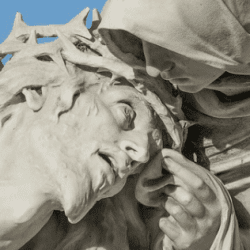
How Could a God of Love Allow Suffering?

TRENDING AT PATHEOS Evangelical

How the author of the world's best hymn...
I've been working with John Newton for a while now. This makes...

Long before this Lectio Divina, Psalm 130 - the song - started...

What About the Trees? Another Living Parable
After I finished writing the last article about falling leaves as a...

Why Classical Education Is a Conversation, Not a...
Come and Read: Joy in Classical Education When I was a little...

Falling Leaves: A Living Parable on Letting Go
I’ve spent the vast majority of my life in the southeast corner...

Cornell University has received a great deal of negative publicity and intense...
view all Evangelical blogs
Ad-Free & Subscriber Log-In Subscription Support
- About Us
- 2026 Calendar
- Videos
- Podcasts
- Library of World Religions
- Faith In Media Tracker
- Advertise With Us
- Write for Us
- Privacy Policy
- Terms of Service
- Do Not Sell My Data
- Contact Us
- Radiant Digital
- Manage Newsletter Subscriptions
- Unsubscribe From Notifications
- Sitemap
Copyright 2008-2026, Patheos. All rights reserved.
Subscription Support Ad-Free & Subscriber Log-In
Follow Patheos