
BuddhistCatholicContemplativeEvangelicalGeneral ChristianHinduJewishLatter-day SaintMuslimNew VisionsProgressive Christian
Beliefs
- Buddhist
- Catholic
- Contemplative
- Evangelical
- General Christian
- Hindu
- Jewish
- Latter-day Saint
- More Voices
- Muslim
- New Visions
- Pagan
- Progressive Christian
Topics
- Religion News
- Food and Religion
- Sports and Religion
- Religious Art
- Religious Music and Entertainment
- Religious Events
- History and Religion
- Style and Religion
- Politics and Religion
- Women in Religion
- Recreation Outdoors and Religion
- Business Finance and Religion
- Careers Workplace and Religion
- Education and Religion
- Family Parenting and Religion
- Health Fitness and Religion
- Home and Religion
- Relationships and Religion
- Technology and Religion
- Travel and Religion
Columnists
- Buddhist Columnists
- Business Finance and Religion Columnists
- Careers Workplace and Religion Columnists
- Catholic Columnists
- Contemplative Columnists
- Education and Religion Columnists
- Evangelists Columnists
- Family Parenting and Religion Columnists
- General Christian Columnists
- Health Fitness and Religion Columnists
- Hindu Columnists
- History and Religion Columnists
- Home and Religion Columnists
- Jewish Columnists
- More Voices Columnists
- Latter Day Columnists
- Muslim Columnists
- New Visions Columnists
- Nonreligious Columnists
- Pagan Columnists
- Politics and Religion Columnists
- Progressive Columnists
- Recreation Outdoors and Religion Columnists
- Relationships and Religion Columnists
- Religion News Columnists
- Religious Art Columnists
- Religious Events Columnists
- Religious Music and Entertainment Columnists
- Sports and Religion Columnists
- Style and Religion Columnists
- Technology and Religion Columnists
- Travel and Religion Columnists
- Women in Religion Columnists
Resource Library
- 2026 Calendar
- Library of World Religions
- The 100 Most Holy Places on Earth
- Patheos Answers
- Podcasts
- Videos
- Faith Leaders Database
- Anglican Episcopalian
- Bahai
- Baptist
- Buddhism
- Christianity
- Confucianism
- Eastern Orthodoxy
- Hinduism
- Holiness and Pentecostal
- ISKCON
- Islam
- Judaism
- Lutheran
- Methodist
- The Church of Jesus Christ of Latter-day Saints
- New Age
- Paganism
- Presbytarian and Reformed
- Protestantism
- Religion Behind the Scenes
- Roman Catholic
- Scientology
- Shia Islam
- Sikhism
- Sufism
- Sunni Islam
- Taoism
- Zen
- See all religions
Research Tools
 Ad-Free & Subscriber Log-In Subscription Support
Follow Patheos 

- Trending:
- Advent
- |
- Forgiveness
- |
- Thanksgiving
- |
- Election
- |
- Seasonal Holidays
- |
- Marriage

- Home
- Evangelical
- Divine Liturgist, Human Liturgies
Divine Liturgist, Human Liturgies
Last updated on: November 19, 2015 at 10:48 pm by Guest Contributor
Divine Liturgist, Human Liturgies 2015-11-19T22:48:49-04:00 Guest Contributor
Patheos Explore the world's faith through different perspectives on religion and spirituality! Patheos has the views of the prevalent religions and spiritualities of the world.

by Peter Leithart
God speaks and light appears. He separates light and darkness, assigns names to each, and judges the whole to be good. Next day, He’s at it again, speaking, separating, assessing, judging. And so it goes throughout the days of creation: With an insistent, incantatory rhythm, God speaks, sees, names, judges. Poetic yes, but more fundamentally, creation unfolds as the enacted poetry of liturgy.
From the first pages of Scripture, before we know much of anything about God, we know He’s a God of repetitive ritual actions and formalized speech. We already know He’s the divine liturgist.
Beginning with Day 3, something else begins to happen. On Day 1, God speaks to nothing, because there is nothing other than God. His speech makes the auditor. Once the seas and land have appeared, though, He addresses them. “Let the earth sprout vegetation” and “Let the waters teem with swarms of living creatures.” And when he calls on earth to sprout, fruit trees and grain plants spring up from the land. He calls on the waters to teem with living souls, and living souls swarm the seas.
God the divine liturgist forms creation as a liturgical partner, a respondent who can speak and act in ecstatic obedience to His creative word.
So the heavens tell the glory of God, and the firmament proclaims His handiwork. Day to day pours speech, and night to night pours out knowledge (Psalm 19). He calls the sun from its tent, and it comes racing across the sky like a mighty man. He speaks thunder, and cedars break, the mountains of Lebanon skip, the wilderness shakes, does calve (Psalm 29). All creation joins in the dialogue, the duet (Psalms 148-150). God speaks, and every creature responds not just with but as a form of praise.
Human beings are made in the image of this God, the God of repetitive, creative speech, the God who creates by ritual and liturgy. Made in His image, we are, whether we want to be or not, liturgical creatures.
We are more homo adorans than homo sapiens. Our most basic orientation comes not from what we think or feel, but from what or whom we worship. Our lives are driven by desires, our desires oriented in turn to an object of ultimate worship. We are created priests to lead a cosmic liturgy, to bring the whole world into the worship of God. Every creature has its own mode of praise, but creation’s praise is fulfilled in us.
No one expressed this more insistently than the eccentric English poet, Christopher Smart. At the beginning of his litany, Jubilate Agno, he calls on people and groups to worship along with an appropriate beast:
Rejoice in God, O ye Tongues; give the glory to the Lord, and the Lamb.
Nations, and languages, and every Creature, in which is the breath of Life.
Let man and beast appear before him, and magnify his name together.
Let Noah and his company approach the throne of Grace, and do homage to the Ark of their Salvation.
Let Abraham present a Ram, and worship the God of his Redemption.
Let Isaac, the Bridegroom, kneel with his Camels, and bless the hope of his pilgrimage.
Let Jacob, and his speckled Drove adore the good Shepherd of Israel.
Let Esau offer a scape Goat for his seed, and rejoice in the blessing of God his father.
Let Nimrod, the mighty hunter, bind a Leopard to the altar, and consecrate his spear to the Lord.
Let Ishmael dedicate a Tyger, and give praise for the liberty, in which the Lord has let him at large.
Let Balaam appear with an Ass, and bless the Lord his people and his creatures for a reward eternal.
Let Anah, the son of Zibion, lead a Mule to the temple, and bless God, who amerces the consolation of the creature for the service of Man.
Let Daniel come forth with a Lion, and praise God with all his might through faith in Christ Jesus.
Let Naphthali with an Hind give glory in the goodly words of Thanksgiving.
Let Aaron, the high priest, sanctify a Bull, and let him go free to the Lord and Giver of Life.
Let the Levites of the Lord take the Beavers of the brook alive into the Ark of the Testimony.
We are liturgical creatures in a broader sense too. Our lives and loves are patterned by repetitive sequences of action. The alarm clock scares us to life each morning at roughly the same time. We go through the same purifications and resurrections (coffee). We work, eat, and relax at specified times, and we retire at roughly the same time every night. Our years also pulse with periods of intense work punctuated by periods of relaxation, rest, and celebration. If we keep the liturgical calendar, the incarnation, life, death, resurrection, and ascension of the Son imprints itself on our time-keeping.
Without this sort of ritualization and habitual behavior, life would be overburdened with decisions: When shall I get up, how shall I prepare for the day, what route shall I take to work, when shall I eat? Acting out the liturgies of daily life, we can live without standing outside ourselves, spectators of our own existence.
We might think that this ritualization and un- self-consciousness inhibits freedom. We might think that it makes us less than fully human. The truth is nearer the opposite.
Jeremy Linn excepted, no basketball played calculates the thrust and arc of his free throw. Players practice by repeating the same movements again and again: Three dribbles, crouch and stare at the basket, bend the knees, flick and follow-through. How you do it matters less than the fact that it’s the same every time. The more automatic the free throw, the freer it is. Ritualized practice inscribes knowledge of shooting into the body.
A good pianist doesn’t decide where her fingers go as she plays. Stop to think about what you’re playing, and the terror of forgetfulness settles in. As long as the hours and hours of practice have trained the fingers to go where they should, as long as the pianist can rely on finger memory, she’s fine. Musical memory is ritualized into the fingers.
This self-forgetfulness is important at the very highest levels of human action as well. In Letters To Malcolm, CS Lewis famously challenged the lust for liturgical novelty. The best worship is the worship we don’t notice, because if we don’t notice it, we also don’t notice ourselves: “Novelty, simply as such, can have only an entertainment value. And they don’t go to church to be entertained. They go to use the service, or, if you prefer, to enact it. Every service is a structure of acts and words through which we receive a sacrament, or repent, or supplicate, or adore. And it enables us to do these things best — if you like, it ‘works’ best — when, through long familiarity, we don’t have to think about it. As long as you notice, and have to count, the steps, you are not yet dancing but only learning to dance. A good shoe is a shoe you don’t notice. Good reading becomes possible when you need not consciously think about eyes, or light, or print, or spelling. The perfect church service would be one we were almost unaware of; our attention would have been on God. But every novelty prevents this. It fixes our attention on the service itself; and thinking about the worship is a different thing from worshipping.” Worship is for worshiping God. Only Pharisees delight in watching themselves worship God.
We are freest – most lordly and Lordlike and human – when we are least self-conscious, when our actions are most liturgical and ritualized. We are most worshipful when we mimic the divine Liturgist who liturgized us into being.
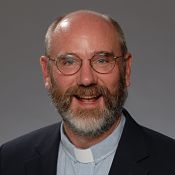
Photo by Mark LaMoreaux, courtesy of New Saint Andrews College
Peter Leithart is President of the Theopolis Institute in Birmingham, Alabama. To learn more about Theopolis, sign up for the e-newsletter In Medias Res.
Previous Post

October 28, 2015
How Modesty Became My Frenemy
Next Post

November 30, 2015 Suggestions on an Evangelical Response to the France Attacks
Browse Our Archives
Select a Category Culture Slideshow Uncategorized
Select a Month November 2026 April 2026 October 2025 July 2025 April 2025 February 2025 October 2024 August 2023 June 2023 March 2023 February 2023 November 2022 April 2022 January 2022 December 2021 November 2021 October 2021 September 2021 August 2021 March 2021 February 2021 January 2021 December 2020 September 2020 August 2020 July 2020 May 2020 April 2020 March 2020 January 2020 December 2019 October 2019 September 2019 August 2019 July 2019 May 2019 April 2019 March 2019 January 2019 October 2018 August 2018 June 2018 May 2018 March 2018 February 2018 January 2018 December 2017 November 2017 October 2017 September 2017 August 2017 July 2017 May 2017 April 2017 March 2017 February 2017 January 2017 December 2016 November 2016 October 2016 September 2016 August 2016 July 2016 June 2016 May 2016 April 2016 March 2016 February 2016 January 2016 December 2015 November 2015 October 2015 September 2015 August 2015 July 2015 June 2015 May 2015 April 2015 March 2015 February 2015 January 2015 December 2014 November 2014 October 2014 September 2014
TAKE THE
Religious Wisdom Quiz
“The Lord is my light and my _______ — whom shall I fear?"
Select your answer to see how you score.
Salvation Leader Lamp Hope
Related posts from The Evangelical Pulpit
How Singing the Psalms Provides a Fixed Point...

TRENDING AT PATHEOS Evangelical

When you hear the word riches, what comes to mind? For most...

Don’t Miss the Parents: A Creative Christmas Meditation
As we enter the Advent Season, I see many people trying to...

Making Stones Into Bread: Choosing the “Right” Work
I was on my online arts ministry Zoom meeting with the International...

Ukraine’s exhausted Christians face fifth winter of war
By Julian Lukins The full-scale war in Ukraine is taking “a serious...

Russell Brand's Conviction is not anti-Christian Persecution
How do we shed the reputation that the Church is OK with...

Have you ever caught yourself saying, “I’ll do it tomorrow,” or “Now...
view all Evangelical blogs
Ad-Free & Subscriber Log-In Subscription Support
- About Us
- 2026 Calendar
- Videos
- Podcasts
- Library of World Religions
- Faith In Media Tracker
- Advertise With Us
- Write for Us
- Privacy Policy
- Terms of Service
- Do Not Sell My Data
- Contact Us
- Radiant Digital
- Manage Newsletter Subscriptions
- Unsubscribe From Notifications
- Sitemap
Copyright 2008-2026, Patheos, part of the Radiant Digital network of media brands. All rights reserved.
Subscription Support Ad-Free & Subscriber Log-In
Follow Patheos