
BuddhistCatholicContemplativeEvangelicalGeneral ChristianHinduJewishLatter-day SaintMuslimNew VisionsProgressive Christian
Beliefs
- Buddhist
- Catholic
- Contemplative
- Evangelical
- General Christian
- Hindu
- Jewish
- Latter-day Saint
- More Voices
- Muslim
- New Visions
- Pagan
- Progressive Christian
Topics
- Religion News
- Food and Religion
- Sports and Religion
- Religious Art
- Religious Music and Entertainment
- Religious Events
- History and Religion
- Style and Religion
- Politics and Religion
- Women in Religion
- Recreation Outdoors and Religion
- Business Finance and Religion
- Careers Workplace and Religion
- Education and Religion
- Family Parenting and Religion
- Health Fitness and Religion
- Home and Religion
- Relationships and Religion
- Technology and Religion
- Travel and Religion
Columnists
- Buddhist Columnists
- Business Finance and Religion Columnists
- Careers Workplace and Religion Columnists
- Catholic Columnists
- Contemplative Columnists
- Education and Religion Columnists
- Evangelists Columnists
- Family Parenting and Religion Columnists
- General Christian Columnists
- Health Fitness and Religion Columnists
- Hindu Columnists
- History and Religion Columnists
- Home and Religion Columnists
- Jewish Columnists
- More Voices Columnists
- Latter Day Columnists
- Muslim Columnists
- New Visions Columnists
- Nonreligious Columnists
- Pagan Columnists
- Politics and Religion Columnists
- Progressive Columnists
- Recreation Outdoors and Religion Columnists
- Relationships and Religion Columnists
- Religion News Columnists
- Religious Art Columnists
- Religious Events Columnists
- Religious Music and Entertainment Columnists
- Sports and Religion Columnists
- Style and Religion Columnists
- Technology and Religion Columnists
- Travel and Religion Columnists
- Women in Religion Columnists
Resource Library
- 2026 Calendar
- Library of World Religions
- The 100 Most Holy Places on Earth
- Patheos Answers
- Podcasts
- Videos
- Faith Leaders Database
- Anglican Episcopalian
- Bahai
- Baptist
- Buddhism
- Christianity
- Confucianism
- Eastern Orthodoxy
- Hinduism
- Holiness and Pentecostal
- ISKCON
- Islam
- Judaism
- Lutheran
- Methodist
- The Church of Jesus Christ of Latter-day Saints
- New Age
- Paganism
- Presbytarian and Reformed
- Protestantism
- Religion Behind the Scenes
- Roman Catholic
- Scientology
- Shia Islam
- Sikhism
- Sufism
- Sunni Islam
- Taoism
- Zen
- See all religions
Research Tools
 Ad-Free & Subscriber Log-In Subscription Support
Ad-Free & Subscriber Log-In Subscription Support
Follow Patheos 

- Trending:
- Forgiveness
- |
- Marriage
- |
- Consciousness
- |
- Death Penalty
- |
- Election
- |
- Halloween

- Home
- Evangelical
- Is the Scientific Method Exclusive to Science?
Is the Scientific Method Exclusive to Science?
Last updated on: August 13, 2015 at 8:24 am by Guest Contributor
Is the Scientific Method Exclusive to Science? 2015-08-13T08:24:49-04:00 Guest Contributor
Patheos Explore the world's faith through different perspectives on religion and spirituality! Patheos has the views of the prevalent religions and spiritualities of the world.
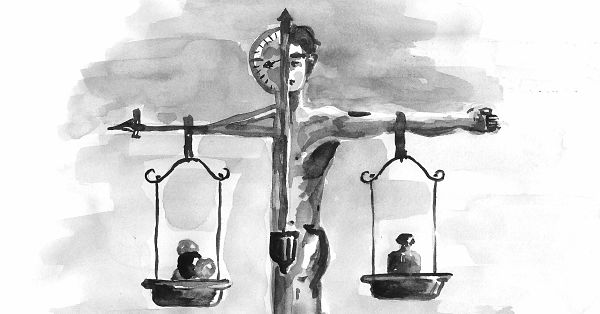
(Copyright Rita Farkas)
by Istvan Kolossvary
Arguably the most commonly cited criticism against religion, and for some reason especially against Christians is that science is based on verifiable facts whereas religion is based on unprovable faith. Jerry Coyne’s new book “Faith vs. Fact: Why Science and Religion Are Incompatible” recently featured in National Geographic andScience News continues the tradition of the new atheists originated in the works of their first evangelist Richard Dawkins and takes aim at religion.
In this blog post I am not going to argue pro or con, I simply want to advocate a straightforward generalization of the scientific method and suggest that it can be used beyond the scope of science, including the arts and religion. The way the scientific method works is quite simple, and it has been amazingly successful for the past five hundred years. Observation of natural phenomena and/or pure theoretical thinking (nowadays aided by computer simulation) lead to ideas that will crystallize in a scientific theory.
I could quote the anecdote with Isaac Newton and the apple, but I’d rather mention Albert Einstein’s observation and ensuing thought experiment riding an elevator. Einstein recognized that the acceleration we feel when stepping on the gas pedal driving our car is equivalent to the acceleration we experience in (unfortunate) free fall. The combined experimental and thought process, then, resulted in one of the earth shattering scientific theories of all time. Given a theory the scientific method calls for experimental verification.
What it means is that scientists apply the theory to make (mathematical) predictions of the outcome of physical experiments that can be carried out in a real setting at the lab. Thus, comparing the results of the physical experiment with the theoretical prediction provides a powerful means for the scientific community to test the theory. The negative is simple, if the results disagree (given that the physical experiment has been carried out correctly, which is no small feat, just think of the 20 mile radius underground particle accelerator facility at CERN in Geneva, Switzerland) the theory is repudiated. The positive, meaning that the predictions match the experimental results (to within a certain statistical tolerance) is not so simple, though, this only means that the experiment has not refuted the theory. It will require numerous experiments over a long period of time to provide reasonable evidence to the point that the scientific community accepts the theory.
Jerry Coyne and the new atheists dismiss religion, because religion is based on faith and not fact. Interestingly, the new atheists, or nobody for that matter dismisses the arts, though. So, how is art tested? What works of art are refuted and what works of art are here to stay? I argue that art is tested by the same scientific method—with people replacing the apparatus in the experiment.
Some would say that the most sensitive experimental device is a pencil standing on its tip; the tiniest push would make it tip over. I would argue, however, that the human person is infinitely more sensitive and is an ideal instrument to experimentally verify artwork. Why do we listen to Mozart and not Salieri, what crystallizes the collection of pieces displayed in the great art museums of the world over time, and what works are delegated to the dungeons of underground storage, once acquired by museum curators as prospective works of art? The masterpieces of art are selected by the same scientific method, by how much they touch the souls of people and the selection process takes a long time, all too often beyond the years of the artist so he or she can enjoy success. The exact same thing in literature, what will determine which novels or poems people read a hundred years after they had been written? Bad literature, bad music, bad paintings are repudiated by the scientific method using people as the experimental apparatus.
Similar in political systems. The ones that people tolerate stay longer and the ones that oppress people will be thrown over, sooner or later. I believe that the same scientific method can be applied to religion. The new atheists don’t seem to understand the difference between God and religion and between faith and religion. We are talking about religion here, the main branches Buddhism, Christianity, Hinduism, Islam, and Judaism with all their factions, and hundreds of other religions. Religion is a shared human response to God’s calling and it is a unique and precious human experience.
Religions are in large part man made, especially in their every day manifestations at temples, churches, mosques, congregations, assemblies, etc., and they change over time. What if not people would be best suited to test them? The scientific method can be applied to religions similar to the arts; the more they touch the human soul and the more they make people agents of good the more they are verified but when they do harm, they are repudiated. It is people who test religion through their ultra sensitive souls far more advanced than any man made instrument. The statement so loudly voiced by the new atheists that religions are irrational, simply does not stand to reason.
 István Kolossváry is a scientist and professor working in the research field of computer simulations of chemical and biological systems. He holds multiple advanced degrees from the Budapest University of Technology and the Hungarian Academy of Sciences. István has been a researcher at various universities and pharmaceutical research labs in Europe and in the United States including Columbia University and most recently a New York based private research organization. He won the 2006 Hungarian Academy of Sciences Book Award in Chemistry for co-authoring Introduction to Computer Aided Drug Design. Over 25 years in his career as a scientist, István has privately grappled with the chasm between science and theology, two disciplines he holds dear. In his debut work The Fabric of Eternity, István shares results from years of scientific inquiry into the works of divine providence and concludes there is solid scientific evidence to suggest that rejecting God and His loving care is against human nature. www.istvankolossvary.com
Previous Post

August 4, 2015
God and Silicon Valley
Next Post

August 18, 2015 Protect Your Devotions, They Could Transform Your Marriage
Browse Our Archives
Select a Category Culture Slideshow Uncategorized
Select a Month April 2026 October 2025 July 2025 April 2025 February 2025 October 2024 August 2023 June 2023 March 2023 February 2023 November 2022 April 2022 January 2022 December 2021 November 2021 October 2021 September 2021 August 2021 March 2021 February 2021 January 2021 December 2020 September 2020 August 2020 July 2020 May 2020 April 2020 March 2020 January 2020 December 2019 October 2019 September 2019 August 2019 July 2019 May 2019 April 2019 March 2019 January 2019 October 2018 August 2018 June 2018 May 2018 March 2018 February 2018 January 2018 December 2017 November 2017 October 2017 September 2017 August 2017 July 2017 May 2017 April 2017 March 2017 February 2017 January 2017 December 2016 November 2016 October 2016 September 2016 August 2016 July 2016 June 2016 May 2016 April 2016 March 2016 February 2016 January 2016 December 2015 November 2015 October 2015 September 2015 August 2015 July 2015 June 2015 May 2015 April 2015 March 2015 February 2015 January 2015 December 2014 November 2014 October 2014 September 2014
TAKE THE
Religious Wisdom Quiz
Who was Elijah's successor, receiving a double portion of his spirit?
Select your answer to see how you score.
Elisha Obadiah Micaiah Samuel
Related posts from The Evangelical Pulpit

‘Do Not Despise These Small Beginnings’: Billy Graham’s...

Pastor Steven Furtick and Evangelical Heresy: Is Almost...


TRENDING AT PATHEOS Evangelical

How the author of the world's best hymn...
I've been working with John Newton for a while now. This makes...

Long before this Lectio Divina, Psalm 130 - the song - started...

What About the Trees? Another Living Parable
After I finished writing the last article about falling leaves as a...

Why Classical Education Is a Conversation, Not a...
Come and Read: Joy in Classical Education When I was a little...

Falling Leaves: A Living Parable on Letting Go
I’ve spent the vast majority of my life in the southeast corner...

Cornell University has received a great deal of negative publicity and intense...
view all Evangelical blogs
Ad-Free & Subscriber Log-In Subscription Support
- About Us
- 2026 Calendar
- Videos
- Podcasts
- Library of World Religions
- Faith In Media Tracker
- Advertise With Us
- Write for Us
- Privacy Policy
- Terms of Service
- Do Not Sell My Data
- Contact Us
- Radiant Digital
- Manage Newsletter Subscriptions
- Unsubscribe From Notifications
- Sitemap
Copyright 2008-2026, Patheos. All rights reserved.
Subscription Support Ad-Free & Subscriber Log-In
Follow Patheos