
BuddhistCatholicContemplativeEvangelicalGeneral ChristianHinduJewishLatter-day SaintMuslimNew VisionsProgressive Christian
Beliefs
- Buddhist
- Catholic
- Contemplative
- Evangelical
- General Christian
- Hindu
- Jewish
- Latter-day Saint
- More Voices
- Muslim
- New Visions
- Pagan
- Progressive Christian
Topics
- Religion News
- Food and Religion
- Sports and Religion
- Religious Art
- Religious Music and Entertainment
- Religious Events
- History and Religion
- Style and Religion
- Politics and Religion
- Women in Religion
- Recreation Outdoors and Religion
- Business Finance and Religion
- Careers Workplace and Religion
- Education and Religion
- Family Parenting and Religion
- Health Fitness and Religion
- Home and Religion
- Relationships and Religion
- Technology and Religion
- Travel and Religion
Columnists
- Buddhist Columnists
- Business Finance and Religion Columnists
- Careers Workplace and Religion Columnists
- Catholic Columnists
- Contemplative Columnists
- Education and Religion Columnists
- Evangelists Columnists
- Family Parenting and Religion Columnists
- General Christian Columnists
- Health Fitness and Religion Columnists
- Hindu Columnists
- History and Religion Columnists
- Home and Religion Columnists
- Jewish Columnists
- More Voices Columnists
- Latter Day Columnists
- Muslim Columnists
- New Visions Columnists
- Nonreligious Columnists
- Pagan Columnists
- Politics and Religion Columnists
- Progressive Columnists
- Recreation Outdoors and Religion Columnists
- Relationships and Religion Columnists
- Religion News Columnists
- Religious Art Columnists
- Religious Events Columnists
- Religious Music and Entertainment Columnists
- Sports and Religion Columnists
- Style and Religion Columnists
- Technology and Religion Columnists
- Travel and Religion Columnists
- Women in Religion Columnists
Resource Library
- 2026 Calendar
- Library of World Religions
- The 100 Most Holy Places on Earth
- Patheos Answers
- Podcasts
- Videos
- Faith Leaders Database
- Anglican Episcopalian
- Bahai
- Baptist
- Buddhism
- Christianity
- Confucianism
- Eastern Orthodoxy
- Hinduism
- Holiness and Pentecostal
- ISKCON
- Islam
- Judaism
- Lutheran
- Methodist
- The Church of Jesus Christ of Latter-day Saints
- New Age
- Paganism
- Presbytarian and Reformed
- Protestantism
- Religion Behind the Scenes
- Roman Catholic
- Scientology
- Shia Islam
- Sikhism
- Sufism
- Sunni Islam
- Taoism
- Zen
- See all religions
Research Tools
 Ad-Free & Subscriber Log-In Subscription Support
Ad-Free & Subscriber Log-In Subscription Support
Follow Patheos 

- Trending:
- Forgiveness
- |
- Marriage
- |
- Consciousness
- |
- Death Penalty
- |
- Election
- |
- Halloween

- Home
- Evangelical
- What God Does To Our Faces
What God Does To Our Faces
Last updated on: June 9, 2015 at 7:10 am by Guest Contributor
What God Does To Our Faces 2015-06-09T07:10:10-04:00 Guest Contributor
Patheos Explore the world's faith through different perspectives on religion and spirituality! Patheos has the views of the prevalent religions and spiritualities of the world.
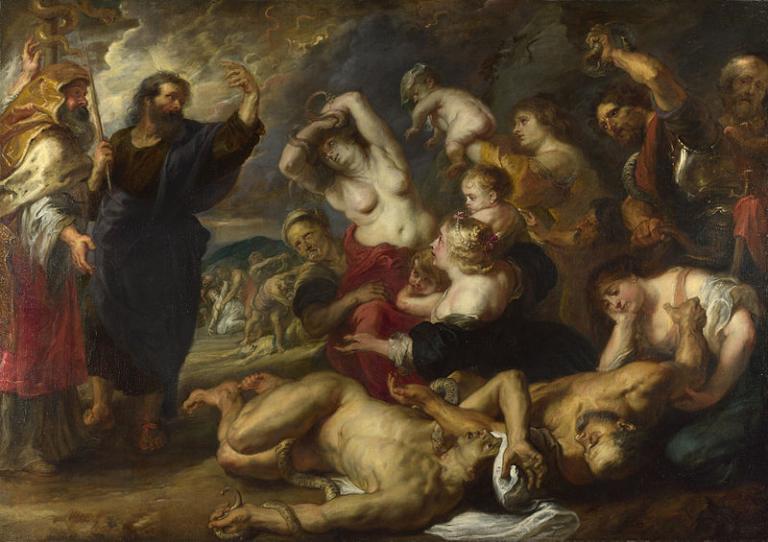
by Brandon Showalter
Whenever I read the story of Moses entering the Tent of Meeting in Exodus 33, David’s words in Psalm 34:5, or Paul’s wisdom in 2 Corinthians 3:7-12, I am always intrigued by the effect God himself has on our faces. I am definitely not speaking of the insufferable, plastic Christian smile I must admit that I have worn more than once to communicate that I am just fine when in fact I am not. I am speaking of the blazing eyes of someone who exudes the love of Christ so brightly that you can almost reach out and touch it; it is the kind of captivating gaze upon which you want to stare for hours. Some of the most powerful encounters with the Lord I have ever experienced have been when I have beheld the face of someone who knows Him so intimately that his or her countenance effortlessly emanates his radiance. Jesus said in the Sermon on the Mount that the pure in heart would see God, and you can certainly tell who has seen him because those who have seen him are like Him.
This is more than what some might call an inner light, a twinkle in the eye, or a sunny, sanguine demeanor. This is the essence of God’s love, the glory that overcomes fear and crushes demonic strongholds. When a Christian becomes conscious of this glory, unlike the type Moses encountered in the Tent which faded away, the surpassing glory never decreases and its substance spills over into the atmosphere through his or her face. No longer must we veil our heads to keep others from looking at a brilliance that slowly dissipates from view, but we have the distinct privilege of carrying a lasting and ever-increasing presence that causes those who do not know Jesus to be drawn to God. Everyone wants a King like Him; Jesus is, after all, the Desire of Nations. Far too many are just not yet aware of it.
“As He is, so are we in this world,” wrote John the Beloved (1 John 4:17), the man who knew the rhythms of the heart of the Lord more than any of the other disciples. He penned that particular passage after Christ had been raised from the dead and the Holy Spirit had been poured out at Pentecost. Yet prior to Pentecost, Jesus asked Mary Magdalene in the garden to not hold onto him because he had not yet gone to the Father (John 20:17), and although Jesus announced that he was entering into his glory right after Judas Iscariot left the table at the Last Supper, the final step in that process was him actually returning to the Father. Unless he went, the Spirit could not come. The Greek word for glory used all throughout the New Testament, doxa, means radiance, brilliance. So until the Son of Man was glorified, clothed in the white-hot radiance of God, there could be no outpouring of the Holy Ghost.
Our Father not only sent the Son to die and be raised for us, he also sent his Spirit to inhabit and rest upon us. He cannot get much nearer to us than in and on us, and the Holy Spirit who was poured out was not the spirit of a man who was about to be nailed to a wooden cross but of the man whom John the Beloved saw while on Patmos: the man Jesus who speaks with the voice of rushing waters, has feet like burnished bronze, hair white like wool and—what else?—a face beaming like the sun. As He is, so are we in this world. The Son of Man remains glorified, wrapped in light, seated at the Father’s right hand, and in that heavenly realm we are seated right there with him.
We received that Spirit, he who is a victorious, glorified Son by whose indwelling we are enabled to live and be something absolutely impossible apart from him: holy. Shame and its accompanying darkness does not, indeed it cannot, cover the face of someone saturated in holiness because in the fires of God’s love it is impossible to be conscious of regret or past sin. He can only be aware of Him who has destroyed his transgressions and exchanged them for glory. Squeaky-clean conduct and the performance-oriented work of religious striving collapses in His presence, every pretension with which we mask ourselves stripped away and replaced with the Spirit by whom we can cry out to Abba Father anytime. That is real holiness, such intimate proximity to God.
As He is, so are we: radiant, glorious, and free, with faces that blaze like torches in this dark and troubled world. How we need all need this revelation. Perhaps the next time someone prays that the Lord bless and keep us and make the light of his countenance to shine upon us—and the risen Lord has one spectacularly bright countenance—we might apprehend this truth a bit more and our own faces display the glory of God more fully.
 Brandon Showalter is a graduate of Bethel School of Ministry in Redding, California and his favorite thing to do in life is to sing. A recording artist and classically trained lyric tenor, his debut album, Song of Psalms EP, includes five original adaptations of selected Psalms set to melodies inspired by the Holy Spirit. Passionate about discipleship, dynamic intercessory prayer, and raising up people to live in the fullness of their identity in Christ, Brandon has traversed several continents to minister in a variety of contexts, both inside and outside the local church. Originally from the Shenandoah Valley of Virginia, he received his BA in International Studies and Spanish in 2007 from Bridgewater College of Virginia and is a fellow of the John Jay Institute for Faith, Society and Law.
Previous Post

June 5, 2015
Preach as a Dying Man to Dying Men
Next Post

June 10, 2015 Mr. Campolo - Opinions Change, but Truth Does Not
Browse Our Archives
Select a Category Culture Slideshow Uncategorized
Select a Month April 2026 October 2025 July 2025 April 2025 February 2025 October 2024 August 2023 June 2023 March 2023 February 2023 November 2022 April 2022 January 2022 December 2021 November 2021 October 2021 September 2021 August 2021 March 2021 February 2021 January 2021 December 2020 September 2020 August 2020 July 2020 May 2020 April 2020 March 2020 January 2020 December 2019 October 2019 September 2019 August 2019 July 2019 May 2019 April 2019 March 2019 January 2019 October 2018 August 2018 June 2018 May 2018 March 2018 February 2018 January 2018 December 2017 November 2017 October 2017 September 2017 August 2017 July 2017 May 2017 April 2017 March 2017 February 2017 January 2017 December 2016 November 2016 October 2016 September 2016 August 2016 July 2016 June 2016 May 2016 April 2016 March 2016 February 2016 January 2016 December 2015 November 2015 October 2015 September 2015 August 2015 July 2015 June 2015 May 2015 April 2015 March 2015 February 2015 January 2015 December 2014 November 2014 October 2014 September 2014
TAKE THE
Religious Wisdom Quiz
What prophet challenged King Ahab and Queen Jezebel over Naboth's vineyard?
Select your answer to see how you score.
Elisha Nathan Elijah Amos
Related posts from The Evangelical Pulpit

How Singing the Psalms Provides a Fixed Point...

TRENDING AT PATHEOS Evangelical

How the author of the world's best hymn...
I've been working with John Newton for a while now. This makes...

Long before this Lectio Divina, Psalm 130 - the song - started...

What About the Trees? Another Living Parable
After I finished writing the last article about falling leaves as a...

Why Classical Education Is a Conversation, Not a...
Come and Read: Joy in Classical Education When I was a little...

Falling Leaves: A Living Parable on Letting Go
I’ve spent the vast majority of my life in the southeast corner...

Cornell University has received a great deal of negative publicity and intense...
view all Evangelical blogs
Ad-Free & Subscriber Log-In Subscription Support
- About Us
- 2026 Calendar
- Videos
- Podcasts
- Library of World Religions
- Faith In Media Tracker
- Advertise With Us
- Write for Us
- Privacy Policy
- Terms of Service
- Do Not Sell My Data
- Contact Us
- Radiant Digital
- Manage Newsletter Subscriptions
- Unsubscribe From Notifications
- Sitemap
Copyright 2008-2026, Patheos. All rights reserved.
Subscription Support Ad-Free & Subscriber Log-In
Follow Patheos