
BuddhistCatholicContemplativeEvangelicalGeneral ChristianHinduJewishLatter-day SaintMuslimNew VisionsProgressive Christian
Beliefs
- Buddhist
- Catholic
- Contemplative
- Evangelical
- General Christian
- Hindu
- Jewish
- Latter-day Saint
- More Voices
- Muslim
- New Visions
- Pagan
- Progressive Christian
Topics
- Religion News
- Food and Religion
- Sports and Religion
- Religious Art
- Religious Music and Entertainment
- Religious Events
- History and Religion
- Style and Religion
- Politics and Religion
- Women in Religion
- Recreation Outdoors and Religion
- Business Finance and Religion
- Careers Workplace and Religion
- Education and Religion
- Family Parenting and Religion
- Health Fitness and Religion
- Home and Religion
- Relationships and Religion
- Technology and Religion
- Travel and Religion
Columnists
- Buddhist Columnists
- Business Finance and Religion Columnists
- Careers Workplace and Religion Columnists
- Catholic Columnists
- Contemplative Columnists
- Education and Religion Columnists
- Evangelists Columnists
- Family Parenting and Religion Columnists
- General Christian Columnists
- Health Fitness and Religion Columnists
- Hindu Columnists
- History and Religion Columnists
- Home and Religion Columnists
- Jewish Columnists
- More Voices Columnists
- Latter Day Columnists
- Muslim Columnists
- New Visions Columnists
- Nonreligious Columnists
- Pagan Columnists
- Politics and Religion Columnists
- Progressive Columnists
- Recreation Outdoors and Religion Columnists
- Relationships and Religion Columnists
- Religion News Columnists
- Religious Art Columnists
- Religious Events Columnists
- Religious Music and Entertainment Columnists
- Sports and Religion Columnists
- Style and Religion Columnists
- Technology and Religion Columnists
- Travel and Religion Columnists
- Women in Religion Columnists
Resource Library
- 2026 Calendar
- Library of World Religions
- The 100 Most Holy Places on Earth
- Patheos Answers
- Podcasts
- Videos
- Faith Leaders Database
- Anglican Episcopalian
- Bahai
- Baptist
- Buddhism
- Christianity
- Confucianism
- Eastern Orthodoxy
- Hinduism
- Holiness and Pentecostal
- ISKCON
- Islam
- Judaism
- Lutheran
- Methodist
- The Church of Jesus Christ of Latter-day Saints
- New Age
- Paganism
- Presbytarian and Reformed
- Protestantism
- Religion Behind the Scenes
- Roman Catholic
- Scientology
- Shia Islam
- Sikhism
- Sufism
- Sunni Islam
- Taoism
- Zen
- See all religions
Research Tools
 Ad-Free & Subscriber Log-In Subscription Support
Ad-Free & Subscriber Log-In Subscription Support
Follow Patheos 

- Trending:
- Forgiveness
- |
- Marriage
- |
- Consciousness
- |
- Death Penalty
- |
- Election
- |
- Halloween

- Home
- Evangelical
- Let the Seven Deadly Sins Guide Your Parenting
Let the Seven Deadly Sins Guide Your Parenting
Last updated on: June 22, 2015 at 8:52 am by Guest Contributor
Let the Seven Deadly Sins Guide Your Parenting 2015-06-22T08:52:31-04:00 Guest Contributor
Patheos Explore the world's faith through different perspectives on religion and spirituality! Patheos has the views of the prevalent religions and spiritualities of the world.
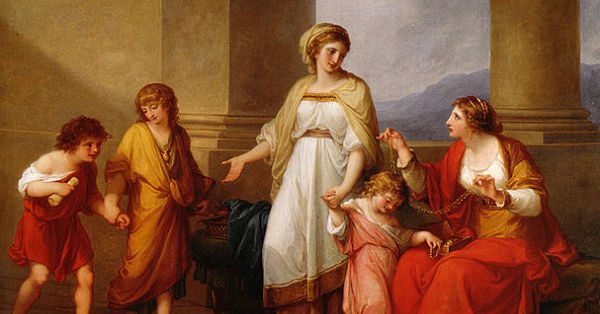
by Ken Roach
Modern parenting tends to lean heavily on either behavior—what children do—or on education—what children think. A growing number of parents, however, are most concerned with identity—who children become. I know for my wife and me, helping to form the character of our two children is far more important than making sure they follow a list of rules.
So, when my pastor suggested a few years ago that parents could be guided by the ancient list of “seven deadly sins,” I thought he had lost his mind. Traditionally the seven deadly sins include pride, greed, lust, envy, sloth, gluttony, and wrath. Although lists of sins like this have been around since the early centuries of Church history, today they are generally neglected.
However, the more I looked into the real meaning this ancient tradition, the more convinced I became that it could indeed be a powerful diagnostic tool for evaluating our children’s spiritual growth. When complemented with the list of seven cardinal virtues,they provide a practical framework for the process of Christian parenting.
At first glance, using the seven deadly sins could sound like a legalistic way to parent. However, to understand what is meant by a “deadly” sin we need to move from an exclusively legal view of sin and recover the biological view of sin.
Here’s what I mean: When Christians talk about sin today, the emphasis is typically on a violation of God’s law, a specific action which you either commit or don’t commit. A parent’s role in the legal view is to teach children the rules to obey, or else (more likely in our post-modern culture) to assure children that God forgives us when we break the rules. The legal view tends to stress that all sins are equal in God’s sight, which makes categorizing certain sins as more deadly a foreign idea.
In contrast, the biological view sees sin more like a weed growing in a garden. Sin is not just a one-time action, it is a tendency or inclination that takes on a life of its own and grows over time if not eradicated. Thus, we not only need God’s forgiveness, but also God’s healing. Salvation viewed holistically is the ongoing process by which God restores us to the fullness of life we were created to enjoy. Just as some diseases are worse than others, so some sins as more deadly than others because they have more destructive effects on our souls.
Take greed, for example. What begins as a seed of temptation—an urge to grasp on to things, grows into an obsession with accumulating possessions or experiences, and culminates with the deadly fruit of idolatrous materialism. This results in choking out all desire for God in the rush to grab more money, more wealth, more stuff. The single root of greed can have many surface forms: in one person it may lead to outright stealing, while in another it produces the seemingly opposite effect of becoming a workaholic. Thinking through the seven deadly sins enables us to see how these very different symptoms grow out of a common germ. We could apply the same thinking to lust, pride, gluttony, and the other deadly sins.
Which brings us back to parenting: it’s easy for moms and dads to underestimate the seriousness of sin in its “seed” stage. We tend to focus on behaviors that violate the rules, but we can leave unchecked seemingly innocent expressions of pride, or sloth, or wrath, that will eventually become poisonous. If we are to “bring up [our children] in the discipline and instruction of the Lord” (Eph. 6:4 NRSV), we need to become like master gardeners, able to spot weeds and cooperate with the Holy Spirit in removing them as early as possible. A master gardener faithfully and tenderly prunes the garden; he is aware of each variety’s color and potential and desires its full beauty. That’s where a list like the seven deadly sins comes in handy.
Of course, removing weeds alone never made a beautiful garden. We must also plant and water and fertilize the right kinds of seeds. Thus each of the seven deadly sins has a cardinal virtue to be nurtured: humility, generosity, patience, diligence, chastity, kindness, self-control. Here again, the legal view gives us rules to follow to “do the right thing,” but the biological view gives us tendencies and inclinations to be strengthened and developed.
Let’s say you suspect pride is becoming an issue for your son or daughter. Certainly, there are rules to put in place for him, like not bragging or boasting. But there are also practices to encourage which will nurture humility, such as having him acknowledge those who have helped him whenever he is recognized for an accomplishment. More broadly, regular practices such as participation in worship and involvement in service to others provide the kind of soil where humility can grow and pride is kept in check.
Even more important than diagnosing our children, the seven deadly sins guides parents by providing a diagnostic tool for our own hearts. Jesus said, “A disciple is not above the teacher, but everyone who is fully qualified will be like the teacher.” (Luke 6:40 NRSV) In other words, all things considered, chances are your children will turn out to be a lot like you when they are fully grown, which can be a terrifying thought for any honest parent. Yet, it can also be a source of hope: if we are willing to confront the sins in our own hearts, we can have confidence that our children will also be able to escape those deadly traps.
Which is why Jesus goes on to say, “Why do you see the speck in your neighbor’s eye, but do not notice the log in your own eye? Or how can you say to your neighbor, ‘Friend, let me take out the speck in your eye,’ when you yourself do not see the log in your own eye? You hypocrite, first take the log out of your own eye, and then you will see clearly to take the speck out of your neighbor’s eye.” (Luke 6:41-42 NRSV)
No “neighbor” is nearer to home than our own children. Remove the log of lust from your own eye, Dad, and you will see more clearly to remove the speck of impurity from your son’s eye. Remove the log of envy from your own eye, Mom, and you will see more clearly to remove the speck of meanness from your daughter’s eye.
Ultimately, what we call parenting is really a cooperation with the Holy Spirit in the process of sanctification—the gradual forming of the heart into the loving character of Christ. As a checklist to measure our progress along the way—our children’s, and our own—we could do worse than the ancient tradition of the seven deadly sins.
Ken is co-author, along with Dr. Patrick M. Quinn, of the book How to Ruin your Child in Seven Easy Steps: Tame Your Vices, Nurture Their Virtues which shows how the tradition of the 7 Deadly Sins and 7 Cardinal Virtues provide an ancient parenting model for the modern-day parent. Patrick and Ken serve on the staff of Frazer United Methodist Church in Montgomery, Alabama. Patrick is a father of three and a foster parent, and Ken is a father of four.
Previous Post

June 20, 2015
Nones, Civilization, and Christian Ingratitude
Next Post
June 24, 2015 SBC and Same-Sex Marriage: A Return to Relevance.
Browse Our Archives
Select a Category Culture Slideshow Uncategorized
Select a Month April 2026 October 2025 July 2025 April 2025 February 2025 October 2024 August 2023 June 2023 March 2023 February 2023 November 2022 April 2022 January 2022 December 2021 November 2021 October 2021 September 2021 August 2021 March 2021 February 2021 January 2021 December 2020 September 2020 August 2020 July 2020 May 2020 April 2020 March 2020 January 2020 December 2019 October 2019 September 2019 August 2019 July 2019 May 2019 April 2019 March 2019 January 2019 October 2018 August 2018 June 2018 May 2018 March 2018 February 2018 January 2018 December 2017 November 2017 October 2017 September 2017 August 2017 July 2017 May 2017 April 2017 March 2017 February 2017 January 2017 December 2016 November 2016 October 2016 September 2016 August 2016 July 2016 June 2016 May 2016 April 2016 March 2016 February 2016 January 2016 December 2015 November 2015 October 2015 September 2015 August 2015 July 2015 June 2015 May 2015 April 2015 March 2015 February 2015 January 2015 December 2014 November 2014 October 2014 September 2014
TAKE THE
Religious Wisdom Quiz
Why was Daniel thrown into the lion’s den?
Select your answer to see how you score.
He prayed to God He refused to bow to the king He spoke against the king He stole from the treasury
Related posts from The Evangelical Pulpit

Santa and Jesus—is there room for both?

How Faith Leaders Helped Pass the First Step...

Middle East Digital Extremism Is Rising - Can...

Can Your Prayers of Intercession Help Save the...
TRENDING AT PATHEOS Evangelical

The REST of Your Life: A Creative Wrestles...
This week I had a conversation with a good friend from church....

How the author of the world's best hymn...
I've been working with John Newton for a while now. This makes...

Long before this Lectio Divina, Psalm 130 - the song - started...

What About the Trees? Another Living Parable
After I finished writing the last article about falling leaves as a...

Why Classical Education Is a Conversation, Not a...
Come and Read: Joy in Classical Education When I was a little...

Cornell University has received a great deal of negative publicity and intense...
view all Evangelical blogs
Ad-Free & Subscriber Log-In Subscription Support
- About Us
- 2026 Calendar
- Videos
- Podcasts
- Library of World Religions
- Faith In Media Tracker
- Advertise With Us
- Write for Us
- Privacy Policy
- Terms of Service
- Do Not Sell My Data
- Contact Us
- Radiant Digital
- Manage Newsletter Subscriptions
- Unsubscribe From Notifications
- Sitemap
Copyright 2008-2026, Patheos. All rights reserved.
Subscription Support Ad-Free & Subscriber Log-In
Follow Patheos