
BuddhistCatholicContemplativeEvangelicalGeneral ChristianHinduJewishLatter-day SaintMuslimNew VisionsProgressive Christian
Beliefs
- Buddhist
- Catholic
- Contemplative
- Evangelical
- General Christian
- Hindu
- Jewish
- Latter-day Saint
- More Voices
- Muslim
- New Visions
- Pagan
- Progressive Christian
Topics
- Religion News
- Food and Religion
- Sports and Religion
- Religious Art
- Religious Music and Entertainment
- Religious Events
- History and Religion
- Style and Religion
- Politics and Religion
- Women in Religion
- Recreation Outdoors and Religion
- Business Finance and Religion
- Careers Workplace and Religion
- Education and Religion
- Family Parenting and Religion
- Health Fitness and Religion
- Home and Religion
- Relationships and Religion
- Technology and Religion
- Travel and Religion
Columnists
- Buddhist Columnists
- Business Finance and Religion Columnists
- Careers Workplace and Religion Columnists
- Catholic Columnists
- Contemplative Columnists
- Education and Religion Columnists
- Evangelists Columnists
- Family Parenting and Religion Columnists
- General Christian Columnists
- Health Fitness and Religion Columnists
- Hindu Columnists
- History and Religion Columnists
- Home and Religion Columnists
- Jewish Columnists
- More Voices Columnists
- Latter Day Columnists
- Muslim Columnists
- New Visions Columnists
- Nonreligious Columnists
- Pagan Columnists
- Politics and Religion Columnists
- Progressive Columnists
- Recreation Outdoors and Religion Columnists
- Relationships and Religion Columnists
- Religion News Columnists
- Religious Art Columnists
- Religious Events Columnists
- Religious Music and Entertainment Columnists
- Sports and Religion Columnists
- Style and Religion Columnists
- Technology and Religion Columnists
- Travel and Religion Columnists
- Women in Religion Columnists
Resource Library
- 2026 Calendar
- Library of World Religions
- The 100 Most Holy Places on Earth
- Patheos Answers
- Podcasts
- Videos
- Faith Leaders Database
- Anglican Episcopalian
- Bahai
- Baptist
- Buddhism
- Christianity
- Confucianism
- Eastern Orthodoxy
- Hinduism
- Holiness and Pentecostal
- ISKCON
- Islam
- Judaism
- Lutheran
- Methodist
- The Church of Jesus Christ of Latter-day Saints
- New Age
- Paganism
- Presbytarian and Reformed
- Protestantism
- Religion Behind the Scenes
- Roman Catholic
- Scientology
- Shia Islam
- Sikhism
- Sufism
- Sunni Islam
- Taoism
- Zen
- See all religions
Research Tools
 Ad-Free & Subscriber Log-In Subscription Support
Ad-Free & Subscriber Log-In Subscription Support
Follow Patheos 

- Trending:
- Forgiveness
- |
- Marriage
- |
- Consciousness
- |
- Death Penalty
- |
- Election
- |
- Halloween

- Home
- Evangelical
- 3 Timeless Lessons John Rockefeller Could Teach Modern Day Givers
3 Timeless Lessons John Rockefeller Could Teach Modern Day Givers
Last updated on: April 16, 2018 at 3:41 pm by Guest Contributor
3 Timeless Lessons John Rockefeller Could Teach Modern Day Givers 2018-04-16T15:41:10-04:00 Guest Contributor
Patheos Explore the world's faith through different perspectives on religion and spirituality! Patheos has the views of the prevalent religions and spiritualities of the world.
According to Forbes John D. Rockefeller heads the list of the wealthiest Americans in history.
His life was a bit of a mystery. He was the head of Standard Oil, the largest oil refiner in the world. He was vilified as a monopolist because he integrated the entire oil industry under his leadership.
Yet at the same time he helped define the structure of modern philanthropy.
What most people don’t know is that he was a deeply religious man devoted to God, the church, and his family. He was also HUGE giver. He gave away more than “required” in response to the needs of society and his love for God.
So what can John D Rockefeller teach tithers? Glad you asked…
1) He saw himself ONLY as a steward
In his seventies Rockefeller said,
“It has seemed that as if I was favored and got increase because the Lord knew that I was going to turn around and give it back.”
Rockefeller minced no words when naming the reason for his business success and affluence,
“God gave me my money.”
Even when Rockefeller was a teenager he took pleasure in distributing money for charitable purposes. Per him he discovered the intimate link between earning money and distributing it:
“I remember clearly when the financial plan–if I may call it so–of my life was formed. It was out in Ohio, under the ministration of a dear old minister, who preached, ‘Get money; get it honestly and then give it wisely.’ I wrote that down in a little book.”
This is why I believe tithing is so vital: it teaches stewardship. We own nothing. We are just simply borrowing it for a time.
2) He gave to charities that produced results
Before he started giving on a worldwide scale towards schools, medical research, and patriotic causes (he gave $70 million to aid the Allied cause in World War I), he gave to small ministries and charities:
- During the Civil War he contributed to several charities that aided blacks and other war time charities.
- During the temperance movement ( a social movement urging moderation in the alcohol) he was a large benefactor and gave a significant amount to that cause.
But…it was only when that charity or ministry could prove fruit (or positive results with invested capital) that they saw the seed of Rockefeller money. According to Ron Chernow,
Personal charity had long been his pleasure, his pride, his recreation, not something delegated to underlings, and he found it hard to break these honorable habits, especially in the midst of so much controversy about his business methods…For such a perfectionist, giving away money was fraught with far more nervous tension than making it. He valued money too highly to dispense it lightly and wanted to investigate all requests before acting upon them. As the Lord fiduciary, he was responsible for seeing the money well invested. As he said in 1886, ‘I haven’t a farthing to give to this or any other interest unless I am perfectly satisfied it is the very best I can do with the money.’
Giving is wonderful, but it also must be done purposefully. The truth is there are charities and/or ministries that fruitful and those that are black holes. It’s up to you the giver to discover which is which.
3. He hated waste
We said before that Rockefeller saw himself as steward. But this stewardship also included how he managed money. Rockefeller had a love of numbers and accounting, so early on he decided to apply the same accounting to his own life. He paid a dime a small red book, called it Ledger A, and recorded all receipts and expenditures. He tracked and was careful not to waste a dime.
This habit of tracking every penny aided him well in his business career.
One particular instance is when he inspected a Standard plant in NY that filled and sealed five-gallon tin cans of kerosene for export. After watching a machine solder caps to the cans, he asked the resident expert how many drops of solder was used.
The expert replied, “Forty.”
Rockefeller replied, “Would you mind having some sealed with thirty-eight and let me know?”
When they used thirty-eight drops there was a leak, but not at thirty-nine. So thirty-nine became the standard. It had a tremendous impact. According to Rockefeller,
“That one drop of solder saved $2,500 the first year, but the export business kept on increasing after that and doubled, quadrupled–became immensely greater than it was then; and the saving has gone steadily along, one drop on each can, and has amounted since to many hundreds of thousands of dollars.”
Another benefit of tithing is that it teaches discipline. Giving away 10% of your income forces you to properly manage the remaining 90%. This is why there is a strong correlation between tithing and prosperity.
Question: Are these viable lessons we can learn from John D Rockefeller? Is there anything else you think can be added?
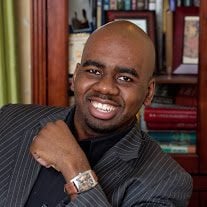 Mike Holmes is founder of Tithehacker.org, a site dedicated to stirring up a revolution of giving. He is also the author of I Shall Raise Thee Up: Ancient Principles for Lasting Greatness. It’s a book teaching how people are raised up as they learn and apply certain time-tested and timeless principles. He is also the husband of 1 lady and the father of 2 small people.
Previous Post

February 13, 2015
3 Biblical and Data Driven Reasons People Are Giving Less
Next Post

March 3, 2015 American Protestantism and the Seal of Confession
Browse Our Archives
Select a Category Culture Slideshow Uncategorized
Select a Month April 2026 October 2025 July 2025 April 2025 February 2025 October 2024 August 2023 June 2023 March 2023 February 2023 November 2022 April 2022 January 2022 December 2021 November 2021 October 2021 September 2021 August 2021 March 2021 February 2021 January 2021 December 2020 September 2020 August 2020 July 2020 May 2020 April 2020 March 2020 January 2020 December 2019 October 2019 September 2019 August 2019 July 2019 May 2019 April 2019 March 2019 January 2019 October 2018 August 2018 June 2018 May 2018 March 2018 February 2018 January 2018 December 2017 November 2017 October 2017 September 2017 August 2017 July 2017 May 2017 April 2017 March 2017 February 2017 January 2017 December 2016 November 2016 October 2016 September 2016 August 2016 July 2016 June 2016 May 2016 April 2016 March 2016 February 2016 January 2016 December 2015 November 2015 October 2015 September 2015 August 2015 July 2015 June 2015 May 2015 April 2015 March 2015 February 2015 January 2015 December 2014 November 2014 October 2014 September 2014
TAKE THE
Religious Wisdom Quiz
What is "the beginning of knowledge," according to Proverbs?
Select your answer to see how you score.
Riches Humility Power Fear of the Lord
Related posts from The Evangelical Pulpit
How Could a God of Love Allow Suffering?

Does God the Father Hate His Beloved Son?

TRENDING AT PATHEOS Evangelical

How the author of the world's best hymn...
I've been working with John Newton for a while now. This makes...

Long before this Lectio Divina, Psalm 130 - the song - started...

What About the Trees? Another Living Parable
After I finished writing the last article about falling leaves as a...

Why Classical Education Is a Conversation, Not a...
Come and Read: Joy in Classical Education When I was a little...

Falling Leaves: A Living Parable on Letting Go
I’ve spent the vast majority of my life in the southeast corner...

Cornell University has received a great deal of negative publicity and intense...
view all Evangelical blogs
Ad-Free & Subscriber Log-In Subscription Support
- About Us
- 2026 Calendar
- Videos
- Podcasts
- Library of World Religions
- Faith In Media Tracker
- Advertise With Us
- Write for Us
- Privacy Policy
- Terms of Service
- Do Not Sell My Data
- Contact Us
- Radiant Digital
- Manage Newsletter Subscriptions
- Unsubscribe From Notifications
- Sitemap
Copyright 2008-2026, Patheos. All rights reserved.
Subscription Support Ad-Free & Subscriber Log-In
Follow Patheos