
BuddhistCatholicContemplativeEvangelicalGeneral ChristianHinduJewishLatter-day SaintMuslimNew VisionsProgressive Christian
Beliefs
- Buddhist
- Catholic
- Contemplative
- Evangelical
- General Christian
- Hindu
- Jewish
- Latter-day Saint
- More Voices
- Muslim
- New Visions
- Pagan
- Progressive Christian
Topics
- Religion News
- Food and Religion
- Sports and Religion
- Religious Art
- Religious Music and Entertainment
- Religious Events
- History and Religion
- Style and Religion
- Politics and Religion
- Women in Religion
- Recreation Outdoors and Religion
- Business Finance and Religion
- Careers Workplace and Religion
- Education and Religion
- Family Parenting and Religion
- Health Fitness and Religion
- Home and Religion
- Relationships and Religion
- Technology and Religion
- Travel and Religion
Columnists
- Buddhist Columnists
- Business Finance and Religion Columnists
- Careers Workplace and Religion Columnists
- Catholic Columnists
- Contemplative Columnists
- Education and Religion Columnists
- Evangelists Columnists
- Family Parenting and Religion Columnists
- General Christian Columnists
- Health Fitness and Religion Columnists
- Hindu Columnists
- History and Religion Columnists
- Home and Religion Columnists
- Jewish Columnists
- More Voices Columnists
- Latter Day Columnists
- Muslim Columnists
- New Visions Columnists
- Nonreligious Columnists
- Pagan Columnists
- Politics and Religion Columnists
- Progressive Columnists
- Recreation Outdoors and Religion Columnists
- Relationships and Religion Columnists
- Religion News Columnists
- Religious Art Columnists
- Religious Events Columnists
- Religious Music and Entertainment Columnists
- Sports and Religion Columnists
- Style and Religion Columnists
- Technology and Religion Columnists
- Travel and Religion Columnists
- Women in Religion Columnists
Resource Library
- 2026 Calendar
- Library of World Religions
- The 100 Most Holy Places on Earth
- Patheos Answers
- Podcasts
- Videos
- Faith Leaders Database
- Anglican Episcopalian
- Bahai
- Baptist
- Buddhism
- Christianity
- Confucianism
- Eastern Orthodoxy
- Hinduism
- Holiness and Pentecostal
- ISKCON
- Islam
- Judaism
- Lutheran
- Methodist
- The Church of Jesus Christ of Latter-day Saints
- New Age
- Paganism
- Presbytarian and Reformed
- Protestantism
- Religion Behind the Scenes
- Roman Catholic
- Scientology
- Shia Islam
- Sikhism
- Sufism
- Sunni Islam
- Taoism
- Zen
- See all religions
Research Tools
 Ad-Free & Subscriber Log-In Subscription Support
Ad-Free & Subscriber Log-In Subscription Support
Follow Patheos 

- Trending:
- Forgiveness
- |
- Marriage
- |
- Consciousness
- |
- Death Penalty
- |
- Election
- |
- Halloween

- Home
- Evangelical
- We Do Better Than Me
We Do Better Than Me
Last updated on: January 22, 2015 at 5:39 am by Guest Contributor
We Do Better Than Me 2015-01-21T17:41:44-04:00 Guest Contributor
Patheos Explore the world's faith through different perspectives on religion and spirituality! Patheos has the views of the prevalent religions and spiritualities of the world.
In the previous article, we briefly discussed how diverse groups of problem solvers are being utilized to uncover innovative solutions. But in the Church, diversity has a history of leading to disagreement and division as evidenced by the suggestion we currently have close to 33,000 Christian denominations in the world.[1] Paul addressed our tendency to let diversity divide us rather than unite us in his letter to the church of Corinth, a city comprised of people from a variety of cultures and economic conditions. He spent over a year there teaching these new believers the ways of Christ only to later find out they had fallen victim to division and immorality.
He writes to the church at Corinth: “Now I appeal to you, brothers and sisters, by the name of our Lord Jesus Christ, that all of you be in agreement and that there be no divisions among you, but that you be united in the same mind and the same purpose” (1 Cor. 1:10 NRSV). Paul went on to illustrate his point with the metaphor of the body where he painted a picture of the Church as a united body comprised of a diverse collection of parts, parts that enabled rather than prevented proper functioning (1 Cor.12).
Paul’s treatise concerning the benefits of diversity within the church echoes current research into optimal decision making methodology as researchers are uncovering the ways in which diversity contributes to better problem solving. A toolbox is a good metaphor to aid in our understanding of the benefits cognitive diversity brings to decision-making.
Each of us likely has a toolbox of some sort at home. The tools in this toolbox enable us to take on certain projects. A hammer enables something different than a screwdriver. A socket set enables tasks in which the hammer or screwdriver would be less than useful. And, if one needed to create a precise sized hole, not having a drill in the toolbox would prove quite detrimental.
This toolbox analogy is applicable to our cognitive capabilities as well in that each of us possesses a cognitive tool box of sorts containing a variety of tools.[2] Each of these tools provides us with certain problem solving capabilities. However, none of us is capable of carrying around a toolbox containing enough cognitive tools to know what is best in every situation. In addition, our proficiency with a certain set of cognitive tools predisposes us to view problem solving through the lens of those tools, which unfortunately creates a sort of error blindness to solutions other than our own. C.S. Lewis perhaps summed up the benefits associated with a diverse group of problem solvers best when he said: “Two heads are better than one, not because either is infallible, but because they are unlikely to go wrong in the same direction.”[3]
Dr. Scott Page has identified four types of diversity within a group that are beneficial to innovative problem solving:[4]
“Diverse Perspectives: ways of representing situations and problems
Diverse Interpretations: ways of categorizing or partitioning
Diverse Heuristics: ways of generating solutions to problems
Diverse Predictive Models: ways of inferring cause and effect”[5]
However, doing our best to assemble a diverse group of problem solving individuals is not the complete solution, for there are certain conditions under which these groups arrive at outstanding solutions:
1) The problem must be difficult.[6]
2) Individuals in the problem-solving group must have some ability that contributes to the solving of the problem.[7]
3) No individual needs to be able to find the solution on his or her own; they just need to be able to offer a suggestion for improvement.[8]
4) The collection of problem solvers working on the problem must be large, definitely more than a handful of individuals.[9]
5) The group contains a diversity of opinions.[10]
6) Members of the group are independent of one another.[11]
7) Leadership of the group is decentralized.[12]
8) There is some method for aggregation of the results.[13]
9) Members of the group self-select, which also encourages participation.[14]
A diverse group of individuals working together under these conditions enables the best solutions to be revealed while at the same time limiting some of the negative consequences oftentimes associated with groups or committees such as groupthink. Groupthink occurs when members of the problem-solving group place consensus or getting along above discovery of the best solutions. Crowdsourcing works against groupthink as it encourages independence in the decision making process.
So, if we are aware of the ways in which diversity contributes to improve problem solving through crowdsourcing, what is it that might hold us as a community of Christians back from utilizing this methodology to uncover better solutions? Do we trust our congregations to make decisions? What gives them the authority? It is to these questions we turn in the next articles as we attempt to answer the question “On whose authority do we crowdsource?”
[1] Ostling, “Researcher Tabulates World’s Believers,” Adherents, http://www.adherents.com/misc/WCE.html
[2] Scott E. Page, The Difference: How the Power of Diversity Creates Better Groups, Firms, Schools, and Societies (New Edition) (Princeton: Princeton University Press, 2008), 103.
[3] C. S. Lewis, God in the Dock: Essays On Theology and Ethics (Grand Rapids, MI: Eerdmans Pub Co, 1994), 202.
[4] Page, The Difference, 7.
[5] Ibid.
[6] Page, The Difference, 159.
[7] Ibid.
[8] Ibid., 161.
[9] Ibid., 162.
[10] James Surowiecki, The Wisdom of Crowds (New York: Anchor, 2005), location 312, Kindle.
[11] Ibid.
[12] Ibid.
[13] Ibid.
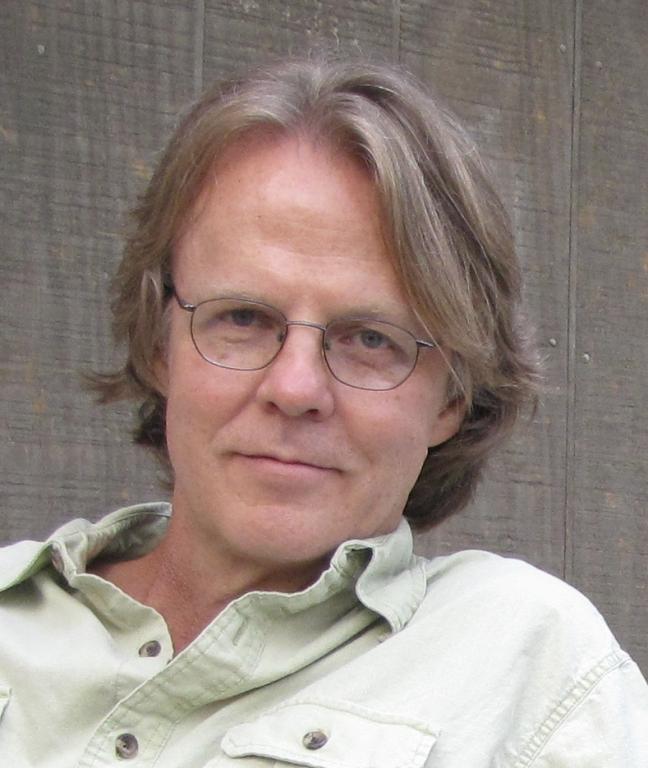
After many years in the creative and business sides of television and music production on both the local and national level, Dr. Thomas Ingram now divides his time between research/writing and mentoring/coaching/encouraging others in their efforts to pursue God’s purpose for their lives. Ingram is the author of The New Normal: A Diagnosis the Church Can Live With. He holds a Bachelors of Science in Psychology, a Master of Business Administration in Leadership and a Doctor of Ministry in Semiotics and Future Studies. You can connect with Tom’s work at www.thomaseingram.com or email him at [email protected].
[14] Karim R. Lakhani and Jill A. Panetta, “The Principles of Distributed Innovation*,” Innovations: Technology, Governance, Globalization* 2, no. 3 (2007): 105.
Previous Post

January 21, 2015
Crowdsourcing and the Church
Next Post
January 23, 2015 On Whose Authority Do We Crowdsource?
Browse Our Archives
Select a Category Culture Slideshow Uncategorized
Select a Month April 2026 October 2025 July 2025 April 2025 February 2025 October 2024 August 2023 June 2023 March 2023 February 2023 November 2022 April 2022 January 2022 December 2021 November 2021 October 2021 September 2021 August 2021 March 2021 February 2021 January 2021 December 2020 September 2020 August 2020 July 2020 May 2020 April 2020 March 2020 January 2020 December 2019 October 2019 September 2019 August 2019 July 2019 May 2019 April 2019 March 2019 January 2019 October 2018 August 2018 June 2018 May 2018 March 2018 February 2018 January 2018 December 2017 November 2017 October 2017 September 2017 August 2017 July 2017 May 2017 April 2017 March 2017 February 2017 January 2017 December 2016 November 2016 October 2016 September 2016 August 2016 July 2016 June 2016 May 2016 April 2016 March 2016 February 2016 January 2016 December 2015 November 2015 October 2015 September 2015 August 2015 July 2015 June 2015 May 2015 April 2015 March 2015 February 2015 January 2015 December 2014 November 2014 October 2014 September 2014
TAKE THE
Religious Wisdom Quiz
According to 2 Thessalonians, what are believers told to stand firm and hold fast to?
Select your answer to see how you score.
The word of God The teachings passed on to them The traditions of the elders The faith once delivered
Related posts from The Evangelical Pulpit



Pastor Steven Furtick and Evangelical Heresy: Is Almost...

TRENDING AT PATHEOS Evangelical

How the author of the world's best hymn...
I've been working with John Newton for a while now. This makes...

Long before this Lectio Divina, Psalm 130 - the song - started...

What About the Trees? Another Living Parable
After I finished writing the last article about falling leaves as a...

Why Classical Education Is a Conversation, Not a...
Come and Read: Joy in Classical Education When I was a little...

Falling Leaves: A Living Parable on Letting Go
I’ve spent the vast majority of my life in the southeast corner...

Cornell University has received a great deal of negative publicity and intense...
view all Evangelical blogs
Ad-Free & Subscriber Log-In Subscription Support
- About Us
- 2026 Calendar
- Videos
- Podcasts
- Library of World Religions
- Faith In Media Tracker
- Advertise With Us
- Write for Us
- Privacy Policy
- Terms of Service
- Do Not Sell My Data
- Contact Us
- Radiant Digital
- Manage Newsletter Subscriptions
- Unsubscribe From Notifications
- Sitemap
Copyright 2008-2026, Patheos. All rights reserved.
Subscription Support Ad-Free & Subscriber Log-In
Follow Patheos