
BuddhistCatholicContemplativeEvangelicalGeneral ChristianHinduJewishLatter-day SaintMuslimNew VisionsProgressive Christian
Beliefs
- Buddhist
- Catholic
- Contemplative
- Evangelical
- General Christian
- Hindu
- Jewish
- Latter-day Saint
- More Voices
- Muslim
- New Visions
- Pagan
- Progressive Christian
Topics
- Religion News
- Food and Religion
- Sports and Religion
- Religious Art
- Religious Music and Entertainment
- Religious Events
- History and Religion
- Style and Religion
- Politics and Religion
- Women in Religion
- Recreation Outdoors and Religion
- Business Finance and Religion
- Careers Workplace and Religion
- Education and Religion
- Family Parenting and Religion
- Health Fitness and Religion
- Home and Religion
- Relationships and Religion
- Technology and Religion
- Travel and Religion
Columnists
- Buddhist Columnists
- Business Finance and Religion Columnists
- Careers Workplace and Religion Columnists
- Catholic Columnists
- Contemplative Columnists
- Education and Religion Columnists
- Evangelists Columnists
- Family Parenting and Religion Columnists
- General Christian Columnists
- Health Fitness and Religion Columnists
- Hindu Columnists
- History and Religion Columnists
- Home and Religion Columnists
- Jewish Columnists
- More Voices Columnists
- Latter Day Columnists
- Muslim Columnists
- New Visions Columnists
- Nonreligious Columnists
- Pagan Columnists
- Politics and Religion Columnists
- Progressive Columnists
- Recreation Outdoors and Religion Columnists
- Relationships and Religion Columnists
- Religion News Columnists
- Religious Art Columnists
- Religious Events Columnists
- Religious Music and Entertainment Columnists
- Sports and Religion Columnists
- Style and Religion Columnists
- Technology and Religion Columnists
- Travel and Religion Columnists
- Women in Religion Columnists
Resource Library
- 2026 Calendar
- Library of World Religions
- The 100 Most Holy Places on Earth
- Patheos Answers
- Podcasts
- Videos
- Faith Leaders Database
- Anglican Episcopalian
- Bahai
- Baptist
- Buddhism
- Christianity
- Confucianism
- Eastern Orthodoxy
- Hinduism
- Holiness and Pentecostal
- ISKCON
- Islam
- Judaism
- Lutheran
- Methodist
- The Church of Jesus Christ of Latter-day Saints
- New Age
- Paganism
- Presbytarian and Reformed
- Protestantism
- Religion Behind the Scenes
- Roman Catholic
- Scientology
- Shia Islam
- Sikhism
- Sufism
- Sunni Islam
- Taoism
- Zen
- See all religions
Research Tools
 Ad-Free & Subscriber Log-In Subscription Support
Ad-Free & Subscriber Log-In Subscription Support
Follow Patheos 

- Trending:
- Forgiveness
- |
- Marriage
- |
- Consciousness
- |
- Death Penalty
- |
- Election
- |
- Halloween
 Euangelion
- Home
- Evangelical
- #MeToo and the Church
#MeToo and the Church
Last updated on: November 12, 2020 at 5:30 am by Michael F. Bird
#MeToo and the Church 2020-07-31T19:38:31-04:00 Michael F. Bird
Patheos Explore the world's faith through different perspectives on religion and spirituality! Patheos has the views of the prevalent religions and spiritualities of the world.
Mary DeMuth
We Too: How the Church can Respond Redemptively to the Sexual Abuse Crisis
Eugene, OR: Harvest House, 2019.
Available at Harvest House and Koorong
By Laura Thierry
There are few things that have so shattered the church’s witness and wounded Christ’s sheep as sexual abuse within the church. As devastating facts continue to pour forth and dams of secrecy finally burst, the church continues to struggle to know how to respond well. It’s easy to be repelled, blame others, or freak out with respect to the incredible number of professional standards needing to be put in place in order to minister within a post-abuse world. Its harder to take a deep look at God’s word, to share personal experience, and to prophetically and hopefully call God’s people to be Christ in the midst of the pain. And it is this harder path that Mary DeMuth takes in this necessary and timely book.
DeMuth writes from the place at which her own heart-rending experience meets her deep love for the church. While not shying away from the hard fact that “the evangelical church has not done a good job of loving those broken by stories of sexual assault, discrimination, and harassment” (19), she consistently responds with love-shaped lament and hope for true healing. With “grief [that] has morphed into a holy urgency” (15), she seeks scripturally-sound and pastorally-sensitive paths forward.
Demuth’s book spans three sections: history, present, and future. Part one begins with a courageous survey of the Old Testament stories of rape and abuse: the harrowing tales of shame and pain in the lives of Tamar, Dinah, Bathsheba, and many more. All these women, seen in the light of their place in Matthew’s genealogy remind us that even in the midst of the shattering of sexual abuse, their stories still matter. DeMuth moves into the story of Jesus, with a brilliant chapter on Jesus’ heart for restorative justice. She reflects, “I fear we have lost the justice side of Jesus. We embrace the image of a Jesus who glosses over perpetration with a grace Band-Aid, and we shy away from the Jesus who asks for radical repentance and restoration” (55).
DeMuth continues with a brief though illuminating survey of how sexual abuse has been viewed and dealt with throughout the church’s history. It is a story with some words of fulsome and Christlike justice (see Basil the Great), and yet, sadly, by and large, she concludes that “to trace the history of the church’s response to sexual abuse through the centuries is to trace the handiwork of Satan, who is alive and well and wants nothing more than to destroy us all.” (67).
In part two, DeMuth provides a distressing jigsaw puzzle of the many elements that converge to make sexual abuse within the church the horror that it is. The putrefying effects of secret-keeping and shame, the pervasiveness of bad theology that fails to recognize the incomparable worth of image-bearers, underestimates the horrid insidiousness of evil, and overlooks God’s commitment to justice. She then analyses the prevalence of porn within the church, and considers the effect it has on the church’s resistance to God’s hatred of sexual abuse. A heavy, but particually helpful, chapter followers, surveying the practices and characteristics of predators. Finally, she concludes with a call of wakeup to a passive church: “A lethargic church that favours perpetrators to victims is an anaemic one, but even more than that, it is an evil one. I write these words not as an angry survivor, but as one who has experienced the best the church has to offer. I healed because people in the church dared to listen to my story and pray for me. I write these words not to indict the church, but to rouse it to be better. I love the church” (133). And that she truly does, as part three’s hopeful tracking of constructive ways forward demonstrates.
All in all, We Too is not an easy read, but it is a very necessary one. It laments the pain that has occurred, and, with a heart shaped by the justice of Christ, and a determined hope of the power of the gospel to provide healing, it courageously imagines what the Church might yet become. As churches everywhere must face the issues associated with our disgraceful history, DeMuth’s story is a gift—one that should be received and listened too by church leaders everywhere. As the Church works to rewrite policies, train people in professional standards, and listen to those who have been shattered by the abuse within its walls, DeMuth’s book is a precious draught of hard reality, shot through with Christ-shaped hope. A highly recommended read.
Laura Thierry a PhD candidate at Ridley College, researching medieval hagiography, Christology, and theology of the body.
Previous Post

November 9, 2020
Discussing Jesus Mythicism, Apocalyptic Paul, and Penal Substitution
Next Post
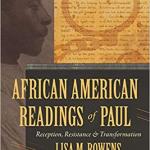
November 15, 2020 Lisa Bowens on African-American Readings of Paul
Browse Our Archives
Select a Category Bible Lands Blogosphere Book Review Calvinism Colleges & Universities Ecclesiology Emerging Adulthood Evangelicalism Foreign Affairs Gospel of John Greco-Roman World Humor Just War N. T. Wright Old Testament Resurrection Terrorism Theological Education Travel Uncategorized Writing
Select a Month September 2021 July 2021 June 2021 May 2021 April 2021 March 2021 February 2021 January 2021 December 2020 November 2020 October 2020 September 2020 August 2020 July 2020 June 2020 May 2020 April 2020 March 2020 February 2020 January 2020 December 2019 November 2019 October 2019 September 2019 August 2019 July 2019 June 2019 May 2019 April 2019 March 2019 February 2019 January 2019 December 2018 November 2018 October 2018 September 2018 August 2018 July 2018 June 2018 May 2018 April 2018 March 2018 February 2018 January 2018 December 2017 November 2017 October 2017 September 2017 August 2017 July 2017 June 2017 May 2017 April 2017 March 2017 February 2017 January 2017 December 2016 November 2016 October 2016 September 2016 August 2016 July 2016 June 2016 May 2016 April 2016 March 2016 February 2016 January 2016 December 2015 November 2015 October 2015 September 2015 August 2015 July 2015 June 2015 May 2015 April 2015 March 2015 February 2015 January 2015 December 2014 November 2014 October 2014 September 2014 August 2014 July 2014 June 2014 May 2014 April 2014 March 2014 February 2014 January 2014 December 2013 November 2013 October 2013 September 2013 August 2013 July 2013 June 2013 May 2013 April 2013 March 2013 February 2013 January 2013 December 2012 November 2012 October 2012 September 2012 August 2012 July 2012 June 2012 May 2012 April 2012 March 2012 February 2012 January 2012 December 2011 November 2011 October 2011 September 2011 August 2011 July 2011 June 2011 May 2011 January 2011
TAKE THE
Religious Wisdom Quiz
In 1 Peter 1, what does Peter say is more valuable than gold?
Select your answer to see how you score.
Righteousness Wisdom Charity Faith
Books by This Author Books by Mike Bird
Related posts from Euangelion

Rom 3:21-26 - Translates, Paraphrase, Notes

Studying the New Testament through Inscriptions


Romans 13:1-7 - Translates, Paraphrase, and Notes
TRENDING AT PATHEOS Evangelical

How the author of the world's best hymn...
I've been working with John Newton for a while now. This makes...

Long before this Lectio Divina, Psalm 130 - the song - started...

What About the Trees? Another Living Parable
After I finished writing the last article about falling leaves as a...

Why Classical Education Is a Conversation, Not a...
Come and Read: Joy in Classical Education When I was a little...

Falling Leaves: A Living Parable on Letting Go
I’ve spent the vast majority of my life in the southeast corner...

Cornell University has received a great deal of negative publicity and intense...
view all Evangelical blogs
Ad-Free & Subscriber Log-In Subscription Support
- About Us
- 2026 Calendar
- Videos
- Podcasts
- Library of World Religions
- Faith In Media Tracker
- Advertise With Us
- Write for Us
- Privacy Policy
- Terms of Service
- Do Not Sell My Data
- Contact Us
- Radiant Digital
- Manage Newsletter Subscriptions
- Unsubscribe From Notifications
- Sitemap
Copyright 2008-2026, Patheos. All rights reserved.
Subscription Support Ad-Free & Subscriber Log-In
Follow Patheos