
BuddhistCatholicContemplativeEvangelicalGeneral ChristianHinduJewishLatter-day SaintMuslimNew VisionsProgressive Christian
Beliefs
- Buddhist
- Catholic
- Contemplative
- Evangelical
- General Christian
- Hindu
- Jewish
- Latter-day Saint
- More Voices
- Muslim
- New Visions
- Pagan
- Progressive Christian
Topics
- Religion News
- Food and Religion
- Sports and Religion
- Religious Art
- Religious Music and Entertainment
- Religious Events
- History and Religion
- Style and Religion
- Politics and Religion
- Women in Religion
- Recreation Outdoors and Religion
- Business Finance and Religion
- Careers Workplace and Religion
- Education and Religion
- Family Parenting and Religion
- Health Fitness and Religion
- Home and Religion
- Relationships and Religion
- Technology and Religion
- Travel and Religion
Columnists
- Buddhist Columnists
- Business Finance and Religion Columnists
- Careers Workplace and Religion Columnists
- Catholic Columnists
- Contemplative Columnists
- Education and Religion Columnists
- Evangelists Columnists
- Family Parenting and Religion Columnists
- General Christian Columnists
- Health Fitness and Religion Columnists
- Hindu Columnists
- History and Religion Columnists
- Home and Religion Columnists
- Jewish Columnists
- More Voices Columnists
- Latter Day Columnists
- Muslim Columnists
- New Visions Columnists
- Nonreligious Columnists
- Pagan Columnists
- Politics and Religion Columnists
- Progressive Columnists
- Recreation Outdoors and Religion Columnists
- Relationships and Religion Columnists
- Religion News Columnists
- Religious Art Columnists
- Religious Events Columnists
- Religious Music and Entertainment Columnists
- Sports and Religion Columnists
- Style and Religion Columnists
- Technology and Religion Columnists
- Travel and Religion Columnists
- Women in Religion Columnists
Resource Library
- 2026 Calendar
- Library of World Religions
- The 100 Most Holy Places on Earth
- Patheos Answers
- Podcasts
- Videos
- Faith Leaders Database
- Anglican Episcopalian
- Bahai
- Baptist
- Buddhism
- Christianity
- Confucianism
- Eastern Orthodoxy
- Hinduism
- Holiness and Pentecostal
- ISKCON
- Islam
- Judaism
- Lutheran
- Methodist
- The Church of Jesus Christ of Latter-day Saints
- New Age
- Paganism
- Presbytarian and Reformed
- Protestantism
- Religion Behind the Scenes
- Roman Catholic
- Scientology
- Shia Islam
- Sikhism
- Sufism
- Sunni Islam
- Taoism
- Zen
- See all religions
Research Tools
 Ad-Free & Subscriber Log-In Subscription Support
Ad-Free & Subscriber Log-In Subscription Support
Follow Patheos 

- Trending:
- Forgiveness
- |
- Marriage
- |
- Consciousness
- |
- Death Penalty
- |
- Election
- |
- Halloween
 Euangelion
- Home
- Evangelical
- Interview with Dan Gurtner about the Pseudepigrapha
Interview with Dan Gurtner about the Pseudepigrapha
Last updated on: November 1, 2020 at 5:18 am by Michael F. Bird
Interview with Dan Gurtner about the Pseudepigrapha 2020-10-15T18:25:50-04:00 Michael F. Bird
Patheos Explore the world's faith through different perspectives on religion and spirituality! Patheos has the views of the prevalent religions and spiritualities of the world.
Here is my interview with Dan Gurtner about the pseudepigrapha and how you can know more about it with the help of his book Introducing the Pseudepigrapha of Second Temple Judaism.
When a student asks, “What is the pseudepigrapha?” What do you say?
First, I congratulate them if they pronounce the word correctly! It’s not a very common word, and it is frequently both mispronounced and misunderstood. Generally, these are writings that celebrate some figure from Israel’s past. I say “generally” because by no means accounts for them. Technically, the term “pseudepigrapha” refers to writings that claim to be written by one person but are in fact written by another. This too only partly accounts for the facts, and also casts an unnecessarily pejorative light on the texts. So, how does one determine whether something is a “pseudepigrapha”? That’s complicated. Typically these writings are not classified by what they are, but what they are not. They are not generally found in the Greek writings in the major codices which do not have corresponding Hebrew Bible texts (i.e., the “Apocrypha”), nor are they among the Dead Sea Scrolls, Philo, Josephus, or the rabbis. But here again there are exceptions to these rules. Perhaps returning to my general comment above, they may utilize the narrative significance of figures such as Abraham from the Hebrew Bible, and recast his life and experience into a new setting, as one finds in the Apocalypse of Abraham. In this way Abraham, as well as other figures like Moses, Job, Enoch, Baruch, etc., are pressed into service in a new setting by Jews who recognized the significance of these figures and utilized their respective prominence to relate their own message(s) based on something from that figure’s past.
Are the pseudepigrapha Jewish or Christian writings?
The ones I examine in my book are Jewish and date prior to the Bar Kochba revolt (ca. 135 CE). There are many that are Jewish but date later, others that are Christian, and still others that are Jewish in origin but in the course of their transmission by Christians essentially become Christian texts or in some way render the Jewish original inaccessible. Among the fundamental problems in studying these writings for those not deeply familiar with the scholarly discourse is discerning which writings belong to which contexts.
What is your best example of the relevance of the Pseudepigrapha for understanding something in the OT and NT?
At the outset I want to clarify that while my book is intended to be useful for interpreters of Old and New Testament texts, it is primarily about the Pseudepigrapha themselves. That is, I did not write it so that one can understand the New Testament better by use of the Pseudepigrapha, but so that the Pseudepigrapha can be better understood in their own contexts. In my view, this is prolegomena to any secondary usage of this material, whether for Old Testament, New Testament, rabbinic Judaism, or some other context.
For Old Testament this is rather difficult since, like the DSS, all the Pseudepigrapha from Second Temple Judaism are written after the Old Testament. So, like the DSS, the Pseudepigrapha often help us find textual traditions of the OT for reconstructions of various texts, and also help us to see how the OT was interpreted by Jews subsequent to the composition of OT texts. In the latter there are many instances, but the Book of Jubilees illustrates the phenomenon, since its task of “rewriting” biblical accounts that has most intrigued scholars. In general, the author’s interpretive methodology is unlike other methods, such as midrash or pesher, in that here the author quotes his source, but not to set it off as distinct from his own contribution; these are melded into a new text entirely, all placed within the new setting of Moses at Sinai (Jub. 1). And so the Angel of the Presence, commanded by God, dictates the narrative to Moses in place of the anonymous narrator of Genesis and sets the whole within an explicit chronology. The modifications are generally of two kinds—additions and omissions. Additions take a number of forms, such as the clarification that the sin introduced by the fallen angels was so heinous as to justify the extent of God’s judgment in the flood (Jub. 5:1–19). And even after the flood the offspring of the fallen angels continue to lead humanity into sin (Jub. 10:1–13). The account of the land allocated to Noah’s descendants provides a basis for Israel’s territorial claims (8:8–9:15; 10:28–34). After recounting the Genesis narrative of Abram’s origins (Jub. 11:27–32), Jubilees explains that he merited the ensuing favor with God (cf. Gen. 12:1–3) by furnishing accounts of his youth in which he exhibits hostility toward idolatry while embracing monotheism (Jub. 11:15–12:21). Levi’s negative depiction in Genesis (Gen. 34; 49:5–7) causes the author of Jubilees to try to improve his reputation. His vengeance on Shechem is seen as a righteous act (Jub. 30:17–20). He is blessed by Isaac (31:13–17) and learns by a dream of his appointment to the priesthood (32:1), for which he is anointed by Jacob (32:2–9). Jubilees also inserts an account of a war between Egypt and Canaan to explain why Joseph’s bones remained in Egypt until after the exodus (46:4–11; cf. Gen. 50:24–26; Exod. 13:19; Josh. 24:32). Jubilees adds a number of speeches not found in the Hebrew Bible, such as the dialogue between Moses and God (Jub. 1), the legal topics explained by the angel (2:17–33; 5:13–19; 6:10–38; 15:25–34; 16:28–31; 23:8–31; 30:5–23; 32:10–15; 33:9–20; 41:23–28; 49:7–23; 50:6–13), and speeches or “testaments” from parents to their progeny (7:20–39; 20:1–22:30; 25; 35; 36). Still other additions pertain to characterization, both positive and negative. Jacob, for instance, is an obedient and respectful son (Jub. 25; 29:15–20; 35–36), whereas Esau breaks his pledge to his parents and wages war against Jacob (37:1–38:14). Presumably Jubilees’ omissions did not suit the author’s purposes or perhaps conflicted with them. These include the expulsion of Hagar (Gen. 16:6–14), two accounts of Abimelech (Gen. 20; 21:22–34), and the reduction of the lengthy search for a wife for Isaac (Gen. 24) and the preparations for Esau and Jacob to meet (Gen. 32:1–33:17), each of which are reduced to a single verse (Jub. 19:10; 29:13). Also omitted are negative portrayals of people whom the author prefers to cast in a positive light, such as Abraham (Gen. 12:13, 19) and Jacob (Gen. 27:19). So for interpreters of the Hebrew Bible, the Jewish Pseudepigrapha from the Second Temple period furnish a fascinating glimpse at how ancient Jews understood the sacred text.
On the New Testament side, there are plenty of examples that could illustrate their significance. Among my favorites is the “Son of David” in the Psalms of Solomon, chapter 17. Psalm 17 recalls God’s promise of David’s kingship to his descendants (17:4). But Israel’s sins have caused “sinners” to rise up against it and establish a monarchy (Hasmoneans) while despoiling the throne of David in arrogance (17:5–6). But God raised a man “alien to our race” (i.e., the Roman gentile Pompey) who hunted them all down to bring about judgment on them (17:7–10). This “lawless one” (Pompey entered the Holy of Holies; cf. Pss. Sol. 2:2; Josephus, W. 1.7.6 §152; Ant. 14.4.4 §72) laid waste to the land and expelled its inhabitants (17:11–13), doing in Jerusalem what gentiles do for their gods elsewhere (17:14). Even the Israelites living among the “gentile rabble” adopted these practices (17:15). The pious did not remain in Jerusalem but fled to the wilderness (17:16–17), while the wicked in Jerusalem continued to practice their iniquity, appointing commoners to leadership and criminals to rule (17:18–20). The psalmist then implores the Lord to raise up the king, the son of David, to rule over Israel, asking him to destroy unrighteous rulers and purge Jerusalem of gentiles (17:21–24). He will cause nations to flee and gather a holy people (17:25–26). He will not tolerate unrighteousness among them and will distribute them upon the land (17:27–28). He will judge the peoples and have the gentile nations serve him (17:29–30a). He will purge Jerusalem and make it holy, and nations will come from the ends of the earth to see its glory (17:30b–31). The Lord Messiah will be a righteous king, and his strength will come from hope in God (17:32–34a, 37–40a). He will be compassionate to the nations that revere him and bless the Lord’s people (17:34b–35), while he himself will be free from sin in order to rule well and drive out sinners (17:36). He will shepherd the Lord’s flock in holiness and discipline the house of Israel with pure words (17:40b–43). The psalmist concludes by pronouncing a blessing on those born in that day, asking God to deliver Israel from the pollution of profane enemies, and acknowledging the eternal kingship of the Lord (17:44–46). This obvious reminds readers of the ascription of “Son of David” to Jesus, in the Gospel of Matthew (Matt 1:1, 20; 9:27; 12:23; 15:22; 20:30, 31; 21:9, 15; 22:42), where there are kingly overtures drawn from 2 Sam 7, but nothing of the violence or militarism espoused by the Psalms of Solomon, which date between 63 bce and the turn of the era. It gives us a window into the kinds of messianism which were in circulation even before the birth of Christ.
Any thoughts on the dating of the Parables of 1 Enoch?
The problem with dating the Parables or Similitudes of Enoch (1 En. 37 – 71) is that it makes very few allusions to historical events found within them. Reference to the Parthians and the Medes (56:5–8) is typically taken to refer to the Parthian invasion of Palestine 40 b.c.e. The reference to springs that serve the kings and the mighty but will become an instrument of judgment (67:5–13) is typically taken to refer to Herod the Great’s attempts to find healings in the hot springs of Callirhoe (Josephus, Antiquities 17.6.5 §§171–73; Jewish War 1.33.5 §§657–58). This locates the Similitudes after Herod’s rise to power in 37 b.c.e. Knibb takes the mention of “the kings and the mighty” to suggest Roman authorities, which may place the Similitudes as a late first century c.e. A common view is that it originates prior to the outset of the Jewish revolt in 66 c.e., to which no clear reference is made. Beyond that I do not see that any more clarity can be given.
Can you give an example of an apocalypse, a testament, a re-written scripture, and psalm from the pseudepigrapha that you think would be a great place to start?
Perhaps the best place to start is the Apocalypse of Abraham, which is a Jewish apocalyptic writing from after the destruction of the temple in 70 CE. Unlike other similar works, like 4 Ezra or 2 Baruch, this work consists of a first-person narrative of the patriarch’s youth and pilgrimage from the idolatry of his fathers (Apoc. Ab. 1–8) and an apocalypse proper in which God makes revelations to him (chaps. 9–32). What makes it interesting for new readers is the way it expands on what we know from the Bible about Abraham to make its own point. We know, for instance, that Abraham was called by God (Gen 12), but the Apocalypse of Abraham speculates about the “back story” not because it is arguing for the historicity of a new narrative, but to show how a revered Jew was called from the absurdities of idolatry: Let me just overview the narrative half of the book: The book begins with Abraham’s narration of his observing the gods of his father and brother to see which was strongest (Apoc. Ab. 1:1). In the course of his story Abraham encounters a stone god, Marumath, fallen to the ground (1:2–4). Abraham, with the help of his father, Terah, lifts it to its place only for its head to fall off in Abraham’s hands (1:5–6). Thereupon Terah fashions a new god Marumath without a head from another stone and smashes the remains of the first one (1:7–9). Terah then makes five other gods and instructs Abraham to sell them (2:1–3). Along the way three of them break (2:4) and are thrown into a river (2:9). The remaining two are sold at a price suitable for all five (2:5–8). While returning to his father, Abraham ponders the legitimacy of man-made idols being gods (3:1–8).
Upon his return to his father (4:1–2), Abraham explains that Terah is in fact god to the idols that he fashioned (4:3–5). Terah responds in anger to Abraham speaking against his gods (4:6). Then Terah instructs Abraham to gather woodchips lying about from his fashioning of gods from fir (5:1–3). Among the remains Abraham finds a small god called Barisat (5:4–5), whom Abraham instructs to tend a fire set to prepare Terah’s food in his absence (5:6–8). Upon his return Abraham, to his amusement, finds Barisat ablaze and consumed by the fire (5:9–11). Abraham prepares Terah’s meal on the fire and encourages his father to praise Barisat, who threw himself on the fire to cook the food (5:12–15). Presumably missing the humor and irony, Terah indeed praises Barisat and vows to create another to make his food the next day (5:16–17). Perplexed with a mixture of laughter, bitterness, and anger (6:1), Abraham questions his father’s sensibility first in his thoughts (6:2–3) before resolving to make his thoughts known to Terah (6:4–7:9), whom he rebukes (7:10). Abraham then appeals to the one true Creator God to make himself known (7:11–12). God answers that prayer and makes himself known to Abraham (8:1–2; cf. Gen. 12:1). God reveals himself as the Creator and instructs Abraham to leave his father’s house, which subsequently burns to the ground (8:3–6). After this, the apocalypse ensues (Apoc. Ab. 9–32), set in the scene of Genesis 15.
The purpose of the Apocalypse of Abraham can be found in two unifying themes. First, the author stresses the fundamental distinction between the gentiles and Israel, who are inextricably identified as descendants of Abraham. Second, the book stresses the rejection of idolatry and presents its ancient readers’ idolatry, particularly within the temple cult, as an abandonment of Abraham’s calling in favor of the idolatrous practices of Terah.
Do you have a favourite pseudepigraphical text?
I have spent a lot of time with 2 Baruch, which is a fascinating apocalypse written after the destruction of the Temple by the Romans in 70 c.e. It reflects a lot of the gloom of the prophet Jeremiah, which is natural since Baruch in the Old Testament is the scribe of Jeremiah the prophet. Yet here Baruch himself is the visionary, and he reflects on the tragedy of the temple’s destruction with lamentation – in apocalyptic form – for the iniquities of Israel that created the catastrophe. Second Baruch is preserved in full only in Syriac, which raises interesting questions about its original language, transmission history, and use by the Christian communities which were the only settings in which this work is preserved.
Why might people teaching NT studies or early Christianity find this book useful for their students?
Again I want to underscore that my book is not a “Pseudepigrapha for New Testament students” kind of book, though it can serve that function. With that caveat, however: First, I think people teaching these subjects may find this book useful for themselves. It is difficult for those teaching in early Christianity to delve into the depths of technical studies on an obscure aspect of Second Temple Judaism. Part of the aim of my book is to furnish readers – teachers and students – with a robust point of entry. This is suitable for those teaching New Testament, but also early Judaism, Rabbinics, or any related field. Second, I think students can gain an appreciation for just how diverse Judaism was in antiquity. Reading the Aramaic Levi Document is quite different from the Sibylline Oracles, which is itself quite distinct from the Book of Jubilees. All have different purposes, emphases, and features, and help students to recognize the complexities exhibited by one subsection of Jewish primary sources from antiquity. Legend has it that Martin Hengel used to say, “If all you know is the New Testament, you don’t know the New Testament.” His point was that the literary context of the New Testament is a vital component of understanding the New Testament itself. Third, for scholars who research and write in New Testament, there is a tendency to treat Second Temple texts in general, and those classified as Pseudepigrapha in particular, in a rather monolithic way as “background” to the New Testament. But these texts were not written as background; they conveyed the ideas of real people in real contexts, and should be understood as such prior to any secondary usage as background to NT or anything else.
Previous Post
October 31, 2020
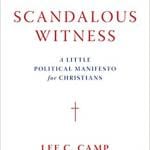
Jesus and US Politics # 3: Lee C. Camp
Next Post

November 3, 2020 Apostle Paul, N.T. Wright, and Supersessionism - The Debate
Browse Our Archives
Select a Category Bible Lands Blogosphere Book Review Calvinism Colleges & Universities Ecclesiology Emerging Adulthood Evangelicalism Foreign Affairs Gospel of John Greco-Roman World Humor Just War N. T. Wright Old Testament Resurrection Terrorism Theological Education Travel Uncategorized Writing
Select a Month September 2021 July 2021 June 2021 May 2021 April 2021 March 2021 February 2021 January 2021 December 2020 November 2020 October 2020 September 2020 August 2020 July 2020 June 2020 May 2020 April 2020 March 2020 February 2020 January 2020 December 2019 November 2019 October 2019 September 2019 August 2019 July 2019 June 2019 May 2019 April 2019 March 2019 February 2019 January 2019 December 2018 November 2018 October 2018 September 2018 August 2018 July 2018 June 2018 May 2018 April 2018 March 2018 February 2018 January 2018 December 2017 November 2017 October 2017 September 2017 August 2017 July 2017 June 2017 May 2017 April 2017 March 2017 February 2017 January 2017 December 2016 November 2016 October 2016 September 2016 August 2016 July 2016 June 2016 May 2016 April 2016 March 2016 February 2016 January 2016 December 2015 November 2015 October 2015 September 2015 August 2015 July 2015 June 2015 May 2015 April 2015 March 2015 February 2015 January 2015 December 2014 November 2014 October 2014 September 2014 August 2014 July 2014 June 2014 May 2014 April 2014 March 2014 February 2014 January 2014 December 2013 November 2013 October 2013 September 2013 August 2013 July 2013 June 2013 May 2013 April 2013 March 2013 February 2013 January 2013 December 2012 November 2012 October 2012 September 2012 August 2012 July 2012 June 2012 May 2012 April 2012 March 2012 February 2012 January 2012 December 2011 November 2011 October 2011 September 2011 August 2011 July 2011 June 2011 May 2011 January 2011
TAKE THE
Religious Wisdom Quiz
What Christian tradition refers to its pastors as "elders"?
Select your answer to see how you score.
Catholic Presbyterian Anglican Orthodox
Books by This Author Books by Mike Bird
Related posts from Euangelion

Rom 3:21-26 - Translates, Paraphrase, Notes

Studying the New Testament through Inscriptions


Romans 13:1-7 - Translates, Paraphrase, and Notes
TRENDING AT PATHEOS Evangelical

How the author of the world's best hymn...
I've been working with John Newton for a while now. This makes...

Long before this Lectio Divina, Psalm 130 - the song - started...

What About the Trees? Another Living Parable
After I finished writing the last article about falling leaves as a...

Why Classical Education Is a Conversation, Not a...
Come and Read: Joy in Classical Education When I was a little...

Falling Leaves: A Living Parable on Letting Go
I’ve spent the vast majority of my life in the southeast corner...

Cornell University has received a great deal of negative publicity and intense...
view all Evangelical blogs
Ad-Free & Subscriber Log-In Subscription Support
- About Us
- 2026 Calendar
- Videos
- Podcasts
- Library of World Religions
- Faith In Media Tracker
- Advertise With Us
- Write for Us
- Privacy Policy
- Terms of Service
- Do Not Sell My Data
- Contact Us
- Radiant Digital
- Manage Newsletter Subscriptions
- Unsubscribe From Notifications
- Sitemap
Copyright 2008-2026, Patheos. All rights reserved.
Subscription Support Ad-Free & Subscriber Log-In
Follow Patheos