
BuddhistCatholicContemplativeEvangelicalGeneral ChristianHinduJewishLatter-day SaintMuslimNew VisionsProgressive Christian
Beliefs
- Buddhist
- Catholic
- Contemplative
- Evangelical
- General Christian
- Hindu
- Jewish
- Latter-day Saint
- More Voices
- Muslim
- New Visions
- Pagan
- Progressive Christian
Topics
- Religion News
- Food and Religion
- Sports and Religion
- Religious Art
- Religious Music and Entertainment
- Religious Events
- History and Religion
- Style and Religion
- Politics and Religion
- Women in Religion
- Recreation Outdoors and Religion
- Business Finance and Religion
- Careers Workplace and Religion
- Education and Religion
- Family Parenting and Religion
- Health Fitness and Religion
- Home and Religion
- Relationships and Religion
- Technology and Religion
- Travel and Religion
Columnists
- Buddhist Columnists
- Business Finance and Religion Columnists
- Careers Workplace and Religion Columnists
- Catholic Columnists
- Contemplative Columnists
- Education and Religion Columnists
- Evangelists Columnists
- Family Parenting and Religion Columnists
- General Christian Columnists
- Health Fitness and Religion Columnists
- Hindu Columnists
- History and Religion Columnists
- Home and Religion Columnists
- Jewish Columnists
- More Voices Columnists
- Latter Day Columnists
- Muslim Columnists
- New Visions Columnists
- Nonreligious Columnists
- Pagan Columnists
- Politics and Religion Columnists
- Progressive Columnists
- Recreation Outdoors and Religion Columnists
- Relationships and Religion Columnists
- Religion News Columnists
- Religious Art Columnists
- Religious Events Columnists
- Religious Music and Entertainment Columnists
- Sports and Religion Columnists
- Style and Religion Columnists
- Technology and Religion Columnists
- Travel and Religion Columnists
- Women in Religion Columnists
Resource Library
- 2026 Calendar
- Library of World Religions
- The 100 Most Holy Places on Earth
- Patheos Answers
- Podcasts
- Videos
- Faith Leaders Database
- Anglican Episcopalian
- Bahai
- Baptist
- Buddhism
- Christianity
- Confucianism
- Eastern Orthodoxy
- Hinduism
- Holiness and Pentecostal
- ISKCON
- Islam
- Judaism
- Lutheran
- Methodist
- The Church of Jesus Christ of Latter-day Saints
- New Age
- Paganism
- Presbytarian and Reformed
- Protestantism
- Religion Behind the Scenes
- Roman Catholic
- Scientology
- Shia Islam
- Sikhism
- Sufism
- Sunni Islam
- Taoism
- Zen
- See all religions
Research Tools
 Ad-Free & Subscriber Log-In Subscription Support
Ad-Free & Subscriber Log-In Subscription Support
Follow Patheos 

- Trending:
- Forgiveness
- |
- Marriage
- |
- Consciousness
- |
- Death Penalty
- |
- Election
- |
- Halloween
 Euangelion
- Home
- Evangelical
- Interview with Jarvis Williams on Galatians
Interview with Jarvis Williams on Galatians
Last updated on: March 26, 2020 at 5:56 am by Michael F. Bird
Interview with Jarvis Williams on Galatians 2020-03-22T01:11:36-04:00 Michael F. Bird
Patheos Explore the world's faith through different perspectives on religion and spirituality! Patheos has the views of the prevalent religions and spiritualities of the world.
Jarvis Williams is an Associate Professor of New Testament Interpretation at the Southern Baptist Theological Seminary in Louisville, Kentucky. He has just published a commentary on Galatians in the NCCS edited by myself and Craig Keener.
 Here’s an interview I conducted with Jarvis about Galatians.
Jarvis, tell us about your earlier studies on Paul and the atonement.
My previous work on atonement in Paul’s theology relates to comparisons with the Jewish martyrological texts found in 2 Maccabees and 4 Maccabees, the function/efficacy of Jesus’ death in Paul’s theology, and the significance of his death in Paul’s soteriology. I’ve also given a little thought to the extent of atonement in Paul’s theology.
In 2019, I published a monograph on Gal 3:13 in the Library of New Testament Studies series. In this monograph, I compared Paul’s presentation of the cursed Christ in Gal 3:13 with Jewish martyrological ideas in 2 and 4 Maccabees. This monograph particularly compares and contrasts both Jewish martyrology’s appropriation of both Deuteronomic language and language from Isaiah 53 to the deaths of the Jewish martyrs (2 Maccabees and 4 Maccabees) and to Jesus (Galatians). I also focused one point of comparison on the similarities and differences between the ways 2 and 4 Maccabees and Paul applies the Deuteronomic blessing and curse motif to the martyrs (2 and 4 Maccabees) and to Jesus (Galatians) and the ways in which these traditions present the deaths of Torah-observant Jews as the pathway to the Deuteronomic blessing (2 and 4 Maccabees) or to both the Deuteronomic blessing and the Abrahamic blessing (Galatians). This monograph also endeavors to shine a ray of light onto the importance of Gal 3:13 in the conversation of divine and human agency and onto the function and efficacy of Jesus’ death in Paul’s soteriology in Galatians.
On Galatians, North or South? Does Gal 2:1-10 = Acts 11 or Acts 15?
As you know, the Northern and Southern Galatian debate is still of interest to scholars of Galatians. I hold to the Southern Galatian theory. I’m currently inclined to think that Gal 2:1-10 is prior to Acts 15. Although it’s quite possible to hold that Gal 2:1-10=Acts 15 and still hold to the Southern Galatian theory.
What do you think is the situation that required Paul to write this letter?
I think Paul wrote Galatians to defend the divine origin of his gospel in order to dissuade the Galatians from turning away from his gospel to “another” gospel. The Galatians were contemplating a turn “so quickly” from Paul’s gospel, and some of them had perhaps already begun to turn “so quickly” from Paul’s gospel to a distorted gospel (Gal 1:6-7). Paul warns the Galatians if they turn away from his gospel to the trouble-makers’ distorted gospel, centered on circumcision and works of law, they would be turning to the path of the curse, whereas his gospel, centered on the cross and resurrection of Jesus Christ, leads them to the path of Abrahamic blessing and Deuteronomic life.
In my reading, the situation that required Paul to write the letter was the trouble-makers, whom I interpret to be professing Jewish Christ-followers, were seeking to persuade the Gentile Christ-followers in the assemblies of Galatia to embrace circumcision and to live a Jewish way of life as Gentile Christ-followers. The trouble-makers were NOT teaching so-called legalism or works righteousness. Instead, the trouble-makers in Galatia were compelling these Gentile Christians to live a Jewish way of life and requiring this way of life for them as a prerequisite for them to inherit the blessing of Abraham. This Jewish way of life promoted by the trouble-makers in Galatia related to receiving the mark of circumcision (Gal 2:6; 5:2-5; 6:12-13) and possibly related to their observance of a select few additional Jewish laws in Torah (cf. Gal 2:11-14; 4:10).
Is there anything in the New Perspective, Paul within Judaism, and Apocalyptic Paul positions that you found helpful? Where would you part company with them?
In my studies of Paul, I’ve come to realize that Paul does not fit neatly into one interpretive model. Often in Pauline scholarship, scholars overreact to overreactions. There are aspects of so-called Old Perspective readings of Paul, New Perspective readings of Paul, Newer Perspective readings of Paul, Paul within Judaism readings of Paul, Anti-imperial readings of Paul, and Apocalyptic readings of Paul that can teach us much about Paul’s soteriology and message in this very complex, important, rhetorical, and earth shaking letter, if we would simply stop pitting one model of reading the letter against other models of reading the letter—as if only one reading of Galatians exhaustively communicates his soteriology or his message in the letter.
Having said that, I think recent readings of Galatians have rightly corrected old caricatures of Jewish soteriology pervasive in earlier readings of Judaism and Paul. On the other hand, although recent readings of Galatians have rightly pointed out the shortcomings of older readings of Judaism and Galatians, certain recent readings of the letter have not appreciated elements of other readings that made helpful and accurate observations about Galatians. In the wake of Sanders’ important and informative work, the NPP helpfully pointed us to the primary sources, forcing readers of Paul to take seriously the study of Paul alongside of Jewish sources. His work also rightly corrected older readings of Jewish soteriology and Paul. Scholarship, however, has also pointed out weaknesses in Sanders’ work.
Paul within Judaism readings of Paul critiques Old Perspective readings and NPP readings for their critiques of Judaism, although Old Perspective readings and NPP readings critique Judaism in different ways and for different reasons. Even when interpreters disagree with aspects of Paul within Judaism readings, we can still learn from their efforts to understand Paul as a Jewish apostle who had a problem with Gentile Judaizing, not with Jewish Christ-followers living Jewishly. Finally, Apocalyptic readings of Paul helpfully point out that Paul’s soteriology should not be understood as a simple linear progression of salvation-history, but as an apocalyptic disruption of God in Christ into the present evil age, a disruption that liberates the cosmos from the seductive forces of evil.
I don’t agree with everything in each of the preceding readings of Galatians, but I think there are helpful things each of them can teach us about Paul’s soteriology in Galatians and about his message to the Galatians. Furthermore, each reading above offers some insightful and accurate readings (some readings are more helpful and more accurate than others) of the letter. I personally understand Paul’s presentation of justification by faith in Galatians in a traditional way. But, in the last 5-7 years, I have learned much from Apocalyptic readings of Paul. While holding to a traditional understanding of justification by faith in Galatians and while holding that Jesus’ death in Galatians is both representative and substitution, I am likewise convinced that Paul’s soteriology in Galatians has cosmological and forensic apocalyptic elements that often go unnoticed by certain readings of Galatians.
Yet, I also see salvation-historical statements in Galatians. Furthermore, I see places in Galatians where Paul critiques both human effort and human agency. Similar to recent critiques of Apocalyptic readings of Paul, I agree with Apocalyptic readings of Paul with respect to what they affirm about the importance of apocalyptic in Galatians, but I would part ways with those who only read Galatians in terms of apocalyptic, because strict apocalyptic readings often reject wholesale other important features of Paul’s soteriology in Galatians that other readings of Paul rightly identify in Galatians.
What’s your take on Gal 3:28?
I think Gal 3:28 simply means one’s social status does not determine one’s spiritual status as children of Abraham. In Christ Jesus, Jews and Gentiles, slave and free, male and female are all one in Christ. The distinctions between these groups are real, and they are not erased or eradicated in Christ. However, these distinctions don’t determine one’s status in the family of Abraham as the people of God.
What is the “law of Christ” (Gal 6:2)?
Gal 6:2 is one of many difficult statements in Galatians. I understand 5:14 and Gal 6:2 together. In Gal 5:13, Paul says the Galatians should use their freedom from the law as an occasion to be slaves of one another in love. In Gal 5:14, he states the reason is love fulfills the whole law. Paul supports this statement with a citation of the love command from Lev 19:18. I think Paul means when Christians love one another, and their neighbors, as themselves, they fulfill the intent of the law, whose intent could be summarized as love for God and love for neighbor. In 6:2, Paul specifically identifies this kind of law-fulfilling love as the “law of Christ” as he gives specific ways to personify this love by helping saints overtaken by a certain transgression. The law of Christ in Gal 6:2 is the law-fulfilling love mentioned in 5:14 as the people of God walk in the Spirit, a fruit of which is love, and not fulfill the lust of the flesh.
Who is the “Israel of God” (Gal 6:16)?
The identity of the Israel of God is another difficult question. In my view, the Israel of God in Gal 6:16 is Jewish and Gentile Christians. There are good arguments that suggest otherwise. But I think Paul’s emphasis on the unity of Jews and Gentiles in Christ throughout the letter may support my reading.
What did you learn from writing about Galatians?
I learned many things by writing this commentary. One is the importance of the Spirit in Paul’s soteriology in Galatians. A second is that Paul’s gospel in Galatians is a BIG gospel. In fact, he says in Gal 1:15-16 that God was pleased to work in him so that he would announce Jesus, his Son, as the gospel amongst the Gentiles. Paul states in Gal 1:16 that Jesus is the gospel. If readers of Paul, especially Christian readers of Paul, take seriously Paul’s remarks about the gospel, then we perhaps would have a more complete and more accurate understanding of the gospel Paul preached, obeyed, and applied. Consequently, certain Christians would have a more robust understanding of the gospel-imperative of loving our neighbors as ourselves.
I’ll work out this argument in more exegetical detail in a monograph I’m writing on the Spirit in Galatians. But let say briefly here: If Jesus is the gospel (Gal 1:16) and if he died and resurrected from the dead to deliver us from the present evil age (Gal 1:4) and from the curse of the law (Gal 3:13), so that we would receive the Spirit (Gal 3:14), and since love is a fruit of the Spirit (Gal 5:22) and related to walking in the Spirit (Gal 5:16), then loving neighbor as self (Gal 5:14), instead of using our freedom as an occasion for the flesh (Gal 5:13), seems to me to be a gospel-imperative.
How does Galatians speak to the church today?
There are many ways in which Galatians speaks to the modern church. One is this very important letter reminds us that God has truly invaded the present evil age in the incarnation, life, ministry, death, and resurrection of his son. God has also revealed his son in believers who have been crucified with Christ by faith. Our crucifixion with Christ produces our death to the world (=the present evil age). God’s invasion of the present evil age has also disrupted and transformed the value systems that we once thought important. Consequently, similar to what John Barclay states in Paul & the Gift, Galatians reminds us that everything in the Christian’s life should be reevaluated, reoriented, and recalibrated around and in light of the revelation of God’s Son in us.
Previous Post

March 25, 2020
Haggai and Malachi in NICOT Series
Next Post
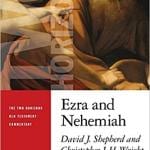
March 28, 2020 Ezra and Nehemiah in the THOTC Series
Browse Our Archives
Select a Category Bible Lands Blogosphere Book Review Calvinism Colleges & Universities Ecclesiology Emerging Adulthood Evangelicalism Foreign Affairs Gospel of John Greco-Roman World Humor Just War N. T. Wright Old Testament Resurrection Terrorism Theological Education Travel Uncategorized Writing
Select a Month September 2021 July 2021 June 2021 May 2021 April 2021 March 2021 February 2021 January 2021 December 2020 November 2020 October 2020 September 2020 August 2020 July 2020 June 2020 May 2020 April 2020 March 2020 February 2020 January 2020 December 2019 November 2019 October 2019 September 2019 August 2019 July 2019 June 2019 May 2019 April 2019 March 2019 February 2019 January 2019 December 2018 November 2018 October 2018 September 2018 August 2018 July 2018 June 2018 May 2018 April 2018 March 2018 February 2018 January 2018 December 2017 November 2017 October 2017 September 2017 August 2017 July 2017 June 2017 May 2017 April 2017 March 2017 February 2017 January 2017 December 2016 November 2016 October 2016 September 2016 August 2016 July 2016 June 2016 May 2016 April 2016 March 2016 February 2016 January 2016 December 2015 November 2015 October 2015 September 2015 August 2015 July 2015 June 2015 May 2015 April 2015 March 2015 February 2015 January 2015 December 2014 November 2014 October 2014 September 2014 August 2014 July 2014 June 2014 May 2014 April 2014 March 2014 February 2014 January 2014 December 2013 November 2013 October 2013 September 2013 August 2013 July 2013 June 2013 May 2013 April 2013 March 2013 February 2013 January 2013 December 2012 November 2012 October 2012 September 2012 August 2012 July 2012 June 2012 May 2012 April 2012 March 2012 February 2012 January 2012 December 2011 November 2011 October 2011 September 2011 August 2011 July 2011 June 2011 May 2011 January 2011
TAKE THE
Religious Wisdom Quiz
How many men did Gideon initially gather?
Select your answer to see how you score.
20,000 15,000 10,000 32,000
Books by This Author Books by Mike Bird
Related posts from Euangelion

Rom 3:21-26 - Translates, Paraphrase, Notes

Studying the New Testament through Inscriptions


Romans 13:1-7 - Translates, Paraphrase, and Notes
TRENDING AT PATHEOS Evangelical

How the author of the world's best hymn...
I've been working with John Newton for a while now. This makes...

Long before this Lectio Divina, Psalm 130 - the song - started...

What About the Trees? Another Living Parable
After I finished writing the last article about falling leaves as a...

Why Classical Education Is a Conversation, Not a...
Come and Read: Joy in Classical Education When I was a little...

Falling Leaves: A Living Parable on Letting Go
I’ve spent the vast majority of my life in the southeast corner...

Cornell University has received a great deal of negative publicity and intense...
view all Evangelical blogs
Ad-Free & Subscriber Log-In Subscription Support
- About Us
- 2026 Calendar
- Videos
- Podcasts
- Library of World Religions
- Faith In Media Tracker
- Advertise With Us
- Write for Us
- Privacy Policy
- Terms of Service
- Do Not Sell My Data
- Contact Us
- Radiant Digital
- Manage Newsletter Subscriptions
- Unsubscribe From Notifications
- Sitemap
Copyright 2008-2026, Patheos. All rights reserved.
Subscription Support Ad-Free & Subscriber Log-In
Follow Patheos