
BuddhistCatholicContemplativeEvangelicalGeneral ChristianHinduJewishLatter-day SaintMuslimNew VisionsProgressive Christian
Beliefs
- Buddhist
- Catholic
- Contemplative
- Evangelical
- General Christian
- Hindu
- Jewish
- Latter-day Saint
- More Voices
- Muslim
- New Visions
- Pagan
- Progressive Christian
Topics
- Religion News
- Food and Religion
- Sports and Religion
- Religious Art
- Religious Music and Entertainment
- Religious Events
- History and Religion
- Style and Religion
- Politics and Religion
- Women in Religion
- Recreation Outdoors and Religion
- Business Finance and Religion
- Careers Workplace and Religion
- Education and Religion
- Family Parenting and Religion
- Health Fitness and Religion
- Home and Religion
- Relationships and Religion
- Technology and Religion
- Travel and Religion
Columnists
- Buddhist Columnists
- Business Finance and Religion Columnists
- Careers Workplace and Religion Columnists
- Catholic Columnists
- Contemplative Columnists
- Education and Religion Columnists
- Evangelists Columnists
- Family Parenting and Religion Columnists
- General Christian Columnists
- Health Fitness and Religion Columnists
- Hindu Columnists
- History and Religion Columnists
- Home and Religion Columnists
- Jewish Columnists
- More Voices Columnists
- Latter Day Columnists
- Muslim Columnists
- New Visions Columnists
- Nonreligious Columnists
- Pagan Columnists
- Politics and Religion Columnists
- Progressive Columnists
- Recreation Outdoors and Religion Columnists
- Relationships and Religion Columnists
- Religion News Columnists
- Religious Art Columnists
- Religious Events Columnists
- Religious Music and Entertainment Columnists
- Sports and Religion Columnists
- Style and Religion Columnists
- Technology and Religion Columnists
- Travel and Religion Columnists
- Women in Religion Columnists
Resource Library
- 2026 Calendar
- Library of World Religions
- The 100 Most Holy Places on Earth
- Patheos Answers
- Podcasts
- Videos
- Faith Leaders Database
- Anglican Episcopalian
- Bahai
- Baptist
- Buddhism
- Christianity
- Confucianism
- Eastern Orthodoxy
- Hinduism
- Holiness and Pentecostal
- ISKCON
- Islam
- Judaism
- Lutheran
- Methodist
- The Church of Jesus Christ of Latter-day Saints
- New Age
- Paganism
- Presbytarian and Reformed
- Protestantism
- Religion Behind the Scenes
- Roman Catholic
- Scientology
- Shia Islam
- Sikhism
- Sufism
- Sunni Islam
- Taoism
- Zen
- See all religions
Research Tools
 Ad-Free & Subscriber Log-In Subscription Support
Ad-Free & Subscriber Log-In Subscription Support
Follow Patheos 

- Trending:
- Forgiveness
- |
- Marriage
- |
- Consciousness
- |
- Death Penalty
- |
- Election
- |
- Halloween
 Euangelion
- Home
- Evangelical
- The Truth about Cats and Dogs and Every Debate in Early Christianity
The Truth about Cats and Dogs and Every Debate in Early Christianity
Last updated on: January 4, 2020 at 5:15 am by Michael F. Bird
The Truth about Cats and Dogs and Every Debate in Early Christianity 2019-08-23T06:43:41-04:00 Michael F. Bird
Patheos Explore the world's faith through different perspectives on religion and spirituality! Patheos has the views of the prevalent religions and spiritualities of the world.
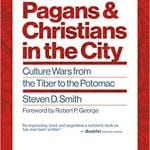
In Steven D. Smith’s Pagans & Christians in the City: Culture Wars from the Tiber to the Potomac (Grand Rapids, MI: Eerdmans, 2018) there is one juicy anecdote that I think can be applied to so many debates about various groups in relation to the first Christians.
Smith takes issue with those who argue that there really wasn’t much of a difference between paganism and Christianity. He has in mind especially Guy Stroumsa’s argument in The End of Sacrifice that ancient Christianity was pluriform and “paganism” is something of a Christian creation as a socio-religious category. In counter-point, Smith deploys this winsome illustration:
As a logical matter, however, the inference from these descriptive observations to the conclusion that there was no inherent and fundamental conflict between paganism and Christianity, or that the ostensible differences between them were artificial and constructed, seems a non sequitur. One can imagine an analogous argument maintaining that although pet lovers have from time immemorial contrasted and debated the relative merits of “dogs” as opposed to “cats,” in reality the various sundry organisms placed under the label of “dog” are enormously diverse in size, color, and behavior. Moreover, no animals ever identified itself as a “dog:: the term and the category have been imposed entirely from the outside – bu humans. Same for cats. Consequently the supposed contrast between “dogs” and “cats” is profoundly misconceived. But this conclusion would be merely silly. Let us concede (although a philosophical realist might dispute the point) that “dog” and “cat,” like most or all other general terms and categories by which we understand and engage with the world – germs, planets, rivers, islands, cities, animals, plants, etc. – are devised by humans for the purpose of describing diverse particulars that usually would not and could not claim the terms for purposes of self-description (often because such entities – dogs, cats, germs, plants, rivers, etc. – do not and could not engage in self-description to begin with). The question is whether such terms and categories usefully help us to address real similarities and differences in the world. Similarly, although the point can always be debated, the widespread use of the categories “pagan” and “Christian” from late antiquity to the present at least suggest that the terms have proven useful in this way.” (pp. 104-5).
Very amusing. You could probably apply the same cats and dogs argument to those who deny the differences or self-definition among Jews and Christians or between Christians and Gnostics. I’m sure I’ve heard arguments that run like this:
– Christian Gnostics did not know that they were “Gnostics,” this label was given to them by their opponents, mostly by caricature and misrepresentation.
– The so-called Gnostics and proto-orthodox Christians were incredibly diverse.
– The differences between Gnostics and Christians is no greater than the differences between Gnostics themselves and between Christians themselves.
– Therefore, Christians and Gnostics were not really two different and distinguishable groups, but merely religious groups along the same religious spectrum.
Sound familiar?
Its a good reminder to be wary of arguments to the effect that certain entities were so diverse that they did not really exist.
Previous Post
January 1, 2020
Pagans and Christians in the City
Next Post

January 6, 2020 Council of Nicaea Rap Battle Video
Browse Our Archives
Select a Category Bible Lands Blogosphere Book Review Calvinism Colleges & Universities Ecclesiology Emerging Adulthood Evangelicalism Foreign Affairs Gospel of John Greco-Roman World Humor Just War N. T. Wright Old Testament Resurrection Terrorism Theological Education Travel Uncategorized Writing
Select a Month September 2021 July 2021 June 2021 May 2021 April 2021 March 2021 February 2021 January 2021 December 2020 November 2020 October 2020 September 2020 August 2020 July 2020 June 2020 May 2020 April 2020 March 2020 February 2020 January 2020 December 2019 November 2019 October 2019 September 2019 August 2019 July 2019 June 2019 May 2019 April 2019 March 2019 February 2019 January 2019 December 2018 November 2018 October 2018 September 2018 August 2018 July 2018 June 2018 May 2018 April 2018 March 2018 February 2018 January 2018 December 2017 November 2017 October 2017 September 2017 August 2017 July 2017 June 2017 May 2017 April 2017 March 2017 February 2017 January 2017 December 2016 November 2016 October 2016 September 2016 August 2016 July 2016 June 2016 May 2016 April 2016 March 2016 February 2016 January 2016 December 2015 November 2015 October 2015 September 2015 August 2015 July 2015 June 2015 May 2015 April 2015 March 2015 February 2015 January 2015 December 2014 November 2014 October 2014 September 2014 August 2014 July 2014 June 2014 May 2014 April 2014 March 2014 February 2014 January 2014 December 2013 November 2013 October 2013 September 2013 August 2013 July 2013 June 2013 May 2013 April 2013 March 2013 February 2013 January 2013 December 2012 November 2012 October 2012 September 2012 August 2012 July 2012 June 2012 May 2012 April 2012 March 2012 February 2012 January 2012 December 2011 November 2011 October 2011 September 2011 August 2011 July 2011 June 2011 May 2011 January 2011
TAKE THE
Religious Wisdom Quiz
True or False: Job lost all his children, wealth, and health in a single day.
Select your answer to see how you score.
TRUE FALSE
Books by This Author Books by Mike Bird
Related posts from Euangelion

Rom 3:21-26 - Translates, Paraphrase, Notes

Studying the New Testament through Inscriptions


Romans 13:1-7 - Translates, Paraphrase, and Notes
TRENDING AT PATHEOS Evangelical

How the author of the world's best hymn...
I've been working with John Newton for a while now. This makes...

Long before this Lectio Divina, Psalm 130 - the song - started...

What About the Trees? Another Living Parable
After I finished writing the last article about falling leaves as a...

Why Classical Education Is a Conversation, Not a...
Come and Read: Joy in Classical Education When I was a little...

Falling Leaves: A Living Parable on Letting Go
I’ve spent the vast majority of my life in the southeast corner...

Cornell University has received a great deal of negative publicity and intense...
view all Evangelical blogs
Ad-Free & Subscriber Log-In Subscription Support
- About Us
- 2026 Calendar
- Videos
- Podcasts
- Library of World Religions
- Faith In Media Tracker
- Advertise With Us
- Write for Us
- Privacy Policy
- Terms of Service
- Do Not Sell My Data
- Contact Us
- Radiant Digital
- Manage Newsletter Subscriptions
- Unsubscribe From Notifications
- Sitemap
Copyright 2008-2026, Patheos. All rights reserved.
Subscription Support Ad-Free & Subscriber Log-In
Follow Patheos