
BuddhistCatholicContemplativeEvangelicalGeneral ChristianHinduJewishLatter-day SaintMuslimNew VisionsProgressive Christian
Beliefs
- Buddhist
- Catholic
- Contemplative
- Evangelical
- General Christian
- Hindu
- Jewish
- Latter-day Saint
- More Voices
- Muslim
- New Visions
- Pagan
- Progressive Christian
Topics
- Religion News
- Food and Religion
- Sports and Religion
- Religious Art
- Religious Music and Entertainment
- Religious Events
- History and Religion
- Style and Religion
- Politics and Religion
- Women in Religion
- Recreation Outdoors and Religion
- Business Finance and Religion
- Careers Workplace and Religion
- Education and Religion
- Family Parenting and Religion
- Health Fitness and Religion
- Home and Religion
- Relationships and Religion
- Technology and Religion
- Travel and Religion
Columnists
- Buddhist Columnists
- Business Finance and Religion Columnists
- Careers Workplace and Religion Columnists
- Catholic Columnists
- Contemplative Columnists
- Education and Religion Columnists
- Evangelists Columnists
- Family Parenting and Religion Columnists
- General Christian Columnists
- Health Fitness and Religion Columnists
- Hindu Columnists
- History and Religion Columnists
- Home and Religion Columnists
- Jewish Columnists
- More Voices Columnists
- Latter Day Columnists
- Muslim Columnists
- New Visions Columnists
- Nonreligious Columnists
- Pagan Columnists
- Politics and Religion Columnists
- Progressive Columnists
- Recreation Outdoors and Religion Columnists
- Relationships and Religion Columnists
- Religion News Columnists
- Religious Art Columnists
- Religious Events Columnists
- Religious Music and Entertainment Columnists
- Sports and Religion Columnists
- Style and Religion Columnists
- Technology and Religion Columnists
- Travel and Religion Columnists
- Women in Religion Columnists
Resource Library
- 2026 Calendar
- Library of World Religions
- The 100 Most Holy Places on Earth
- Patheos Answers
- Podcasts
- Videos
- Faith Leaders Database
- Anglican Episcopalian
- Bahai
- Baptist
- Buddhism
- Christianity
- Confucianism
- Eastern Orthodoxy
- Hinduism
- Holiness and Pentecostal
- ISKCON
- Islam
- Judaism
- Lutheran
- Methodist
- The Church of Jesus Christ of Latter-day Saints
- New Age
- Paganism
- Presbytarian and Reformed
- Protestantism
- Religion Behind the Scenes
- Roman Catholic
- Scientology
- Shia Islam
- Sikhism
- Sufism
- Sunni Islam
- Taoism
- Zen
- See all religions
Research Tools
 Ad-Free & Subscriber Log-In Subscription Support
Follow Patheos 

- Trending:
- Advent
- |
- Forgiveness
- |
- Thanksgiving
- |
- Election
- |
- Seasonal Holidays
- |
- Marriage
 Euangelion
- Home
- Evangelical
- Hermeneutics as Apprenticeship
Hermeneutics as Apprenticeship
Last updated on: September 7, 2019 at 5:27 am by Michael F. Bird
Hermeneutics as Apprenticeship 2019-05-20T02:42:44-04:00 Michael F. Bird
Patheos Explore the world's faith through different perspectives on religion and spirituality! Patheos has the views of the prevalent religions and spiritualities of the world.
David I. Starling
Hermeneutics as Apprenticeship: How the Bible Shapes Our Interpretive Habits and Practices
Grand Rapids: Baker Academic, 2016.
Available from Baker and Koorong
By Laura Thierry
What if learning to read and interpret Scripture well looked less like a classroom and more like a carpenters shop? What if character and virtue were just as significant for the interpretation of Scripture as an excellent Greek and Hebrew exegetical toolbox? What if hermeneutics was actually like learning a trade than gaining a degree? Such are the kinds of questions undergirding David I. Starlings winsome and engaging book, Hermeneutics as Apprenticeship.
Beginning with the clear reorientation to the reality that “Whenever we read Scripture we are interpreting” (1) (that is, that there is no possibility of a “pure” uninterrupted reading), Starling analyzes the plight that this raises for Evangelical Interpreters, that is, those who “approach the task of Bible reading without the direction of an infallible church tradition to govern their interpretive decisions.” Without this, what is the anchor for our interpretation, particularly in light of the “plurality of evangelical interpretations” that increasingly exist? (7).
The answer, from a protestant perspective has often put forward a two-fold understanding of Scripture being its own interpreter: (1) Scripture is passively interpreted by those who actively interpret it by other passages of Scripture, or (2) Scripture, as an active agent, interprets and illuminates “the world of the reader”.
But what if there is also a third way in which “Scripture interprets Scripture”? A “reflexive sense of the maxim [that] appeals to the plural, human authorship of Scripture and speaks of the interpretive work that the biblical authors themselves perform in understanding and appropriating anteceding texts and traditions that functioned for the as Scripture does for us”(11)? This third sense is what Starling goes on to demonstrate. Scripture, according to Starling, doesn’t just function as a circle or a spiral (both helpful images to show us how the Scriptures relate to contemporary readers), rather, as a metaphor of how Scripture functions with regard to itself, the Canon is more like a snowball: “The Bible did not fall from the sky like a single snowflake; it rolled down the hill of salvation history adding layers as it went. Each new layer of the accumulating collection presupposes what comes before and wraps itself around it” (14).
This delightful image, according to Starling, has implications for how we read and interpret the Scriptures, that is, as apprentices to the Biblical writers in their “interpretive practices” and “hermeneutical wisdom” (206). This method requires not just “sweat… [and] skill”, but also “character”, character that will “bring to bear on the task the right dispositions, affections, and virtues.” (17).
Starling works this understanding out in a series of fourteen case studies. In interpreting the Psalms as apprentices to the canonical writers we need to take seriously their hermeneutical practice of interpreting the psalms through the communal practice of singing them, thus forming a “hermeneutics of delight”. The book of Ruth read in this light proves to be an exercise in virtue ethics, and so forth through to the book of Revelation. Starling then concludes with a helpful reminder that this is not a silver bullet curriculum that can be ‘mastered’. Rather it is a life-long apprenticeship of slow and faithful learning and relearning that is ‘richly worth the effort that it requires.” (206).
This book is an excellent resource in bringing to bear the growing interest in practices, virtues, and liturgies in the life of the Evangelical Church to the essential task of Scriptural interpretation. As such it would serve particularly well as a helpful tool to all those involved in teaching people how to read and interpret the Bible faithfully in both academic and local church contexts.
Laura Thierry a PhD student at Ridley College, researching medieval hagiography, Christology, and theology of the body.
Previous Post
September 4, 2019
Flemming Rutlege on Good Friday
Next Post

September 10, 2019 A War of Loves - The Story of a Gay Activist
Browse Our Archives
Select a Category Bible Lands Blogosphere Book Review Calvinism Colleges & Universities Ecclesiology Emerging Adulthood Evangelicalism Foreign Affairs Gospel of John Greco-Roman World Humor Just War N. T. Wright Old Testament Resurrection Terrorism Theological Education Travel Uncategorized Writing
Select a Month September 2021 July 2021 June 2021 May 2021 April 2021 March 2021 February 2021 January 2021 December 2020 November 2020 October 2020 September 2020 August 2020 July 2020 June 2020 May 2020 April 2020 March 2020 February 2020 January 2020 December 2019 November 2019 October 2019 September 2019 August 2019 July 2019 June 2019 May 2019 April 2019 March 2019 February 2019 January 2019 December 2018 November 2018 October 2018 September 2018 August 2018 July 2018 June 2018 May 2018 April 2018 March 2018 February 2018 January 2018 December 2017 November 2017 October 2017 September 2017 August 2017 July 2017 June 2017 May 2017 April 2017 March 2017 February 2017 January 2017 December 2016 November 2016 October 2016 September 2016 August 2016 July 2016 June 2016 May 2016 April 2016 March 2016 February 2016 January 2016 December 2015 November 2015 October 2015 September 2015 August 2015 July 2015 June 2015 May 2015 April 2015 March 2015 February 2015 January 2015 December 2014 November 2014 October 2014 September 2014 August 2014 July 2014 June 2014 May 2014 April 2014 March 2014 February 2014 January 2014 December 2013 November 2013 October 2013 September 2013 August 2013 July 2013 June 2013 May 2013 April 2013 March 2013 February 2013 January 2013 December 2012 November 2012 October 2012 September 2012 August 2012 July 2012 June 2012 May 2012 April 2012 March 2012 February 2012 January 2012 December 2011 November 2011 October 2011 September 2011 August 2011 July 2011 June 2011 May 2011 January 2011
TAKE THE
Religious Wisdom Quiz
What does James say about faith without works?
Select your answer to see how you score.
Faith without works is dead. Faith alone is enough. Faith is only for the righteous. Works without faith is dead.
Books by This Author Books by Mike Bird
Related posts from Euangelion

Rom 3:21-26 - Translates, Paraphrase, Notes
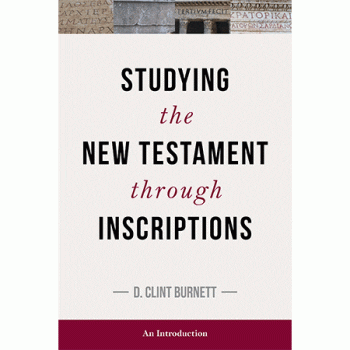
Studying the New Testament through Inscriptions


Romans 13:1-7 - Translates, Paraphrase, and Notes
TRENDING AT PATHEOS Evangelical

When you hear the word riches, what comes to mind? For most...

Don’t Miss the Parents: A Creative Christmas Meditation
As we enter the Advent Season, I see many people trying to...

Making Stones Into Bread: Choosing the “Right” Work
I was on my online arts ministry Zoom meeting with the International...

Ukraine’s exhausted Christians face fifth winter of war
By Julian Lukins The full-scale war in Ukraine is taking “a serious...

Russell Brand's Conviction is not anti-Christian Persecution
How do we shed the reputation that the Church is OK with...

Have you ever caught yourself saying, “I’ll do it tomorrow,” or “Now...
view all Evangelical blogs
Ad-Free & Subscriber Log-In Subscription Support
- About Us
- 2026 Calendar
- Videos
- Podcasts
- Library of World Religions
- Faith In Media Tracker
- Advertise With Us
- Write for Us
- Privacy Policy
- Terms of Service
- Do Not Sell My Data
- Contact Us
- Radiant Digital
- Manage Newsletter Subscriptions
- Unsubscribe From Notifications
- Sitemap
Copyright 2008-2026, Patheos, part of the Radiant Digital network of media brands. All rights reserved.
Subscription Support Ad-Free & Subscriber Log-In
Follow Patheos