
BuddhistCatholicContemplativeEvangelicalGeneral ChristianHinduJewishLatter-day SaintMuslimNew VisionsProgressive Christian
Beliefs
- Buddhist
- Catholic
- Contemplative
- Evangelical
- General Christian
- Hindu
- Jewish
- Latter-day Saint
- More Voices
- Muslim
- New Visions
- Pagan
- Progressive Christian
Topics
- Religion News
- Food and Religion
- Sports and Religion
- Religious Art
- Religious Music and Entertainment
- Religious Events
- History and Religion
- Style and Religion
- Politics and Religion
- Women in Religion
- Recreation Outdoors and Religion
- Business Finance and Religion
- Careers Workplace and Religion
- Education and Religion
- Family Parenting and Religion
- Health Fitness and Religion
- Home and Religion
- Relationships and Religion
- Technology and Religion
- Travel and Religion
Columnists
- Buddhist Columnists
- Business Finance and Religion Columnists
- Careers Workplace and Religion Columnists
- Catholic Columnists
- Contemplative Columnists
- Education and Religion Columnists
- Evangelists Columnists
- Family Parenting and Religion Columnists
- General Christian Columnists
- Health Fitness and Religion Columnists
- Hindu Columnists
- History and Religion Columnists
- Home and Religion Columnists
- Jewish Columnists
- More Voices Columnists
- Latter Day Columnists
- Muslim Columnists
- New Visions Columnists
- Nonreligious Columnists
- Pagan Columnists
- Politics and Religion Columnists
- Progressive Columnists
- Recreation Outdoors and Religion Columnists
- Relationships and Religion Columnists
- Religion News Columnists
- Religious Art Columnists
- Religious Events Columnists
- Religious Music and Entertainment Columnists
- Sports and Religion Columnists
- Style and Religion Columnists
- Technology and Religion Columnists
- Travel and Religion Columnists
- Women in Religion Columnists
Resource Library
- 2026 Calendar
- Library of World Religions
- The 100 Most Holy Places on Earth
- Patheos Answers
- Podcasts
- Videos
- Faith Leaders Database
- Anglican Episcopalian
- Bahai
- Baptist
- Buddhism
- Christianity
- Confucianism
- Eastern Orthodoxy
- Hinduism
- Holiness and Pentecostal
- ISKCON
- Islam
- Judaism
- Lutheran
- Methodist
- The Church of Jesus Christ of Latter-day Saints
- New Age
- Paganism
- Presbytarian and Reformed
- Protestantism
- Religion Behind the Scenes
- Roman Catholic
- Scientology
- Shia Islam
- Sikhism
- Sufism
- Sunni Islam
- Taoism
- Zen
- See all religions
Research Tools
 Ad-Free & Subscriber Log-In Subscription Support
Ad-Free & Subscriber Log-In Subscription Support
Follow Patheos 

- Trending:
- Forgiveness
- |
- Marriage
- |
- Consciousness
- |
- Death Penalty
- |
- Election
- |
- Halloween
 Euangelion
- Home
- Evangelical
- Mondays with Moo and McKnight – Romans 2
Mondays with Moo and McKnight – Romans 2
Last updated on: August 5, 2019 at 5:08 am by Michael F. Bird
Mondays with Moo and McKnight – Romans 2 2019-08-04T21:41:32-04:00 Michael F. Bird
Patheos Explore the world's faith through different perspectives on religion and spirituality! Patheos has the views of the prevalent religions and spiritualities of the world.
I’m continuing my Mondays with Moo series, but now adding Scot McKnight’s Reading Romans Backwards because it just arrived!
Interestingly, Moo continued to argue the view that justification to the doers of the law is hypothetical (2:13), he sees no Gentile Christians (2:14-15) except allusively towards the end of the chapter (2:27-28):
We think, therefore, that vv. 7 and 10 set forth what is called in traditional (especially Lutheran) language “the law.” Paul sets forth the binbilal conditions for attaining eternal life apart from Christ. Understood this way, Paul is not speaking hypothetically. But once his doctrine of universal human powerlessness under sin has been developed (see 3:9 especially), it becomes clear that the promise can, in fact, never become operative because the condition for its fulfillment – consistent, earnest seeking after good – can never be realized (p. 153).
Christians must indeed be “doers” if they want to be vindicated in the judgment. But Christians do not “do” the law of Moses … but the “law of Christ”. As in vv. 7 and 10, therefore, we think it more likely that Paul is here simply setting forth the standard by which God’s justifying verdict will be rendered (p. 158).
Verses such as Rom. 2:7, 10, 13, and 7:10 suggest that Paul agreed with the Jewish belief that justification could, in theory, be secured through works. Where Paul disagreed with Judaism was in his belief that the power of sin prevents any person, even the Jew who depends on his or her covenant status, from actually achieving justification in that manner. While, therefore, one could be justified by doing the law in theory, in practice it is impossible (p. 166).
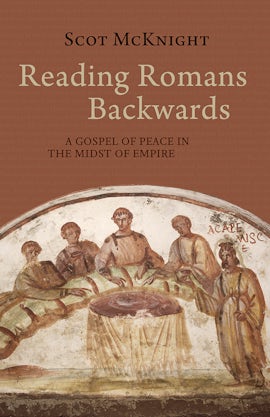 McKnight calls Romans 2 a “Rhetorical Turn” where Paul moves from accepting the judgment of the Wisdom of Solomon on the Gentile world to putting such an author, with his/her judgment of Gentiles, in the dock before God. McKnight further argues that, in view of Romans 14, the “Judge” in this case might actually be the “weak” those Christian Jews who sit in judgment of the “strong” about the observance of Torah. He writes:
Paul, then, is not talking about Judaism per se or even Jewish privilege in general; he is talking about a specific audience in Rome – the Weak – and the Weak is a group who knows Torah, believes in Torah, practices Torah, and expects gentile believers to convert the whole way and join them in Torah observance because they know the will of God. They know because they are God’s elect, God’s remnant, the messianic people of God. Because the gentile believers, the Strong, are not doing Torah, the Weak judge them as inferior and uncommitted to the fullness of God’s revelation in Moses. Yes, Torah observance is a boundary marking used aginst the Strong, the gentile believers, that concerns Paul (p. 108).
Previous Post
August 4, 2019
Jesus the Priest?
Next Post

August 7, 2019 Post-Commentary Reflections on Philippians
Browse Our Archives
Select a Category Bible Lands Blogosphere Book Review Calvinism Colleges & Universities Ecclesiology Emerging Adulthood Evangelicalism Foreign Affairs Gospel of John Greco-Roman World Humor Just War N. T. Wright Old Testament Resurrection Terrorism Theological Education Travel Uncategorized Writing
Select a Month September 2021 July 2021 June 2021 May 2021 April 2021 March 2021 February 2021 January 2021 December 2020 November 2020 October 2020 September 2020 August 2020 July 2020 June 2020 May 2020 April 2020 March 2020 February 2020 January 2020 December 2019 November 2019 October 2019 September 2019 August 2019 July 2019 June 2019 May 2019 April 2019 March 2019 February 2019 January 2019 December 2018 November 2018 October 2018 September 2018 August 2018 July 2018 June 2018 May 2018 April 2018 March 2018 February 2018 January 2018 December 2017 November 2017 October 2017 September 2017 August 2017 July 2017 June 2017 May 2017 April 2017 March 2017 February 2017 January 2017 December 2016 November 2016 October 2016 September 2016 August 2016 July 2016 June 2016 May 2016 April 2016 March 2016 February 2016 January 2016 December 2015 November 2015 October 2015 September 2015 August 2015 July 2015 June 2015 May 2015 April 2015 March 2015 February 2015 January 2015 December 2014 November 2014 October 2014 September 2014 August 2014 July 2014 June 2014 May 2014 April 2014 March 2014 February 2014 January 2014 December 2013 November 2013 October 2013 September 2013 August 2013 July 2013 June 2013 May 2013 April 2013 March 2013 February 2013 January 2013 December 2012 November 2012 October 2012 September 2012 August 2012 July 2012 June 2012 May 2012 April 2012 March 2012 February 2012 January 2012 December 2011 November 2011 October 2011 September 2011 August 2011 July 2011 June 2011 May 2011 January 2011
TAKE THE
Religious Wisdom Quiz
Which two apostles went up to the temple at the "hour of prayer" and healed a lame man in Acts 3?
Select your answer to see how you score.
Peter and John James and Jude Paul and Barnabas Philip and Stephen
Books by This Author Books by Mike Bird
Related posts from Euangelion

Rom 3:21-26 - Translates, Paraphrase, Notes

Studying the New Testament through Inscriptions


Romans 13:1-7 - Translates, Paraphrase, and Notes
TRENDING AT PATHEOS Evangelical

The REST of Your Life: A Creative Wrestles...
This week I had a conversation with a good friend from church....

How the author of the world's best hymn...
I've been working with John Newton for a while now. This makes...

Long before this Lectio Divina, Psalm 130 - the song - started...

What About the Trees? Another Living Parable
After I finished writing the last article about falling leaves as a...

Why Classical Education Is a Conversation, Not a...
Come and Read: Joy in Classical Education When I was a little...

Cornell University has received a great deal of negative publicity and intense...
view all Evangelical blogs
Ad-Free & Subscriber Log-In Subscription Support
- About Us
- 2026 Calendar
- Videos
- Podcasts
- Library of World Religions
- Faith In Media Tracker
- Advertise With Us
- Write for Us
- Privacy Policy
- Terms of Service
- Do Not Sell My Data
- Contact Us
- Radiant Digital
- Manage Newsletter Subscriptions
- Unsubscribe From Notifications
- Sitemap
Copyright 2008-2026, Patheos. All rights reserved.
Subscription Support Ad-Free & Subscriber Log-In
Follow Patheos