
BuddhistCatholicContemplativeEvangelicalGeneral ChristianHinduJewishLatter-day SaintMuslimNew VisionsProgressive Christian
Beliefs
- Buddhist
- Catholic
- Contemplative
- Evangelical
- General Christian
- Hindu
- Jewish
- Latter-day Saint
- More Voices
- Muslim
- New Visions
- Pagan
- Progressive Christian
Topics
- Religion News
- Food and Religion
- Sports and Religion
- Religious Art
- Religious Music and Entertainment
- Religious Events
- History and Religion
- Style and Religion
- Politics and Religion
- Women in Religion
- Recreation Outdoors and Religion
- Business Finance and Religion
- Careers Workplace and Religion
- Education and Religion
- Family Parenting and Religion
- Health Fitness and Religion
- Home and Religion
- Relationships and Religion
- Technology and Religion
- Travel and Religion
Columnists
- Buddhist Columnists
- Business Finance and Religion Columnists
- Careers Workplace and Religion Columnists
- Catholic Columnists
- Contemplative Columnists
- Education and Religion Columnists
- Evangelists Columnists
- Family Parenting and Religion Columnists
- General Christian Columnists
- Health Fitness and Religion Columnists
- Hindu Columnists
- History and Religion Columnists
- Home and Religion Columnists
- Jewish Columnists
- More Voices Columnists
- Latter Day Columnists
- Muslim Columnists
- New Visions Columnists
- Nonreligious Columnists
- Pagan Columnists
- Politics and Religion Columnists
- Progressive Columnists
- Recreation Outdoors and Religion Columnists
- Relationships and Religion Columnists
- Religion News Columnists
- Religious Art Columnists
- Religious Events Columnists
- Religious Music and Entertainment Columnists
- Sports and Religion Columnists
- Style and Religion Columnists
- Technology and Religion Columnists
- Travel and Religion Columnists
- Women in Religion Columnists
Resource Library
- 2026 Calendar
- Library of World Religions
- The 100 Most Holy Places on Earth
- Patheos Answers
- Podcasts
- Videos
- Faith Leaders Database
- Anglican Episcopalian
- Bahai
- Baptist
- Buddhism
- Christianity
- Confucianism
- Eastern Orthodoxy
- Hinduism
- Holiness and Pentecostal
- ISKCON
- Islam
- Judaism
- Lutheran
- Methodist
- The Church of Jesus Christ of Latter-day Saints
- New Age
- Paganism
- Presbytarian and Reformed
- Protestantism
- Religion Behind the Scenes
- Roman Catholic
- Scientology
- Shia Islam
- Sikhism
- Sufism
- Sunni Islam
- Taoism
- Zen
- See all religions
Research Tools
 Ad-Free & Subscriber Log-In Subscription Support
Ad-Free & Subscriber Log-In Subscription Support
Follow Patheos 

- Trending:
- Forgiveness
- |
- Marriage
- |
- Consciousness
- |
- Death Penalty
- |
- Election
- |
- Halloween
 Euangelion
- Home
- Evangelical
- Wrestling with Christianity, Money, and Economics
Wrestling with Christianity, Money, and Economics
Last updated on: July 4, 2019 at 5:05 am by Michael F. Bird
Wrestling with Christianity, Money, and Economics 2019-03-24T18:22:29-04:00 Michael F. Bird
Patheos Explore the world's faith through different perspectives on religion and spirituality! Patheos has the views of the prevalent religions and spiritualities of the world.
There’s been a flurry of books about Christianity and Economics in the last year, including the following:
Michael Rhodes and Robby Holt, Practicing the King’s Economy: Honoring Jesus in How We Work, Earn, Spend, Save, and Give (Grand Rapids, MI: Baker, 2018).
John D. Barry, Jesus’ Economy: A Biblical View of Poverty, the Currency of Love, and a Pattern for Lasting Change (New Kensington, PA: Whitaker House, 2019).
Michael Barram, Missional Economics: Biblical Justice and Christian Formation (Grand Rapids, MI: Eerdmans, 2018).
Robert Myles (ed.), Class Struggle in the New Testament (Lanham: Lexington/Fortress, forthcoming 2019).
Kenneth Barnes, Redeeming Capitalism (Grand Rapids, MI: Eerdmans 2018).
Ian Harper, Confessions of a Meddlesome Economist (Acorn, 2019).
As it is, Professor Ian Harper, a leading Australian economist, economics professor, current dean of the Melbourne Business School, senior advisor to Deloitte Access Economics, and board member of the reserve bank of Australia, reviews two of these books:
John D. Barry, Jesus’ Economy: A Biblical View of Poverty, The Currency of Love, and a Pattern for Lasting Change, New Kensington, PA: Whitaker House, 2019, 178 pp. no index.
Michael Rhodes and Robby Holt (with Brian Fikkert), Practicing the King’s Economy: Honoring Jesus in How We Work, Earn, Spend, Save, and Give, Grand Rapids, MI: Baker Books, 2018, 317 pp. including index.
These two books offer practical strategies for Christians seeking to ‘work out their salvation’ in the everyday business of meeting our material needs and those of others, whether in our midst or beyond. The first focuses on alleviating poverty, specifically, while the second takes a broader view of economic life. In both cases, the authors draw lessons from the Bible, both the Old and New Testaments, about how Christians should relate to other people, believers and non-believers, when it comes to commercial relations. Unsurprisingly, the Bible teaches us that we are far more valuable to God than the sum of what we are capable of producing and consuming, and that to value human beings according to these standards is to do the very opposite of ‘loving our neighbours’ as God loves us. In this sense, God’s ‘economy’ runs on very different principles to real-world economies where goods and services are traded and prices determined with little or no thought given to the underlying worth of the people for whom this activity is notionally beneficial. This is where the Gospel transforms a believer’s attitude to economic relations, or ought to do so. Yet the pressure to conform to worldly approaches to wealth creation are intense. How can Christians live in a world drunk on material prosperity and often blind to spiritual welfare without succumbing themselves? And how can Christians love their neighbours in practical ways that build them up and show them their real identity in Jesus when so much of the focus of real-world economic relations is narrowly material? Neither of these books seeks a wholesale reconstruction of the way economies work or even to advance a Christian vision of a transformed economics, more attuned to Kingdom values than worldly priorities. Rather they are both thoughtful and practical studies, informed by Biblical priorities, that show how Christians can live in the worldly economy and yet not be of it, and in doing so to witness to the abundance of God’s love rather than the scarcity of material goods and services.
Previous Post

July 2, 2019
John Wesley on the Biblical Languages
Next Post
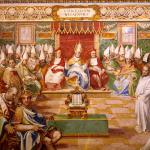
July 7, 2019 Lewis Ayres: Is Nicene Trinitarianism in the Scriptures
Browse Our Archives
Select a Category Bible Lands Blogosphere Book Review Calvinism Colleges & Universities Ecclesiology Emerging Adulthood Evangelicalism Foreign Affairs Gospel of John Greco-Roman World Humor Just War N. T. Wright Old Testament Resurrection Terrorism Theological Education Travel Uncategorized Writing
Select a Month September 2021 July 2021 June 2021 May 2021 April 2021 March 2021 February 2021 January 2021 December 2020 November 2020 October 2020 September 2020 August 2020 July 2020 June 2020 May 2020 April 2020 March 2020 February 2020 January 2020 December 2019 November 2019 October 2019 September 2019 August 2019 July 2019 June 2019 May 2019 April 2019 March 2019 February 2019 January 2019 December 2018 November 2018 October 2018 September 2018 August 2018 July 2018 June 2018 May 2018 April 2018 March 2018 February 2018 January 2018 December 2017 November 2017 October 2017 September 2017 August 2017 July 2017 June 2017 May 2017 April 2017 March 2017 February 2017 January 2017 December 2016 November 2016 October 2016 September 2016 August 2016 July 2016 June 2016 May 2016 April 2016 March 2016 February 2016 January 2016 December 2015 November 2015 October 2015 September 2015 August 2015 July 2015 June 2015 May 2015 April 2015 March 2015 February 2015 January 2015 December 2014 November 2014 October 2014 September 2014 August 2014 July 2014 June 2014 May 2014 April 2014 March 2014 February 2014 January 2014 December 2013 November 2013 October 2013 September 2013 August 2013 July 2013 June 2013 May 2013 April 2013 March 2013 February 2013 January 2013 December 2012 November 2012 October 2012 September 2012 August 2012 July 2012 June 2012 May 2012 April 2012 March 2012 February 2012 January 2012 December 2011 November 2011 October 2011 September 2011 August 2011 July 2011 June 2011 May 2011 January 2011
TAKE THE
Religious Wisdom Quiz
Who is credited with writing much of Proverbs?
Select your answer to see how you score.
Hezekiah Solomon David Agur
Books by This Author Books by Mike Bird
Related posts from Euangelion

Rom 3:21-26 - Translates, Paraphrase, Notes

Studying the New Testament through Inscriptions


Romans 13:1-7 - Translates, Paraphrase, and Notes
TRENDING AT PATHEOS Evangelical

The REST of Your Life: A Creative Wrestles...
This week I had a conversation with a good friend from church....

How the author of the world's best hymn...
I've been working with John Newton for a while now. This makes...

Long before this Lectio Divina, Psalm 130 - the song - started...

What About the Trees? Another Living Parable
After I finished writing the last article about falling leaves as a...

Why Classical Education Is a Conversation, Not a...
Come and Read: Joy in Classical Education When I was a little...

Cornell University has received a great deal of negative publicity and intense...
view all Evangelical blogs
Ad-Free & Subscriber Log-In Subscription Support
- About Us
- 2026 Calendar
- Videos
- Podcasts
- Library of World Religions
- Faith In Media Tracker
- Advertise With Us
- Write for Us
- Privacy Policy
- Terms of Service
- Do Not Sell My Data
- Contact Us
- Radiant Digital
- Manage Newsletter Subscriptions
- Unsubscribe From Notifications
- Sitemap
Copyright 2008-2026, Patheos. All rights reserved.
Subscription Support Ad-Free & Subscriber Log-In
Follow Patheos