
BuddhistCatholicContemplativeEvangelicalGeneral ChristianHinduJewishLatter-day SaintMuslimNew VisionsProgressive Christian
Beliefs
- Buddhist
- Catholic
- Contemplative
- Evangelical
- General Christian
- Hindu
- Jewish
- Latter-day Saint
- More Voices
- Muslim
- New Visions
- Pagan
- Progressive Christian
Topics
- Religion News
- Food and Religion
- Sports and Religion
- Religious Art
- Religious Music and Entertainment
- Religious Events
- History and Religion
- Style and Religion
- Politics and Religion
- Women in Religion
- Recreation Outdoors and Religion
- Business Finance and Religion
- Careers Workplace and Religion
- Education and Religion
- Family Parenting and Religion
- Health Fitness and Religion
- Home and Religion
- Relationships and Religion
- Technology and Religion
- Travel and Religion
Columnists
- Buddhist Columnists
- Business Finance and Religion Columnists
- Careers Workplace and Religion Columnists
- Catholic Columnists
- Contemplative Columnists
- Education and Religion Columnists
- Evangelists Columnists
- Family Parenting and Religion Columnists
- General Christian Columnists
- Health Fitness and Religion Columnists
- Hindu Columnists
- History and Religion Columnists
- Home and Religion Columnists
- Jewish Columnists
- More Voices Columnists
- Latter Day Columnists
- Muslim Columnists
- New Visions Columnists
- Nonreligious Columnists
- Pagan Columnists
- Politics and Religion Columnists
- Progressive Columnists
- Recreation Outdoors and Religion Columnists
- Relationships and Religion Columnists
- Religion News Columnists
- Religious Art Columnists
- Religious Events Columnists
- Religious Music and Entertainment Columnists
- Sports and Religion Columnists
- Style and Religion Columnists
- Technology and Religion Columnists
- Travel and Religion Columnists
- Women in Religion Columnists
Resource Library
- 2026 Calendar
- Library of World Religions
- The 100 Most Holy Places on Earth
- Patheos Answers
- Podcasts
- Videos
- Faith Leaders Database
- Anglican Episcopalian
- Bahai
- Baptist
- Buddhism
- Christianity
- Confucianism
- Eastern Orthodoxy
- Hinduism
- Holiness and Pentecostal
- ISKCON
- Islam
- Judaism
- Lutheran
- Methodist
- The Church of Jesus Christ of Latter-day Saints
- New Age
- Paganism
- Presbytarian and Reformed
- Protestantism
- Religion Behind the Scenes
- Roman Catholic
- Scientology
- Shia Islam
- Sikhism
- Sufism
- Sunni Islam
- Taoism
- Zen
- See all religions
Research Tools
 Ad-Free & Subscriber Log-In Subscription Support
Ad-Free & Subscriber Log-In Subscription Support
Follow Patheos 

- Trending:
- Forgiveness
- |
- Marriage
- |
- Consciousness
- |
- Death Penalty
- |
- Election
- |
- Halloween
 Euangelion
- Home
- Evangelical
- Origen on Gospel Harmonization and Inerrancy
Origen on Gospel Harmonization and Inerrancy
Last updated on: April 30, 2019 at 5:16 am by Michael F. Bird
Origen on Gospel Harmonization and Inerrancy 2019-01-02T21:19:00-04:00 Michael F. Bird
Patheos Explore the world's faith through different perspectives on religion and spirituality! Patheos has the views of the prevalent religions and spiritualities of the world.
In his Commentary on John (10.2), Origen says this about harmonizations of discrepancies between the Gospels:
“The truth of these matters must lie in that which is seen by the mind. If the discrepancy between the Gospels is not solved, we must give up our trust in the Gospels, as being true and written by a divine spirit, or as records worthy of credence, for both these characters are held to belong to these works. Those who accept the four Gospels, and who do not consider that their apparent discrepancy is to be solved anagogically (by mystical interpretation), will have to clear up the difficulty, raised above, about the forty days of the temptation, a period for which no room can be found in any way in John’s narrative; and they will also have to tell us when it was that the Lord came to Capernaum. If it was after the six days of the period of His baptism, the sixth being that of the marriage at Cans of Galilee, then it is clear that the temptation never took place, and that He never was at Nazara, and that John was not yet delivered up. Now, after Capernaum, where He abode not many days, the passover of the Jews was at hand, and He went up to Jerusalem, where He cast the sheep and oxen out of the temple, and poured out the small change of the bankers. In Jerusalem, too, it appears that Nicodemus, the ruler and Pharisee, first came to Him by night, and heard what we may read in the Gospel. “After these things, Jesus came, and His disciples, into the land of Judaea, and there He tarried with them and baptized, at the same time at which John also was baptizing in AEnon near Salim, because there were many waters there, and they came and were baptized; for John was not yet cast into prison.” On this occasion, too, there was a questioning on the part of John’s disciples with the Jews about purification, and they came to John, saying of the Saviour. “Behold, He baptizeth, and all come to Him.” They had heard words from the Baptist, the exact tenor of which it is better to take from Scripture itself. Now, if we ask when Christ was first in Capernaum, our respondents, if they follow the words of Matthew, and of the other two, will say, After the temptation, when, “leaving Nazareth, He came and dwelt in Capernaum by the sea.” But how can they show both the statements to be true, that of Matthew and Mark, that it was because He heard that John was delivered up that He departed into Galilee, and that of John, found there, after a number of other transactions, subsequent to His stay at Capernaum, after His going to Jerusalem, and His journey from there to Judaea, that John was not yet cast into prison, but was baptizing in Aenon near Salim? There are many other points on which the careful student of the Gospels will find that their narratives do not agree; and these we shall place before the reader, according to our power, as they occur. The student, staggered at the consideration of these things, will either renounce the attempt to find all the Gospels true, and not venturing to conclude that all our information about our Lord is untrustworthy, will choose at random one of them to be his guide; or he will accept the four, and will consider that their truth is not to be sought for in the outward and material letter.”
In other words, for Origen, inerrancy only applies to the spiritual horizon of a text, not its letter, history, or external referent. I’m not necessarily advocating this, just pointing out that this is a different approach to what you’ll find in Augustine and Warfield about Gospel harmonization and inerrancy.
Previous Post

April 27, 2019
Paul, the Spirit, and Experience in Galatians 3
Next Post
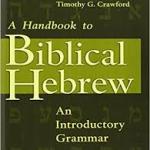
May 1, 2019 New Hebrew Grammar - A Review
Browse Our Archives
Select a Category Bible Lands Blogosphere Book Review Calvinism Colleges & Universities Ecclesiology Emerging Adulthood Evangelicalism Foreign Affairs Gospel of John Greco-Roman World Humor Just War N. T. Wright Old Testament Resurrection Terrorism Theological Education Travel Uncategorized Writing
Select a Month September 2021 July 2021 June 2021 May 2021 April 2021 March 2021 February 2021 January 2021 December 2020 November 2020 October 2020 September 2020 August 2020 July 2020 June 2020 May 2020 April 2020 March 2020 February 2020 January 2020 December 2019 November 2019 October 2019 September 2019 August 2019 July 2019 June 2019 May 2019 April 2019 March 2019 February 2019 January 2019 December 2018 November 2018 October 2018 September 2018 August 2018 July 2018 June 2018 May 2018 April 2018 March 2018 February 2018 January 2018 December 2017 November 2017 October 2017 September 2017 August 2017 July 2017 June 2017 May 2017 April 2017 March 2017 February 2017 January 2017 December 2016 November 2016 October 2016 September 2016 August 2016 July 2016 June 2016 May 2016 April 2016 March 2016 February 2016 January 2016 December 2015 November 2015 October 2015 September 2015 August 2015 July 2015 June 2015 May 2015 April 2015 March 2015 February 2015 January 2015 December 2014 November 2014 October 2014 September 2014 August 2014 July 2014 June 2014 May 2014 April 2014 March 2014 February 2014 January 2014 December 2013 November 2013 October 2013 September 2013 August 2013 July 2013 June 2013 May 2013 April 2013 March 2013 February 2013 January 2013 December 2012 November 2012 October 2012 September 2012 August 2012 July 2012 June 2012 May 2012 April 2012 March 2012 February 2012 January 2012 December 2011 November 2011 October 2011 September 2011 August 2011 July 2011 June 2011 May 2011 January 2011
TAKE THE
Religious Wisdom Quiz
What is the Christian approach to enemies?
Select your answer to see how you score.
Avoid them Curse them Pray for them Fight with them
Books by This Author Books by Mike Bird
Related posts from Euangelion

Rom 3:21-26 - Translates, Paraphrase, Notes

Studying the New Testament through Inscriptions


Romans 13:1-7 - Translates, Paraphrase, and Notes
TRENDING AT PATHEOS Evangelical

The REST of Your Life: A Creative Wrestles...
This week I had a conversation with a good friend from church....

How the author of the world's best hymn...
I've been working with John Newton for a while now. This makes...

Long before this Lectio Divina, Psalm 130 - the song - started...

What About the Trees? Another Living Parable
After I finished writing the last article about falling leaves as a...

Why Classical Education Is a Conversation, Not a...
Come and Read: Joy in Classical Education When I was a little...

Cornell University has received a great deal of negative publicity and intense...
view all Evangelical blogs
Ad-Free & Subscriber Log-In Subscription Support
- About Us
- 2026 Calendar
- Videos
- Podcasts
- Library of World Religions
- Faith In Media Tracker
- Advertise With Us
- Write for Us
- Privacy Policy
- Terms of Service
- Do Not Sell My Data
- Contact Us
- Radiant Digital
- Manage Newsletter Subscriptions
- Unsubscribe From Notifications
- Sitemap
Copyright 2008-2026, Patheos. All rights reserved.
Subscription Support Ad-Free & Subscriber Log-In
Follow Patheos