
BuddhistCatholicContemplativeEvangelicalGeneral ChristianHinduJewishLatter-day SaintMuslimNew VisionsProgressive Christian
Beliefs
- Buddhist
- Catholic
- Contemplative
- Evangelical
- General Christian
- Hindu
- Jewish
- Latter-day Saint
- More Voices
- Muslim
- New Visions
- Pagan
- Progressive Christian
Topics
- Religion News
- Food and Religion
- Sports and Religion
- Religious Art
- Religious Music and Entertainment
- Religious Events
- History and Religion
- Style and Religion
- Politics and Religion
- Women in Religion
- Recreation Outdoors and Religion
- Business Finance and Religion
- Careers Workplace and Religion
- Education and Religion
- Family Parenting and Religion
- Health Fitness and Religion
- Home and Religion
- Relationships and Religion
- Technology and Religion
- Travel and Religion
Columnists
- Buddhist Columnists
- Business Finance and Religion Columnists
- Careers Workplace and Religion Columnists
- Catholic Columnists
- Contemplative Columnists
- Education and Religion Columnists
- Evangelists Columnists
- Family Parenting and Religion Columnists
- General Christian Columnists
- Health Fitness and Religion Columnists
- Hindu Columnists
- History and Religion Columnists
- Home and Religion Columnists
- Jewish Columnists
- More Voices Columnists
- Latter Day Columnists
- Muslim Columnists
- New Visions Columnists
- Nonreligious Columnists
- Pagan Columnists
- Politics and Religion Columnists
- Progressive Columnists
- Recreation Outdoors and Religion Columnists
- Relationships and Religion Columnists
- Religion News Columnists
- Religious Art Columnists
- Religious Events Columnists
- Religious Music and Entertainment Columnists
- Sports and Religion Columnists
- Style and Religion Columnists
- Technology and Religion Columnists
- Travel and Religion Columnists
- Women in Religion Columnists
Resource Library
- 2026 Calendar
- Library of World Religions
- The 100 Most Holy Places on Earth
- Patheos Answers
- Podcasts
- Videos
- Faith Leaders Database
- Anglican Episcopalian
- Bahai
- Baptist
- Buddhism
- Christianity
- Confucianism
- Eastern Orthodoxy
- Hinduism
- Holiness and Pentecostal
- ISKCON
- Islam
- Judaism
- Lutheran
- Methodist
- The Church of Jesus Christ of Latter-day Saints
- New Age
- Paganism
- Presbytarian and Reformed
- Protestantism
- Religion Behind the Scenes
- Roman Catholic
- Scientology
- Shia Islam
- Sikhism
- Sufism
- Sunni Islam
- Taoism
- Zen
- See all religions
Research Tools
 Ad-Free & Subscriber Log-In Subscription Support
Ad-Free & Subscriber Log-In Subscription Support
Follow Patheos 

- Trending:
- Forgiveness
- |
- Marriage
- |
- Consciousness
- |
- Death Penalty
- |
- Election
- |
- Halloween
 Euangelion
- Home
- Evangelical
- Why Be Anglican? My Story
Why Be Anglican? My Story
Last updated on: February 9, 2019 at 5:32 am by Michael F. Bird
Why Be Anglican? My Story 2019-02-07T01:38:19-04:00 Michael F. Bird
Patheos Explore the world's faith through different perspectives on religion and spirituality! Patheos has the views of the prevalent religions and spiritualities of the world.
In the course of my church life I’ve moved from Baptist, to Presbyterian, to Anglican. People often ask me “Why?”
First, I came to faith through a wonderful Baptist Church in western Sydney in the mid-90s, a new church, with an energetic ministry, and who shared the gospel of Christ and the love of Christ with me. I was well discipled, nurtured, I attended several Baptist churches with godly ministers and ministries, and I even graduated from a Baptist seminary. I’m happy that God put these people, churches, and institutions in my life and I’m all the better for it. Also, I have a deep appreciation for the Baptist tradition, it is the church of believers and for believers, big emphasis on conversion, preaching, and the priesthood of all believers. Biggest drawbacks were a big lack catholicity (as if everything before Luther was pure darkness and even Luther was a confused Christian), a fixation on fads (church growth, sensitive seeking something, homogenous churches, church health, inductive preaching, narrative preaching, missional churches, etc), and a view of the Lord’s Supper that is so impoverished that it could qualify for theological food stamps.
Second, because I was theologically Reformed (well, Dortian at least, I loved my five solas and five-point Calvinism), Presbyterianism was a natural home, especially in Scotland where the evangelical scene pretty much is Presbyterianism of only two different flavours. It’s great, God’s sovereignty, solid confession of faith, some great churches and good people (esp. around Inverness and Dingwall), often with a high view of the sacraments, and there are some great Presbyterian colleges and seminaries. One particular Pressy church in Brisbane will always feel like a second home for me and the family. But again, a general lack of catholicity (though not as deficient as the Baptists in this), many churches are orthodox but spiritually dour, and it really isn’t a safe space to hang out if one of your friends and colleagues is N.T. Wright (oh, the emails I have received!). Presbyterians take Protestantism seriously, its robustly confessional, they value theology, but sadly it was never going to last in the long term.
Third, then I became Anglican. Here’s why. First, I read in F.F. Bruce’s biography that he kept two books on his desk, a Greek New Testament and the Book of Common Prayer (even though he was life-long Bretheren). Well, it worked for him, so I started reading the BCP (a 1927 version), and it had me hooked, Bible readings, prayers, a liturgical calendar, I felt spiritually nourished by it. Second, I had to admit that being Anglican was also the best platform – certainly in Australia – to be Reformed and Evangelical. Third, as my interests became concurrently Reformed (in the sense recovering the apostolic gospel) and broadly Catholic (in the sense of recovering patristic sources for our theology) Anglicanism was the place to be since Anglicanism allows one to be both Protestant and Catholic. Or, as John Dickson puts it, Evangelicalism Anglicanism – high view of church and sacraments with passionate gospel preaching – is what the Roman Catholic Church would have looked like if it embraced the Reformation. Fourth, all the cool kids are doing it, C.S. Lewis, Alister McGrath, J.I. Packer, and N.T. Wright, etc.
So I accepted a position at an Evangelical Anglican college in Melbourne (Ridley), I was accepted into the Anglican Church, and ordained as an Anglican priest (because I have the priestly calling of proclaiming the gospel as Paul says in Rom 15:16). Its the church I love and it is where I love the church.
Now of course, not everything in the Anglican Church is perfect. There is the whole Henry VIII-needs-a-fertile-wife thing, though I like to think Thomas Cranmer used the king’s problem as the opportunity to indigenize the Reformation in England. The worldwide Anglican communion is fragile and fractitious, I don’t get along with some progressive Anglicans and even some conservative Anglicans are not all that fond of me either. The GAFCON movement represents a real challenge to existing structures to ensure the discipline and orthodoxy of the Anglican communion and it elicits a range of responses (mine are positive with a few questions). Many in the western church are positively petrified of the global south Anglican churches ever holding power, influence, or control over the instruments of unity (so colonialism is alive and well).
Furthermore, our liturgies are Trinitarian, rich, ornate, biblical, and beautiful. Before you trash the idea of bishops, remember, your multi-site church structure is a defacto diocese. Anglicanism is not a via media between Catholicism and Protestantism, it is more properly a via media between Wittenberg and Geneva. The 39 Articles are pretty robust without being confessionally claustrophobic. Anglicanism is broad enough that it can accommodate Reformed, charismatic, and Catholic flavours.
In sum, I love Anglicanism, the prayer book, the Diocese of Melbourne, and Ridley College.
Previous Post

February 7, 2019
Paul and Scripture as "for us"
Next Post
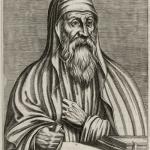
February 10, 2019 Origen on Scripture
Browse Our Archives
Select a Category Bible Lands Blogosphere Book Review Calvinism Colleges & Universities Ecclesiology Emerging Adulthood Evangelicalism Foreign Affairs Gospel of John Greco-Roman World Humor Just War N. T. Wright Old Testament Resurrection Terrorism Theological Education Travel Uncategorized Writing
Select a Month September 2021 July 2021 June 2021 May 2021 April 2021 March 2021 February 2021 January 2021 December 2020 November 2020 October 2020 September 2020 August 2020 July 2020 June 2020 May 2020 April 2020 March 2020 February 2020 January 2020 December 2019 November 2019 October 2019 September 2019 August 2019 July 2019 June 2019 May 2019 April 2019 March 2019 February 2019 January 2019 December 2018 November 2018 October 2018 September 2018 August 2018 July 2018 June 2018 May 2018 April 2018 March 2018 February 2018 January 2018 December 2017 November 2017 October 2017 September 2017 August 2017 July 2017 June 2017 May 2017 April 2017 March 2017 February 2017 January 2017 December 2016 November 2016 October 2016 September 2016 August 2016 July 2016 June 2016 May 2016 April 2016 March 2016 February 2016 January 2016 December 2015 November 2015 October 2015 September 2015 August 2015 July 2015 June 2015 May 2015 April 2015 March 2015 February 2015 January 2015 December 2014 November 2014 October 2014 September 2014 August 2014 July 2014 June 2014 May 2014 April 2014 March 2014 February 2014 January 2014 December 2013 November 2013 October 2013 September 2013 August 2013 July 2013 June 2013 May 2013 April 2013 March 2013 February 2013 January 2013 December 2012 November 2012 October 2012 September 2012 August 2012 July 2012 June 2012 May 2012 April 2012 March 2012 February 2012 January 2012 December 2011 November 2011 October 2011 September 2011 August 2011 July 2011 June 2011 May 2011 January 2011
TAKE THE
Religious Wisdom Quiz
Who became king after David and built the first Temple in Jerusalem?
Select your answer to see how you score.
Absalom Adonijah Rehoboam Solomon
Books by This Author Books by Mike Bird
Related posts from Euangelion

Rom 3:21-26 - Translates, Paraphrase, Notes

Studying the New Testament through Inscriptions


Romans 13:1-7 - Translates, Paraphrase, and Notes
TRENDING AT PATHEOS Evangelical

The REST of Your Life: A Creative Wrestles...
This week I had a conversation with a good friend from church....

How the author of the world's best hymn...
I've been working with John Newton for a while now. This makes...

Long before this Lectio Divina, Psalm 130 - the song - started...

What About the Trees? Another Living Parable
After I finished writing the last article about falling leaves as a...

Why Classical Education Is a Conversation, Not a...
Come and Read: Joy in Classical Education When I was a little...

Cornell University has received a great deal of negative publicity and intense...
view all Evangelical blogs
Ad-Free & Subscriber Log-In Subscription Support
- About Us
- 2026 Calendar
- Videos
- Podcasts
- Library of World Religions
- Faith In Media Tracker
- Advertise With Us
- Write for Us
- Privacy Policy
- Terms of Service
- Do Not Sell My Data
- Contact Us
- Radiant Digital
- Manage Newsletter Subscriptions
- Unsubscribe From Notifications
- Sitemap
Copyright 2008-2026, Patheos. All rights reserved.
Subscription Support Ad-Free & Subscriber Log-In
Follow Patheos