
BuddhistCatholicContemplativeEvangelicalGeneral ChristianHinduJewishLatter-day SaintMuslimNew VisionsProgressive Christian
Beliefs
- Buddhist
- Catholic
- Contemplative
- Evangelical
- General Christian
- Hindu
- Jewish
- Latter-day Saint
- More Voices
- Muslim
- New Visions
- Pagan
- Progressive Christian
Topics
- Religion News
- Food and Religion
- Sports and Religion
- Religious Art
- Religious Music and Entertainment
- Religious Events
- History and Religion
- Style and Religion
- Politics and Religion
- Women in Religion
- Recreation Outdoors and Religion
- Business Finance and Religion
- Careers Workplace and Religion
- Education and Religion
- Family Parenting and Religion
- Health Fitness and Religion
- Home and Religion
- Relationships and Religion
- Technology and Religion
- Travel and Religion
Columnists
- Buddhist Columnists
- Business Finance and Religion Columnists
- Careers Workplace and Religion Columnists
- Catholic Columnists
- Contemplative Columnists
- Education and Religion Columnists
- Evangelists Columnists
- Family Parenting and Religion Columnists
- General Christian Columnists
- Health Fitness and Religion Columnists
- Hindu Columnists
- History and Religion Columnists
- Home and Religion Columnists
- Jewish Columnists
- More Voices Columnists
- Latter Day Columnists
- Muslim Columnists
- New Visions Columnists
- Nonreligious Columnists
- Pagan Columnists
- Politics and Religion Columnists
- Progressive Columnists
- Recreation Outdoors and Religion Columnists
- Relationships and Religion Columnists
- Religion News Columnists
- Religious Art Columnists
- Religious Events Columnists
- Religious Music and Entertainment Columnists
- Sports and Religion Columnists
- Style and Religion Columnists
- Technology and Religion Columnists
- Travel and Religion Columnists
- Women in Religion Columnists
Resource Library
- 2026 Calendar
- Library of World Religions
- The 100 Most Holy Places on Earth
- Patheos Answers
- Podcasts
- Videos
- Faith Leaders Database
- Anglican Episcopalian
- Bahai
- Baptist
- Buddhism
- Christianity
- Confucianism
- Eastern Orthodoxy
- Hinduism
- Holiness and Pentecostal
- ISKCON
- Islam
- Judaism
- Lutheran
- Methodist
- The Church of Jesus Christ of Latter-day Saints
- New Age
- Paganism
- Presbytarian and Reformed
- Protestantism
- Religion Behind the Scenes
- Roman Catholic
- Scientology
- Shia Islam
- Sikhism
- Sufism
- Sunni Islam
- Taoism
- Zen
- See all religions
Research Tools
 Ad-Free & Subscriber Log-In Subscription Support
Ad-Free & Subscriber Log-In Subscription Support
Follow Patheos 

- Trending:
- Forgiveness
- |
- Marriage
- |
- Consciousness
- |
- Death Penalty
- |
- Election
- |
- Halloween
 Euangelion
- Home
- Evangelical
- Our Bodies “Do” God’s Revelation
Our Bodies “Do” God’s Revelation
Last updated on: February 13, 2016 at 9:25 pm by Joel Willitts
Our Bodies “Do” God’s Revelation 2016-02-13T21:25:20-04:00 Joel Willitts
Patheos Explore the world's faith through different perspectives on religion and spirituality! Patheos has the views of the prevalent religions and spiritualities of the world.
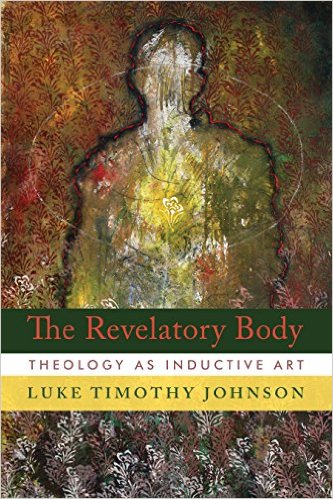 In his recent book The Revelatory Body: Theology as Inductive Art
The argument of this book is thoroughly phenomenological by emphasizing embodied and lived experience as the source of our perceptions about reality. Johnson argues that we need to pay attention to what our bodies are telling us about God’s will. The book is an attempt to offer some guidance in reading God’s revelation from our lived experience.
In summarizing the major points of the book Johnson states:
Of the greatest importance, and grounding everything else, is my conviction that God continues to create the world at every moment, and by so creating, continues to reveal Godself in what is coming-into-being. If this understanding of the Living God — an understanding I think underpinning everything said in Scripture — is not correct, then everything else I have said in this book is false. If God only acted in in the past, and those actions are adequately reported by Scripture, then the Bible can indeed be said to “contain” revelation, and nothing more needs doing apart from the systematic exposition of propositions based on the biblical accounts. The major problem with this is that it posits a God who is no longer active — in effect, a dead god. But if God is, in fact, active in the world, then authentic faith — and, by extension, authentic theology — must consistently fix its attention on what God is up to here and now. I have argued from a variety of angles that the human body is the preeminent place of God’s continuing revelation in the world, and that theology must pay close attention to what is happening in actual human experience, which is always in some way somatic. Scripture itself, I have shown, declares that, not itself, but the human body is the place where God’s word particularly is expressed and where God’s work is done. But I have also argued that, without being formed by Scripture, theologians are not able to perceive the movement of the Spirit in human bodies as expressing the word and work of God. Scripture participates in revelation first by providing the lens for perceiving human experience, and second by being given new meaning and pertinence through engagement with God’s living work. (231-32)
For Johnson, theological, like the therapeutic practice, is a “living art” — learning takes place primarily through practice, not theory or scientific methodology. It is much more the practice of engaging human bodies, than mental wrestling with abstract propositions.
I admit, I’m sympathetic to the thesis of this book. I have come to believe that we have ignored or diminished the importance of the human body in spiritual formation and theology. Rather than being a source of revelation, we’ve treated the body as a problem that needed to be solved, a wild animal that needed to be caged, or an epidemic that needed to be contained.
Johnson’s proposal objects to this approach to the body. It is an invitation to pay attention to our lived experience as a vehicle of God’s living voice. There are dangers in this approach, Johnson admits them. What’s more, I am uncomfortable with the suggestion that Scripture should take a secondary place to lived experience in theological discourse. Yet, I think Johnson is on to something here and I want to continue to think about this.
I do believe if we are to be conformed to the image of Christ, we need to trust and attune to our body’s voice, expressed through its myriad of testimonies. It is not a far step for me to see that in my body’s voice God is also speaking.
Previous Post

February 9, 2016
Interviews with Presenters Ahead of the Greer-Heard Forum
Next Post
February 14, 2016 The Greer-Heard Debate on Jesus' Divinity with Bart Ehrman and Mike Bird
Browse Our Archives
Select a Category Bible Lands Blogosphere Book Review Calvinism Colleges & Universities Ecclesiology Emerging Adulthood Evangelicalism Foreign Affairs Gospel of John Greco-Roman World Humor Just War N. T. Wright Old Testament Resurrection Terrorism Theological Education Travel Uncategorized Writing
Select a Month September 2021 July 2021 June 2021 May 2021 April 2021 March 2021 February 2021 January 2021 December 2020 November 2020 October 2020 September 2020 August 2020 July 2020 June 2020 May 2020 April 2020 March 2020 February 2020 January 2020 December 2019 November 2019 October 2019 September 2019 August 2019 July 2019 June 2019 May 2019 April 2019 March 2019 February 2019 January 2019 December 2018 November 2018 October 2018 September 2018 August 2018 July 2018 June 2018 May 2018 April 2018 March 2018 February 2018 January 2018 December 2017 November 2017 October 2017 September 2017 August 2017 July 2017 June 2017 May 2017 April 2017 March 2017 February 2017 January 2017 December 2016 November 2016 October 2016 September 2016 August 2016 July 2016 June 2016 May 2016 April 2016 March 2016 February 2016 January 2016 December 2015 November 2015 October 2015 September 2015 August 2015 July 2015 June 2015 May 2015 April 2015 March 2015 February 2015 January 2015 December 2014 November 2014 October 2014 September 2014 August 2014 July 2014 June 2014 May 2014 April 2014 March 2014 February 2014 January 2014 December 2013 November 2013 October 2013 September 2013 August 2013 July 2013 June 2013 May 2013 April 2013 March 2013 February 2013 January 2013 December 2012 November 2012 October 2012 September 2012 August 2012 July 2012 June 2012 May 2012 April 2012 March 2012 February 2012 January 2012 December 2011 November 2011 October 2011 September 2011 August 2011 July 2011 June 2011 May 2011 January 2011
TAKE THE
Religious Wisdom Quiz
Who lost his strength when his hair was cut?
Select your answer to see how you score.
Elijah David Absalom Samson
Books by This Author Books by Mike Bird
Related posts from Euangelion

Rom 3:21-26 - Translates, Paraphrase, Notes

Studying the New Testament through Inscriptions


Romans 13:1-7 - Translates, Paraphrase, and Notes
TRENDING AT PATHEOS Evangelical

The REST of Your Life: A Creative Wrestles...
This week I had a conversation with a good friend from church....

How the author of the world's best hymn...
I've been working with John Newton for a while now. This makes...

Long before this Lectio Divina, Psalm 130 - the song - started...

What About the Trees? Another Living Parable
After I finished writing the last article about falling leaves as a...

Why Classical Education Is a Conversation, Not a...
Come and Read: Joy in Classical Education When I was a little...

Cornell University has received a great deal of negative publicity and intense...
view all Evangelical blogs
Ad-Free & Subscriber Log-In Subscription Support
- About Us
- 2026 Calendar
- Videos
- Podcasts
- Library of World Religions
- Faith In Media Tracker
- Advertise With Us
- Write for Us
- Privacy Policy
- Terms of Service
- Do Not Sell My Data
- Contact Us
- Radiant Digital
- Manage Newsletter Subscriptions
- Unsubscribe From Notifications
- Sitemap
Copyright 2008-2026, Patheos. All rights reserved.
Subscription Support Ad-Free & Subscriber Log-In
Follow Patheos