
BuddhistCatholicContemplativeEvangelicalGeneral ChristianHinduJewishLatter-day SaintMuslimNew VisionsProgressive Christian
Beliefs
- Buddhist
- Catholic
- Contemplative
- Evangelical
- General Christian
- Hindu
- Jewish
- Latter-day Saint
- More Voices
- Muslim
- New Visions
- Pagan
- Progressive Christian
Topics
- Religion News
- Food and Religion
- Sports and Religion
- Religious Art
- Religious Music and Entertainment
- Religious Events
- History and Religion
- Style and Religion
- Politics and Religion
- Women in Religion
- Recreation Outdoors and Religion
- Business Finance and Religion
- Careers Workplace and Religion
- Education and Religion
- Family Parenting and Religion
- Health Fitness and Religion
- Home and Religion
- Relationships and Religion
- Technology and Religion
- Travel and Religion
Columnists
- Buddhist Columnists
- Business Finance and Religion Columnists
- Careers Workplace and Religion Columnists
- Catholic Columnists
- Contemplative Columnists
- Education and Religion Columnists
- Evangelists Columnists
- Family Parenting and Religion Columnists
- General Christian Columnists
- Health Fitness and Religion Columnists
- Hindu Columnists
- History and Religion Columnists
- Home and Religion Columnists
- Jewish Columnists
- More Voices Columnists
- Latter Day Columnists
- Muslim Columnists
- New Visions Columnists
- Nonreligious Columnists
- Pagan Columnists
- Politics and Religion Columnists
- Progressive Columnists
- Recreation Outdoors and Religion Columnists
- Relationships and Religion Columnists
- Religion News Columnists
- Religious Art Columnists
- Religious Events Columnists
- Religious Music and Entertainment Columnists
- Sports and Religion Columnists
- Style and Religion Columnists
- Technology and Religion Columnists
- Travel and Religion Columnists
- Women in Religion Columnists
Resource Library
- 2026 Calendar
- Library of World Religions
- The 100 Most Holy Places on Earth
- Patheos Answers
- Podcasts
- Videos
- Faith Leaders Database
- Anglican Episcopalian
- Bahai
- Baptist
- Buddhism
- Christianity
- Confucianism
- Eastern Orthodoxy
- Hinduism
- Holiness and Pentecostal
- ISKCON
- Islam
- Judaism
- Lutheran
- Methodist
- The Church of Jesus Christ of Latter-day Saints
- New Age
- Paganism
- Presbytarian and Reformed
- Protestantism
- Religion Behind the Scenes
- Roman Catholic
- Scientology
- Shia Islam
- Sikhism
- Sufism
- Sunni Islam
- Taoism
- Zen
- See all religions
Research Tools
 Ad-Free & Subscriber Log-In Subscription Support
Ad-Free & Subscriber Log-In Subscription Support
Follow Patheos 

- Trending:
- Forgiveness
- |
- Marriage
- |
- Consciousness
- |
- Death Penalty
- |
- Election
- |
- Halloween
 Euangelion
- Home
- Evangelical
- Engaging Josh Jipp’s Christ is King, Chapter 5: King and Justice
Engaging Josh Jipp’s Christ is King, Chapter 5: King and Justice
Last updated on: January 18, 2016 at 9:02 am by Joel Willitts
Engaging Josh Jipp’s Christ is King, Chapter 5: King and Justice 2016-01-17T09:33:52-04:00 Joel Willitts
Patheos Explore the world's faith through different perspectives on religion and spirituality! Patheos has the views of the prevalent religions and spiritualities of the world.
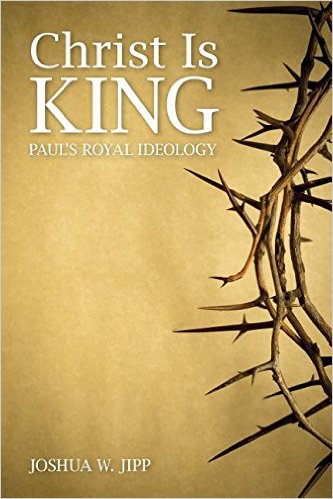 In this post, I engage with Josh’s final chapter in his recent book Christ Is King: Paul’s Royal Ideology: “King and Justice: God’s Righteousness and the Righteous King in Romans.”
Interacting with Josh’s carefully argued and evidenced-filled chapters has been rigorously instructive and thoroughly enjoyable. I want to thank Josh again for taking the time to read my posts and provide responses. Both our academic semesters (he at TEDS and I at NPU) have begun again, so it is a good time to bring this discussion to a conclusion.
The fifth chapter’s focus is on an aspect of ancient kingship ideology which conceives of the good king as a righteous one, the embodiment of righteousness, and the person divinely granted to establish a just cosmos for his people. Josh demonstrates that this theme in ancient kingship ideology around the Mediterranean and ANE was widespread. What’s more, and importantly, Josh argues that in Romans Paul’s dik-language is best understood in the context of this kingship ideology. The central contours of the argument are laid out in this extended quotation:
Paul’s justice and judgment discourse in Romans is best illumined when it is considered within the context of ancient discussions of king and justice . . . in Romans, God establishes a just rule over the cosmos through God’s messianic king, who rescues his people and judges his enemies (Rom. 1:1-16-17; 3:21-22). God’s righteousness is revealed and established over the people by means of the resurrecting from the dead his righteous, faithful, and obedient Messiah, whose death had been an apocalyptic revelation of injustice. God’s righteousness is on display, then, in this divine powerful activity to justify the one who is righteous, and this results in the formerly oppressed but now vindicated one having a status of righteousness, a status that is accompanied by God’s actual rescue of the righteous one. For Paul, the Messiah is the only one who is righteous, faithful, and obedient . . . God’s revelation of God’s righteousness in resurrecting the Messiah has salvific consequences for those who belong to the Messiah, given the inextricable relationship between the Messiah and his people. In other words, justification, redemption, and atonement are contingent upon God’s prior act of rightly rescuing his Messiah from death (215-16).
As I see it, the most important elements of his argument are among the following.
The saturation of scriptural texts from the Psalms and Isaiah in the passages where righteousness is the central theme reveals “God’s righteousness” means “God’s resurrection of the righteous Messiah”
The Psalms and the Servant Songs of Isaiah are important source material for Paul’s conceptualization of the “righteousness of God” especially in Rom 1:17. He states, “Paul’s justification-language is laden with allusions to those Septuatinal texts that associate God’s righteousness with God’s righteous but persecuted Messiah whose task is to establish justice for his people” (245). Earlier in the chapter Josh showed that there is a structure of thought in the Psalms where the righteous suffers and calls out to God for deliverance (229). God then responses rightly to save the righteous one, and this is seen as the right thing for God to do (225-31). Josh highlights Psalm 97 and 70 as important Septuagintal texts behind Paul’s phrase. The righteous one in the Psalms was established in the first two Psalms to be the Davidic king (Psa. 1-2). So, Josh, concludes, “When God acts to reveal his divine righteousness, the Davidic figure expects that this will result in his salvation . . . God’s righteousness is revealed in the rescue of God’s righteous Davidic son . . .” (251). The third Isaisanic Servant Song (Isa. 50:7-9) shares a similar structure. Josh sees these texts from Psalms an Isaiah as establishing that God’s righteousness is made manifest in God’s vindication of the only righteous one, Jesus. “The revelation of God’s powerful righteousness has already been enacted in the event whereby the righteous Messiah has been justified and resurrected from the dead . . . God’s justification of humanity is contingent upon the prior act of rightly responding to justify and thereby resurrect God’s unjustly executed Messiah, and this accords closely with what we have seen regarding God’s relationship to God’s king in the Psalter and Isaiah” (252).
The important and inseparable link between Rom 1:1-5 and 1:16-17
Agreeing with scholars such as Stephen Young, Daniel Kirk, Tom Wright and a few others, Josh stresses the inextricable link between Rom 1:1-5 and 1:16-17, while chastising those who have either ignored it or denied it (e.g. Watson). Josh states, “Many of the words and phrases in this so-called thesis statement of Rom. 1:16-17 would be opaque apart from Paul’s contextualization of the statement in Rom. 1:1-5, and yet it must be said that 1:16-17 is frequently interpreted almost entirely apart from nay considerations of 1:1-5 . . . In interpretations of Rom. 1:16-17, scholars too frequently ignore that fact that Paul has already defined God’s gospel” (248). And again I say “Amen!”
The ΔίΚΑΙΟΣ of Habakkuk 2:6 in Rom. 1:17 is the Messiah
Josh states, “Where as I suggest that Paul assumes the association between king/messiah and justice as necessary for the logic of his argumentation, there are some important signals that indicate that Paul sees the Messiah as the singular righteous on who is, thereby, able to justify his people” (253).
He provides four reasons why the “righteous one” refers to the Messiah (255-57).
- Paul has a penchant for describing Christ with articular substantives.
- In Romans Paul generally uses ὁ δίκαιοςin an absolute sense of that which is godly.
- Paul establishes a christological hermeneutic for his reading of Israel’s Scriptures whereby “God’s gospel” (1:1b) is pre-promised “through his prophets in the holy scriptures” (1:2). God’s gospel has as its content God’s resurrection and installation of the Davidic Son in power (1:3-4).
- The variety and prevalence of Jewish and Christian texts that speak of the Messiah as the “Righteous One.”
Josh concludes, “In a letter that centers upon a messianic figure, and opens and concludes with direct references to the messiah’s Davidic heritage (Rom. 1:3-4; 15:7-12), including his role as innocently suffering at the hands of his enemies (Rom. 15:3), it would not be surprising that Paul would intend ὁ δίκαιος to refer to the Messiah in Rom. 1:17b” (257).
The clear support for the subjective reading of ΠΙΣΤΙΣ ΧΡΙΣΤΟΥ
Without giving much comment, it is interesting and important that Josh takes the subjective reading of ΠΙΣΤΙΣ ΧΡΙΣΤΟΥ: “It is Christ’s faithfulness (ἐκ πίστεως) that justifies those who have faith (εἰς πίστιν) in 1:17b” (262). While the argument does not depend on it, a subjective reading coheres with and confirms his overall point that the unrighteous are made righteous through the faith of the Messiah.
All four of these points, I am sympathetic with and find Josh’s arguments largely convincing.
Perhaps one question, and I apologize for its specificity – this level of knit-picking is certainly because of how much I agree with Josh. But I do think it is an important assumption of the overall argument and clarification is needed. In discussing the point that God’s righteousness is his justification of the Messiah, the “Righteous One”, Josh offers this summation – only the first two of the three points is relevant for my question:
(a) God’s righteousness is revealed in his resurrection and granting of eschatological life to the Messiah; (b) the Messiah’s vindication from death is due to the fact that, as a good king, he has established himself as righteous before God . . .” (245, emphasis added)
So my question: In the story of Jesus, when did he “rule” as a “good king,” a rule which forms the basis of his righteousness before God”, which, then, is the basis of God’s act on his behalf?
Do you mean Jesus earthly life and ministry? Is Paul assuming more than the faithful death of Jesus? What do you have in mind here?
In conclusion, this chapter alone demonstrates the thorough-going nature of Paul’s Davidic Christology. What’s more, both in this chapter and throughout the whole book, Josh has shown the significant resource Davidic Messianism can be for unlocking infamous Gordian theological knots in Paul’s thinking. Whatever work I may do in the future on Davidic Christology, Josh’s book will be a starting point for Paul.
Previous Post

January 17, 2016
Bird & Ehrman at Greer-Heard Forum in Nawleans
Next Post
January 20, 2016 The Gospel of Mark and Chalcedon
Browse Our Archives
Select a Category Bible Lands Blogosphere Book Review Calvinism Colleges & Universities Ecclesiology Emerging Adulthood Evangelicalism Foreign Affairs Gospel of John Greco-Roman World Humor Just War N. T. Wright Old Testament Resurrection Terrorism Theological Education Travel Uncategorized Writing
Select a Month September 2021 July 2021 June 2021 May 2021 April 2021 March 2021 February 2021 January 2021 December 2020 November 2020 October 2020 September 2020 August 2020 July 2020 June 2020 May 2020 April 2020 March 2020 February 2020 January 2020 December 2019 November 2019 October 2019 September 2019 August 2019 July 2019 June 2019 May 2019 April 2019 March 2019 February 2019 January 2019 December 2018 November 2018 October 2018 September 2018 August 2018 July 2018 June 2018 May 2018 April 2018 March 2018 February 2018 January 2018 December 2017 November 2017 October 2017 September 2017 August 2017 July 2017 June 2017 May 2017 April 2017 March 2017 February 2017 January 2017 December 2016 November 2016 October 2016 September 2016 August 2016 July 2016 June 2016 May 2016 April 2016 March 2016 February 2016 January 2016 December 2015 November 2015 October 2015 September 2015 August 2015 July 2015 June 2015 May 2015 April 2015 March 2015 February 2015 January 2015 December 2014 November 2014 October 2014 September 2014 August 2014 July 2014 June 2014 May 2014 April 2014 March 2014 February 2014 January 2014 December 2013 November 2013 October 2013 September 2013 August 2013 July 2013 June 2013 May 2013 April 2013 March 2013 February 2013 January 2013 December 2012 November 2012 October 2012 September 2012 August 2012 July 2012 June 2012 May 2012 April 2012 March 2012 February 2012 January 2012 December 2011 November 2011 October 2011 September 2011 August 2011 July 2011 June 2011 May 2011 January 2011
TAKE THE
Religious Wisdom Quiz
How old was Jesus when He started His ministry?
Select your answer to see how you score.
21 35 28 30
Books by This Author Books by Mike Bird
Related posts from Euangelion

Rom 3:21-26 - Translates, Paraphrase, Notes

Studying the New Testament through Inscriptions


Romans 13:1-7 - Translates, Paraphrase, and Notes
TRENDING AT PATHEOS Evangelical

How the author of the world's best hymn...
I've been working with John Newton for a while now. This makes...

Long before this Lectio Divina, Psalm 130 - the song - started...

What About the Trees? Another Living Parable
After I finished writing the last article about falling leaves as a...

Why Classical Education Is a Conversation, Not a...
Come and Read: Joy in Classical Education When I was a little...

Falling Leaves: A Living Parable on Letting Go
I’ve spent the vast majority of my life in the southeast corner...

Cornell University has received a great deal of negative publicity and intense...
view all Evangelical blogs
Ad-Free & Subscriber Log-In Subscription Support
- About Us
- 2026 Calendar
- Videos
- Podcasts
- Library of World Religions
- Faith In Media Tracker
- Advertise With Us
- Write for Us
- Privacy Policy
- Terms of Service
- Do Not Sell My Data
- Contact Us
- Radiant Digital
- Manage Newsletter Subscriptions
- Unsubscribe From Notifications
- Sitemap
Copyright 2008-2026, Patheos. All rights reserved.
Subscription Support Ad-Free & Subscriber Log-In
Follow Patheos