
BuddhistCatholicContemplativeEvangelicalGeneral ChristianHinduJewishLatter-day SaintMuslimNew VisionsProgressive Christian
Beliefs
- Buddhist
- Catholic
- Contemplative
- Evangelical
- General Christian
- Hindu
- Jewish
- Latter-day Saint
- More Voices
- Muslim
- New Visions
- Pagan
- Progressive Christian
Topics
- Religion News
- Food and Religion
- Sports and Religion
- Religious Art
- Religious Music and Entertainment
- Religious Events
- History and Religion
- Style and Religion
- Politics and Religion
- Women in Religion
- Recreation Outdoors and Religion
- Business Finance and Religion
- Careers Workplace and Religion
- Education and Religion
- Family Parenting and Religion
- Health Fitness and Religion
- Home and Religion
- Relationships and Religion
- Technology and Religion
- Travel and Religion
Columnists
- Buddhist Columnists
- Business Finance and Religion Columnists
- Careers Workplace and Religion Columnists
- Catholic Columnists
- Contemplative Columnists
- Education and Religion Columnists
- Evangelists Columnists
- Family Parenting and Religion Columnists
- General Christian Columnists
- Health Fitness and Religion Columnists
- Hindu Columnists
- History and Religion Columnists
- Home and Religion Columnists
- Jewish Columnists
- More Voices Columnists
- Latter Day Columnists
- Muslim Columnists
- New Visions Columnists
- Nonreligious Columnists
- Pagan Columnists
- Politics and Religion Columnists
- Progressive Columnists
- Recreation Outdoors and Religion Columnists
- Relationships and Religion Columnists
- Religion News Columnists
- Religious Art Columnists
- Religious Events Columnists
- Religious Music and Entertainment Columnists
- Sports and Religion Columnists
- Style and Religion Columnists
- Technology and Religion Columnists
- Travel and Religion Columnists
- Women in Religion Columnists
Resource Library
- 2026 Calendar
- Library of World Religions
- The 100 Most Holy Places on Earth
- Patheos Answers
- Podcasts
- Videos
- Faith Leaders Database
- Anglican Episcopalian
- Bahai
- Baptist
- Buddhism
- Christianity
- Confucianism
- Eastern Orthodoxy
- Hinduism
- Holiness and Pentecostal
- ISKCON
- Islam
- Judaism
- Lutheran
- Methodist
- The Church of Jesus Christ of Latter-day Saints
- New Age
- Paganism
- Presbytarian and Reformed
- Protestantism
- Religion Behind the Scenes
- Roman Catholic
- Scientology
- Shia Islam
- Sikhism
- Sufism
- Sunni Islam
- Taoism
- Zen
- See all religions
Research Tools
 Ad-Free & Subscriber Log-In Subscription Support
Follow Patheos 

- Trending:
- Advent
- |
- Forgiveness
- |
- Thanksgiving
- |
- Election
- |
- Seasonal Holidays
- |
- Marriage
 Euangelion
- Home
- Evangelical
- An Anglican Theologian Has 5 Questions for Rachel Held Evans
An Anglican Theologian Has 5 Questions for Rachel Held Evans
Last updated on: May 16, 2017 at 4:01 pm by Michael F. Bird
An Anglican Theologian Has 5 Questions for Rachel Held Evans 2017-05-16T16:01:10-04:00 Michael F. Bird
Patheos Explore the world's faith through different perspectives on religion and spirituality! Patheos has the views of the prevalent religions and spiritualities of the world.
 I’ve always found author/blogger Rachel Held Evans to be an interesting person who could probably hold up a good conversation in a cafe. She has an interesting story of wrestling with what it means to be a Christian, combined with some contrarian sass and social media savyness. She has successfully cultivated a following out of disenfranchisement with the American evangelical scene while trying to affirm her faith in God and love for the church. She is a capable author and energetic commentator. Evans is not afraid to court controversy by disagreeing with leaders like John Piper and Al Mohler on everything from theodicy to gay marriage.
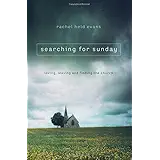
In her latest book, Searching for Sunday, she narrates her journey from evangelicalism to Episcopalianism through an exposition of the seven sacraments. It is a book that wrestles with things like doubt and the wonder of Jesus. Evans talks about the richness of liturgy and how she became pro-LGBT. In a nutshell, the book is about:
The church tells us we are beloved (baptism)
The church tells us we are broken (confession)
The church tells us we are commissioned (holy orders)
The church feeds us (communion)
The church welcomes us (confirmation)
The church anoints us (anointing the sick)
The church unites us (marriage)
Many people, especially millennials, will resonate with much of Evans’ story and her journey into the mainline. Others will eschew her critique of evangelicalism as shallow and remain wary of her adulation for liturgical churches. Evidence of the polarizing response to her book is the lukewarm reception it got from Ben Witherington and the positive review from Mike McHargue who has trouble containing his enthusiasm for it . What I like is that Evans is beautifully affirming of the resurrection, she has an almost poetic view of the Eucharist, and is resolutely pro-church. Evans also calls those trying to woo millennials back to church not to bother with tacky worshiptainment, but to seek substance over cheesiness. In addition, I really loved this line from her interview with Jonathan Merritt:
Every Sunday morning, I stand in my Episcopal church and join in a chorus of voices publicly affirming the Apostle’s Creed. Together, we declare that there is a good and almighty God who is the creative force behind all things seen and unseen; that this God is One, yet exists as three persons; that God loved the world enough to become flesh in the person of Jesus Christ, who lived, taught, fed, healed and suffered among us as both fully God and fully human; that Jesus was conceived by the power of the Holy Spirit and born to Mary; that he was crucified on a Roman cross and buried in the ground; that after three days dead, Jesus came back to life; that he ascended into heaven and reigns with God; that he will return to bring justice and restoration to our broken world; that God continues to work through the Holy Spirit, the church, and God’s people; that forgiveness is possible, resurrection is possible, and eternal life is possible.
However, as an Anglican theologian/clergyman, I do have some pressing questions for Rachel. Who knows, maybe she’ll even answer!.
1. What if there was a brand of evangelicalism – committed to the authority of Scripture and the proclamation of the good news about Jesus – which did not have the specific baggage of American evangelicalism with its marriage to right-wing politics, its tribalism, negative rhetoric, and fear of losing cultural supremacy; a place where there is egalitarianism, liturgical worship, with hermeneutical sophistication rather than crass literalism? I call this place “the rest of the world” where Christianity, even in its conservative forms, does not have the window dressing of American evangelicalism. Could it be that you’ve used the right extreme of evangelicalism as a shallow reason to justify leaving it rather than engage with the moderate/centrist evangelicals in the US and around the world who have similar concerns to yourself, but are not prepared to jump the evangelical ship precisely because they believe in the evangel? In other words, did you ever consider that Michelle Bachmann might not be the only evangelical game in town?
2. You’ve said in the past that, “Jesus is Lord and Caesar is not,” which is a mantra I oft quote myself. However, given that your faith seems to sit quite well with a progressive liberal audience, is there anything that a secular Caesar would find affronting about your faith? In other words, what is there about your faith that would make a secular fundamentalist want to throw you to the lions?
3. The Episcopal Church (TEC) is a complex and diverse denomination. Only last January I had the pleasure of worshipping at two Episcopal churches in Houston, which was a great experience with some wonderful people. In a broad church like TEC there are people to the theological left and right and everything in between. However, TEC as a whole is typified by a radical liberalism and an authoritative leadership that punishes dissent and persecutes conservative believers (I can provide evidence if you wish!). Bishops in TEC have denied every line in the Apostles’ Creed and there is a flagrant rejoicing in apostasy. I have to tell you that the vast majority of world-wide Anglicans look on TEC with a mixture of confusion and disgust and have broken fellowship with TEC. It is because of TEC that the next Lambeth conference has been indefinitely postponed. The African and Global South Anglican bishops have responded with no shortage of rage and rancor at TEC’s actions and attitudes towards Scripture. Now if the TEC presiding bishop asked you, as something of a celebrity recruit to TEC, to go to Africa and get the African bishops to chillax and to receive TEC back into the Anglican fold, what would you say to them? In other words, should the global south Anglican bishops be in fellowship with TEC?
4. You rejoice in reciting the creeds, as do I, in fact I’ve got a book coming out on the Apostles’ Creed! But what are we saying when we confess “one holy catholic and apostolic church”? I don’t want a corny answer, “This is what it means to me” as if we are looking at Rorschach drawings and we can each believe whatever we like. The creeds embody the faith that all Christians – be they orthodox, protestant, or catholic – profess together. As a Christian, what am I supposed to believe about the church’s oneness, holiness, catholicity, and apostolicity? What is the essential substance and symbol of a church compared to any other organization? To put it differently, when is a church non-apostolic or when is it not holy?
5. Do you think it possible for a church to be affirming of LGBT persons even while insisting on celibacy in singleness and faithfulness in heterosexual marriage? What would you say to an ex-gay person like Rosaria Butterfield and a celibate gay Christian like Wesley Hill who both hold to traditionalist view of sexuality?
I’d like to have the kind of conversation with Rachel that Ben Witherington suggested:
Come let us reason together, without the one side or both shouting at the other, or the one side or both foreclosing the discussion prematurely. Without self-righteousness or condescension let us have a heart to heart talk, and if we still disagree, then let us part as Christians, with love and respect for each other.
I don’t know if Rachel will answer these questions, but these are juicy questions for all us to ponder about the church (though #3 is really just for Anglicans).

Next Post

April 28, 2015 Book Notice: Christianity in Roman Africa
Browse Our Archives
Select a Category Bible Lands Blogosphere Book Review Calvinism Colleges & Universities Ecclesiology Emerging Adulthood Evangelicalism Foreign Affairs Gospel of John Greco-Roman World Humor Just War N. T. Wright Old Testament Resurrection Terrorism Theological Education Travel Uncategorized Writing
Select a Month September 2021 July 2021 June 2021 May 2021 April 2021 March 2021 February 2021 January 2021 December 2020 November 2020 October 2020 September 2020 August 2020 July 2020 June 2020 May 2020 April 2020 March 2020 February 2020 January 2020 December 2019 November 2019 October 2019 September 2019 August 2019 July 2019 June 2019 May 2019 April 2019 March 2019 February 2019 January 2019 December 2018 November 2018 October 2018 September 2018 August 2018 July 2018 June 2018 May 2018 April 2018 March 2018 February 2018 January 2018 December 2017 November 2017 October 2017 September 2017 August 2017 July 2017 June 2017 May 2017 April 2017 March 2017 February 2017 January 2017 December 2016 November 2016 October 2016 September 2016 August 2016 July 2016 June 2016 May 2016 April 2016 March 2016 February 2016 January 2016 December 2015 November 2015 October 2015 September 2015 August 2015 July 2015 June 2015 May 2015 April 2015 March 2015 February 2015 January 2015 December 2014 November 2014 October 2014 September 2014 August 2014 July 2014 June 2014 May 2014 April 2014 March 2014 February 2014 January 2014 December 2013 November 2013 October 2013 September 2013 August 2013 July 2013 June 2013 May 2013 April 2013 March 2013 February 2013 January 2013 December 2012 November 2012 October 2012 September 2012 August 2012 July 2012 June 2012 May 2012 April 2012 March 2012 February 2012 January 2012 December 2011 November 2011 October 2011 September 2011 August 2011 July 2011 June 2011 May 2011 January 2011
TAKE THE
Religious Wisdom Quiz
Who was known as the "son of encouragement"?
Select your answer to see how you score.
Philip Barnabas Stephen Silas
Books by This Author Books by Mike Bird
Related posts from Euangelion

Rom 3:21-26 - Translates, Paraphrase, Notes
Studying the New Testament through Inscriptions


Romans 13:1-7 - Translates, Paraphrase, and Notes
TRENDING AT PATHEOS Evangelical

Making Stones Into Bread: Choosing the “Right” Work
I was on my online arts ministry Zoom meeting with the International...

Ukraine’s exhausted Christians face fifth winter of war
By Julian Lukins The full-scale war in Ukraine is taking “a serious...

Russell Brand's Conviction is not anti-Christian Persecution
How do we shed the reputation that the Church is OK with...

Have you ever caught yourself saying, “I’ll do it tomorrow,” or “Now...

Write Your Story: A Great Way to Find...
A few month’s back, my son was scrolling around Facebook and saw...

Throughout history, people have pursued pleasure, possessions, relationships, and success in an...
view all Evangelical blogs
Ad-Free & Subscriber Log-In Subscription Support
- About Us
- 2026 Calendar
- Videos
- Podcasts
- Library of World Religions
- Faith In Media Tracker
- Advertise With Us
- Write for Us
- Privacy Policy
- Terms of Service
- Do Not Sell My Data
- Contact Us
- Radiant Digital
- Manage Newsletter Subscriptions
- Unsubscribe From Notifications
- Sitemap
Copyright 2008-2026, Patheos, part of the Radiant Digital network of media brands. All rights reserved.
Subscription Support Ad-Free & Subscriber Log-In
Follow Patheos