
BuddhistCatholicContemplativeEvangelicalGeneral ChristianHinduJewishLatter-day SaintMuslimNew VisionsProgressive Christian
Beliefs
- Buddhist
- Catholic
- Contemplative
- Evangelical
- General Christian
- Hindu
- Jewish
- Latter-day Saint
- More Voices
- Muslim
- New Visions
- Pagan
- Progressive Christian
Topics
- Religion News
- Food and Religion
- Sports and Religion
- Religious Art
- Religious Music and Entertainment
- Religious Events
- History and Religion
- Style and Religion
- Politics and Religion
- Women in Religion
- Recreation Outdoors and Religion
- Business Finance and Religion
- Careers Workplace and Religion
- Education and Religion
- Family Parenting and Religion
- Health Fitness and Religion
- Home and Religion
- Relationships and Religion
- Technology and Religion
- Travel and Religion
Columnists
- Buddhist Columnists
- Business Finance and Religion Columnists
- Careers Workplace and Religion Columnists
- Catholic Columnists
- Contemplative Columnists
- Education and Religion Columnists
- Evangelists Columnists
- Family Parenting and Religion Columnists
- General Christian Columnists
- Health Fitness and Religion Columnists
- Hindu Columnists
- History and Religion Columnists
- Home and Religion Columnists
- Jewish Columnists
- More Voices Columnists
- Latter Day Columnists
- Muslim Columnists
- New Visions Columnists
- Nonreligious Columnists
- Pagan Columnists
- Politics and Religion Columnists
- Progressive Columnists
- Recreation Outdoors and Religion Columnists
- Relationships and Religion Columnists
- Religion News Columnists
- Religious Art Columnists
- Religious Events Columnists
- Religious Music and Entertainment Columnists
- Sports and Religion Columnists
- Style and Religion Columnists
- Technology and Religion Columnists
- Travel and Religion Columnists
- Women in Religion Columnists
Resource Library
- 2026 Calendar
- Library of World Religions
- The 100 Most Holy Places on Earth
- Patheos Answers
- Podcasts
- Videos
- Faith Leaders Database
- Anglican Episcopalian
- Bahai
- Baptist
- Buddhism
- Christianity
- Confucianism
- Eastern Orthodoxy
- Hinduism
- Holiness and Pentecostal
- ISKCON
- Islam
- Judaism
- Lutheran
- Methodist
- The Church of Jesus Christ of Latter-day Saints
- New Age
- Paganism
- Presbytarian and Reformed
- Protestantism
- Religion Behind the Scenes
- Roman Catholic
- Scientology
- Shia Islam
- Sikhism
- Sufism
- Sunni Islam
- Taoism
- Zen
- See all religions
Research Tools
 Ad-Free & Subscriber Log-In Subscription Support
Ad-Free & Subscriber Log-In Subscription Support
Follow Patheos 

- Trending:
- Forgiveness
- |
- Marriage
- |
- Consciousness
- |
- Death Penalty
- |
- Election
- |
- Halloween
 Euangelion
- Home
- Evangelical
- “Interpretation of a Gospel is Far More than Source and Redaction Criticism”
“Interpretation of a Gospel is Far More than Source and Redaction Criticism”
Last updated on: January 6, 2014 at 7:00 am by Joel Willitts
“Interpretation of a Gospel is Far More than Source and Redaction Criticism” 2014-01-05T11:13:24-04:00 Joel Willitts
Patheos Explore the world's faith through different perspectives on religion and spirituality! Patheos has the views of the prevalent religions and spiritualities of the world.
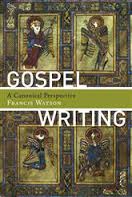 After mentioning Watson’s book new book Gospel Writing: A Canonical Perspective
A wonderfully wide-ranging book, full of learning and insight. One of the most significant books on the gospels in the last hundred years, this work will undoubtedly shake up the current study of the gospels.
High praise indeed!
When “pigeon holing” the book, I found this passage that quite well captures my less than sanguine interest, referenced in my DJG post, in source and redaction criticism. Watson admits:
If the main purpose of the synopsis is comparison, leading one to appreciate the distinctiveness of each individual gospel, that appreciation will be further enhanced if we can learn how was that their convergences and divergence came about in the first place. There is of course a considerable risk here. If a gospel is interpreted in light of a source-critical hypothesis that turns out to be erroneous, the whole interpretation will be undermined. If Griesbach is wrong (as he probably is), then the Mark who follows first Matthew and then Luke is a fictitious figure who will seriously distort the reading of the canonical text. The same is true in principle of any other source-critical hypothesis: Markan priority (which is presupposed throughout the present work), Q (rejected in Chapter 3, below) or Luke’s selective use of Matthew as well as Mark (proposed in Chapters 3 and 4), not to mention the potential relevance of early gospels later deemed noncanonical (Chapters 5–7). The interpretation of a gospel is far more than source redaction criticism, but that is no reason to disparage or reject these methods (60-61)
I am in agreement with Watson about the purpose of synopsis work. I have found it fruitful after studying a passage in one Gospel to then compare it as a whole with a parallel in another Gospel. These comparison’s bring out the unique elements of one Evangelist’s story. But I’m not optimistic that we can “learn how”, with any certainty, the “convergences and divergences” came about even if they would, in theory, “enhance” this appreciation of the comparison. What’s more, while I wouldn’t advocate a complete rejection of the methods of source and redaction criticism, I don’t think they provide secure enough foundation for conclusions about the particular Gospel or Jesus.
Early on in my Gospel Studies I read something Tom Wright said (I think in NTPG) that gave language to my emerging pessimism about these so-called criticisms. Tom said that he’s much more certain about Jesus than he is about which Gospel was first and what the nature of the inter-relationships are between the Gospels.
I think there are other more fruitful lines of research that have a much greater yield.
But I’ll keep reading . . . I have been intrigued for quite sometime with the L/M hypothesis which assumes Mark wrote first, then Matthew (using Mark) and then Luke using Mark and Matthew. This obviously dispenses with the Q hypothesis which I’d be happy to do. This has been made popular recently by Mark Goodacre.
Previous Post

January 5, 2014
How I Got an ESV Study Bible
Next Post
January 6, 2014 More on Homosexuality, the Bible, the Church and ... Reconciliation
Browse Our Archives
Select a Category Bible Lands Blogosphere Book Review Calvinism Colleges & Universities Ecclesiology Emerging Adulthood Evangelicalism Foreign Affairs Gospel of John Greco-Roman World Humor Just War N. T. Wright Old Testament Resurrection Terrorism Theological Education Travel Uncategorized Writing
Select a Month September 2021 July 2021 June 2021 May 2021 April 2021 March 2021 February 2021 January 2021 December 2020 November 2020 October 2020 September 2020 August 2020 July 2020 June 2020 May 2020 April 2020 March 2020 February 2020 January 2020 December 2019 November 2019 October 2019 September 2019 August 2019 July 2019 June 2019 May 2019 April 2019 March 2019 February 2019 January 2019 December 2018 November 2018 October 2018 September 2018 August 2018 July 2018 June 2018 May 2018 April 2018 March 2018 February 2018 January 2018 December 2017 November 2017 October 2017 September 2017 August 2017 July 2017 June 2017 May 2017 April 2017 March 2017 February 2017 January 2017 December 2016 November 2016 October 2016 September 2016 August 2016 July 2016 June 2016 May 2016 April 2016 March 2016 February 2016 January 2016 December 2015 November 2015 October 2015 September 2015 August 2015 July 2015 June 2015 May 2015 April 2015 March 2015 February 2015 January 2015 December 2014 November 2014 October 2014 September 2014 August 2014 July 2014 June 2014 May 2014 April 2014 March 2014 February 2014 January 2014 December 2013 November 2013 October 2013 September 2013 August 2013 July 2013 June 2013 May 2013 April 2013 March 2013 February 2013 January 2013 December 2012 November 2012 October 2012 September 2012 August 2012 July 2012 June 2012 May 2012 April 2012 March 2012 February 2012 January 2012 December 2011 November 2011 October 2011 September 2011 August 2011 July 2011 June 2011 May 2011 January 2011
TAKE THE
Religious Wisdom Quiz
Who said, "Lord, I am not worthy to have you come under my roof" but asked Jesus to heal his servant?
Select your answer to see how you score.
A scribe Peter A Pharisee A Roman centurion
Books by This Author Books by Mike Bird
Related posts from Euangelion

Rom 3:21-26 - Translates, Paraphrase, Notes

Studying the New Testament through Inscriptions


Romans 13:1-7 - Translates, Paraphrase, and Notes
TRENDING AT PATHEOS Evangelical

The REST of Your Life: A Creative Wrestles...
This week I had a conversation with a good friend from church....

How the author of the world's best hymn...
I've been working with John Newton for a while now. This makes...

Long before this Lectio Divina, Psalm 130 - the song - started...

What About the Trees? Another Living Parable
After I finished writing the last article about falling leaves as a...

Why Classical Education Is a Conversation, Not a...
Come and Read: Joy in Classical Education When I was a little...

Cornell University has received a great deal of negative publicity and intense...
view all Evangelical blogs
Ad-Free & Subscriber Log-In Subscription Support
- About Us
- 2026 Calendar
- Videos
- Podcasts
- Library of World Religions
- Faith In Media Tracker
- Advertise With Us
- Write for Us
- Privacy Policy
- Terms of Service
- Do Not Sell My Data
- Contact Us
- Radiant Digital
- Manage Newsletter Subscriptions
- Unsubscribe From Notifications
- Sitemap
Copyright 2008-2026, Patheos. All rights reserved.
Subscription Support Ad-Free & Subscriber Log-In
Follow Patheos