
BuddhistCatholicContemplativeEvangelicalGeneral ChristianHinduJewishLatter-day SaintMuslimNew VisionsProgressive Christian
Beliefs
- Buddhist
- Catholic
- Contemplative
- Evangelical
- General Christian
- Hindu
- Jewish
- Latter-day Saint
- More Voices
- Muslim
- New Visions
- Pagan
- Progressive Christian
Topics
- Religion News
- Food and Religion
- Sports and Religion
- Religious Art
- Religious Music and Entertainment
- Religious Events
- History and Religion
- Style and Religion
- Politics and Religion
- Women in Religion
- Recreation Outdoors and Religion
- Business Finance and Religion
- Careers Workplace and Religion
- Education and Religion
- Family Parenting and Religion
- Health Fitness and Religion
- Home and Religion
- Relationships and Religion
- Technology and Religion
- Travel and Religion
Columnists
- Buddhist Columnists
- Business Finance and Religion Columnists
- Careers Workplace and Religion Columnists
- Catholic Columnists
- Contemplative Columnists
- Education and Religion Columnists
- Evangelists Columnists
- Family Parenting and Religion Columnists
- General Christian Columnists
- Health Fitness and Religion Columnists
- Hindu Columnists
- History and Religion Columnists
- Home and Religion Columnists
- Jewish Columnists
- More Voices Columnists
- Latter Day Columnists
- Muslim Columnists
- New Visions Columnists
- Nonreligious Columnists
- Pagan Columnists
- Politics and Religion Columnists
- Progressive Columnists
- Recreation Outdoors and Religion Columnists
- Relationships and Religion Columnists
- Religion News Columnists
- Religious Art Columnists
- Religious Events Columnists
- Religious Music and Entertainment Columnists
- Sports and Religion Columnists
- Style and Religion Columnists
- Technology and Religion Columnists
- Travel and Religion Columnists
- Women in Religion Columnists
Resource Library
- 2026 Calendar
- Library of World Religions
- The 100 Most Holy Places on Earth
- Patheos Answers
- Podcasts
- Videos
- Faith Leaders Database
- Anglican Episcopalian
- Bahai
- Baptist
- Buddhism
- Christianity
- Confucianism
- Eastern Orthodoxy
- Hinduism
- Holiness and Pentecostal
- ISKCON
- Islam
- Judaism
- Lutheran
- Methodist
- The Church of Jesus Christ of Latter-day Saints
- New Age
- Paganism
- Presbytarian and Reformed
- Protestantism
- Religion Behind the Scenes
- Roman Catholic
- Scientology
- Shia Islam
- Sikhism
- Sufism
- Sunni Islam
- Taoism
- Zen
- See all religions
Research Tools
 Ad-Free & Subscriber Log-In Subscription Support
Follow Patheos 

- Trending:
- Advent
- |
- Forgiveness
- |
- Thanksgiving
- |
- Election
- |
- Seasonal Holidays
- |
- Marriage
 Euangelion
- Home
- Evangelical
- Dietrich Bonhoeffer, a New Testament Pastoral Theologian
Dietrich Bonhoeffer, a New Testament Pastoral Theologian
Last updated on: November 30, 2013 at 7:08 pm by Joel Willitts
Dietrich Bonhoeffer, a New Testament Pastoral Theologian 2013-11-30T19:08:31-04:00 Joel Willitts
Patheos Explore the world's faith through different perspectives on religion and spirituality! Patheos has the views of the prevalent religions and spiritualities of the world.
 In the new volume of Dietrich Bonhoeffer’s Works, Vol. 14: Theological Education at Finkenwalde: 1935-37, there are some very interesting (to me) observations made by Jürgen Henkys in the “Editor’s Afterward to the German Edition”.
In particular, I note five particularly interesting observations Henkys’s makes about what emerges from the present collection.
(1) Finkenwalde was a protest and a prophetic discipleship against and in relationship to the dramatic take over of the German Church by the Nazis and the response of the Confessing Church. The Preachers Seminary was founded in response to the Confessing synods of Barmen and Dahlem in 1934. As the Seminary opened with its second of five sessions it was declared illegal by the state in a statement called the Fifth Implementation Decree published on 12/2/1935. The seminary opened its doors in April 1935 and was closed in September 1937 by the Gestapo.
(2) The Bible was the primary resource for Bonhoeffer in the Finkenwalde years. Particularly as everything was being reconsidered by the Confessing Church in response to the challenge of the Third Reich.
It is no accident that the Bible stands at the beginning and the end of this enumeration . . . Everything that had to be justified anew here—with respect to pastoral care, ecclesiastical politics, ecumenical and dogmatic issues—could not be addressed adequately at the level of traditional academic theological deduction (975).
(3) But the Bible is read anew in light of the present experience. There is an important hermeneutical approach Bonhoeffer takes as evidenced in his lectures and sermons. He sees that there is a need for something in addition to historical-critical exegesis. The Church Struggle becomes a hermeneutical lens for reading the Bible aright.
His writing, teaching, proclamation, and admonitions were all guided now by a new manner of reading the Bible, a manner with which not even he had much familiarity yet; the Bible was now to be read with an eye on the decisions—both imminent and past—that affected the church’s concrete present (975).
Bonhoeffer allowed the contemporary theological and ecclesiastical conflicts to shape the lecture’s task (984) Bonhoeffer’s hermeneutics pointed him in the direction of exegesis substantively shaped by the church’s own contemporary experience rather than exegesis somehow removed from time. As he reminded his candidates, academic theological departments were not the ones carrying the Church Struggle and were thus unaware of this question regarding the space of the church; those carrying that struggle were instead the pastors and congregations themselves. Bonhoeffer concludes, ‘the theology and question of the church develops from within the church’s own empirical experience and encounters. It receives blows and realizes: the body of the church must take this or that particular path. (985)
In the Bible study (“The Reconstruction of Jerusalem according to Ezra and Nehemiah”), the path to a contemporary statement or position does not emerge from any comprehensive examination of the biblical textual material nor from any enumeration of the results of historical scholarship regarding that material. What moves the exegete instead is the urgent question already on the table, concerning the church dispute and the theological assessment he has already made about this issue. The edifying elements and orientation solicited from the text itself emerge not by way of exegetical derivation and historical considerations. Rather, it is discovered, recognized anew, welcomed as confirming challenge by an exegete who reads Scripture with the assurance of the truth of the struggling church itself, which has already decided in favor of the understanding of its confession required by the contemporary situation (998).
(4) The New Testament was the primary textbook for the training of the seminarians.
The most distinctive feature of Bonhoeffer’s teaching at Finkenwalde is his exegesis of the New Testament in session after session (982).
(5) Bonhoeffer was a pastoral-theologian.
The lecture on homiletics is the most unequivocal example of the pastoral-theological emphasis in Bonhoeffer’s Finkenwalde instruction. Here the term “pastoral-theological” refers to the perspective from which Bonhoeffer introduced his understanding of the sermon and of other topics and areas of church praxis, a perspective enormously influenced by personal professional experiences (his own or those of others) and by a concern for those persons to whom such is also to be related for the sake of the office they are to assume. Here a pastor speaks to other pastors about what it means to be a pastor with respect to the sermon, to instruction and to pastoral care. Rather than diminishing theological reflection, this relationship focuses it even more clearly, developing that reflection further, and rendering it fruitful for the relation between pastoral office and person (993-94)
Previous Post

November 29, 2013
Reflections on ETS and the Conference Theme of Inerrancy
Browse Our Archives
Select a Category Bible Lands Blogosphere Book Review Calvinism Colleges & Universities Ecclesiology Emerging Adulthood Evangelicalism Foreign Affairs Gospel of John Greco-Roman World Humor Just War N. T. Wright Old Testament Resurrection Terrorism Theological Education Travel Uncategorized Writing
Select a Month September 2021 July 2021 June 2021 May 2021 April 2021 March 2021 February 2021 January 2021 December 2020 November 2020 October 2020 September 2020 August 2020 July 2020 June 2020 May 2020 April 2020 March 2020 February 2020 January 2020 December 2019 November 2019 October 2019 September 2019 August 2019 July 2019 June 2019 May 2019 April 2019 March 2019 February 2019 January 2019 December 2018 November 2018 October 2018 September 2018 August 2018 July 2018 June 2018 May 2018 April 2018 March 2018 February 2018 January 2018 December 2017 November 2017 October 2017 September 2017 August 2017 July 2017 June 2017 May 2017 April 2017 March 2017 February 2017 January 2017 December 2016 November 2016 October 2016 September 2016 August 2016 July 2016 June 2016 May 2016 April 2016 March 2016 February 2016 January 2016 December 2015 November 2015 October 2015 September 2015 August 2015 July 2015 June 2015 May 2015 April 2015 March 2015 February 2015 January 2015 December 2014 November 2014 October 2014 September 2014 August 2014 July 2014 June 2014 May 2014 April 2014 March 2014 February 2014 January 2014 December 2013 November 2013 October 2013 September 2013 August 2013 July 2013 June 2013 May 2013 April 2013 March 2013 February 2013 January 2013 December 2012 November 2012 October 2012 September 2012 August 2012 July 2012 June 2012 May 2012 April 2012 March 2012 February 2012 January 2012 December 2011 November 2011 October 2011 September 2011 August 2011 July 2011 June 2011 May 2011 January 2011
TAKE THE
Religious Wisdom Quiz
True or False: Timothy was instructed to avoid godless chatter and opposing ideas of what is falsely called knowledge.
Select your answer to see how you score.
FALSE TRUE
Books by This Author Books by Mike Bird
Related posts from Euangelion

Rom 3:21-26 - Translates, Paraphrase, Notes
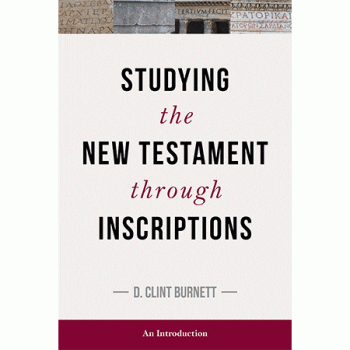
Studying the New Testament through Inscriptions


Romans 13:1-7 - Translates, Paraphrase, and Notes
TRENDING AT PATHEOS Evangelical

When you hear the word riches, what comes to mind? For most...

Don’t Miss the Parents: A Creative Christmas Meditation
As we enter the Advent Season, I see many people trying to...

Making Stones Into Bread: Choosing the “Right” Work
I was on my online arts ministry Zoom meeting with the International...

Ukraine’s exhausted Christians face fifth winter of war
By Julian Lukins The full-scale war in Ukraine is taking “a serious...

Russell Brand's Conviction is not anti-Christian Persecution
How do we shed the reputation that the Church is OK with...

Have you ever caught yourself saying, “I’ll do it tomorrow,” or “Now...
view all Evangelical blogs
Ad-Free & Subscriber Log-In Subscription Support
- About Us
- 2026 Calendar
- Videos
- Podcasts
- Library of World Religions
- Faith In Media Tracker
- Advertise With Us
- Write for Us
- Privacy Policy
- Terms of Service
- Do Not Sell My Data
- Contact Us
- Radiant Digital
- Manage Newsletter Subscriptions
- Unsubscribe From Notifications
- Sitemap
Copyright 2008-2026, Patheos, part of the Radiant Digital network of media brands. All rights reserved.
Subscription Support Ad-Free & Subscriber Log-In
Follow Patheos