
BuddhistCatholicContemplativeEvangelicalGeneral ChristianHinduJewishLatter-day SaintMuslimNew VisionsProgressive Christian
Beliefs
- Buddhist
- Catholic
- Contemplative
- Evangelical
- General Christian
- Hindu
- Jewish
- Latter-day Saint
- More Voices
- Muslim
- New Visions
- Pagan
- Progressive Christian
Topics
- Religion News
- Food and Religion
- Sports and Religion
- Religious Art
- Religious Music and Entertainment
- Religious Events
- History and Religion
- Style and Religion
- Politics and Religion
- Women in Religion
- Recreation Outdoors and Religion
- Business Finance and Religion
- Careers Workplace and Religion
- Education and Religion
- Family Parenting and Religion
- Health Fitness and Religion
- Home and Religion
- Relationships and Religion
- Technology and Religion
- Travel and Religion
Columnists
- Buddhist Columnists
- Business Finance and Religion Columnists
- Careers Workplace and Religion Columnists
- Catholic Columnists
- Contemplative Columnists
- Education and Religion Columnists
- Evangelists Columnists
- Family Parenting and Religion Columnists
- General Christian Columnists
- Health Fitness and Religion Columnists
- Hindu Columnists
- History and Religion Columnists
- Home and Religion Columnists
- Jewish Columnists
- More Voices Columnists
- Latter Day Columnists
- Muslim Columnists
- New Visions Columnists
- Nonreligious Columnists
- Pagan Columnists
- Politics and Religion Columnists
- Progressive Columnists
- Recreation Outdoors and Religion Columnists
- Relationships and Religion Columnists
- Religion News Columnists
- Religious Art Columnists
- Religious Events Columnists
- Religious Music and Entertainment Columnists
- Sports and Religion Columnists
- Style and Religion Columnists
- Technology and Religion Columnists
- Travel and Religion Columnists
- Women in Religion Columnists
Resource Library
- 2026 Calendar
- Library of World Religions
- The 100 Most Holy Places on Earth
- Patheos Answers
- Podcasts
- Videos
- Faith Leaders Database
- Anglican Episcopalian
- Bahai
- Baptist
- Buddhism
- Christianity
- Confucianism
- Eastern Orthodoxy
- Hinduism
- Holiness and Pentecostal
- ISKCON
- Islam
- Judaism
- Lutheran
- Methodist
- The Church of Jesus Christ of Latter-day Saints
- New Age
- Paganism
- Presbytarian and Reformed
- Protestantism
- Religion Behind the Scenes
- Roman Catholic
- Scientology
- Shia Islam
- Sikhism
- Sufism
- Sunni Islam
- Taoism
- Zen
- See all religions
Research Tools
 Ad-Free & Subscriber Log-In Subscription Support
Follow Patheos 

- Trending:
- Advent
- |
- Forgiveness
- |
- Thanksgiving
- |
- Election
- |
- Seasonal Holidays
- |
- Marriage
 Euangelion
- Home
- Evangelical
- The Necessity of Background Information for Understanding the Bible
The Necessity of Background Information for Understanding the Bible
Last updated on: August 1, 2013 at 12:45 am by Michael F. Bird
The Necessity of Background Information for Understanding the Bible 2013-07-27T08:21:12-04:00 Michael F. Bird
Patheos Explore the world's faith through different perspectives on religion and spirituality! Patheos has the views of the prevalent religions and spiritualities of the world.
Over at TGC, Andy Naselli gives a cautious “yes,” to the question as to whether or not knowledge of historical background is ever necessary to understanding the Bible. It’s a good article and weighs the options wisely.
His article is all the more interesting in light of the recent presidential address by Chris Tuckett at the recent SNTS meeting in Perth just last week. Tuckett said in his address:
[I]t would be accepted by all that some (considerable) knowledge of non-canonical texts (such as Qumran, Josephus, Plutarch, Thucydides etc.) is a sine qua non for any contemporary discussion of NT texts themselves. If we are to place these NT texts within their broader social, cultural, linguistic and ideological thought world, it is essential that we pay attention to other texts of the period in which they were written, whether canonical or non-canonical. In this sense, any kind of ‘canonical criticism’ which claims that methodologically one must focus on other ‘biblical’ texts as the only legitimate comparator, and context, for analysing NT texts has not often found a place within modern NT studies.
I have several assertions to make on this topic:
1. A basic and sufficient knowledge of the Bible can come from an intelligent and close reading of it in its canonical context. You can know that there is a God our creator, who called Israel, sent his Son, Jesus died and rose for us, salvation is by faith, and God will judge the world, and the elect will dwell with God for eternity. No Ph.D required here.
2. The assumption seems to be about whether an individual needs background knowledge to adequately understand the Bible. But if we get away from the scenario of just “Me and my ESV” and think about reading and studying the Bible in a community of faith; a community with preachers and teachers who have been instructed in the Scriptures, then we should think of pursuit of historical background knowledge as a basic part of any regime of preaching, teaching, catechesis, or discipleship. All the more so when we are now served by wonderful and very readable resources in this area like the books on backgrounds by Craig Keener and Darrell Bock. If we read in a community of faith where people before us and around us have labored in the fields of biblical, theological, canonical, and historical study,then background knowledge should be the norm, not an exception.
3. While I am sympathetic to the view that reliance on historical background can turn into a kind of scholarly gnosticism so that only learned men of letters can truly understand the Bible with their secret knowledge of historical background, even so, the opposite is a docetic view of revelation, a view that rips God’s revelation out of the historical context in which divine revelation takes place. If God reveals himself in events, places, cultures, and languages then to the study of events, places. cultures, and languages we must go because our doctrine of revelation demands it.
4. There are several concrete places where you could say that background knowledge is to some degree essential. The discussion of head-coverings in 1 Corinthians 11, why Cephas separated from Gentiles at Antioch, or else the rise and fall of empires in Daniel. You just HAVE to know something about context here or else it won’t make a lot of sense.
5. To confessional Christians, I would point out that the WCF and LBC both affirm that the clarity of Scripture pertains only to the “things necessary for salvation,” not to all things. Think on that! Moreover, while many confessional Christians urge us to read Owen, Edwards, Spurgeon, Warfield, and Machen and the like (and no reason why not), it wouldn’t be such a bad idea for them to also urge Christians to also read Josephus, Virgil, Horace, the DSS, Eusebius, and Philo too. In fact, James Charlesworth says that he has inherited three libraries from retired or departed ministers and in each one of them was a copy of the complete works of Josephus by William Whiston. A previous generation knew the value of knowing ancient history, so should we!
Previous Post

July 30, 2013
James Dunn on Germans and the NPP
Next Post
August 3, 2013 Todd Wilson on Galatians 2:20
Browse Our Archives
Select a Category Bible Lands Blogosphere Book Review Calvinism Colleges & Universities Ecclesiology Emerging Adulthood Evangelicalism Foreign Affairs Gospel of John Greco-Roman World Humor Just War N. T. Wright Old Testament Resurrection Terrorism Theological Education Travel Uncategorized Writing
Select a Month September 2021 July 2021 June 2021 May 2021 April 2021 March 2021 February 2021 January 2021 December 2020 November 2020 October 2020 September 2020 August 2020 July 2020 June 2020 May 2020 April 2020 March 2020 February 2020 January 2020 December 2019 November 2019 October 2019 September 2019 August 2019 July 2019 June 2019 May 2019 April 2019 March 2019 February 2019 January 2019 December 2018 November 2018 October 2018 September 2018 August 2018 July 2018 June 2018 May 2018 April 2018 March 2018 February 2018 January 2018 December 2017 November 2017 October 2017 September 2017 August 2017 July 2017 June 2017 May 2017 April 2017 March 2017 February 2017 January 2017 December 2016 November 2016 October 2016 September 2016 August 2016 July 2016 June 2016 May 2016 April 2016 March 2016 February 2016 January 2016 December 2015 November 2015 October 2015 September 2015 August 2015 July 2015 June 2015 May 2015 April 2015 March 2015 February 2015 January 2015 December 2014 November 2014 October 2014 September 2014 August 2014 July 2014 June 2014 May 2014 April 2014 March 2014 February 2014 January 2014 December 2013 November 2013 October 2013 September 2013 August 2013 July 2013 June 2013 May 2013 April 2013 March 2013 February 2013 January 2013 December 2012 November 2012 October 2012 September 2012 August 2012 July 2012 June 2012 May 2012 April 2012 March 2012 February 2012 January 2012 December 2011 November 2011 October 2011 September 2011 August 2011 July 2011 June 2011 May 2011 January 2011
TAKE THE
Religious Wisdom Quiz
Which mountain is traditionally believed to be where Noah's Ark came to rest?
Select your answer to see how you score.
Mount Ararat Mount Carmel Mount Sinai Mount Hermon
Books by This Author Books by Mike Bird
Related posts from Euangelion
Rom 3:21-26 - Translates, Paraphrase, Notes
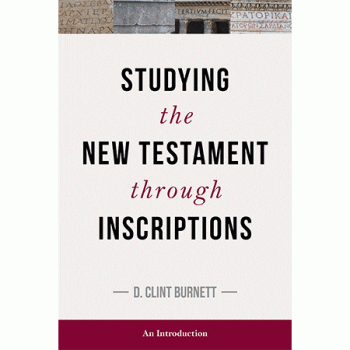
Studying the New Testament through Inscriptions


Romans 13:1-7 - Translates, Paraphrase, and Notes
TRENDING AT PATHEOS Evangelical

When you hear the word riches, what comes to mind? For most...

Don’t Miss the Parents: A Creative Christmas Meditation
As we enter the Advent Season, I see many people trying to...

Making Stones Into Bread: Choosing the “Right” Work
I was on my online arts ministry Zoom meeting with the International...

Ukraine’s exhausted Christians face fifth winter of war
By Julian Lukins The full-scale war in Ukraine is taking “a serious...

Russell Brand's Conviction is not anti-Christian Persecution
How do we shed the reputation that the Church is OK with...

Have you ever caught yourself saying, “I’ll do it tomorrow,” or “Now...
view all Evangelical blogs
Ad-Free & Subscriber Log-In Subscription Support
- About Us
- 2026 Calendar
- Videos
- Podcasts
- Library of World Religions
- Faith In Media Tracker
- Advertise With Us
- Write for Us
- Privacy Policy
- Terms of Service
- Do Not Sell My Data
- Contact Us
- Radiant Digital
- Manage Newsletter Subscriptions
- Unsubscribe From Notifications
- Sitemap
Copyright 2008-2026, Patheos, part of the Radiant Digital network of media brands. All rights reserved.
Subscription Support Ad-Free & Subscriber Log-In
Follow Patheos