
BuddhistCatholicContemplativeEvangelicalGeneral ChristianHinduJewishLatter-day SaintMuslimNew VisionsProgressive Christian
Beliefs
- Buddhist
- Catholic
- Contemplative
- Evangelical
- General Christian
- Hindu
- Jewish
- Latter-day Saint
- More Voices
- Muslim
- New Visions
- Pagan
- Progressive Christian
Topics
- Religion News
- Food and Religion
- Sports and Religion
- Religious Art
- Religious Music and Entertainment
- Religious Events
- History and Religion
- Style and Religion
- Politics and Religion
- Women in Religion
- Recreation Outdoors and Religion
- Business Finance and Religion
- Careers Workplace and Religion
- Education and Religion
- Family Parenting and Religion
- Health Fitness and Religion
- Home and Religion
- Relationships and Religion
- Technology and Religion
- Travel and Religion
Columnists
- Buddhist Columnists
- Business Finance and Religion Columnists
- Careers Workplace and Religion Columnists
- Catholic Columnists
- Contemplative Columnists
- Education and Religion Columnists
- Evangelists Columnists
- Family Parenting and Religion Columnists
- General Christian Columnists
- Health Fitness and Religion Columnists
- Hindu Columnists
- History and Religion Columnists
- Home and Religion Columnists
- Jewish Columnists
- More Voices Columnists
- Latter Day Columnists
- Muslim Columnists
- New Visions Columnists
- Nonreligious Columnists
- Pagan Columnists
- Politics and Religion Columnists
- Progressive Columnists
- Recreation Outdoors and Religion Columnists
- Relationships and Religion Columnists
- Religion News Columnists
- Religious Art Columnists
- Religious Events Columnists
- Religious Music and Entertainment Columnists
- Sports and Religion Columnists
- Style and Religion Columnists
- Technology and Religion Columnists
- Travel and Religion Columnists
- Women in Religion Columnists
Resource Library
- 2026 Calendar
- Library of World Religions
- The 100 Most Holy Places on Earth
- Patheos Answers
- Podcasts
- Videos
- Faith Leaders Database
- Anglican Episcopalian
- Bahai
- Baptist
- Buddhism
- Christianity
- Confucianism
- Eastern Orthodoxy
- Hinduism
- Holiness and Pentecostal
- ISKCON
- Islam
- Judaism
- Lutheran
- Methodist
- The Church of Jesus Christ of Latter-day Saints
- New Age
- Paganism
- Presbytarian and Reformed
- Protestantism
- Religion Behind the Scenes
- Roman Catholic
- Scientology
- Shia Islam
- Sikhism
- Sufism
- Sunni Islam
- Taoism
- Zen
- See all religions
Research Tools
 Ad-Free & Subscriber Log-In Subscription Support
Ad-Free & Subscriber Log-In Subscription Support
Follow Patheos 

- Trending:
- Forgiveness
- |
- Marriage
- |
- Consciousness
- |
- Death Penalty
- |
- Election
- |
- Halloween

- Home
- General Christian
- Inner Agony: The Binding of Isaac and Gethsemane
Inner Agony: The Binding of Isaac and Gethsemane
Last updated on: November 30, 2023 at 11:35 pm by Jordan Bennett
Inner Agony: The Binding of Isaac and Gethsemane 2023-11-30T23:35:17-05:00 Jordan Bennett
Patheos Explore the world's faith through different perspectives on religion and spirituality! Patheos has the views of the prevalent religions and spiritualities of the world.
Can you imagine a more unsettling command? That one would be directed, by God, to give up their beloved son to be offered as a ritual sacrifice. Or worse yet, that a father would be the one to perform the sacrificial ceremony, to slaughter and set ablaze his own flesh and blood. Although brutal, such a command does not exist solely in the realm of hypothetical fiction, but actually represents history; this seemingly bleak directive was given to the father of all believers, the patriarch Abraham, and was recorded by Moses in the very first book of the Old Testament.
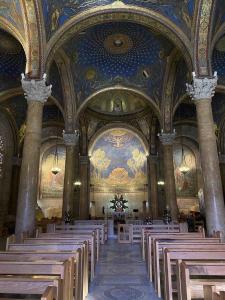
Jordan Bennett
It is a command that incites uneasiness, and at the same time conveys brilliance; for much can be learned from this divine mandate when it is interpreted in context. Indeed, the story that accompanies this grim command is actually—despite what one would think—far from grim, brutal, unsettling, or any other dark adjective that you can fasten to it. In fact, it is a tale of promise, hope, and of the unwavering faithfulness of both God, and those who have been transformed and strengthened by the Lord’s saving grace.
What follows will be the first of two entries on the “Binding of Isaac.” Today’s post will revolve around Abraham, the son of Terah who is described as God’s friend in Isaiah 41:8, and the second will concern his son, the patriarch Isaac. Each of the two sections will have two primary objectives. To comment on these Biblical figures as they have been revealed in Genesis 22, I will attempt to: 1. relay the meaning of the passage, and 2. show how each patriarch in the story prefigures Christ. Let’s begin with Abraham.
The Promise of Isaac
Earlier in the book of Genesis, we see God’s promise to Abraham of an heir fulfilled in Isaac. Although Abraham’s wife Sarah could not conceive—and despite the couple’s severely advanced ages—the LORD spoke to Abraham and told him that Sarah would indeed bear him a son. God promised to establish his covenant with this heir “as an everlasting covenant for his descendants after him.” (Gen. 17:19) Blessings were also pledged to Ishmael, Abraham’s firstborn by the slave woman Hagar, yet God’s covenant was not to be extended to him.
A year later, in accordance with the LORD’s words to his servant, “Sarah conceived and bore a son to Abraham in his old age.” (Gen. 21:2) And after Isaac was weaned, Ishmael was cast out from under his father’s wings, effectively pronouncing Isaac as Abraham’s only-begotten. After these events and others, God tested his friend with a trial that would reduce most of us to mere rubble.
A Test of Faith
The LORD said unto Abraham, “Take now your son, your only son, whom you love, Isaac, and go to the land of Moriah, and offer him there as a burnt offering on one of the mountains of which I will tell you.” (Gen. 22:2) This command considered by itself already seems unsurpassable in its harshness. But let us, for a moment, take into account the dialogue used within this narrative as we endeavor to understand the true difficulty of the test that was imposed upon Abraham. In verse two of Genesis 22, the LORD told His servant to take his only son, the one whom he loves, and offer him as a sacrifice.
As God articulated this command, He used language that intensified the difficulty of Abraham’s test. It must have brought certain troubling thoughts to the man’s mind, and would have deterred many others from carrying out the task before him. Because of how the LORD spoke to Abraham, the patriarch would have been reminded of the significance of his son to the Lord’s promises. He would have contemplated the love that he had for his child, and at the same time, would have—if only for a moment—envisioned this love and promise slipping from his fingers. Almighty God guaranteed that Abraham’s descendants would inherit the land of Canaan as an everlasting possession, but how could this be if Isaac, his only son, was to be sacrificed?
The journey to the mountain appointed by the LORD for Isaac’s sacrifice was by no means short; Abraham traveled alongside his son and two young men for three days. For the entirety of that time, the patriarch knew what he had to do once he and Isaac reached their destination. Abraham undoubtedly experienced, as any man would, three days of internal agony and grief as he interacted normally with his beloved son—a son whose days were quite literally numbered. Nearing the mountain, the last leg of the pair’s sojourn was accomplished alone; for Abraham sent away his young servants, expressing a desire for him and his son to worship by themselves.
Darkest Before Dawn
Certain thoughts concerning how he might explain Isaac’s absence upon his return would have battled to drive Abraham’s obedience away. For many people, the doubts would have succeeded. This consideration, alongside many more, must have weighed heavily on Abraham’s mind. To make matters worse, as Abraham and Isaac packed up materials for a burnt offering and neared the LORD’s mountain, the son posed a piercing question to his father. He said, “Behold, the fire and the wood, but where is the lamb for the burnt offering?” The father gave a profound answer. “God will provide for Himself the lamb for the burnt offering, my son.”
Great emotional turmoil sought to engulf the faith of Abraham, but the patriarch remained steadfast. His confidence in the word of the LORD was truly unshakable. Despite not knowing exactly how His promises would be fulfilled, Abraham knew that God was faithful to keep them; the patriarch considered that God, the performer of so many miracles could raise people even from the dead. (Heb. 11:19)
The patriarch’s grace-laden resolve to fulfill God’s command brought him all the way to the end. The father bound his son, laid him upon an altar, and raised his knife against Isaac until he was interrupted by the angel of the LORD. Although many arrows of doubt and difficulty were hurled at him from the beginning of his test until its conclusion, Abraham, equipped with the armor of God, persisted in faith; in this story, Abraham’s will was conformed to that of his Creator’s—an immense goal to which we all should strive.
Abraham’s Grief Prefigured Gethsemane
In this narrative, we can see Christ prefigured in Abraham as he underwent God’s test. Although Scripture doesn’t explicitly detail the inner struggles of Abraham in the chapter, one can make inferences from the fact that he was human. There is little doubt that the patriarch would have suffered greatly, both emotionally and mentally, as he neared the completion of his task. In a more explicit manner, we read of Jesus’ inner experience in the Garden of Gethsemane as he approached His crucifixion. The account described in Luke’s gospel is as follows:
“And He withdrew from them about a stone’s throw, and He knelt down and began to pray, saying, “Father, if You are willing, remove this cup from Me; yet not My will, but Yours be done.” Now an angel from heaven appeared to Him, strengthening Him. And being in agony, He was praying very fervently; and His sweat became like drops of blood, falling down upon the ground.” (Luke 22:41-44)
In Matthew 26, we read that Jesus even expressed His distress in words to Peter and the two sons of Zebedee. The Lord said to them: “My soul is deeply grieved, to the point of death; remain here and keep watch with Me.” (Matt. 26:38) It is evident that Abraham knew, even before he began his journey to the mountain of the LORD’s choosing, that he was to sacrifice his only son. Yet before Abraham was, Christ existed, and because Jesus is God, and God is all-knowing, Christ was always aware of His mission here on earth. Abraham’s inner suffering as he prepared to bind and slaughter his son looked forward to the mental agony that Jesus was to suffer in the Garden of Gethsemane.
Although the patriarch’s internal hardships must have been immense, they were pale in comparison to those experienced by Christ. Abraham anticipated the death of his son by his own hand, but the Lord Jesus foresaw His own definite, and extremely violent death upon a cross. Moreover, the torment that Christ was to suffer far exceeded the physical; He himself bore our sins in his body on the cross, so that we might be free from sins and live for righteousness. (1 Pet. 2:24) Christ’s agony—knowing all of what was to come—incited the only physical response properly due to such thoughts. He sweated drops of blood.
Thy Will Be Done
Abraham ached as he contemplated sacrificing Isaac, yet he remained devoted to God in spite of the pain. Christ, too, longed for His Father’s will to be done, and this took precedence over His humanly desire for His suffering to be removed. Both were faithful to their mission, and both trusted the Father, yet one was relieved of suffering, while the other was not. Abraham’s worst fears were dissuaded as God let that cup pass from him; the Lord Jesus, on the other hand, endured an agonizing death.
In both narratives, an angel was sent by the LORD at the eleventh hour to these two who suffered. The first messenger stayed a patriarch’s hand, and ended his test of faith. A second appeared to our Messiah, and strengthened Him for the immense task ahead. While extraordinary, this order of events was not at all arbitrary. Because of Abraham’s willingness to sacrifice his only son—and everything that this son embodied—at the LORD’s command, the patriarch succeeded in becoming a role model of faith for all those who would desire a relationship with God following him. He accomplished this without sacrificing Isaac.
The purpose for which Christ became incarnate, however, could not be satisfied purely by right intent. Indeed, under the law almost everything is purified with blood, and without the shedding of blood there is no forgiveness of sins. (Heb. 9:22) In order to reconcile God and man, Jesus had to die; at that moment in time, a sacrifice had to be made. Yet even death was not enough. If Christ had not also been raised from the dead, those with faith in Him would still be in their sins. (1 Cor. 15:17) Jesus was not relieved of His burden, because, following the Fall, creation’s destiny was the cross. It was the most necessary sacrifice ever made and only one man was fit to lay down His life as a ransom for many.
Abraham could not atone for the sins of the world in giving up his son, nor could Isaac, who laid down his life voluntarily. No matter how holy the patriarchs were, they were not perfect. Only He who is God from God, Light from Light, true God from true God, could die for the ungodly, and it is by His wounds that we are healed.
Previous Post

October 26, 2023
Reflections on The Church in Dialogue Pt. 3
Next Post

January 31, 2024 When Man Becomes Beast
Recent Comments
Browse Our Archives
Select a Category Baháʼí Biblical Interpretation Christianity Church Fathers Comparative Religion Eastern Orthodox Ecclesiology Ecumenism Hues of Moshe Judaism LDS Mormonism Protestant Rastafarianism Santo Daime Uncategorized
Select a Month June 2026 January 2026 June 2025 January 2025 October 2024 July 2024 May 2024 January 2024 November 2023 October 2023 August 2023 July 2023 June 2023 February 2023 December 2022 November 2022 October 2022 September 2022 August 2022 July 2022 June 2022 May 2022
Follow Us!
TAKE THE
Religious Wisdom Quiz
Who prophesied about the birth of Jesus in the Old Testament?
Select your answer to see how you score.
Jeremiah Isaiah Ezekiel Daniel
Related posts from Essence of the Altar

Why Ecumenical Dialogue Should Be Done in Person

Carried Across the Lake of Fire: The Church...

TRENDING AT PATHEOS General Christian

Seventy and Five Years Old: God Still Starts...
There is a small detail tucked into Genesis 12 that I skipped...

A Biblical Vision of Success in Christian Life...
The Concern and Quest Recent trends and tendencies I note around me...

Indigenous Peoples’ Day and the Church
Indigenous' Peoples Day or Columbus Day? Depending on where you live...

When Spiritual Growth Looks Like Losing Ground
Four Passive Spiritual Disciplines: An Introduction When I was a college freshman,...

Faith and Finding Your Current Season
“To everything there is a season,” Ecclesiastes tells us, “and a time...

Did Jesus Fear God's Wrath in Gethsemane?
That Time Jesus Was Terrified Before we begin, let me say at...
view all General Christian blogs
What Are Your Thoughts?leave a comment
Ad-Free & Subscriber Log-In Subscription Support
- About Us
- 2026 Calendar
- Videos
- Podcasts
- Library of World Religions
- Faith In Media Tracker
- Advertise With Us
- Write for Us
- Privacy Policy
- Terms of Service
- Do Not Sell My Data
- Contact Us
- Radiant Digital
- Manage Newsletter Subscriptions
- Unsubscribe From Notifications
- Sitemap
Copyright 2008-2026, Patheos. All rights reserved.
Subscription Support Ad-Free & Subscriber Log-In
Follow Patheos