
BuddhistCatholicContemplativeEvangelicalGeneral ChristianHinduJewishLatter-day SaintMuslimNew VisionsProgressive Christian
Beliefs
- Buddhist
- Catholic
- Contemplative
- Evangelical
- General Christian
- Hindu
- Jewish
- Latter-day Saint
- More Voices
- Muslim
- New Visions
- Pagan
- Progressive Christian
Topics
- Religion News
- Food and Religion
- Sports and Religion
- Religious Art
- Religious Music and Entertainment
- Religious Events
- History and Religion
- Style and Religion
- Politics and Religion
- Women in Religion
- Recreation Outdoors and Religion
- Business Finance and Religion
- Careers Workplace and Religion
- Education and Religion
- Family Parenting and Religion
- Health Fitness and Religion
- Home and Religion
- Relationships and Religion
- Technology and Religion
- Travel and Religion
Columnists
- Buddhist Columnists
- Business Finance and Religion Columnists
- Careers Workplace and Religion Columnists
- Catholic Columnists
- Contemplative Columnists
- Education and Religion Columnists
- Evangelists Columnists
- Family Parenting and Religion Columnists
- General Christian Columnists
- Health Fitness and Religion Columnists
- Hindu Columnists
- History and Religion Columnists
- Home and Religion Columnists
- Jewish Columnists
- More Voices Columnists
- Latter Day Columnists
- Muslim Columnists
- New Visions Columnists
- Nonreligious Columnists
- Pagan Columnists
- Politics and Religion Columnists
- Progressive Columnists
- Recreation Outdoors and Religion Columnists
- Relationships and Religion Columnists
- Religion News Columnists
- Religious Art Columnists
- Religious Events Columnists
- Religious Music and Entertainment Columnists
- Sports and Religion Columnists
- Style and Religion Columnists
- Technology and Religion Columnists
- Travel and Religion Columnists
- Women in Religion Columnists
Resource Library
- 2026 Calendar
- Library of World Religions
- The 100 Most Holy Places on Earth
- Patheos Answers
- Podcasts
- Videos
- Faith Leaders Database
- Anglican Episcopalian
- Bahai
- Baptist
- Buddhism
- Christianity
- Confucianism
- Eastern Orthodoxy
- Hinduism
- Holiness and Pentecostal
- ISKCON
- Islam
- Judaism
- Lutheran
- Methodist
- The Church of Jesus Christ of Latter-day Saints
- New Age
- Paganism
- Presbytarian and Reformed
- Protestantism
- Religion Behind the Scenes
- Roman Catholic
- Scientology
- Shia Islam
- Sikhism
- Sufism
- Sunni Islam
- Taoism
- Zen
- See all religions
Research Tools
 Ad-Free & Subscriber Log-In Subscription Support
Ad-Free & Subscriber Log-In Subscription Support
Follow Patheos 

- Trending:
- Forgiveness
- |
- Marriage
- |
- Consciousness
- |
- Death Penalty
- |
- Election
- |
- Halloween

- Home
- General Christian
- How Could Humanity Fall? Pt. 2
How Could Humanity Fall? Pt. 2
Last updated on: October 19, 2022 at 12:15 pm by Jordan Bennett
How Could Humanity Fall? Pt. 2 2022-10-19T12:15:38-04:00 Jordan Bennett
Patheos Explore the world's faith through different perspectives on religion and spirituality! Patheos has the views of the prevalent religions and spiritualities of the world.
Before we dive back into the difficulties which surround the doctrine of the Fall of Man, let us first review the analogy that I presented in part one. (See original post here). In our imagined scenario, you, the reader, are seated comfortably at the head of a dining table in the midst of an elegant eating establishment; you are prepared to enjoy a nice meal and have brought the required appetite.
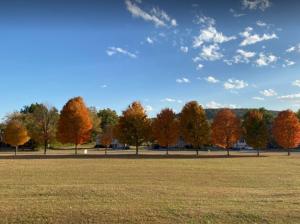
Jordan Bennett | Cedar Grove
However, on this fictitious occasion, things aren’t quite what they seem; you notice the presence of supernatural feelings and happenings uncommon to most dining experiences. For instance, your inclination to eat is infinite (not in a dreadful manner, but in a way similar to your current [non-imagined] need to breathe). Accompanying this unconventional superpower is yet another—an ability to eat and enjoy food without pain or repercussion. Within this unusual narrative, you are well aware of the mysterious abilities that affect you, but are not deterred by them in any way (another supernatural occurrence!).
Now, suppose that at some point during the course of the evening, you receive food—two plates are placed on the table in front of you. One dish cradles your favorite food, and the other holds a single stale cracker. Like your infinite appetite, your most desired dish can be supplied to you infinitely; should you choose it, it shall never cease to be served. And, as the event progresses, imagine that you take advantage of these supernatural happenings; you enjoy your absolute favorite food without interruption, never choosing the cracker in place of it. Until, suddenly, after having consumed your most desired dish for a time, and relishing its remarkable goodness, you—in opposition to sound reason—dismiss your favorite food and embrace the allure of the pale saltine.
In this second and final post, I shall conclude my discussion on the difficulties which surround the Fall by moving from the thought of Maximus the Confessor to that of Basil the Great; like the seventh-century theologian from part 1, Basil had something to say about Adam’s ability to sin, and in turn, about one’s ability to choose a stale cracker over a delicious meal.
Basil the Great (330—379) and Another Proposed Solution
“There was a time when Adam was set on high, not in place but by free choice, when, having just then been given life, he looked up toward heaven and became exceedingly glad at the things he saw. He greatly loved his Benefactor, who gave him the enjoyment of eternal life, enabled him to rest amid the delights of paradise, gave him authority like that of the angels…and let him hear the divine voice. As he was protected in all these things by God and enjoyed the blessings belonging to him, he quickly became full of everything. Αnd as it were becoming insolent through satiety, he preferred what appeared delightful to the fleshly eyes to the spiritual beauty…And immediately he was outside paradise and outside that blessed way of life, becoming evil not from necessity but from thoughtlessness.” [i]
In the excerpt above, the once bishop of Caesarea, Basil the Great, seeks to answer a particularly difficult question concerning the Fall. Like Maximus after him, Basil endeavored to solve the following: How was it possible for Adam and Eve to choose a lesser good after they had already experienced the ultimate Good which is their Creator? Because the first humans initially enjoyed a state of inborn righteousness and pre-fall perfection, their relationship with God was undimmed by sin; at that time, humanity wasn’t in need of justification, nor did it require eternal satisfaction.
Adam and Eve had within their grasp the highest conceivable human goal, and they received it at the very instant that they were created. Considering this, doesn’t it sound reasonable that anything contrary to God would have seemed frivolous and wonting to those humans who dwelt in Eden before sin’s inception? Nevertheless, they did choose a lesser good (which was actually an evil in disguise), and what resulted was a myriad of problems, including the philosophical dilemma at hand.
Basil understood this difficulty and proposed an interesting solution. According to the Church father, Adam’s sin was—in some sense—the fruit of his own limited capacity to receive God’s profound goodness. In the garden, the first man basked in the spiritual delights that his soul received until he became satiated by those pleasures that poured into him; “being weighed down by a kind of sleepiness,” [ii] Adam turned from God and focused his heart on that which God forbade. In other words, the soul of Adam became jaded, and his righteous judgment clouded up—this allowed him to choose a lesser good.
According to Basil’s analysis, the first human’s careless act of selfishness stemmed from disinterest; somehow Adam became apathetic towards the divine benefits which filled him, and thus he found the forbidden fruit to be good for eating. But the Almighty’s goodness isn’t deficient, for it is Goodness itself. How then could pre-fall humanity become bored of the perfect spiritual delights which flow from the Creator? The only way to resolve this tension, I believe, is to focus in on the idea that Adam was ill-equipped to receive. With this as a foundation, some questions appear to be answered, yet new ones arise; I will address a couple of them before the end of this post.
A New Interpretation of this Approach
Ahead of revisiting the dinner scenario for one final version of the analogy, I would like to briefly present an idea that came to mind after I had read Basil’s comments on Adam’s immeasurable mistake. When comparing the ancient bishop’s solution to that of Maximus’s, I undoubtedly prefer the latter, yet I believe that there is something in Basil’s discussion that is well worth mining—in particular, the concept of early humanity’s capacity to receive and enjoy God’s goodness.
While the Church father’s thought provides a good starting point, I find that there is one major adjustment that should be made. Instead of Adam becoming satiated by the Divine’s communicable gifts, perhaps it would be more fitting to suggest that he was overwhelmed by them. According to this assertion, Adam received God’s holy light and profound pleasures until he could no longer withstand their intensity. What followed then was man’s turning away from the utter brilliancy of God to that of dim pleasures—comforts of the senses that could not overwhelm him.
“With a small turning of the eye, we are either facing the sun or facing the shadow of our own body. Thus one who looks upward easily finds illumination, but for one who turns toward the shadow, darkening is inevitable.” [iii]
Truly, the goodness of God is immeasurable, but the state of (even a sinless) humanity is only finite; it is impossible to think that a creature could contain all the goodness that the Almighty could gift it. And, because Adam could not accommodate that which he was given, he subsequently turned from the burning brightness of the Holy Sun. Now faced with his own shadow, and armed with unhindered free will, the first man transgressed the law of God and was rightly cast from the doors of paradise.
Basil and the Meal
Now let’s take one final look at the “meal” metaphor presented earlier. The modified version of Basil’s reply to the problem of the Fall is analogous to the following: When in the scenario you are served both dishes, the favored meal, and the cracker, suppose that you begin by immediately digging into the delicious entree. In your hunger-induced fervor, you do not even realize that the cracker exists (at least at first), for, on this particular occasion, the taste of your favorite food is everything that you hoped it would be; throughout the course of the evening, you relish its goodness for quite some time. Now imagine that, in a flash, you detect a change; the flavor of your meal has somehow increased in its intensity, yet nothing has changed concerning its composition. It is simply that over time you have become overfilled with its profound richness—that which was originally palatable and beyond delectable.
Like a luscious chocolate cake (which may actually be your favorite meal, who am I to judge?), it began as a pleasurable treat, but presently, you have exhausted your capacity to enjoy it; it has become too much to swallow. Upon discovering this limited ability to relish the taste of your favorite food, you then, in order to satisfy your endless desire to eat, trade in your favorite dish with its overwhelming flavor for that of a bland, albeit palatable, cracker.
Final Remarks
The modified version of Basil’s solution to the problem of the Fall mends a certain issue: the notion that Adam could become at all disinterested in the benefits of God. Despite this, a somewhat more significant problem remains unresolved; how could Adam be to blame for eating the forbidden fruit when God had created him, from the very beginning, as a limited vessel, unable to receive that which was to flood into him from above? The answer, if at all warranted, can only be found in the sovereignty of God. For if the things described in this post did indeed transpire in the manner in which we have said, it is only because the LORD deemed it worthy of the expression of His glory that they should do so.
“God the good Creator of all things, in His infinite power and wisdom does uphold, direct, dispose, and govern all creatures and things, from the greatest even to the least, by His most wise and holy providence, to the end for the which they were created, according unto His infallible foreknowledge, and the free and immutable counsel of His own will; to the praise of the glory of His wisdom, power, justice, infinite goodness, and mercy.” [iv]
[i] Caesariensis, Basilius Magnus, and Harrison Verna E F. On the Human Condition. Crestwood, NY: St. Vladimir’s Seminary Press, 2005, 76.
[ii] Ibid., 74.
[iii] Ibid.
[iv] Masters, Peter. The Baptist Confession of Faith 1689: With Scripture Proofs. London: Wakeman Trust, 1989, 15.
Previous Post

September 30, 2022
How the Early Church Handled Leviticus
Next Post
November 11, 2022 Reflections on TCID: Protestant-Orthodox Dialogue
Browse Our Archives
Select a Category Baháʼí Biblical Interpretation Christianity Church Fathers Comparative Religion Eastern Orthodox Ecclesiology Ecumenism Hues of Moshe Judaism LDS Mormonism Protestant Rastafarianism Santo Daime Uncategorized
Select a Month June 2026 January 2026 June 2025 January 2025 October 2024 July 2024 May 2024 January 2024 November 2023 October 2023 August 2023 July 2023 June 2023 February 2023 December 2022 November 2022 October 2022 September 2022 August 2022 July 2022 June 2022 May 2022
Follow Us!
TAKE THE
Religious Wisdom Quiz
What did the Israelites worship while Moses was on Mount Sinai?
Select your answer to see how you score.
A statue of Moses The ark A bronze snake A golden calf
Related posts from Essence of the Altar

Archetypal Abraham: The Binding of Isaac and Christians


TRENDING AT PATHEOS General Christian

Seventy and Five Years Old: God Still Starts...
There is a small detail tucked into Genesis 12 that I skipped...

A Biblical Vision of Success in Christian Life...
The Concern and Quest Recent trends and tendencies I note around me...

Indigenous Peoples’ Day and the Church
Indigenous' Peoples Day or Columbus Day? Depending on where you live...

When Spiritual Growth Looks Like Losing Ground
Four Passive Spiritual Disciplines: An Introduction When I was a college freshman,...

Faith and Finding Your Current Season
“To everything there is a season,” Ecclesiastes tells us, “and a time...

Did Jesus Fear God's Wrath in Gethsemane?
That Time Jesus Was Terrified Before we begin, let me say at...
view all General Christian blogs
Ad-Free & Subscriber Log-In Subscription Support
- About Us
- 2026 Calendar
- Videos
- Podcasts
- Library of World Religions
- Faith In Media Tracker
- Advertise With Us
- Write for Us
- Privacy Policy
- Terms of Service
- Do Not Sell My Data
- Contact Us
- Radiant Digital
- Manage Newsletter Subscriptions
- Unsubscribe From Notifications
- Sitemap
Copyright 2008-2026, Patheos. All rights reserved.
Subscription Support Ad-Free & Subscriber Log-In
Follow Patheos