
BuddhistCatholicContemplativeEvangelicalGeneral ChristianHinduJewishLatter-day SaintMuslimNew VisionsProgressive Christian
Beliefs
- Buddhist
- Catholic
- Contemplative
- Evangelical
- General Christian
- Hindu
- Jewish
- Latter-day Saint
- More Voices
- Muslim
- New Visions
- Pagan
- Progressive Christian
Topics
- Religion News
- Food and Religion
- Sports and Religion
- Religious Art
- Religious Music and Entertainment
- Religious Events
- History and Religion
- Style and Religion
- Politics and Religion
- Women in Religion
- Recreation Outdoors and Religion
- Business Finance and Religion
- Careers Workplace and Religion
- Education and Religion
- Family Parenting and Religion
- Health Fitness and Religion
- Home and Religion
- Relationships and Religion
- Technology and Religion
- Travel and Religion
Columnists
- Buddhist Columnists
- Business Finance and Religion Columnists
- Careers Workplace and Religion Columnists
- Catholic Columnists
- Contemplative Columnists
- Education and Religion Columnists
- Evangelists Columnists
- Family Parenting and Religion Columnists
- General Christian Columnists
- Health Fitness and Religion Columnists
- Hindu Columnists
- History and Religion Columnists
- Home and Religion Columnists
- Jewish Columnists
- More Voices Columnists
- Latter Day Columnists
- Muslim Columnists
- New Visions Columnists
- Nonreligious Columnists
- Pagan Columnists
- Politics and Religion Columnists
- Progressive Columnists
- Recreation Outdoors and Religion Columnists
- Relationships and Religion Columnists
- Religion News Columnists
- Religious Art Columnists
- Religious Events Columnists
- Religious Music and Entertainment Columnists
- Sports and Religion Columnists
- Style and Religion Columnists
- Technology and Religion Columnists
- Travel and Religion Columnists
- Women in Religion Columnists
Resource Library
- 2026 Calendar
- Library of World Religions
- The 100 Most Holy Places on Earth
- Patheos Answers
- Podcasts
- Videos
- Faith Leaders Database
- Anglican Episcopalian
- Bahai
- Baptist
- Buddhism
- Christianity
- Confucianism
- Eastern Orthodoxy
- Hinduism
- Holiness and Pentecostal
- ISKCON
- Islam
- Judaism
- Lutheran
- Methodist
- The Church of Jesus Christ of Latter-day Saints
- New Age
- Paganism
- Presbytarian and Reformed
- Protestantism
- Religion Behind the Scenes
- Roman Catholic
- Scientology
- Shia Islam
- Sikhism
- Sufism
- Sunni Islam
- Taoism
- Zen
- See all religions
Research Tools
 Ad-Free & Subscriber Log-In Subscription Support
Ad-Free & Subscriber Log-In Subscription Support
Follow Patheos 

- Trending:
- Forgiveness
- |
- Marriage
- |
- Consciousness
- |
- Death Penalty
- |
- Election
- |
- Halloween

- Home
- General Christian
- The Rationality of Animal Sacrifice According to Maimonides
The Rationality of Animal Sacrifice According to Maimonides
Last updated on: August 24, 2022 at 6:26 pm by Jordan Bennett
The Rationality of Animal Sacrifice According to Maimonides 2022-08-24T18:26:59-04:00 Jordan Bennett
Patheos Explore the world's faith through different perspectives on religion and spirituality! Patheos has the views of the prevalent religions and spiritualities of the world.
In the Guide for the Perplexed, Moses Maimonides, the most lauded of all Medieval Jewish philosophers, argues for the inherent rationality of ritual sacrifice, and does so by echoing a familiar sentiment that was common to at least one religious thinker who had come before him. Not unlike the early Antiochene Christian exegete Theodoret of Cyrus (see my previous post here), Maimonides saw the sacrificial system of the ancient Israelites as an institution established by God for the express purpose of preventing religious whiplash among His worshipers.
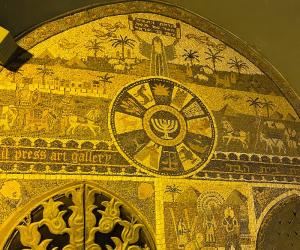
Bennett | Jerusalem
“It is…according to the nature of man impossible for him suddenly to discontinue everything to which he has been accustomed…But the custom which was in those days general among all men, and the general mode of worship in which the Israelites were brought up, consisted in sacrificing animals in those temples which contained certain images, to bow down to those images, and to burn incense before them…It was in accordance with the wisdom and plan of God, as displayed in the whole Creation, that He did not command us to give up and to discontinue all these manners of service; for to obey such a commandment it would have been contrary to the nature of man…For this reason God allowed these kinds of service to continue; He transferred to His service that which had formerly served as a worship of created beings, and of things imaginary and unreal…”
The LORD stooped to the weakness of mankind, mighty as He is, and allowed them to continue to practice their methods of religious service, whilst redirecting their attention away from all previously held idolatrous inclinations. According to Maimonides, the temple sacrifices were not themselves the primary object of their governing precepts, nor did they represent the closest form of worship whereby an individual could attain knowledge of God; still, the LORD decreed the sacrificial system to be one of the methods through which He would draw His followers to Himself, teaching them to serve no other being. Indeed, to make travel simpler, “He took them by another road in order to obtain thereby His original object.” [ii]
A Philosophical Exegesis of Sacrifice
Maimonides’s purpose for crafting the Guide for the Perplexed—to reconcile Aristotelian philosophy with that of sacred Scripture*—*colors his understanding of sacrifice to a profound extent (in my opinion). By engaging in a philosophical exegesis of the Bible, Moses unveils the Aristotelian core of the Hebrew holy writings, [iii] and in so doing, constructs, in earthly terms, an outline for the concept of God’s transcendence. According to the philosopher, “it is clear and evident that most Biblical prophecies are given in images,” thus generating “strange ideas” if taken literally. [iv] Considering this, it is then paramount for one to view certain Scriptural passages and words as figurative in order to more adequately assimilate their meaning.
Maimonides believed that God’s revelation to mankind surpasses that of human language and cognition. Indeed, the supernatural concepts described in the Hebrew Bible fit quite uneasily into the cloak of the written word. Even so, the LORD chose this medium from which to speak unto His nation; He descended from the heavenly realms to accommodate the chiseled finiteness of man. Just as God constricted himself in order to communicate to a people who lacked His supernatural qualities, so did He forgo a greater vehicle by which those people could worship Him (a method nobler than sacrifice, according to Maimonides, is prayer).
To meditate upon the laws surrounding sacrifice—including their Maimonidean purposes for being—is to receive a substantial lesson in religious humility. People lack the ability to meet the LORD where He is; they are set in their ways; God must empty Himself in order to bring His people to their feet, to the recognition that He is the sustainer of their temporal lives.
Lessons in Reverance
“In order to bring the offering in the best condition, we choose the old of the turtle-doves and the young of the pigeons, the old pigeons being less agreeable. The oblation must likewise be mingled with oil, and must be of fine flour ( Lev. 2:1), for in this condition it is good and pleasant. Frankincense is prescribed because its fumes are good in places filled with the odor of burnt flesh. The burnt-offering was flayed (Lev. 1:16), and its inwards and legs, although they were entirely burnt, had to be previously washed (Lev. 1:9), in order that due respect should be shown to the sacrifice, and it should not appear despicable and contemptible.” [v]
Here the philosopher gifts further importance to the institution of sacrifice by shedding light on a lesson drawn from the specifics of sacrificial procedure. In this excerpt, Maimonides uncovers a textbook of intent with regard to the honor paid to the sacrificial animals; he sees an inherent rationality in the commands concerning the victim’s proper handling. The burnt-offering was to be consumed by the flames in its entirety, yet its inward parts needed to be washed. If the victim’s fate was utter annihilation, what purpose would there be then in its ritual cleansing? The philosopher suggests that such an act grants honor to the victim, a necessary component in the process of making an offering unto the Holy One.
Almighty God receives the sacrifice, and He is holy, therefore, all that touches His eternity must be treated with considerable reverence. For Maimonides, “these rules were laid down in order that people should not despise that with which the name of God is connected, and which serves as a means of approaching God.” [vi] All that is associated with the Name*—the Tetragrammaton—*should echo waves of His purity, but we should not limit such a practice to the realm of sacrifice alone. If we would just engage in the work of applying it, the laws governing the sacrificial system of ancient Israel are ripe with content relevant to the act of contemporary supplication; may our thoughts and words be cleansed, and deeply purified as we stand before the Holy One with prayers of otherworldly admiration.
[i] Maimonides, Moses. The Guide for the Perplexed. Translated by M. Friedlander. New York: Barnes & Noble Books, 2004, 539.
[ii] Ibid., 540.
[iii] Klein-Braslavy, Sara. “The Philosophical Exegesis.” In Hebrew Bible / Old Testament: The History of Its Interpretation Part 2: The Middle Ages, edited by Magne Sæbø, 302-320. Göttingen: Vandenhoeck & Ruprecht, 2000.
[iv] Maimonides, The Guide, 416
[v] Ibid., 599.
[vi] Ibid., 600.
Jewish
Previous Post

August 17, 2022
The Purpose of Animal Sacrifice According to Theodoret
Next Post
September 13, 2022 How Could Humanity Fall? Pt. 1
Browse Our Archives
Select a Category Baháʼí Biblical Interpretation Christianity Church Fathers Comparative Religion Eastern Orthodox Ecclesiology Ecumenism Hues of Moshe Judaism LDS Mormonism Protestant Rastafarianism Santo Daime Uncategorized
Select a Month June 2026 January 2026 June 2025 January 2025 October 2024 July 2024 May 2024 January 2024 November 2023 October 2023 August 2023 July 2023 June 2023 February 2023 December 2022 November 2022 October 2022 September 2022 August 2022 July 2022 June 2022 May 2022
Follow Us!
TAKE THE
Religious Wisdom Quiz
Which Christian group is known for their rejection of military service and voting?
Select your answer to see how you score.
Catholic Anglican Pentecostal Amish
Related posts from Essence of the Altar

Archetypal Abraham: The Binding of Isaac and Christians


TRENDING AT PATHEOS General Christian

Seventy and Five Years Old: God Still Starts...
There is a small detail tucked into Genesis 12 that I skipped...

A Biblical Vision of Success in Christian Life...
The Concern and Quest Recent trends and tendencies I note around me...

Indigenous Peoples’ Day and the Church
Indigenous' Peoples Day or Columbus Day? Depending on where you live...

When Spiritual Growth Looks Like Losing Ground
Four Passive Spiritual Disciplines: An Introduction When I was a college freshman,...

Faith and Finding Your Current Season
“To everything there is a season,” Ecclesiastes tells us, “and a time...

Did Jesus Fear God's Wrath in Gethsemane?
That Time Jesus Was Terrified Before we begin, let me say at...
view all General Christian blogs
Ad-Free & Subscriber Log-In Subscription Support
- About Us
- 2026 Calendar
- Videos
- Podcasts
- Library of World Religions
- Faith In Media Tracker
- Advertise With Us
- Write for Us
- Privacy Policy
- Terms of Service
- Do Not Sell My Data
- Contact Us
- Radiant Digital
- Manage Newsletter Subscriptions
- Unsubscribe From Notifications
- Sitemap
Copyright 2008-2026, Patheos. All rights reserved.
Subscription Support Ad-Free & Subscriber Log-In
Follow Patheos