
BuddhistCatholicContemplativeEvangelicalGeneral ChristianHinduJewishLatter-day SaintMuslimNew VisionsProgressive Christian
Beliefs
- Buddhist
- Catholic
- Contemplative
- Evangelical
- General Christian
- Hindu
- Jewish
- Latter-day Saint
- More Voices
- Muslim
- New Visions
- Pagan
- Progressive Christian
Topics
- Religion News
- Food and Religion
- Sports and Religion
- Religious Art
- Religious Music and Entertainment
- Religious Events
- History and Religion
- Style and Religion
- Politics and Religion
- Women in Religion
- Recreation Outdoors and Religion
- Business Finance and Religion
- Careers Workplace and Religion
- Education and Religion
- Family Parenting and Religion
- Health Fitness and Religion
- Home and Religion
- Relationships and Religion
- Technology and Religion
- Travel and Religion
Columnists
- Buddhist Columnists
- Business Finance and Religion Columnists
- Careers Workplace and Religion Columnists
- Catholic Columnists
- Contemplative Columnists
- Education and Religion Columnists
- Evangelists Columnists
- Family Parenting and Religion Columnists
- General Christian Columnists
- Health Fitness and Religion Columnists
- Hindu Columnists
- History and Religion Columnists
- Home and Religion Columnists
- Jewish Columnists
- More Voices Columnists
- Latter Day Columnists
- Muslim Columnists
- New Visions Columnists
- Nonreligious Columnists
- Pagan Columnists
- Politics and Religion Columnists
- Progressive Columnists
- Recreation Outdoors and Religion Columnists
- Relationships and Religion Columnists
- Religion News Columnists
- Religious Art Columnists
- Religious Events Columnists
- Religious Music and Entertainment Columnists
- Sports and Religion Columnists
- Style and Religion Columnists
- Technology and Religion Columnists
- Travel and Religion Columnists
- Women in Religion Columnists
Resource Library
- 2026 Calendar
- Library of World Religions
- The 100 Most Holy Places on Earth
- Patheos Answers
- Podcasts
- Videos
- Faith Leaders Database
- Anglican Episcopalian
- Bahai
- Baptist
- Buddhism
- Christianity
- Confucianism
- Eastern Orthodoxy
- Hinduism
- Holiness and Pentecostal
- ISKCON
- Islam
- Judaism
- Lutheran
- Methodist
- The Church of Jesus Christ of Latter-day Saints
- New Age
- Paganism
- Presbytarian and Reformed
- Protestantism
- Religion Behind the Scenes
- Roman Catholic
- Scientology
- Shia Islam
- Sikhism
- Sufism
- Sunni Islam
- Taoism
- Zen
- See all religions
Research Tools
 Ad-Free & Subscriber Log-In Subscription Support
Ad-Free & Subscriber Log-In Subscription Support
Follow Patheos 

- Trending:
- Forgiveness
- |
- Marriage
- |
- Consciousness
- |
- Death Penalty
- |
- Election
- |
- Halloween

- Home
- General Christian
- The Prophet As Mirror: Moses in the Baháʼí Faith
The Prophet As Mirror: Moses in the Baháʼí Faith
Last updated on: August 17, 2022 at 2:37 pm by Jordan Bennett
The Prophet As Mirror: Moses in the Baháʼí Faith 2022-08-17T14:37:20-04:00 Jordan Bennett
Patheos Explore the world's faith through different perspectives on religion and spirituality! Patheos has the views of the prevalent religions and spiritualities of the world.
In my preceding post, I examined the role of the prophet Moses within the doctrine and literature of the Church of Jesus Christ of Latter-day Saints. As in Judaism, Christianity, and Islam, the Israelite lawgiver maintains a place of lasting prominence among Mormons on account of his reputed heroic deeds and proximity to the transcendent. Therefore, to summarize the LDS perception of Moses rather quite succinctly is to simply echo the following description by Bruce R. McConkie: “In prophetic power, spiritual insight, and leadership qualifications, Moses ranks with the mightiest men who have ever lived.” [i] But Mormonism isn’t the only young Abrahamic faith to highly revere the biblical figure in question, Baháʼís too acknowledge the immensity of Moses.

Flickr | Christopher Macsurak
The second eldest of the three new religious movements being discussed in this series (see Pt. 1 here) sprung forth from Persia three decades after Joseph Smith first published the Book of Mormon. This tradition, known as the Baháʼí faith, affirmed itself as the next authentic religious structure to drink from the fount of God’s progressive revelation following a proclamation by the prophet Baháʼu’lláh in the 1860s.
Manifestations of God
Since the faith’s inception, Baháʼís have promulgated a belief in the unity of religions, suggesting that the founders of all major world faiths had been granted the ability to accurately transmit the will of God at a specific point in time. These Manifestations of God are considered to be more like prophets than that of incarnations, but nevertheless act as “true mirrors of the sanctified Essence of God.”[ii] Among the most influential of the Baháʼí Manifestations are the following: Abraham, Jesus, Muhammad, Buddha, Baháʼu’lláh, and Moses.
Despite some jurisdiction being given to the Hebrew Bible, New Testament, Quran, and other sacred scriptures from around the globe, the Baháʼí faith earnestly advocates Baháʼu’lláh as the appointed Manifestation for this cycle of human history and therefore endorses his writings–along with those from Abdu’l-Bahá, and the Báb–as the most authoritative of inspired texts. As I continue my pursuit of Moses, I will examine two crucial Baháʼí texts, the Kitáb-i-Íqán (Book of Certitude) and Some Answered Questions, in the words below*.*
Book of Certitiude
When searching for the great Israelite leader in the Baháʼí canon, one needn’t look beyond that of one of the faith’s most fundamental theological volumes, the Book of Certitude. This sacred masterwork optimally outlines much of Baháʼí doctrine–having flowed from the pen of Baháʼu’lláh himself during his exile in Iraq[iii]— and additionally solidifies the significance of the Hebrew lawgiver within the faith.
Speaking much of the Manifestations, the text portrays Moses as a divinely-ordained lamp unto humanity who instructed the hearers of God throughout the duration of his designated dispensation. Baháʼu’lláh revealed the following:
“Armed with the rod of celestial dominion, adorned with the white hand of divine knowledge, and proceeding from the Paran of the love of God, and wielding the serpent of power and everlasting majesty, He shone forth from the Sinai of light upon the world. He summoned all peoples and kindreds of the earth to the kingdom of eternity, and invited them to partake of the fruit of the tree of faithfulness.”[iv]
This excerpt from the Book of Certitude shines a tremendous light on Moshe as he is conceptualized amongst the Baháʼís. Having accepted the holy baton thrust upon him by the glorious Friend of God, Abraham, the great Israelite became the next Divine Manifestation to proclaim the utterances of the Lord to those who dwelled upon the face of the eternal earth. “He Who Held converse with God”[v] overcame opposition from Pharaoh, redeemed a nation, and “gave life to the people of Israel” by establishing celestial “laws and ordinances.”[vi]
Moses fulfilled his task as a Manifestation adroitly and when the hour drew nigh, prepared the way for the next of God’s holy foot soldiers to take the reins of the infinitely sublime task at hand.
Some Answered Questions
As a response to pressing inquiries regarding doctrine and metaphysics, Abdu’l-Bahá, the progeny of Baháʼu’lláh, composed a paramount Baháʼí text entitled: Some Answered Questions. Expounding upon a manifold of religious uncertainties, this inspired scripture explicates the nature of a theme imperative to the unfolding of our discussion: the Divine Manifestations.
Moses is the third prophet to garner a subheading by the author and although much is echoed from the pages of the Kitáb-i-Íqán, several statements unique to Questions can still be observed. Here is one regarding Moshe after he had bestowed wisdom upon the Israelites:
“To such a development did they attain that the philosophers of Greece would come and acquire knowledge from the learned men of Israel. Such an one was Socrates, who visited Syria, and took from the children of Israel the teachings of the Unity of God and of the immortality of the soul. After his return to Greece, he promulgated these teachings.[vii]
According to the Baháʼí faith, the Hebrew lawgiver wasn’t solely a seer, but a divinely-inspired philosopher whose instruction had successfully trickled down to the very likes of Plato and Aristotle– giants of Hellenistic thinking.[viii]
As observed in the pages of his doctrinal work, Abdu’l-Bahá emphasizes Moses’ lowly beginnings and proclaims the beauty of God’s work throughout the prophet’s life. The Baháʼí faith doesn’t suggest that the Israelite’s importance waned outside of the Hebrew encampments; Moses’ reverberations were felt throughout the world. Indeed, Baháʼís declare that it was Moshe’s holy wisdom that spurred nothing less than the beginnings of the intellectual West.
To learn more about the significance that Moses enjoys within the Rastafari movement, check out the next installment!
[i] Bruce R. McConkie, Mormon Doctrine. Salt Lake City: Bookcraft, 1993), 515
[ii] Abdu’l-Bahá, Some Answered Questions, trans. Laura Clifford Barney (Wilmette: Baháʼí Pub., 1981), 147
[iii] Baháʼu’lláh, Book of Certitude, trans. Shoghi Effendi (Wilmette: Baháʼí Pub., 2003), x
[iv] Ibid., 10
[v] Ibid., 58
[vi] Abdu’l-Bahá, Questions, 14
[vii] Ibid., 14
[viii] Ibid., 15
More Voices
Previous Post

May 27, 2022
A Prophet Among Saints: Moses in the LDS Scriptures
Next Post
June 20, 2022 Beyond the Amazon: Santo Daime and Ayahuasca
Browse Our Archives
Select a Category Baháʼí Biblical Interpretation Christianity Church Fathers Comparative Religion Eastern Orthodox Ecclesiology Ecumenism Hues of Moshe Judaism LDS Mormonism Protestant Rastafarianism Santo Daime Uncategorized
Select a Month June 2026 January 2026 June 2025 January 2025 October 2024 July 2024 May 2024 January 2024 November 2023 October 2023 August 2023 July 2023 June 2023 February 2023 December 2022 November 2022 October 2022 September 2022 August 2022 July 2022 June 2022 May 2022
Follow Us!
TAKE THE
Religious Wisdom Quiz
Who betrayed Jesus with a kiss?
Select your answer to see how you score.
Herod Peter Judas Thomas
Related posts from Essence of the Altar

Reflections on TCID: Protestant-Orthodox Dialogue
The Rationality of Animal Sacrifice According to Maimonides
Gleanings in Origen's Homilies on Leviticus
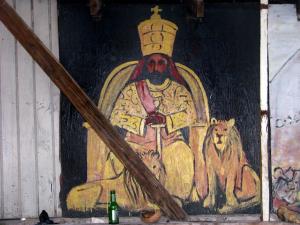
Dread Moses: The Prophet and Rastafari
TRENDING AT PATHEOS General Christian

Seventy and Five Years Old: God Still Starts...
There is a small detail tucked into Genesis 12 that I skipped...

A Biblical Vision of Success in Christian Life...
The Concern and Quest Recent trends and tendencies I note around me...

Indigenous Peoples’ Day and the Church
Indigenous' Peoples Day or Columbus Day? Depending on where you live...

When Spiritual Growth Looks Like Losing Ground
Four Passive Spiritual Disciplines: An Introduction When I was a college freshman,...

Faith and Finding Your Current Season
“To everything there is a season,” Ecclesiastes tells us, “and a time...

Did Jesus Fear God's Wrath in Gethsemane?
That Time Jesus Was Terrified Before we begin, let me say at...
view all General Christian blogs
Ad-Free & Subscriber Log-In Subscription Support
- About Us
- 2026 Calendar
- Videos
- Podcasts
- Library of World Religions
- Faith In Media Tracker
- Advertise With Us
- Write for Us
- Privacy Policy
- Terms of Service
- Do Not Sell My Data
- Contact Us
- Radiant Digital
- Manage Newsletter Subscriptions
- Unsubscribe From Notifications
- Sitemap
Copyright 2008-2026, Patheos. All rights reserved.
Subscription Support Ad-Free & Subscriber Log-In
Follow Patheos