
BuddhistCatholicContemplativeEvangelicalGeneral ChristianHinduJewishLatter-day SaintMuslimNew VisionsProgressive Christian
Beliefs
- Buddhist
- Catholic
- Contemplative
- Evangelical
- General Christian
- Hindu
- Jewish
- Latter-day Saint
- More Voices
- Muslim
- New Visions
- Pagan
- Progressive Christian
Topics
- Religion News
- Food and Religion
- Sports and Religion
- Religious Art
- Religious Music and Entertainment
- Religious Events
- History and Religion
- Style and Religion
- Politics and Religion
- Women in Religion
- Recreation Outdoors and Religion
- Business Finance and Religion
- Careers Workplace and Religion
- Education and Religion
- Family Parenting and Religion
- Health Fitness and Religion
- Home and Religion
- Relationships and Religion
- Technology and Religion
- Travel and Religion
Columnists
- Buddhist Columnists
- Business Finance and Religion Columnists
- Careers Workplace and Religion Columnists
- Catholic Columnists
- Contemplative Columnists
- Education and Religion Columnists
- Evangelists Columnists
- Family Parenting and Religion Columnists
- General Christian Columnists
- Health Fitness and Religion Columnists
- Hindu Columnists
- History and Religion Columnists
- Home and Religion Columnists
- Jewish Columnists
- More Voices Columnists
- Latter Day Columnists
- Muslim Columnists
- New Visions Columnists
- Nonreligious Columnists
- Pagan Columnists
- Politics and Religion Columnists
- Progressive Columnists
- Recreation Outdoors and Religion Columnists
- Relationships and Religion Columnists
- Religion News Columnists
- Religious Art Columnists
- Religious Events Columnists
- Religious Music and Entertainment Columnists
- Sports and Religion Columnists
- Style and Religion Columnists
- Technology and Religion Columnists
- Travel and Religion Columnists
- Women in Religion Columnists
Resource Library
- 2026 Calendar
- Library of World Religions
- The 100 Most Holy Places on Earth
- Patheos Answers
- Podcasts
- Videos
- Faith Leaders Database
- Anglican Episcopalian
- Bahai
- Baptist
- Buddhism
- Christianity
- Confucianism
- Eastern Orthodoxy
- Hinduism
- Holiness and Pentecostal
- ISKCON
- Islam
- Judaism
- Lutheran
- Methodist
- The Church of Jesus Christ of Latter-day Saints
- New Age
- Paganism
- Presbytarian and Reformed
- Protestantism
- Religion Behind the Scenes
- Roman Catholic
- Scientology
- Shia Islam
- Sikhism
- Sufism
- Sunni Islam
- Taoism
- Zen
- See all religions
Research Tools
 Ad-Free & Subscriber Log-In Subscription Support
Ad-Free & Subscriber Log-In Subscription Support
Follow Patheos 

- Trending:
- Forgiveness
- |
- Marriage
- |
- Consciousness
- |
- Death Penalty
- |
- Election
- |
- Halloween
 Stories Untold
- Home
- Evangelical
- Proselytizing While Fighting Trafficking: Human Rights Violation?
Proselytizing While Fighting Trafficking: Human Rights Violation?
Last updated on: March 7, 2013 at 5:49 pm by Erik Campano
Proselytizing While Fighting Trafficking: Human Rights Violation? 2013-03-07T17:49:49-05:00 Erik Campano
Patheos Explore the world's faith through different perspectives on religion and spirituality! Patheos has the views of the prevalent religions and spiritualities of the world.
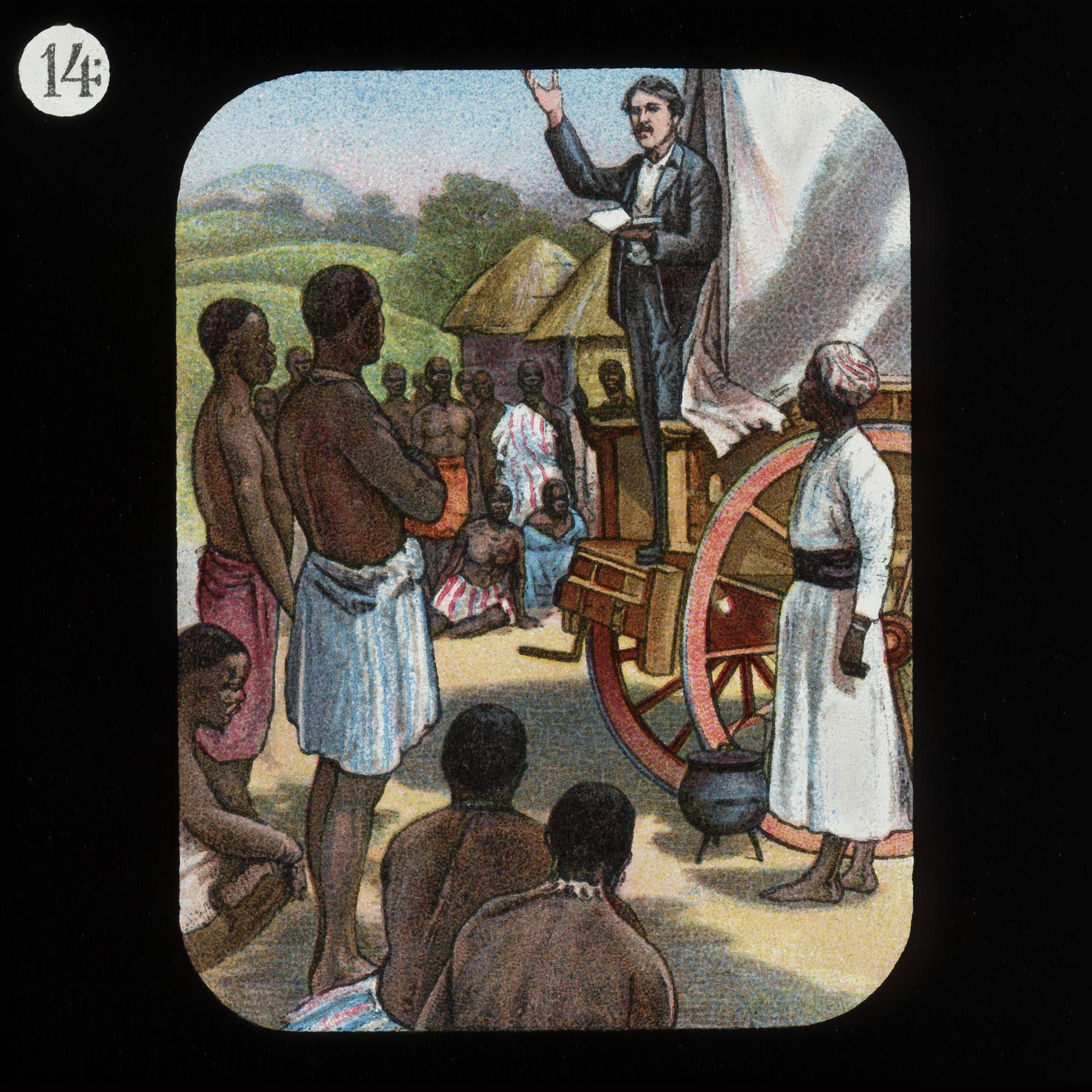
The question, “is proselytizing acceptable?” is perhaps discussed more frequently today than in the times of
David Livingstone.
One of the issues that’s come out of the current discussion over best practices in fighting human trafficking has revolved around proselytizing.
Shortly, we’ll publish part one of our interview with Claude d’Estrée, Buddhist Chaplain at the University of Denver and head of the Human Trafficking Clinic. Prompted by a UN conference, he and colleagues were asked to come up with a Code of Conduct for organizations doing anti-human trafficking work. He co-authored it with Yvonne Zimmerman, whose interview on this blog launched a discussion about the ethics of anti-trafficking efforts. As a little preview of the interview, here’s what Claude had to say about it:
Erik Campano: How have groups you have observed as proselytizing reacted to your Code of Conduct?
Claude d’Estrée: [laughing] Not well. I should have predicted this, right? Which is to say: the religious groups and organizations which don’t do this have no problem with it. But the ones that are violating it have strong disagreement on many different layers. Not the least of which is to say that secular forms of therapy are providing a form of normative values no different than if it is Christian based.
OK, so Claude d’Estrée is referring to guideline #5 of 5, of his proposed Code of Conduct:
1) Religious education and activities shall not be a compulsory aspect of the services provided to survivors of forced labour and human trafficking.
2) Conversations about religion and spirituality must always be initiated by trafficking survivors, not by anti-trafficking advocates or workers.
3) Anti-trafficking advocates and workers must respect the religious backgrounds of their clients, even when these backgrounds are different than their own
4) Anti-trafficking advocates and workers will provide religious literature, training and instruction only when this is solicited by the trafficking survivor. These may never be offered by the organization providing primary services.
5) Pastoral counseling, religious based therapies, and spiritual direction are not a substitute for standard therapeutic models and should only be offered at the request of the trafficking survivor. Again, these may never be offered by the organization providing primary services.
Let’s just focus on #5 here. What d’Estrée is saying is that what is commonly called “Christian counseling” can’t replace traditional psychotherapy, psychiatry, social work counseling, and so forth. But (and we get into this in the interview), often, Christian counseling is offered to “victims” (or potential “victims”) (I’m using scare quotes because that word is currently in dispute; consider them included for the rest of this post). What frightens some observers concerned with human rights is that the psychotherapeutic process could be used as a way to impose Christian symbols and language onto people who don’t come from Christian cultures. That in trying to make broken, vulnerable human trafficking victims whole again, religious NGOs manipulate their psychology so that they start believing and behaving like Christians. Would (or would not) that come pretty close to violating the UN’s decree that freedom of religion and belief is a human right?
On the other hand, if you asked certain Christians, they’d say that you’re only whole when, for example, you’ve accepted Christ as your savior. Which, might, of course, create a cognitive dissonance in the part of the NGO worker, who, on one hand, wants to respect human rights, but on the other hand, believes in the universality of his religious belief — and the importance of spreading it.
The solution of d’Estrée and his colleagues is to require the NGO to refer the victim out to a separate organization, so there’s no conflict of interest between the rescuer and the therapist. That, of course, comes with its own major challenge: actually getting the funding to have secular, normative psychotherapists available to help counsel rescued victims. When you’re on the ground (as d’Estrée has been, many times), working with real, suffering people, it’s a lot harder to make these distinctions or know what to do in emergency situations.
Evangelism in anti-human trafficking, according to d’Estrée, is separate from proseltyzing, in that during evangelism the victim initiates the interest in exploring the religious tradition. There’s no quid-pro-quo: I’ll follow your religion because you rescued me from a brothel.
How do you distinguish evangelism from proselytizing? Are either acceptable in anti-trafficking efforts? Is the #5 standard fair? Realistic?
var _gaq = _gaq || []; _gaq.push(['_setAccount', 'UA-38934621-1']); _gaq.push(['_trackPageview']);
(function() { var ga = document.createElement('script'); ga.type = 'text/javascript'; ga.async = true; ga.src = ('https:' == document.location.protocol ? 'https://ssl' : 'http://www') + '.google-analytics.com/ga.js'; var s = document.getElementsByTagName('script')[0]; s.parentNode.insertBefore(ga, s); })();
Previous Post

February 22, 2013
How Buddhist Nuns Fight Human Trafficking in Nepal
Next Post

March 1, 2013 A Code of Conduct for Anti-Trafficking Efforts
Browse Our Archives
Select a Category Uncategorized
Select a Month May 2014 September 2013 August 2013 July 2013 May 2013 April 2013 March 2013 February 2013
Follow Us!
TAKE THE
Religious Wisdom Quiz
What Christian tradition is noted for its belief in nonresistance and simple living?
Select your answer to see how you score.
Methodist Anglican Amish Episcopalian
Related posts from Stories Untold

Why We Can’t Blame Sexual Assault on the...

"People become the poem" - Interview with Syrian-American...

Why Every American Should Try Fasting for Ramadan

Central African Republic Needs Humanitarian Help Urgently
TRENDING AT PATHEOS Evangelical

The REST of Your Life: A Creative Wrestles...
This week I had a conversation with a good friend from church....

How the author of the world's best hymn...
I've been working with John Newton for a while now. This makes...

Long before this Lectio Divina, Psalm 130 - the song - started...

What About the Trees? Another Living Parable
After I finished writing the last article about falling leaves as a...

Why Classical Education Is a Conversation, Not a...
Come and Read: Joy in Classical Education When I was a little...

Cornell University has received a great deal of negative publicity and intense...
view all Evangelical blogs
Ad-Free & Subscriber Log-In Subscription Support
- About Us
- 2026 Calendar
- Videos
- Podcasts
- Library of World Religions
- Faith In Media Tracker
- Advertise With Us
- Write for Us
- Privacy Policy
- Terms of Service
- Do Not Sell My Data
- Contact Us
- Radiant Digital
- Manage Newsletter Subscriptions
- Unsubscribe From Notifications
- Sitemap
Copyright 2008-2026, Patheos. All rights reserved.
Subscription Support Ad-Free & Subscriber Log-In
Follow Patheos