
BuddhistCatholicContemplativeEvangelicalGeneral ChristianHinduJewishLatter-day SaintMuslimNew VisionsProgressive Christian
Beliefs
- Buddhist
- Catholic
- Contemplative
- Evangelical
- General Christian
- Hindu
- Jewish
- Latter-day Saint
- More Voices
- Muslim
- New Visions
- Pagan
- Progressive Christian
Topics
- Religion News
- Food and Religion
- Sports and Religion
- Religious Art
- Religious Music and Entertainment
- Religious Events
- History and Religion
- Style and Religion
- Politics and Religion
- Women in Religion
- Recreation Outdoors and Religion
- Business Finance and Religion
- Careers Workplace and Religion
- Education and Religion
- Family Parenting and Religion
- Health Fitness and Religion
- Home and Religion
- Relationships and Religion
- Technology and Religion
- Travel and Religion
Columnists
- Buddhist Columnists
- Business Finance and Religion Columnists
- Careers Workplace and Religion Columnists
- Catholic Columnists
- Contemplative Columnists
- Education and Religion Columnists
- Evangelists Columnists
- Family Parenting and Religion Columnists
- General Christian Columnists
- Health Fitness and Religion Columnists
- Hindu Columnists
- History and Religion Columnists
- Home and Religion Columnists
- Jewish Columnists
- More Voices Columnists
- Latter Day Columnists
- Muslim Columnists
- New Visions Columnists
- Nonreligious Columnists
- Pagan Columnists
- Politics and Religion Columnists
- Progressive Columnists
- Recreation Outdoors and Religion Columnists
- Relationships and Religion Columnists
- Religion News Columnists
- Religious Art Columnists
- Religious Events Columnists
- Religious Music and Entertainment Columnists
- Sports and Religion Columnists
- Style and Religion Columnists
- Technology and Religion Columnists
- Travel and Religion Columnists
- Women in Religion Columnists
Resource Library
- 2026 Calendar
- Library of World Religions
- The 100 Most Holy Places on Earth
- Patheos Answers
- Podcasts
- Videos
- Faith Leaders Database
- Anglican Episcopalian
- Bahai
- Baptist
- Buddhism
- Christianity
- Confucianism
- Eastern Orthodoxy
- Hinduism
- Holiness and Pentecostal
- ISKCON
- Islam
- Judaism
- Lutheran
- Methodist
- The Church of Jesus Christ of Latter-day Saints
- New Age
- Paganism
- Presbytarian and Reformed
- Protestantism
- Religion Behind the Scenes
- Roman Catholic
- Scientology
- Shia Islam
- Sikhism
- Sufism
- Sunni Islam
- Taoism
- Zen
- See all religions
Research Tools
 Ad-Free & Subscriber Log-In Subscription Support
Ad-Free & Subscriber Log-In Subscription Support
Follow Patheos 

- Trending:
- Forgiveness
- |
- Marriage
- |
- Consciousness
- |
- Death Penalty
- |
- Election
- |
- Halloween
 Epiphenom
- Home
- Nonreligious
- Use of prayer by African-Americans can help explain why they are more sensitive to pain
Use of prayer by African-Americans can help explain why they are more sensitive to pain
Last updated on: February 19, 2016 at 5:14 pm by Epiphenom
Use of prayer by African-Americans can help explain why they are more sensitive to pain 2016-02-19T17:14:31+01:00 Epiphenom
Patheos Explore the world's faith through different perspectives on religion and spirituality! Patheos has the views of the prevalent religions and spiritualities of the world.
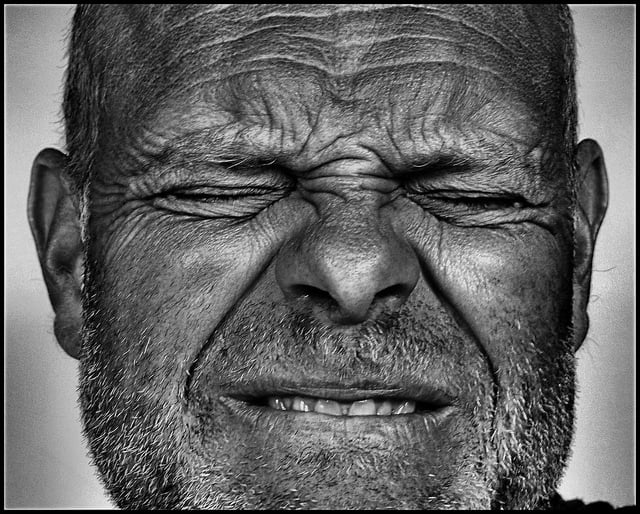
African-Americans are more sensitive to pain than Caucasian (white) Americans. That’s been shown in comparisons of much pain is experienced in illnesses such as AIDS and arthritis, after surgery, and in conditions such as lower back pain. It’s also been shown experimentally, when volunteers undergo painful experiences (like holding your hand in ice-cold water) and report how much pain they feel.
Many studies have been done to try to understand why this difference exists. One important area of research has been into differences in coping strategies.
People use a wide range of mental strategies to deal with pain. One approach is just to endure it or try to ignore it. Other approaches include exaggerating or overstating the pain (which goes by the delightful name of ‘catastrophizing), increasing activity, and praying.
Samantha Meints, a psychologist at Indiana University in the USA, and colleagues have undertaken a statistical analysis of all the studies published on this topic (a ‘meta-analysis’). They looked at data from 6,489 individuals who participated in 19 different studies, and came up with some surprising insights.
For a start, African-Americans are more likely to use coping strategies of any kind, and in particular are more likely to use prayer and catastrophizing.
In fact, the difference in the use of prayer by African-Americans versus Caucasians was almost twice as large as the difference in catastrophizing, then next most important factor.
There was one strategy used more often by Caucasians than by African-Americans: task persistence. That’s where you knuckle down and focus on the task at hand, to try to blot out the sensations of pain.
You may be thinking ‘Aha, this explains the differences in pain sensitivity!’. After all, praying to a supernatural being sounds like a pretty useless way to deal with pain, right?
But not so fast. It’s more complicated than that.
Overall, what it seems is that African-Americans are more likely to use passive, rather than active, pain coping strategies. That’s reflected in their use of passive forms of prayer, things like “I pray to God it won’t last long”.
Meints and colleagues suggest that this might be a manifestation of learned helplessness. That occurs when people come to believe that they have no control over their situation. And African-Americans might be right to think this – other studies have shown that African Americans don’t receive the same quality of pain care. As a result, the researchers say:
Black patients might conclude that no matter what they do, their pain will not be adequately treated. Consequently, they may adopt a catastrophic style of thinking about pain, while White patients who do not face such discrimination continue to seek treatment or engage in new actions to reduce pain and improve function.
On a more positive note, they also point out catastrophizing might have an important function as a social signal.
Human beings are very sensitive to pain. If you’ve ever seen an animal stoically dealing with what seems like horrific injuries, you may have marveled at the differences to humans. Psychologists have speculated that we humans holler and scream when in pain because it’s a way of signalling to friends nearby that you need help.
The researchers speculate that the close-knit nature of many African-American social communities may encourage catastrophizing about pain, rather than suffering in silence. And that “although pain catastrophizing might lead to increased pain at the intrapersonal level … it may also confer significant advantages at the interpersonal level” – by increasing social support when you need it most.
And in fact praying may be an extension of this. MRI studies have shown that devout prayer uses the same brain regions as talking to a friend or loved one.
On a final note, consider this. Pain is not simply your body’s way of telling you to avoid damage. It’s tightly bound up with the social environment you were brought up in, and the effect that has on your psychology.
We’ve seen from other research that people who don’t feel in control of their own situation are more likely to be religious. This research suggests they’re also more likely to use poor coping strategies to deal with pain.
And one of those poor coping strategies is religion. It seems to me that the use of prayer to deal with pain is part of a broader approach to life, one that tries to deal with uncertainties and feelings of helplessness by trying to gain help and support from the supernatural.

Meints, S., Miller, M., & Hirsh, A. (2016). Differences in pain coping between Black and White Americans: A meta-analysis The Journal of Pain DOI: 10.1016/j.jpain.2015.12.017
Effects of religion - psychological

Browse Our Archives
Select a Category Causes of religion - evolution Causes of religion - psychological Causes of religion - social Demographics Digest Effects of religion - health Effects of religion - psychological Effects of religion - social Notifications Politics Uncategorized
Select a Month March 2016 February 2016 January 2016 December 2015 November 2015 October 2015 September 2015 August 2015 July 2015 June 2015 May 2015 April 2015 March 2015 February 2015 January 2015 December 2014 November 2014 October 2014 September 2014 August 2014 July 2014 June 2014 May 2014 April 2014 March 2014 February 2014 January 2014 December 2013 November 2013 October 2013 September 2013 August 2013 July 2013 June 2013 May 2013 April 2013 March 2013 February 2013 January 2013 December 2012 November 2012 October 2012 September 2012 August 2012 July 2012 June 2012 May 2012 April 2012 March 2012 February 2012 January 2012 December 2011 November 2011 October 2011 September 2011 August 2011 July 2011 June 2011 May 2011 April 2011 March 2011 February 2011 January 2011 December 2010 November 2010 October 2010 September 2010 August 2010 July 2010 June 2010 May 2010 April 2010 March 2010 February 2010 January 2010 December 2009 November 2009 October 2009 September 2009 August 2009 July 2009 June 2009 May 2009 April 2009 March 2009 February 2009 January 2009 December 2008 November 2008 October 2008 September 2008 August 2008 July 2008 June 2008 May 2008 April 2008 March 2008 February 2008 January 2008 December 2007 November 2007 October 2007
Follow Us!
TAKE THE
Religious Wisdom Quiz
What is the first book of the Bible?
Select your answer to see how you score.
Genesis Exodus Matthew Psalms
Related posts from Epiphenom

Planned Parenthood is disgusting? What does that even...

Kids in atheist families are more altruistic! The...
Make people uncertain then remind them about God,...
Subliminal religious prompts might not make people nicer...
TRENDING AT PATHEOS Nonreligious

Dethroning Jesus and Enthroning Yourself
Jesus Never Asked to Be Worshipped. He Asked to Be Understood. Christianity...

Why Most Christians are Really Paulians and Jobians
I Don't Care, But It Matters Let's get this out of the...

Essential Tips to Successfully Navigate the Selling Process
Selling a house can feel overwhelming, but it doesn’t have to be....

To Make Remote Work Effective, Think About Others
The COVID-19 pandemic forced many companies to rapidly transition to remote work....

Flexibility Is Key to Solving Problems of Tomorrow
The world of work is undergoing a dramatic transformation. The COVID-19 pandemic...
view all Nonreligious blogs
Ad-Free & Subscriber Log-In Subscription Support
- About Us
- 2026 Calendar
- Videos
- Podcasts
- Library of World Religions
- Faith In Media Tracker
- Advertise With Us
- Write for Us
- Privacy Policy
- Terms of Service
- Do Not Sell My Data
- Contact Us
- Radiant Digital
- Manage Newsletter Subscriptions
- Unsubscribe From Notifications
- Sitemap
Copyright 2008-2026, Patheos. All rights reserved.
Subscription Support Ad-Free & Subscriber Log-In
Follow Patheos