
BuddhistCatholicContemplativeEvangelicalGeneral ChristianHinduJewishLatter-day SaintMuslimNew VisionsProgressive Christian
Beliefs
- Buddhist
- Catholic
- Contemplative
- Evangelical
- General Christian
- Hindu
- Jewish
- Latter-day Saint
- More Voices
- Muslim
- New Visions
- Pagan
- Progressive Christian
Topics
- Religion News
- Food and Religion
- Sports and Religion
- Religious Art
- Religious Music and Entertainment
- Religious Events
- History and Religion
- Style and Religion
- Politics and Religion
- Women in Religion
- Recreation Outdoors and Religion
- Business Finance and Religion
- Careers Workplace and Religion
- Education and Religion
- Family Parenting and Religion
- Health Fitness and Religion
- Home and Religion
- Relationships and Religion
- Technology and Religion
- Travel and Religion
Columnists
- Buddhist Columnists
- Business Finance and Religion Columnists
- Careers Workplace and Religion Columnists
- Catholic Columnists
- Contemplative Columnists
- Education and Religion Columnists
- Evangelists Columnists
- Family Parenting and Religion Columnists
- General Christian Columnists
- Health Fitness and Religion Columnists
- Hindu Columnists
- History and Religion Columnists
- Home and Religion Columnists
- Jewish Columnists
- More Voices Columnists
- Latter Day Columnists
- Muslim Columnists
- New Visions Columnists
- Nonreligious Columnists
- Pagan Columnists
- Politics and Religion Columnists
- Progressive Columnists
- Recreation Outdoors and Religion Columnists
- Relationships and Religion Columnists
- Religion News Columnists
- Religious Art Columnists
- Religious Events Columnists
- Religious Music and Entertainment Columnists
- Sports and Religion Columnists
- Style and Religion Columnists
- Technology and Religion Columnists
- Travel and Religion Columnists
- Women in Religion Columnists
Resource Library
- 2026 Calendar
- Library of World Religions
- The 100 Most Holy Places on Earth
- Patheos Answers
- Podcasts
- Videos
- Faith Leaders Database
- Anglican Episcopalian
- Bahai
- Baptist
- Buddhism
- Christianity
- Confucianism
- Eastern Orthodoxy
- Hinduism
- Holiness and Pentecostal
- ISKCON
- Islam
- Judaism
- Lutheran
- Methodist
- The Church of Jesus Christ of Latter-day Saints
- New Age
- Paganism
- Presbytarian and Reformed
- Protestantism
- Religion Behind the Scenes
- Roman Catholic
- Scientology
- Shia Islam
- Sikhism
- Sufism
- Sunni Islam
- Taoism
- Zen
- See all religions
Research Tools
 Ad-Free & Subscriber Log-In Subscription Support
Ad-Free & Subscriber Log-In Subscription Support
Follow Patheos 

- Trending:
- Forgiveness
- |
- Marriage
- |
- Consciousness
- |
- Death Penalty
- |
- Election
- |
- Halloween
 Epiphenom
- Home
- Nonreligious
- What does the latest research say on religion decreasing the risk of suicide?
What does the latest research say on religion decreasing the risk of suicide?
Last updated on: March 2, 2015 at 9:17 pm by Epiphenom
What does the latest research say on religion decreasing the risk of suicide? 2015-03-02T21:17:48+01:00 Epiphenom
Patheos Explore the world's faith through different perspectives on religion and spirituality! Patheos has the views of the prevalent religions and spiritualities of the world.
And so to this thorny subject again! This time with a batch of new studies – but what light do they shed on this complicated topic?
First up is a straightforward analysis of data from the Third National Health and Nutrition Examination Survey (NHANES III) in the USA (Evan Kleiman and Richard Liu at George Mason University, USA – all the refs are at the foot of this post). This survey asked people about their religious service attendance, and then followed them for up to 20 years, to see what became of them.
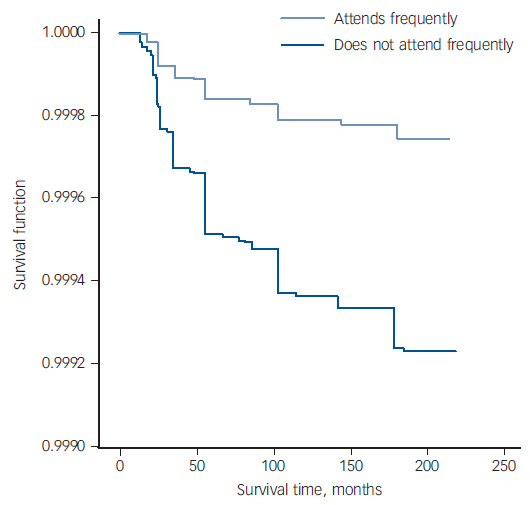
As you can see in the graphic, frequent attenders were significantly less likely to commit suicide. (You have to be a bit careful with that graph. It looks like most people committed suicide, until you look at the scale on the left hand side and realise that it’s only 0.08% even of the non-religious!)
Why might this be? Well, research by Shigehiro Oishi and Ed Diener across multiple nations found that places where people have a greater sense of meaning in life also have lower suicide rates. And they also found that religious people have a greater sense of meaning in life.
But wait. What does it mean to say that you feel that your life has “an important purpose or meaning”? I don’t know many atheists who would feel that such a statement even makes sense. So perhaps that’s really just a surrogate for a certain kind of religious belief – which doesn’t take us very far.
One thing that characterises Western religion is the deep-seated prejudice against suicide. Is this the protective factor?
In Malaysia, a survey of 141 students by Foo et al found that, although religious commitment was not associated with suicidal behaviours, it was linked to rejection of suicide as an action. So more support for this idea (see Suicide, Age and Poison for another perspective).
One last study, this time from the Ukrainian city of Dnipropetrovsk. Vasiliy Usenko and colleagues found that after Orthodox Christian mass events (we’re talking here about one-off events, not your regular Christmas, East etc), suicidal behaviour and suicidal attempts dropped among women (men carried on at the same rate as before).
But something very different happened after ‘New Religious Movement’ events (the charismatic new Christian movements that are springing up in poor countries everywhere). After these, the risk of suicides, attempts, and behaviour actually increased for both men and women.
Now, this is not to dispute that alleviation of sadness and depression, that is sometimes linked to religious involvement, could contribute to reducing the risk of suicide. But clearly it also depends on what your religion says, and whether or not you are part of the mainstream.
Which may well explain why the link between suicide and religion is rather patchy worldwide.

Kleiman, E., & Liu, R. (2013). Prospective prediction of suicide in a nationally representative sample: religious service attendance as a protective factor The British Journal of Psychiatry, 204 (4), 262-266 DOI: 10.1192/bjp.bp.113.128900
Oishi, S., & Diener, E. (2013). Residents of Poor Nations Have a Greater Sense of Meaning in Life Than Residents of Wealthy Nations Psychological Science, 25 (2), 422-430 DOI: 10.1177/0956797613507286
Foo, X., Mohd. Alwi, M., Ismail, S., Ibrahim, N., & Jamil Osman, Z. (2012). Religious Commitment, Attitudes Toward Suicide, and Suicidal Behaviors Among College Students of Different Ethnic and Religious Groups in Malaysia Journal of Religion and Health, 53 (3), 731-746 DOI: 10.1007/s10943-012-9667-9
Usenko, V., Svirin, S., Shchekaturov, Y., & Ponarin, E. (2014). Impact of some types of mass gatherings on current suicide risk in an urban population: statistical and negative binominal regression analysis of time series BMC Public Health, 14 (1) DOI: 10.1186/1471-2458-14-308
 This article by Tom Rees was first published on Epiphenom. It is licensed under Creative Commons.
Effects of religion - psychological
Next Post

August 3, 2014 What are the religious disgusted by?
Browse Our Archives
Select a Category Causes of religion - evolution Causes of religion - psychological Causes of religion - social Demographics Digest Effects of religion - health Effects of religion - psychological Effects of religion - social Notifications Politics Uncategorized
Select a Month March 2016 February 2016 January 2016 December 2015 November 2015 October 2015 September 2015 August 2015 July 2015 June 2015 May 2015 April 2015 March 2015 February 2015 January 2015 December 2014 November 2014 October 2014 September 2014 August 2014 July 2014 June 2014 May 2014 April 2014 March 2014 February 2014 January 2014 December 2013 November 2013 October 2013 September 2013 August 2013 July 2013 June 2013 May 2013 April 2013 March 2013 February 2013 January 2013 December 2012 November 2012 October 2012 September 2012 August 2012 July 2012 June 2012 May 2012 April 2012 March 2012 February 2012 January 2012 December 2011 November 2011 October 2011 September 2011 August 2011 July 2011 June 2011 May 2011 April 2011 March 2011 February 2011 January 2011 December 2010 November 2010 October 2010 September 2010 August 2010 July 2010 June 2010 May 2010 April 2010 March 2010 February 2010 January 2010 December 2009 November 2009 October 2009 September 2009 August 2009 July 2009 June 2009 May 2009 April 2009 March 2009 February 2009 January 2009 December 2008 November 2008 October 2008 September 2008 August 2008 July 2008 June 2008 May 2008 April 2008 March 2008 February 2008 January 2008 December 2007 November 2007 October 2007
Follow Us!
TAKE THE
Religious Wisdom Quiz
How many times does the book of Genesis mention "God created"?
Select your answer to see how you score.
7 9 5 11
Related posts from Epiphenom

Use of prayer by African-Americans can help explain...

Planned Parenthood is disgusting? What does that even...

Kids in atheist families are more altruistic! The...
Make people uncertain then remind them about God,...
TRENDING AT PATHEOS Nonreligious

Dethroning Jesus and Enthroning Yourself
Jesus Never Asked to Be Worshipped. He Asked to Be Understood. Christianity...

Why Most Christians are Really Paulians and Jobians
I Don't Care, But It Matters Let's get this out of the...

Essential Tips to Successfully Navigate the Selling Process
Selling a house can feel overwhelming, but it doesn’t have to be....

To Make Remote Work Effective, Think About Others
The COVID-19 pandemic forced many companies to rapidly transition to remote work....

Flexibility Is Key to Solving Problems of Tomorrow
The world of work is undergoing a dramatic transformation. The COVID-19 pandemic...
view all Nonreligious blogs
Ad-Free & Subscriber Log-In Subscription Support
- About Us
- 2026 Calendar
- Videos
- Podcasts
- Library of World Religions
- Faith In Media Tracker
- Advertise With Us
- Write for Us
- Privacy Policy
- Terms of Service
- Do Not Sell My Data
- Contact Us
- Radiant Digital
- Manage Newsletter Subscriptions
- Unsubscribe From Notifications
- Sitemap
Copyright 2008-2026, Patheos. All rights reserved.
Subscription Support Ad-Free & Subscriber Log-In
Follow Patheos